




For commercial and industrial PV projects, the inverter is not just a device that converts DC electricity into AC electricity. It is a project-critical asset that influences energy yield, grid approval, commissioning speed, monitoring quality, O&M workload, warranty exposure, and long-term financial performance. A well-priced inverter that causes grid compliance problems, repeated truck rolls, thermal derating, or poor monitoring visibility can become expensive very quickly.
This solar inverter procurement guide is written for EPCs, installers, resellers, system integrators, facility owners, and commercial PV decision-makers who need to evaluate inverter options with less technical and financial risk. It focuses on professional PV systems rather than residential brand comparisons. The goal is to help procurement teams define requirements, compare inverter architectures, assess suppliers, control warranty risk, and make decisions based on lifecycle value instead of unit price alone.
In commercial PV, inverter procurement should begin before suppliers are asked for quotations. The project application, grid connection conditions, module selection, DC/AC ratio, O&M strategy, monitoring requirements, and future storage plans all affect which inverter platform is suitable. A strong procurement process connects engineering, compliance, finance, logistics, and service planning into one decision framework.
The first mistake in commercial solar inverter selection is comparing datasheets before defining the project context. A 300 kW rooftop system on a factory, a 5 MW agricultural ground-mounted plant, and a 50 MW utility-scale project may all use three-phase inverters, but the procurement logic is different.
A distributed commercial rooftop often needs flexible MPPT design because the roof may have multiple orientations, parapet shading, HVAC obstacles, or phased expansion. A uniform ground-mounted project may prioritize high power density, standardized electrical blocks, easier medium-voltage integration, and reduced installation labor. A hybrid solar-plus-storage project requires compatibility with batteries, energy management systems, export control logic, and possibly backup or microgrid operation.
The inverter choice should therefore be linked to site layout, AC connection voltage, DC string design, installation environment, grid code requirements, and maintenance strategy. If these requirements are not defined early, procurement teams may receive attractive quotations for products that later require design revisions, additional control equipment, or costly approval work.
Inverter CAPEX matters, but it is only one part of project economics. For utility-scale PV, inverter cost is often a relatively small share of total plant CAPEX, commonly in the range of several percent to the low teens depending on project size and architecture. However, inverter-related downtime can have an outsized effect on OPEX and revenue because the inverter is an active electronic component with a higher failure exposure than passive mounting structures or PV modules.
Modern three-phase string inverters commonly advertise peak efficiencies around 98–99%, while weighted efficiency figures are often slightly lower because real systems operate across changing irradiance, temperature, and load conditions. A small efficiency difference may be less important than service response time, thermal derating behavior, MPPT granularity, spare parts availability, or grid compliance. Conversely, for a large portfolio, even a modest gain in availability or commissioning speed can create meaningful financial value.
Procurement teams should compare total cost of ownership (TCO), and according to lifecycle assessment methodologies developed in IEA PVPS reports on PV system performance and economics, inverter selection should be evaluated based on long-term energy yield, availability, and operational cost rather than upfront CAPEX alone. This includes the inverter price, expected energy yield, installation labor, monitoring costs, warranty coverage, extended warranty options, field service rates, spare parts, expected replacement strategy, and the financial impact of downtime.
A technically suitable inverter can still create procurement risk if the supplier cannot support the project region. EPCs and resellers should verify manufacturer track record, installed base, regional inventory, technical documentation quality, certification coverage, warranty process, and after-sales responsiveness.
Bankability is particularly important because commercial inverter warranties often run 5–10 years as standard, with paid extensions sometimes reaching 15–20 years. Many PV assets are designed for 25–30 years, so buyers should ask whether the supplier can support firmware updates, spare parts, replacement units, and service escalation over the life of the plant.
For resellers, supplier reliability directly affects customer satisfaction. For EPCs, it affects project delivery, commissioning risk, performance guarantees, and future O&M obligations. The lowest quoted price is rarely valuable if replacement units are unavailable during peak production months or if warranty claims take months to resolve.
A practical procurement checklist should cover both engineering and commercial details. The table below summarizes the minimum information professional buyers should standardize before evaluating bids.
| Procurement area | Key items to verify |
|---|---|
| Diseño eléctrico | Rated AC power, DC voltage range, startup voltage, MPPT range, max input current, short-circuit current tolerance, DC/AC ratio limits |
| Performance | Peak efficiency, weighted efficiency, thermal derating curve, MPPT accuracy, night consumption |
| Cumplimiento de la red eléctrica | Local grid code certificates, anti-islanding, ride-through, reactive power, export limitation, power quality |
| Instalación | IP rating, corrosion protection, operating temperature, cooling method, mounting method, cable access, clearance requirements |
| Seguimiento | RS485, Ethernet, Modbus TCP/RTU, SunSpec, API access, data logger compatibility, SCADA/EMS integration |
| Condiciones comerciales | Unit price, warranty duration, exclusions, lead time, MOQ, logistics terms, spare parts, service SLA, escalation process |
This type of structured review prevents procurement decisions from being reduced to price per kW. It also makes supplier deviations visible before purchase orders are issued.
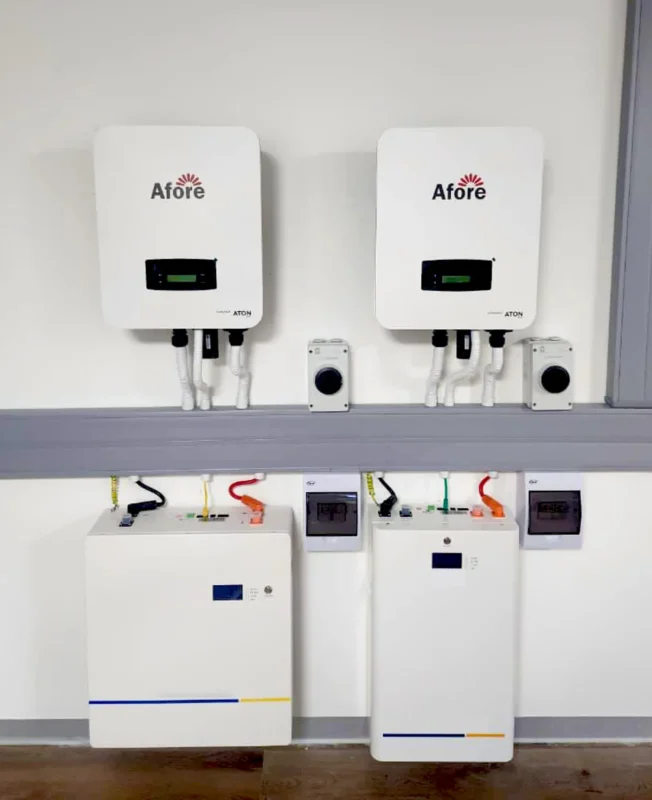
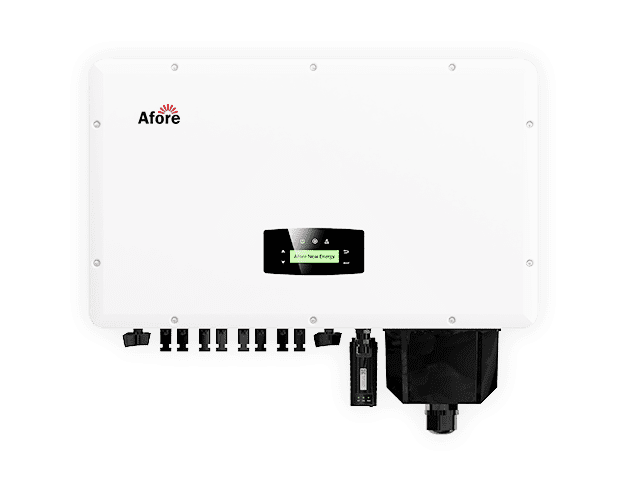
String inverters are widely used in commercial rooftop PV because they offer modularity, flexible MPPT design, and easier fault isolation. In a rooftop project with multiple roof planes, partial shading, or mixed orientations, using several string inverters or multi-MPPT string units can reduce mismatch losses and simplify troubleshooting.
From an O&M perspective, string inverters also reduce single-point-of-failure risk. If one unit fails, only a portion of the system is affected. Replacement is usually faster than replacing a large central unit, and technicians can often complete the work without heavy lifting equipment. This is valuable for C&I portfolios where many systems are distributed across factories, warehouses, logistics centers, or retail sites.
However, string inverter architectures can increase the number of devices, communication points, and AC terminations. Procurement teams should consider whether the installer and O&M provider can manage firmware versions, monitoring configuration, spare unit inventory, and standardized commissioning across multiple sites.
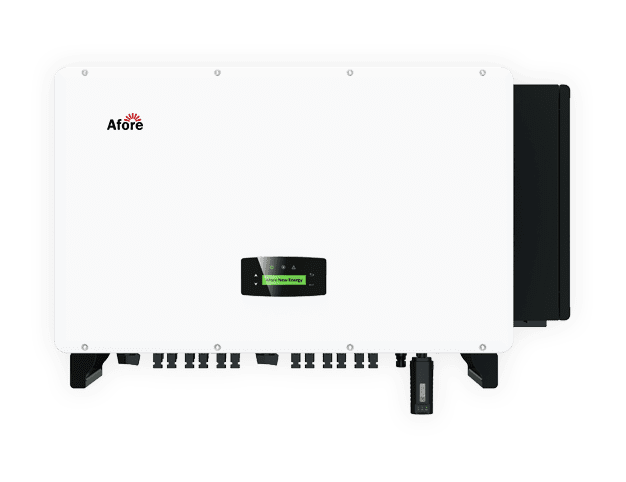
Central inverters are commonly used in large ground-mounted PV projects where high power density, standardized block design, and centralized maintenance are priorities. These inverters are often deployed with DC combiner boxes, step-up transformers, and medium-voltage stations. For utility-scale projects, central architecture can simplify plant layout and reduce the number of inverter units.
The trade-off is concentration of risk. A central inverter failure can remove a large block of capacity from production. Site access, crane availability, spare parts logistics, and response time become critical. Procurement teams should assess whether containerized solutions, redundancy options, transformer interfaces, and service agreements are suitable for the project’s availability targets.
Central inverters may still be appropriate where the site is uniform, maintenance access is controlled, and the owner prefers centralized electrical design. The decision should be based on plant-level LCOE, not only inverter cost per watt.
Hybrid or storage-ready inverters support battery integration, backup functionality, peak shaving, time-of-use optimization, or self-consumption strategies. In commercial facilities with demand charges, grid export limits, or weak grid conditions, storage compatibility can improve the long-term flexibility of the PV system.
However, storage-ready does not always mean storage-compatible in a complete project sense. Buyers must verify battery voltage range, battery management system communication, EMS control logic, backup transfer requirements, export control behavior, safety certification, and grid approval. In some projects, an AC-coupled storage system with separate battery inverters may be more flexible than a hybrid inverter. In others, a DC-coupled or hybrid-ready platform may reduce retrofit complexity.
The best decision depends on whether storage is part of the initial project or a realistic future phase. If the site has demand charges, limited export permission, resilience requirements, or likely battery adoption within the project lifecycle, storage-ready solar inverters deserve serious evaluation.
There is no universal best inverter type for commercial PV. String inverters often fit distributed C&I rooftops, complex roof layouts, and phased portfolios. Central inverters can suit large uniform ground-mounted sites where centralized maintenance and block-level design are preferred. Hybrid or storage-ready systems are valuable where energy storage, backup power, export limitation, or load management is part of the business case.
The procurement decision should be made at system level. Buyers should compare inverter architecture against site layout, grid requirements, shading conditions, maintenance strategy, expansion plans, and financial model. The right inverter is the one that delivers reliable energy, compliant operation, manageable O&M, and acceptable lifecycle cost for that specific project.
Peak efficiency is useful, but it does not fully describe field performance. Commercial PV systems operate under variable irradiance, temperature, and load conditions. Weighted efficiency metrics such as European efficiency or CEC efficiency are more useful because they estimate performance across different operating points.
Part-load efficiency also matters. An inverter may perform extremely well near rated output but less efficiently at low loading. This is relevant for systems with high DC/AC ratios, east-west orientations, frequent cloud cover, or self-consumption profiles where operating conditions vary throughout the day.
Procurement teams should request full efficiency curves, not only headline figures. For large projects, the yield model should include site-specific irradiance, module orientation, temperature assumptions, inverter clipping, and thermal derating. This is especially important in hot climates, where derating may reduce actual AC output during high irradiance periods.
Modern PV modules have become larger and higher-current, especially with bifacial, TOPCon, HJT, and large-format module designs. This makes inverter input current limits increasingly important. A project that looks acceptable based on DC voltage may still exceed maximum input current per MPPT or string input under certain conditions.
EPCs should verify maximum DC voltage, startup voltage, MPPT operating range, maximum input current, short-circuit current tolerance, and the permitted number of strings per MPPT. Bifacial modules require special attention because albedo can increase current under reflective ground or rooftop conditions. If the inverter input stage is underspecified, the result may be clipping, design revisions, reliability stress, or warranty disputes.
This is also where procurement and engineering must work together. A purchasing team may see two inverters with the same AC rating, while the design team sees major differences in MPPT count, input current capacity, stringing flexibility, and future module compatibility.
The DC/AC ratio, also called inverter loading ratio, is the ratio of installed DC module capacity to inverter AC capacity. Commercial and utility-scale PV systems commonly use DC/AC ratios above 1.0 because PV modules rarely operate at nameplate output for long periods. Oversizing the DC side can improve inverter utilization and increase energy generation during lower irradiance hours, although it may cause clipping during peak conditions.
Typical commercial and utility DC/AC ratios often fall in the range of 1.1 to 1.5, but there is no single correct value. The optimum depends on climate, orientation, module cost, inverter cost, grid export limits, self-consumption profile, tariff structure, and project finance assumptions.
| Factor de diseño | Impact on inverter sizing | Main risk reduced |
|---|---|---|
| High irradiance and cool climate | More clipping risk at high DC/AC ratios | Wrong inverter architecture |
| East-west rooftop orientation | Often supports higher DC/AC ratio because peak output is flatter | Interconnection delays |
| Export limit below PV capacity | May justify oversizing DC if self-consumption is high | Module incompatibility |
| High electricity tariff during daytime | Supports careful yield optimization | Poor yield assumptions |
| Hot climate | Requires derating analysis and thermal design | Thermal failures and derating |
| Low module cost vs inverter cost | May support higher DC/AC ratio if clipping remains economical | Integration delays |
Excessive oversizing can increase clipping losses and thermal stress. It can also violate manufacturer limits if maximum DC input power or current is exceeded. Therefore, inverter sizing should be calculated using design software, manufacturer datasheets, site irradiance data, temperature assumptions, grid interconnection limits, and economic yield modeling.
Inverter sizing should start with module capacity, string voltage, temperature-adjusted voltage limits, MPPT operating range, maximum input current, and inverter AC rating. The design team should then model the expected annual energy production at different DC/AC ratios and compare incremental yield against equipment cost, clipping losses, interconnection limits, and tariff structure.
For commercial projects, sizing should not rely only on nominal capacity matching. A 1 MWdc array paired with 1 MWac of inverters may be simple, but it may not be financially optimal. Likewise, a very high DC/AC ratio may look attractive in CAPEX terms but reduce yield quality or cause thermal stress. The best sizing decision is the one that improves risk-adjusted project economics under real operating conditions.
Grid compliance is one of the highest-risk areas in inverter procurement. Based on IEC safety and grid-interconnection requirements for photovoltaic power converters, compliance verification must be treated as a primary procurement gate rather than a post-selection validation step.
Modern grid codes require inverters to provide functions such as low-voltage ride-through, frequency response, reactive power control, anti-islanding, active power curtailment, and power factor adjustment. These requirements vary by country, utility, voltage level, and project size.
Safety certification ensures the inverter can operate safely under defined electrical and environmental conditions.
Common standards include:
A critical procurement point is that electrical safety compliance alone does not guarantee grid approval.
This layer defines how the inverter interacts with the grid and is often the primary approval barrier for commercial projects.
Typical standards and requirements include:
This layer governs ride-through behavior, voltage/frequency response, and reactive power control functions.
This layer ensures safe disconnection behavior and acceptable grid impact.
Common requirements include:
These parameters are often validated through type testing and grid studies.
Even if an inverter is fully certified, final approval depends on the local utility or distribution system operator.
Approval may require:
One inverter may be electrically safe and fully certified, but still not approved for a specific project if:
This means compliance is not only a standards issue, but also a version control and utility acceptance issue.
Procurement-stage compliance checks should be aligned with project milestones:
Required certifications depend on the installation region and grid operator. In general, buyers should verify electrical safety certification, grid interconnection approval, anti-islanding compliance, electromagnetic compatibility, and any market-specific utility listing before finalizing a purchase order.
| Standard | What it covers | Why procurement teams care | Typical project impact if missing |
|---|---|---|---|
| IEC 62109 | PV inverter electrical safety requirements | Ensures equipment safety and regulatory approval | Delayed commissioning or failed inspection |
| IEC 62116 | Anti-islanding protection test methods | Required for grid safety compliance | Grid connection rejection |
| IEC 61727 | Utility interface characteristics | Defines inverter-grid interaction behavior | Utility approval delays |
| IEEE 1547 / UL 1741 | Grid interconnection and ride-through functions | Mandatory in North America for interconnection | Cannot obtain utility permission |
| EN 50549 | European grid connection requirements | Required for EU grid compliance | Ineligible for grid export approval |
For resellers, certification risk is particularly important. Holding inventory that lacks required local certificates can tie up working capital and delay customer projects. For EPCs, incomplete documentation can delay grid approval, energization, and final acceptance.
The certification package should include datasheets, installation manuals, declarations of conformity, safety certificates, grid code compliance reports, anti-islanding test evidence, EMC documentation, and firmware/version information. If the supplier cannot provide a complete documentation package during bidding, that should be treated as a commercial risk, not a paperwork inconvenience.
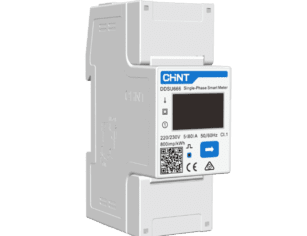
Many commercial sites require export limitation or dynamic power control because the local grid cannot accept uncontrolled PV export. In such cases, the inverter must coordinate with meters, CTs, data loggers, plant controllers, or energy management systems.
Procurement teams should check technical thresholds for:
Supplier verification should also include:
Commercial PV inverters may operate in heat, humidity, dust, salt mist, high altitude, or direct sunlight. Datasheet values should be evaluated against the actual installation environment, not ideal laboratory conditions. Outdoor units commonly require IP65 or IP66 protection, but IP rating alone does not guarantee suitability for corrosive coastal sites, high dust environments, or poorly ventilated plant rooms.
Procurement teams should review operating temperature range, derating curve, altitude limits, corrosion resistance, enclosure material, mounting method, cable entry design, and service clearance. Many inverters specify full power only up to a certain ambient temperature or altitude. Above that point, output may derate. In hot climates, this can materially affect energy yield and should be included in the simulation.
Thermal management affects both performance and reliability. Fan-cooled inverters can provide strong heat dissipation, but fans are moving parts that may require maintenance or replacement, especially in dusty environments. Natural cooling reduces moving parts but may have different limits for high ambient temperatures or high-load operation.
The buyer should request derating curves and installation manuals before final selection. These documents show how the inverter behaves at high temperature, high altitude, and different mounting conditions. For rooftop installations, placing inverters in direct sun or areas with poor airflow can increase derating and shorten component life. For ground-mounted sites, enclosure shading, spacing, and ventilation should be part of the layout design.
This section covers key protection and safety design considerations:
Procurement and engineering checks should confirm:
These factors directly affect compliance, commissioning safety, and long-term O&M cost.
Commissioning is often underweighted in procurement, but it directly affects labor cost and project schedule. Good inverter platforms provide clear wiring access, intuitive labeling, mobile commissioning tools, remote configuration, firmware management, and diagnostic support. Poor commissioning processes can create repeated site visits, configuration errors, and delayed grid approval.
For EPCs managing multi-site commercial rollouts, standardization is valuable. If installers use the same inverter family across multiple sites, they can reuse design templates, commissioning checklists, monitoring setup procedures, and spare parts plans. This reduces training burden and improves consistency.
Common installation mistakes include poor cable termination, incorrect string polarity, inadequate grounding, insufficient ventilation clearance, missing surge protection, unsupported communication wiring, and mismatched firmware settings. A procurement decision should therefore consider not only the product but also the installation documentation, training support, and quality control process.

Professional PV operators need more than a simple generation dashboard. They need real-time and historical data on inverter status, alarms, string or MPPT performance, grid events, energy generation, downtime, and communication failures. Good monitoring enables faster fault detection, performance ratio analysis, portfolio benchmarking, and better O&M planning.
For a single small commercial system, a manufacturer portal may be sufficient. For larger portfolios, operators may need API access, third-party monitoring integration, standardized data models, and plant-level analytics. Data ownership should also be clarified, including export rights, system integration access, and long-term data portability when switching O&M providers.
Common inverter communication interfaces include RS485, Ethernet, Wi-Fi, 4G/LTE, Modbus RTU, Modbus TCP, and sometimes SunSpec-compatible data models. Larger PV plants often use plant controllers or SCADA systems to aggregate inverter data, meters, weather stations, transformers, and protection devices.
Before purchase, system integrators should confirm protocol support, register maps, polling limits, cybersecurity features, firmware update methods, and compatibility with EMS, BMS, SCADA, and utility control systems.
Additional procurement verification for communication and platform integration should include:
These factors directly affect long-term asset transparency, performance analysis accuracy, and operational independence from third-party service providers.
Interoperability should not be assumed simply because a datasheet mentions Modbus. In some cases, vendor-specific extensions or incomplete data models create integration delays.
Cybersecurity is increasingly relevant for commercial PV systems connected to corporate networks or remote operations centers. Buyers should evaluate user authentication, encrypted communication, role-based access, audit logs, remote access procedures, and alignment with the end customer’s IT policies.
Inverter procurement should include a plan for spare units, replacement boards, fans, fuses, communication modules, surge protection components, and service tools. For C&I portfolios, standardizing inverter models can reduce downtime because technicians are familiar with the equipment and spare parts can be shared across sites. Choosing a reliable fabricante de inversores solares also supports long-term service continuity.
Warranty comparison should go beyond duration. Buyers need to understand whether labor, shipping, replacement units, on-site service, firmware issues, surge damage, and environmental damage are covered. Many warranties exclude damage from improper installation, poor ventilation, grid events outside limits, water ingress due to incorrect cable glands, or unauthorized modifications.
Over a 25–30 year PV asset life, inverter replacement should be treated as a planned lifecycle event rather than an unexpected failure scenario.
Expected inverter replacement timing may occur once or multiple times depending on thermal stress, environmental conditions, load profiles, and technology evolution.
Repowering compatibility risk should be considered early, especially when future inverter generations may introduce changes in communication protocols, control logic, or grid support functions.
Procurement teams should evaluate whether future replacement units can integrate with existing SCADA, EMS, and monitoring systems without requiring a full redesign of plant-level architecture.
Financial planning should distinguish between:
Key procurement checks include:
The claims process matters as much as the written warranty. Procurement teams should ask how faults are diagnosed, who approves replacement, whether advance replacement is available, who pays freight, what response times apply, and whether local service teams are available. For high-value projects, service level agreements should be negotiated before contract signature.
Inverter downtime directly reduces energy production. The financial impact depends on site size, energy tariff, PPA price, self-consumption value, demand charge reduction, fault duration, and season. A small inverter failure during a low-irradiance period may have limited impact. A central inverter outage during peak summer production can materially affect monthly revenue and performance guarantees.
Downtime can also create indirect costs. These include truck rolls, diagnostic labor, replacement logistics, customer complaints, liquidated damages under EPC or O&M contracts, and reduced confidence from asset owners. For this reason, inverter availability, service response, and spare parts planning should be part of the financial evaluation, not left to the O&M phase.
Supplier due diligence should cover financial stability, manufacturing capacity, regional presence, product track record, project references, and long-term support commitments. Buyers should request references from similar projects in the same region and application type. A supplier with strong residential experience may not automatically be suitable for utility-scale grid requirements or C&I portfolio management.
Factory quality systems are also relevant. Procurement teams may request evidence of ISO-certified quality management, incoming material control, production testing, routine safety testing, and outgoing inspection. For large orders, factory acceptance testing or third-party inspection may be justified.
A 10-year warranty can be weaker than a 5-year warranty if exclusions are broad and response times are unclear. Buyers should read the warranty conditions carefully and confirm whether replacement parts, shipping, labor, firmware updates, and on-site support are included.
It is also important to define when the warranty starts. Some warranties begin at shipment, while projects may not be commissioned for months due to construction or grid approval timelines. EPCs should negotiate terms that align with project delivery schedules.
Solar inverter procurement can be affected by seasonal demand, regional certification constraints, shipping delays, and component availability. Resellers should plan inventory by power class, certification market, and expected demand. EPCs should align inverter delivery with modules, mounting systems, AC equipment, transformers, and grid connection milestones.
For multi-site commercial portfolios, late inverter delivery can delay several projects at once. Framework agreements can help secure pricing, production slots, spare parts, and service commitments across a pipeline. However, buyers should avoid over-standardization if it creates excessive dependence on one supplier.
Procurement channels affect pricing, minimum order quantity, warranty handling, technical support, and logistics flexibility. Distributors may offer local inventory, faster replacement, and simplified warranty handling. Direct manufacturer purchasing may be suitable for high-volume EPCs or project portfolios requiring standardized equipment and negotiated service terms.
The best channel depends on volume, internal technical capability, project schedule, and after-sales expectations. For a reseller, local stock and fast claims handling may outweigh a slightly lower direct price. For a large EPC, direct agreements may support better customization, training, and long-term pipeline planning.
Inverters influence more than equipment CAPEX. Financial evaluation should directly connect technical performance with lifecycle outcomes such as availability, clipping losses, thermal derating, and service response cost, since these factors directly influence energy yield and long-term O&M expenditure. They affect BOS design, DC combiner needs, AC cabling, installation labor, monitoring architecture, grid compliance, O&M cost, and energy yield. A cheaper inverter may require additional external control equipment, more commissioning time, or more frequent field service.
A more expensive inverter may be justified if it reduces truck rolls, improves uptime, simplifies monitoring integration, supports stricter grid codes, or improves yield through better MPPT performance. The financial evaluation should therefore compare lifecycle value, not only price per kW.
Levelized cost of energy is affected by CAPEX, OPEX, energy yield, degradation, availability, and replacement costs. Inverter performance influences all of these. Higher weighted efficiency, lower downtime, better thermal behavior, and stronger MPPT design can improve project LCOE and performance ratio.
EPCs should model yield differences using site-specific assumptions. It is risky to assume that two inverters with the same AC rating will deliver equivalent financial performance. Differences in derating, MPPT range, input current limits, monitoring accuracy, and service response can appear small in procurement but significant during operation.
Commercial PV payback depends on self-consumption rate, electricity tariff, export price, demand charges, incentives, and system availability. In markets with high self-consumption value, maximizing reliable daytime generation may be more important than minimizing equipment cost. In markets with export limits, inverters with accurate export control and EMS compatibility may protect project value.
Where time-of-use pricing or peak demand charges apply, storage-ready inverters or systems that integrate well with energy management platforms may provide stronger long-term economics. However, storage capability should be evaluated against actual tariff structure and load profile. A storage-ready inverter is valuable only if the site conditions support a future business case.
A higher-priced inverter can make financial sense when it reduces risk-adjusted lifecycle cost. This may happen if it improves uptime, meets stricter grid requirements, reduces commissioning labor, provides better monitoring data, supports future storage, offers stronger local service, or has a more reliable warranty process.
For example, a logistics warehouse installing PV across ten sites may choose a standardized inverter family with strong monitoring integration and spare parts availability even if the unit price is higher. The decision reduces training time, simplifies O&M, and improves response speed across the portfolio. In this scenario, procurement value comes from operational consistency and reduced downtime, not from the lowest first cost.
Commercial facilities often expand PV capacity as loads grow, electricity prices rise, or new roof and land areas become available. Inverter procurement should consider future AC panel capacity, transformer capacity, communication scalability, monitoring licenses, and grid export limits.
A modular inverter architecture can support phased deployment, but only if the original design reserves electrical and communication capacity. Otherwise, expansion may require panel upgrades, new data loggers, additional meters, or grid approval revisions.
For solar-plus-storage projects, inverter selection must align with battery voltage, BMS communication, EMS logic, backup requirements, export control, and grid interaction strategy. Buyers should clarify whether the system is intended for self-consumption optimization, demand charge management, backup power, frequency response, or curtailment reduction. Each use case may require different control behavior.
Storage-ready inverters are worth considering when a site has demand charges, weak grid conditions, limited export permission, backup power needs, or likely battery adoption within the project lifecycle. However, buyers should compare the cost and complexity of storage-ready architecture against future retrofit alternatives.
Portfolio standardization is one of the most underappreciated procurement levers in commercial PV. Using a consistent inverter family across multiple projects can simplify design templates, installer training, spare parts inventory, monitoring dashboards, firmware management, and warranty claims.
The risk is vendor lock-in. If one supplier discontinues a product line, changes firmware strategy, or exits a region, the portfolio may face support challenges. A balanced approach is often best: standardize around a limited number of approved platforms while maintaining enough flexibility to adapt to supply, certification, or project-specific requirements.

A strong procurement process should move from requirements definition to technical review, supplier evaluation, commercial negotiation, and O&M planning. The following step-by-step structure is useful for EPCs, resellers, and asset owners.
| Step | Procurement action | Main risk reduced |
|---|---|---|
| 1 | Define project type, grid connection, storage needs, and O&M strategy | Wrong inverter architecture |
| 2 | Confirm local grid code and certification requirements | Interconnection delays |
| 3 | Validate DC string design, MPPT range, and input current limits | Module incompatibility |
| 4 | Model DC/AC ratio, clipping, efficiency, and derating | Poor yield assumptions |
| 5 | Review installation environment and cooling requirements | Thermal failures and derating |
| 6 | Check monitoring, protocol, EMS, and SCADA compatibility | Integration delays |
| 7 | Evaluate supplier bankability and regional service capability | Warranty and support risk |
| 8 | Compare warranty scope, exclusions, response times, and spare parts | Downtime and cost disputes |
| 9 | Align logistics and lead times with project milestones | Construction delays |
| 10 | Standardize documentation, commissioning, and acceptance tests | Quality control gaps |
This checklist should be adapted into the project RFQ so bidders submit comparable information. The clearer the procurement specification, the easier it becomes to separate compliant bids from low-cost offers that transfer risk back to the EPC or asset owner.
Required certifications vary by jurisdiction and grid operator, and typically include safety certification, grid interconnection approval, anti-islanding compliance, EMC compliance, and local utility listing. These requirements must match the exact project location, voltage level, and inverter model or firmware version. Safety compliance alone does not guarantee grid approval. In many cases, utilities require exact certificate and firmware matching before acceptance.
Typical DC/AC ratios range from 1.1 to 1.5 because oversizing improves inverter utilization and increases energy yield under real operating conditions. It helps reduce cost per kWh but introduces clipping during peak production periods. The optimal ratio depends on tariff structure, export limits, and module cost. A common example is 1 MW AC paired with 1.3 MW DC in commercial rooftops.
There is no universal “better” option for C&I solar. String inverters are often preferred due to modularity and lower single-point-of-failure risk, while central inverters reduce unit count and simplify centralized maintenance. However, a failure in central systems affects larger capacity blocks. The best choice depends on site layout, O&M strategy, and lifecycle cost.
Warranty scope matters more than warranty length alone. Key risks include exclusions such as surge events, ventilation issues, installation errors, and grid disturbances outside limits. Response time and local spare-parts availability are critical for minimizing downtime. A fast local service network can be more valuable than a longer warranty period.
Storage-ready inverters are only valuable if future battery storage is commercially and technically realistic. Buyers must verify battery compatibility, EMS/BMS communication, and grid approval constraints. Not all storage-ready systems are automatically grid-compliant under future configurations. If storage deployment is uncertain, retrofit flexibility may be more cost-effective.








 Turkish
  Romanian