




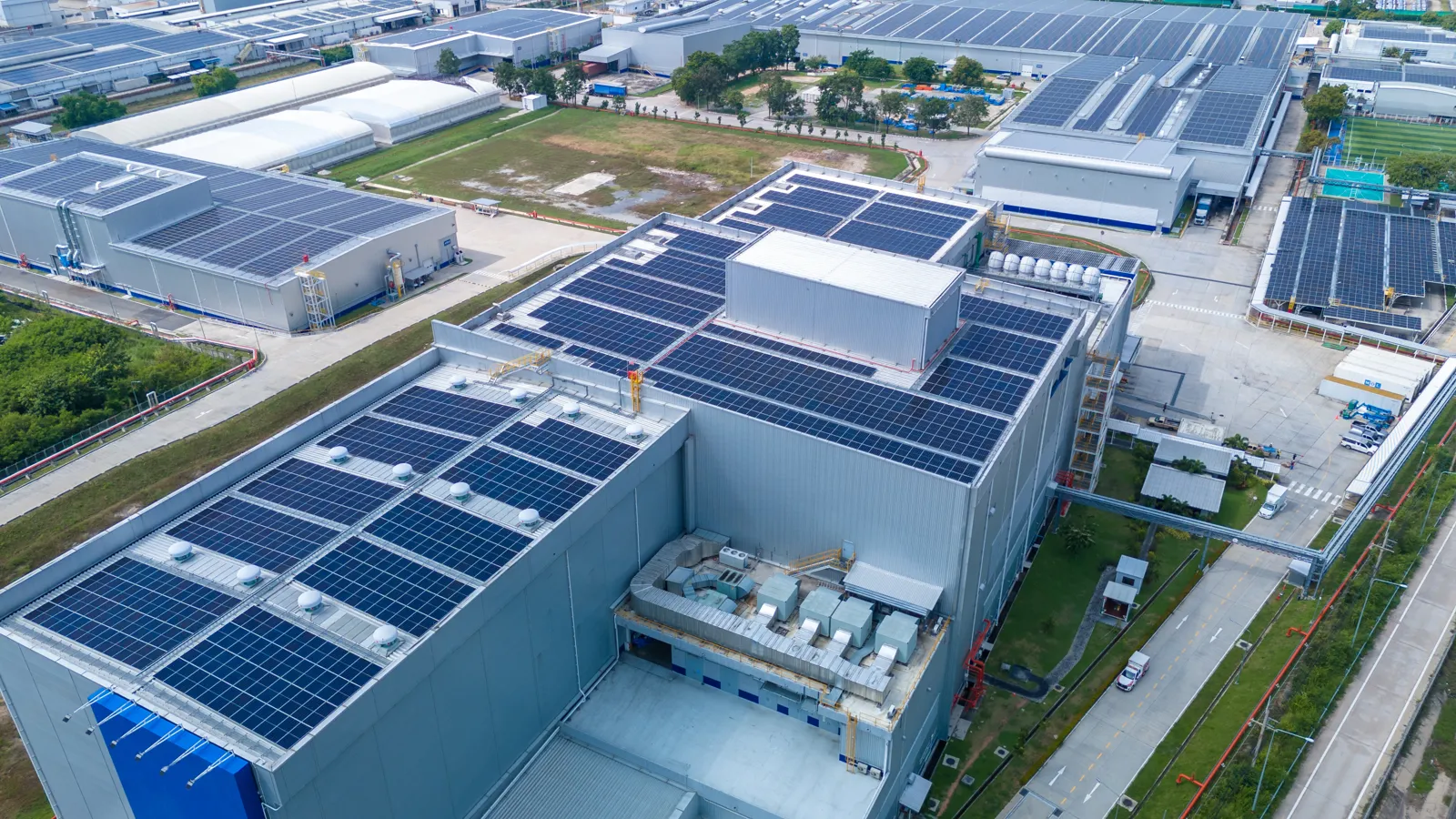
The term “commercial microgrid” is sometimes used for grid-connected PV-plus-storage systems focused mainly on energy optimization, even when they do not provide full backup capability. This guide covers both grid-interactive commercial PV-plus-storage systems and true microgrids with islanding capability for backup and resilience applications.
Commercial microgrid energy storage is becoming a key planning consideration for commercial PV projects that require more than basic solar generation. For many factories, warehouses, campuses, logistics hubs, hospitals, data centers, and remote commercial sites, the business case for solar is no longer limited to reducing daytime electricity purchases. Facility owners increasingly want resilience, demand charge control, peak shaving, backup power for critical loads, better PV self-consumption, and readiness for future grid services.
For EPCs, PV installers, resellers, and system integrators, this changes the nature of project design. A battery is not simply another component added after the PV system is sized. In a true commercial microgrid, storage must be integrated with the PV array, power conversion system, switchgear, utility interconnection, and protection scheme. The design must also account for site load behavior, safety requirements, and long-term operating strategy.
A technically impressive battery installation can still fail commercially if the tariff model is wrong, the interconnection agreement limits exports, the controls are poorly commissioned, or the owner does not understand degradation and O&M requirements.
This guide explains how to evaluate commercial microgrid energy storage as a complete project system. It focuses on the decisions that determine whether a PV-plus-storage microgrid is bankable, buildable, serviceable, and valuable over its operating life.
Commercial microgrid energy storage addresses several problems that PV alone cannot fully solve. Solar generation reduces grid consumption during production hours, but it does not automatically reduce demand charges, maintain power during outages, control export limits, or support critical loads after sunset. Batteries and microgrid controls fill that gap by shifting energy across time and managing power flows in real time.
The strongest commercial projects usually combine several value streams. A warehouse may use storage to reduce monthly peak demand, increase solar self-consumption, and provide limited backup for refrigeration or security systems. A manufacturing plant may prioritize power continuity for process equipment while also using the battery for time-of-use optimization. A campus may use storage to coordinate PV, EV charging, and flexible loads while maintaining backup capability for selected buildings.
When storage is justified by only one benefit, the financial case can be fragile. When it is designed around multiple operating modes, the project has more resilience against tariff changes, load growth, and shifting site priorities.
For commercial PV projects, storage typically creates value through several operating functions. These include resilience, demand charge management, energy arbitrage, PV self-consumption improvement, and backup support for critical loads.
However, these functions are not the same. Backup power means the system can continue supplying selected loads after a grid outage, usually through islanding controls and dedicated electrical design. Resilience is broader and refers to the ability of a facility to maintain important operations during disruptions, which may include backup power, load prioritization, and recovery strategies. Power quality ride-through focuses on short-duration events such as voltage dips, frequency disturbances, or brief interruptions that affect sensitive equipment but do not require long-term backup operation.
Demand charge management is especially important in markets where a significant share of the electricity bill is based on the highest measured kW demand rather than total kWh consumption. In these cases, a commercial battery energy storage system may deliver strong savings even if total annual energy consumption changes only modestly. However, the dispatch strategy must be precise. If the battery discharges too early or lacks enough reserve during the actual peak event, the expected savings may not materialize.
Energy arbitrage is easier to understand but not always sufficient on its own. Storing low-cost energy and using it during high-cost periods depends on tariff spreads, battery efficiency, cycling costs, and degradation. In many commercial projects, arbitrage becomes more attractive when combined with demand charge reduction, PV curtailment avoidance, or resilience-related value.
A standalone commercial battery may operate only as a grid-tied asset. It charges and discharges according to tariffs, demand peaks, or site consumption, but it may shut down when the utility grid fails. A microgrid is different. It is a controllable local energy system capable of coordinating distributed energy resources, loads, and the grid connection. It may include PV, batteries, diesel or gas generators, controllable loads, meters, protection equipment, and a microgrid controller or energy management system.
The practical difference is islanding. A backup-capable PV-plus-storage microgrid must safely disconnect from the grid during an outage, maintain voltage and frequency for local loads, coordinate generation and storage, and reconnect when utility service returns. This requires suitable switchgear, protection coordination, anti-islanding functions, relay settings, and tested control logic. A battery that looks adequate on a datasheet may not be suitable for microgrid operation unless the inverter, controller, BMS, and site electrical design support stable islanded operation.
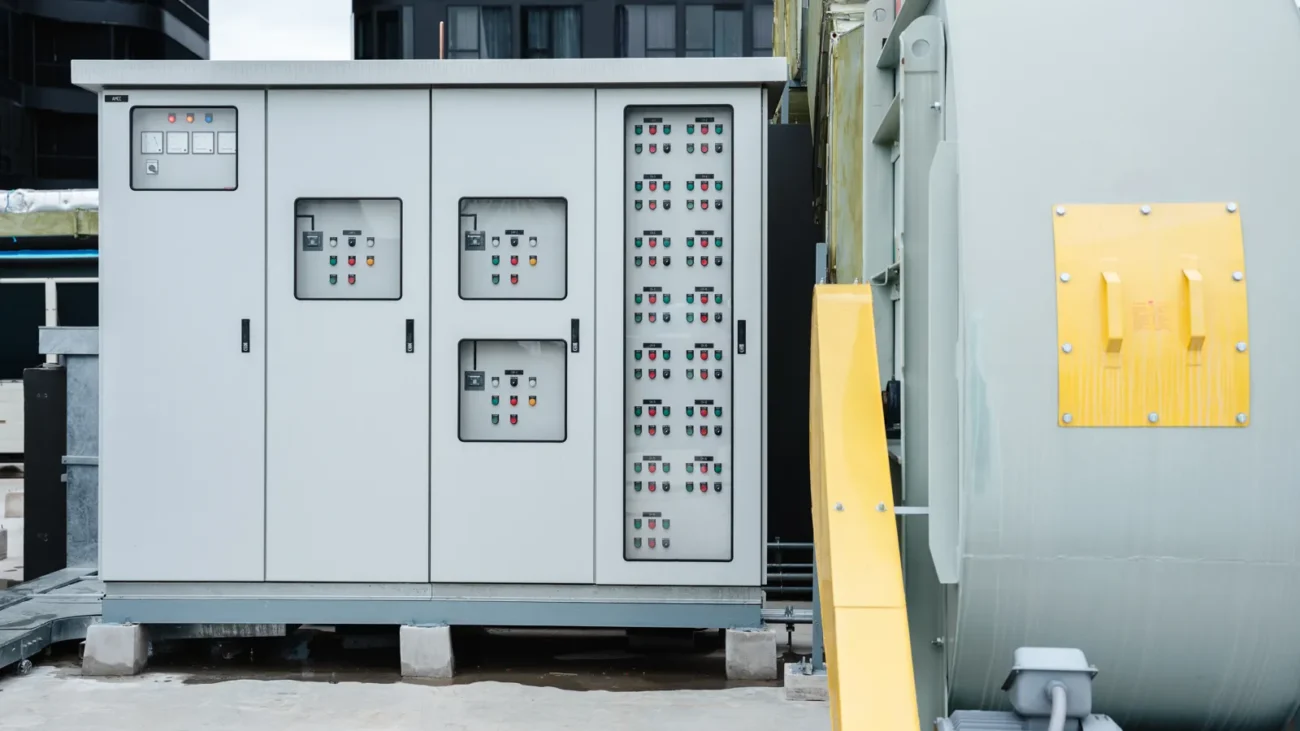
For resilience-oriented sites, batteries and generators often serve different but complementary roles. Batteries typically handle fast transitions, short-duration peaks, and sudden load changes during outage events, while generators provide sustained energy for longer interruptions. This hybrid approach can reduce unnecessary BESS oversizing, limit generator inefficiency caused by frequent cycling, and improve fuel utilization during extended outages.
This distinction is critical during sales and project development. If a customer expects backup power, the EPC must confirm whether the system is truly designed for islanding or only for grid-tied savings. Misalignment here can lead to serious contractual, technical, and reputational risk.
Commercial microgrid energy storage tends to make the most sense where the site has high electricity costs, high outage costs, or operational constraints that PV alone cannot solve. Facilities with sharp load peaks, high demand charges, time-of-use tariffs, weak grid reliability, limited export compensation, or sustainability targets are strong candidates.
Factories and process facilities often value storage because short outages can interrupt production, damage materials, or require costly restart procedures. Cold storage and food processing sites may need backup for refrigeration and controls. Hospitals and healthcare campuses require high reliability for critical systems, although compliance and redundancy requirements are more complex. Logistics hubs and warehouses may use storage to manage EV charging loads and reduce peak demand. Data centers and telecom facilities may value fast response and continuity, often in coordination with existing UPS and generator systems. Remote commercial sites may use microgrids to reduce fuel consumption and improve reliability where grid access is weak or unavailable.
The common factor is not facility type alone. It is the combination of load profile, tariff exposure, outage impact, and operational priority.
Early feasibility should begin with site data, not product selection. Feasibility studies should also include modeled outage scenarios before the system size is finalized. At minimum, the analysis should evaluate a weekday afternoon outage with high PV availability, a nighttime outage with no solar generation, and a multi-hour low-solar event. These scenarios help determine whether the battery can maintain critical loads, how much reserve capacity is required, and whether additional generation or load management is needed.
EPCs and commercial owners should first analyze interval load data, ideally at 15-minute or shorter resolution, across at least 12 months. The load profile reveals whether the battery needs to shave short peaks, shift solar energy into evening hours, provide backup for long outages, or perform several functions at once.
Critical load definition is equally important. Full-site backup is often technically possible but financially unnecessary. A practical resilience evaluation should begin by comparing outage frequency with outage cost. Sites that experience frequent interruptions may prioritize reliability improvements, while facilities with rare but extremely costly outages may justify higher backup investment.
The next step is establishing a critical load hierarchy. Loads should be grouped based on operational importance, such as safety systems, production equipment, refrigeration, IT infrastructure, and non-essential loads. Each load category should have a defined duration target, ranging from short ride-through support to several hours or extended backup operation. Seasonal outage scenarios should also be evaluated, including periods with extreme weather, high cooling demand, or reduced solar availability.
For backup-capable microgrids, black-start capability requirements should be reviewed early. The design team must determine whether the system needs to restart independently after a complete power loss, how batteries and generators interact during recovery, and which controls are required to restore critical operations safely. Utility tariff structure, outage history, interconnection rules, available space, fire safety constraints, and project financial goals should be reviewed before equipment is specified.
For EPCs and system integrators, the key early question is simple: does the site need short-duration peak shaving, long-duration resilience, or both? The answer drives battery power rating, energy capacity, control strategy, electrical architecture, and commercial expectations.
A commercial microgrid is an engineered system, not a collection of independent devices. Architecture choices made during concept design affect efficiency, commissioning complexity, expansion options, safety approvals, and long-term serviceability. The right architecture depends on whether the project is a retrofit, a new PV installation, a resilience project, or a portfolio deployment.
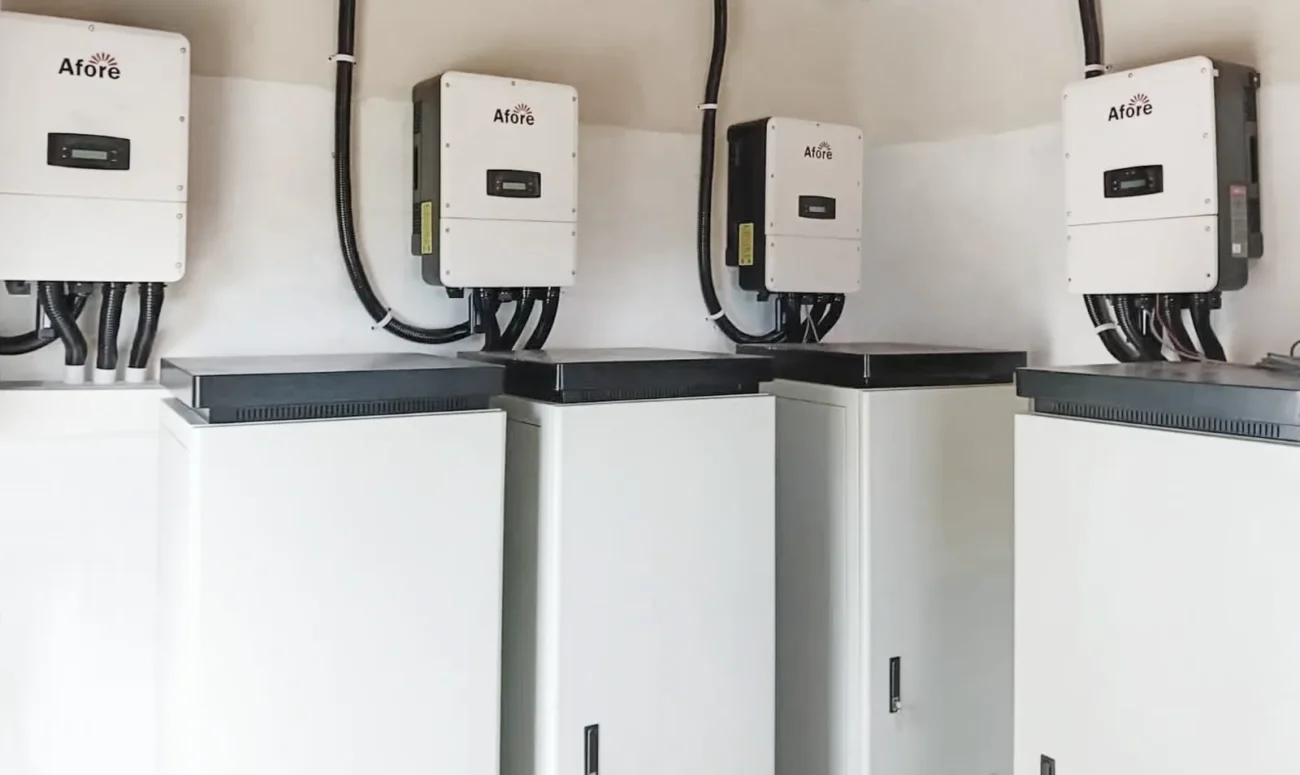
Typical commercial and industrial microgrids can range from hundreds of kW to multi-MW scale, with storage from smaller 100 kWh-class systems to multi-MWh installations. Most commercial PV-plus-storage projects are sized around real site constraints rather than generic rules. Still, several technical reference points are useful during early planning.
| Parâmetro de projeto | Typical commercial range | Por que é importante |
|---|---|---|
| Microgrid load scale | Hundreds of kW to tens of MW | Defines switchgear, protection, and control complexity |
| Battery duration | Often 1–4 hours; longer for resilience | Determines runtime and economic use cases |
| Lithium-ion round-trip efficiency | Commonly about 85–95% | Affects arbitrage, PV shifting, and modeled savings |
| Battery operating life target | Often 10–15 years with proper controls | Influences warranty review and lifecycle economics |
| Availability target | Often above 97–99% in service contracts | Important for critical-load and revenue-based projects |
AC-coupled systems connect PV inverters and battery inverters on the AC side of the electrical system. This architecture is common in retrofits because it allows storage to be added to existing PV installations with less redesign of the DC array. It also gives EPCs flexibility to work with multiple inverter platforms and can simplify expansion where the existing PV system is already commissioned.
DC-coupled systems connect PV and batteries on a shared DC bus through inversores híbridos or DC/DC conversion equipment. This can reduce conversion steps when charging the battery from PV and may allow recovery of energy that would otherwise be clipped by PV inverter limits. DC-coupling can be attractive for new-build projects where PV and storage are designed together from the beginning.
The trade-off is not only efficiency. AC-coupled systems may be easier to phase and service, while DC-coupled systems may offer better PV-to-battery optimization under certain operating profiles. Inverter sizing, clipping assumptions, protection design, control integration, and future expansion all need to be considered. For EPCs, the best architecture is the one that matches the site’s value streams and reduces execution risk, not necessarily the one with the highest theoretical efficiency.
Most commercial facilities cannot economically back up every load for extended periods. HVAC, process loads, compressors, ovens, pumps, EV chargers, and other high-power equipment can quickly make full-site backup expensive. A more disciplined approach separates critical loads from discretionary loads through dedicated panels or switchgear sections.
Critical loads may include safety systems, IT equipment, refrigeration controls, emergency lighting, access control, selected production lines, medical equipment, communications, or building management systems. Once these loads are identified, the design team can determine required backup duration. Some sites need only minutes of support for power quality or generator transition. Others need several hours to finish a production batch or protect refrigerated goods. Resilience-focused facilities may require 24 hours or more, often involving a combination of PV, batteries, generators, and load shedding.
Backup duration is not simply battery kWh divided by load. Designers must account for usable state-of-charge window, depth-of-discharge limits, inverter efficiency, reserve margin, battery degradation, ambient temperature, and whether PV generation is expected during the outage. A four-hour battery may provide much less runtime if the critical load is underestimated or if reserve capacity is held for black-start and control stability.
Battery sizing starts with two separate questions: how much power is required and how much energy is required. The kW rating determines how much instantaneous load the battery can serve or how much peak demand it can shave. The kWh capacity determines how long the battery can sustain that output.
For demand charge management, the battery may need a high enough kW rating to reduce short demand spikes, but the required kWh may be modest if peaks are brief. For backup power, the kWh requirement is usually more important, because the system must serve critical loads over a defined duration. For PV self-consumption, battery size depends on the gap between daytime solar surplus and evening or nighttime load.
A practical sizing model should include historical interval data, PV production simulation, outage scenarios, tariff rules, export limits, battery degradation, and control reserve.
Simple sizing examples can help explain the difference between project goals:
EPCs should evaluate usable energy rather than nameplate capacity because actual performance depends on operating limits and project assumptions. For example, a site that needs to shave a 300 kW demand spike lasting 45 minutes may require about 225 kWh of usable energy before adding reserve and efficiency margins. The actual battery nameplate capacity may need to be higher, meaning a “250 kWh battery” headline figure may not provide the expected performance under real operating conditions.
The microgrid controller or energy management system is the operational brain of the project, but different control layers perform different functions. The supervisory EMS focuses on higher-level optimization, such as demand charge reduction, time-of-use scheduling, PV self-consumption, and reserve management. PCS and inverter controls operate at a faster level by managing power conversion, current control, voltage response, and battery charging or discharging behavior. Protection relays handle safety-critical actions, including fault detection, electrical isolation, and coordination with utility protection requirements.
In grid-connected mode, the EMS coordinates operating objectives while maintaining communication with PV, batteries, generators, and controllable loads.
In islanded mode, second-by-second voltage and frequency stability is typically maintained by grid-forming inverter controls and protection systems, while the EMS manages slower operational decisions such as dispatch optimization, state-of-charge management, and critical load prioritization. The EMS should not be expected to perform fast electrical stabilization functions that require millisecond- or cycle-level inverter response.
Not every BESS inverter can provide stable grid-forming operation, so projects requiring islanded operation should confirm whether the inverter supports grid-forming capabilities, black-start functions, and the required operating modes before equipment selection.
Dispatch logic should be defined before commissioning. If the owner expects backup power, the system may need to maintain a minimum state of charge instead of fully discharging for daily savings. If demand response revenue is available, the controller must avoid conflicts between grid event participation and resilience reserve. If EV charging is added later, the EMS should be capable of managing charger load without undermining tariff optimization.
Advanced EMS platforms may use forecasting, weather data, load prediction, or model-based dispatch. These tools can improve value, but only if the control objectives are transparent and testable. For professional PV stakeholders, the key question is not whether the controller is advanced. It is whether it can be commissioned, monitored, updated, and supported reliably over the life of the asset.
Commercial solar battery storage product selection must balance performance, safety, cost, warranty, and integration risk. The battery chemistry matters, but so do the inverter, power conversion system, BMS, enclosure, HVAC, fire protection, communications, and after-sales support. A lower-cost battery package can become expensive if it lacks the certifications, documentation, integration compatibility, or service coverage required for commercial deployment.
Lithium-ion batteries dominate most commercial microgrid energy storage projects because they offer high efficiency, fast response, compact footprint, and mature supply chains. Within lithium-ion, lithium iron phosphate, commonly called LFP, is widely used in stationary storage because of its thermal stability, cycle life, and suitability for high-utilization commercial systems.
Chemistry selection should not be reduced to energy density alone. Stationary commercial projects usually care more about safety profile, lifecycle cost, degradation behavior, warranty terms, supplier bankability, and code compliance. Energy density is useful where space is limited, but a compact system with weaker thermal management or limited service support may create more risk than it solves.
Alternative chemistries, including flow batteries and emerging sodium-ion systems, may be relevant for long-duration, high-cycle, or specific environmental applications. However, many commercial owners and financiers still prefer lithium-ion because field experience, warranty structures, and integration ecosystems are more mature. For EPCs, alternative chemistries should be evaluated carefully against bankability, maintenance requirements, and real project references.
A commercial battery energy storage system includes more than battery cells. Modules are assembled into racks or cabinets, monitored by a battery management system, and connected to an inversor de armazenamento de energia or power conversion system that controls AC output. Transformers, switchgear, meters, relays, cables, HVAC, fire detection, suppression systems, grounding, communications, and controls complete the system.
Compatibility between these components is central to EPC risk reduction. The BMS must communicate correctly with the PCS and EMS. The inverter must support required grid-code functions. The controller must receive accurate meter data. Protection settings must coordinate with utility requirements and site switchgear. If these interfaces are unclear, problems often appear late during commissioning, when schedule pressure is highest.
A strong procurement process should therefore evaluate the complete integrated package, not only battery module cost. Datasheets are useful, but integration manuals, tested communication protocols, approved equipment combinations, commissioning procedures, and service response commitments are often more important for project success.
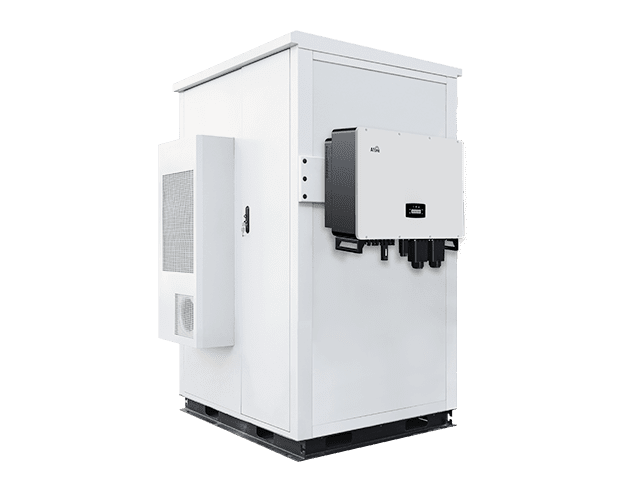
Outdoor containerized systems are common for larger commercial and industrial sites. They simplify factory integration, provide a defined enclosure for batteries and thermal management, and can be placed near electrical infrastructure where space allows. However, they require suitable foundations, access clearance, lifting plans, fire separation, drainage, security, and first-responder access.
Indoor systems may use cabinets or dedicated battery rooms. They can be attractive where outdoor space is limited or where the electrical room is already prepared for energy infrastructure. However, indoor installations can face stricter ventilation, fire separation, structural, access, and emergency response requirements. Retrofitting batteries into an existing building may be more complex than expected if floor loading, egress, or fire compartmentation is inadequate.
Rooftop installations require special caution. Weight, wind loading, access, fire setbacks, and maintenance logistics can make rooftop BESS deployment challenging at commercial scale. Parking areas, service yards, or ground-level electrical zones are often more practical, provided they do not conflict with vehicle movement, drainage, or site operations.
Supplier evaluation should focus on long-term project risk. Commercial microgrid storage is expected to operate for many years, often under demanding cycling and availability requirements. EPCs and owners should review certifications, warranty duration, degradation assumptions, throughput limits, operating temperature limits, performance guarantees, commissioning support, spare parts strategy, and local service coverage.
Warranty comparison requires careful reading. Two products may both advertise a ten-year warranty, but one may include stricter cycle limits, narrower temperature conditions, lower retained capacity, or weaker remedies. Owners should understand whether the remedy is repair, replacement, capacity augmentation, or financial compensation. EPCs should clarify who handles warranty claims and what data must be available to validate performance.
After-sales support is especially important for resellers and installers. Strong documentation and technical support reduce commissioning and service risk. In commercial projects, supplier support is not a convenience; it is part of bankability.
Interconnection and safety requirements can determine whether a commercial microgrid is approved, delayed, redesigned, or rejected. Codes vary by jurisdiction, utility, system size, battery chemistry, installation environment, and export strategy. EPCs should engage utilities, authorities having jurisdiction, and fire officials early enough to influence design before procurement commitments are made.
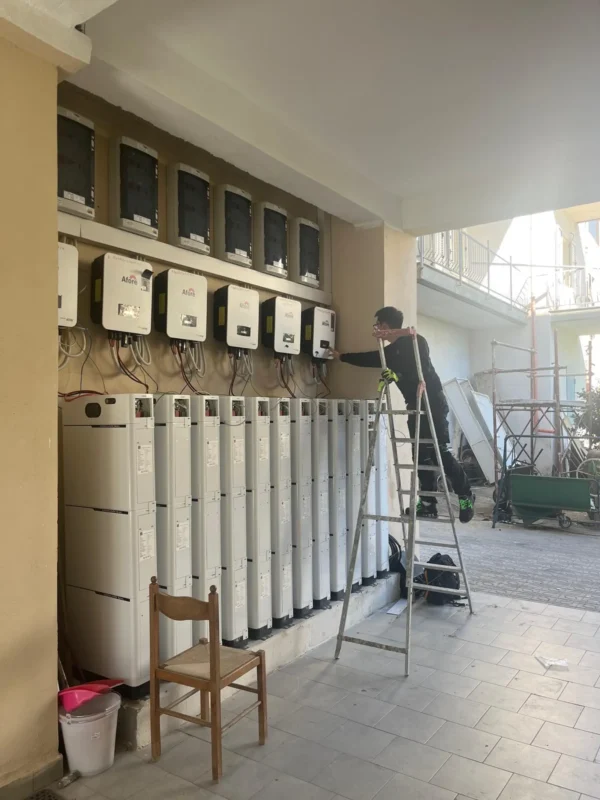
Commercial microgrid storage projects may need to consider standards and codes covering battery systems, power conversion, grid interconnection, fire safety, electrical installation, and controller performance. In North American projects, common references include UL 9540 for energy storage systems, UL 9540A for thermal runaway fire propagation testing, NFPA 855 for stationary energy storage installation, NEC Article 706 for energy storage systems, IEEE 1547 for distributed energy resource interconnection, and UL 1741 SB for inverter grid-support functions.
Internationally, IEC and EN standards may apply to battery systems, power converters, and grid connection. In the European Union, commercial storage projects may also need to account for evolving rules on battery sustainability, safety, labeling, and end-of-life management. Local building codes, fire codes, environmental requirements, and utility technical rules remain decisive.
Beyond basic certification, grid-support functions also affect commercial microgrid design. Voltage ride-through and frequency ride-through requirements define how inverters respond to abnormal grid conditions without unnecessary disconnection. Volt-var and freq-watt functions allow inverter-based resources to support grid voltage and frequency stability when required by the utility. EPCs should also distinguish between anti-islanding protection, which prevents unsafe unintended island operation, and intentional islanding, which allows a properly designed microgrid to continue operating during an outage. Communication requirements are equally important because utilities may require reliable data exchange, remote monitoring, or control interfaces for approved operation.
The key point for EPCs is that compliance cannot be treated as a final documentation step. Siting, spacing, enclosure type, ventilation, disconnect locations, protection settings, and control sequences may all be shaped by code and utility requirements.
Utilities may require impact studies before approving PV-plus-storage microgrids. These studies can examine feeder capacity, reverse power flow, short-circuit contribution, voltage regulation, harmonics, flicker, relay coordination, and anti-islanding behavior. Larger systems may require additional metering, telemetry, transfer trip schemes, or specific relay settings.
Storage inverters used in commercial microgrids may also require specific IEEE 1547 settings approved by the utility. These settings can define voltage response, frequency response, ride-through behavior, and reconnection timing. Incorrect settings may reduce dispatch flexibility, create nuisance trips during normal grid events, or delay reconnection after an outage. EPCs should confirm required settings during the interconnection process rather than waiting until commissioning.
Export control is increasingly important. Some commercial sites want to install more PV than the utility feeder can accept. Storage can help manage export limits by absorbing excess generation, but utility-approved export control is not only an EMS software function. It often depends on certified inverter behavior, accurate point-of-interconnection metering, and a control architecture that can reliably limit power flow under normal and abnormal operating conditions.
If the interconnection agreement imposes a zero-export or limited-export requirement, the EMS, inverter controls, and metering system must work together to enforce those limits. The final design must be accepted by the utility before commercial operation.
Early utility engagement prevents costly redesigns. A project optimized around unrestricted export may look attractive in financial modeling but fail when the utility requires export limitation, transformer upgrades, or extended review timelines.
Battery fire safety is one of the most visible permitting issues for commercial storage. Good design should consider installation practices, equipment spacing, ventilation, emergency access, and other requirements covered by NFPA 855 energy storage requirements for stationary energy storage systems. Good design addresses thermal management, gas detection, ventilation, spacing, compartmentalization, emergency shutdown, signage, access routes, and first-responder procedures. AHJ reviews may also focus on separation distances from buildings, proximity to occupied spaces, ventilation pathways, emergency vehicle access, and responder approach routes. Indoor installations require additional review of room size limits, fire-rated compartmentation, ventilation capacity, and potential gas exhaust or deflagration mitigation measures where applicable. Emergency shutoff locations must be clearly accessible, identified, and marked with appropriate signage. Fire officials may request manufacturer test data, hazard mitigation analysis, emergency response plans, and documentation showing how the system behaves under fault conditions.
Thermal runaway risk cannot be eliminated entirely, but it can be mitigated through chemistry selection, BMS controls, enclosure design, cell monitoring, fire detection, and appropriate installation practices. Containerized systems should provide adequate clearance for service and emergency access. Indoor systems must be assessed for ventilation, fire separation, and occupant safety.
Insurers may impose requirements that exceed minimum code. This is increasingly relevant for large commercial and industrial facilities where business interruption risk is significant. EPCs should encourage owners to involve insurers early, especially for multi-MWh installations or sites with high-value operations.
Permitting delays often arise from incomplete or inconsistent documentation. Manufacturer certifications can support the approval process, but they do not automatically guarantee local approval. Authorities may still require additional documentation, site-specific analysis, or design changes based on local fire codes, building requirements, and installation conditions. Common issues include unclear single-line diagrams, missing equipment certifications, incomplete control narratives, undefined islanding sequences, insufficient fire safety documentation, structural concerns, zoning restrictions, and unclear responsibility between PV, storage, electrical, and controls contractors.
The control narrative is particularly important. Authorities and utilities need to understand what happens during grid loss, islanding, load shedding, generator start, PV curtailment, battery low state of charge, emergency stop activation, and grid reconnection. If these sequences are not documented, reviewers may request additional studies or revisions.
Common AHJ review triggers include:
For EPC execution, permitting risk should be treated as a schedule and cost item. Projects that look simple during sales can become difficult if compliance review is postponed until after equipment is ordered.
The economics of commercial microgrid energy storage depend on site-specific value. Commercial storage returns usually come from a combination of bill management and resilience benefits, but these value streams should be modeled separately because they behave differently during financing review. Battery hardware cost is only one part of the investment.
The financial model must capture installed cost, operational savings, avoided downtime, incentives, market participation, degradation, maintenance, replacement risk, and financing structure.
Installed cost is influenced by both kW and kWh. A high-power battery designed for peak shaving may require a larger PCS relative to energy capacity. A resilience-focused project may require more kWh, critical load panels, islanding switchgear, and advanced controls. Civil works, trenching, foundations, transformers, protection equipment, fire safety systems, engineering studies, and commissioning labor can materially affect total project cost.
Battery pack prices have fallen significantly over the last decade, but commercial system-level costs remain higher than cell or pack prices because the project includes enclosures, power conversion, controls, integration, permitting, installation, and margin. EPCs should therefore model total installed cost rather than quoting battery hardware cost as a proxy for project economics.
A realistic commercial budget should also include contingency for switchgear upgrades, utility requirements, and communications infrastructure. These items are often discovered during detailed engineering and can materially change project economics.
Commercial storage systems require ongoing operation and maintenance. Typical OPEX includes monitoring subscriptions, preventive maintenance, HVAC service, fire system inspection, firmware updates, battery health checks, capacity testing, cybersecurity maintenance, insurance, and service visits. For larger projects, owners may also need a long-term service agreement with defined response times and availability commitments.
Battery degradation must be included in lifecycle modeling. Usable capacity declines over time based on temperature, depth of discharge, C-rate, cycling frequency, and operating strategy. A system sized too tightly in year one may fail to meet backup or savings targets in year eight. Some projects plan augmentation, meaning additional battery capacity is added later to maintain performance. Others oversize the initial system or reserve a narrower operating window to extend life.
Warranty reserves and performance guarantees should be aligned with the financial model. If modeled savings require aggressive daily cycling, the warranty throughput limits must support that use case.
There is no universal payback period for commercial battery storage. Well-designed projects in favorable markets may achieve attractive payback when demand charges are high, time-of-use spreads are strong, incentives are available, or outage costs are significant. In less favorable tariff environments, storage may require resilience value, sustainability value, or future flexibility benefits to justify investment.
A practical model should include conservative, base, and upside scenarios. The conservative case may assume lower tariff escalation, fewer demand response events, lower battery availability, and no revenue from uncertain market programs. The base case should reflect current tariffs, realistic dispatch, and expected degradation. The upside case may include future EV charging growth, higher peak charges, improved market access, or increased outage avoidance value.
For CFOs and facility executives, resilience value is often the most difficult to quantify. Avoided downtime may not appear on an electricity bill, but it can dominate the business case for data centers, cold storage, healthcare, semiconductor production, pharmaceutical manufacturing, and other high-value operations.
Levelized cost of energy is familiar from PV projects, but storage is better evaluated with levelized cost of storage, net present value, internal rate of return, and avoided cost metrics. LCOS considers the cost of storing and delivering energy over the system life, including efficiency losses, degradation, O&M, and replacement assumptions.
However, LCOS alone does not capture all microgrid value. A battery used mainly for backup may have a high LCOS if it cycles infrequently, yet still be justified by avoided outage losses. A battery used for daily arbitrage may have a lower LCOS but limited resilience value if it is often depleted when outages occur. Therefore, microgrid financial modeling should connect technical dispatch to business outcomes.
The most useful models show how the system behaves under real scenarios: a summer demand peak, a winter outage, a low-PV week, a high-price tariff period, an EV charging ramp, or a utility export restriction. Scenario-based modeling is more persuasive and more accurate than a single blended ROI figure.
Commercial PV-plus-storage microgrids are execution-heavy projects. Many failures occur not because the concept is weak, but because site conditions, communication design, control responsibility, or commissioning procedures were underestimated. EPCs and integrators should treat installation planning as a risk management discipline.
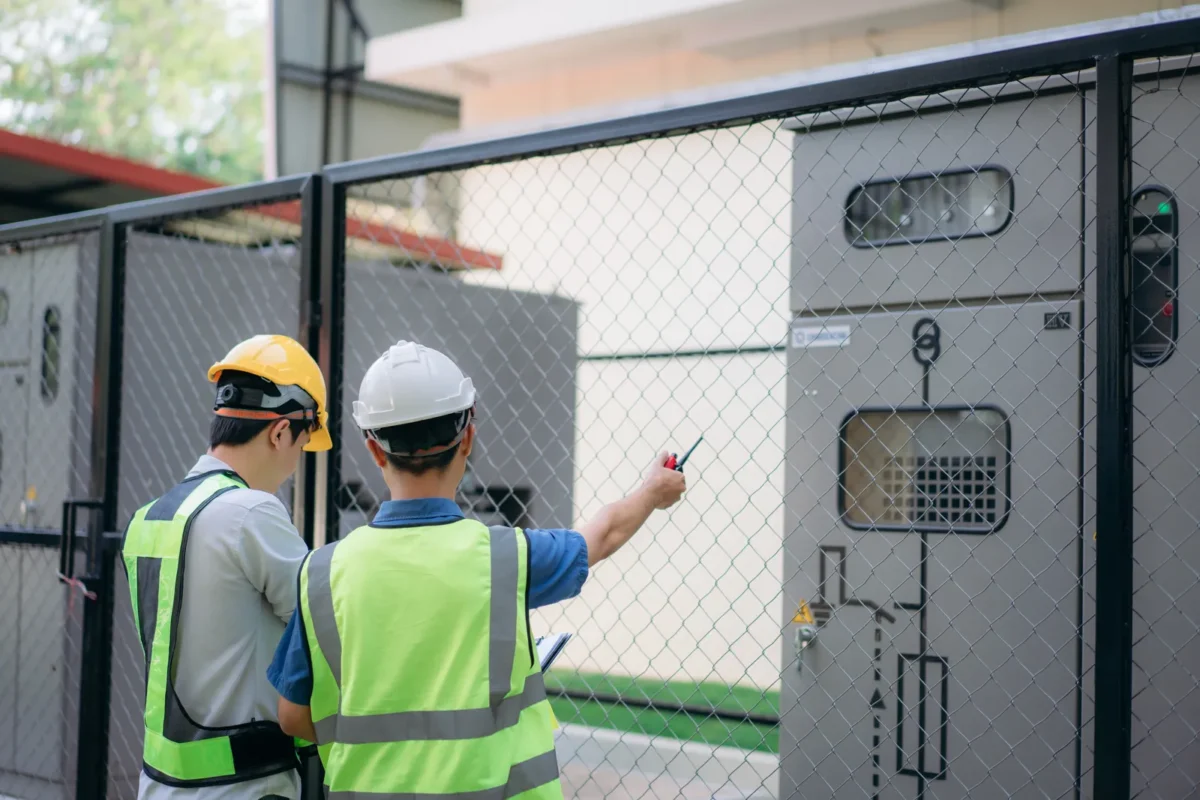
A good site assessment reviews the service entrance, main switchgear, transformers, grounding, protection equipment, load panels, meter locations, available breaker capacity, cable routes, and communications pathways. Older commercial facilities may have limited space in electrical rooms, undocumented modifications, or switchgear that cannot easily accept new interconnection equipment.
Physical conditions matter as much as electrical capacity. Outdoor systems need stable foundations, drainage, bollards or impact protection, crane access, maintenance clearance, and appropriate distance from occupied structures or property lines. Indoor systems require assessment of floor loading, ventilation, access routes, fire separation, and equipment replacement logistics.
The survey should also consider operations. A battery container placed in a loading yard may interfere with truck movement. Cable trenching may disrupt production. Utility shutdown windows may be limited. These practical details affect cost, schedule, and customer satisfaction.
A typical commercial microgrid project moves from feasibility to detailed engineering, permitting, procurement, site preparation, equipment delivery, electrical installation, communications wiring, controller configuration, utility coordination, functional testing, and final approval. The sequence must be coordinated because delays in one workstream can block the others.
Storage delivery should be aligned with site readiness. Batteries may have storage temperature limits, state-of-charge requirements, and handling restrictions. PCS, transformers, and switchgear are often long-lead items and can become schedule bottlenecks. Communications wiring should not be treated as an afterthought; poor network design can undermine EMS operation and remote support.
Clear responsibility between the PV installer, storage vendor, controls integrator, electrical contractor, and commissioning engineer is essential. If no party owns system-level performance, commissioning becomes difficult and warranty responsibility becomes unclear.
Commissioning should verify more than whether the battery charges and discharges. It should test BMS communication, PCS response, EMS dispatch, meter accuracy, relay settings, alarms, emergency stops, HVAC operation, fire system signals, export control, low state-of-charge behavior, generator coordination where applicable, and remote monitoring.
For backup-capable systems, islanding tests are critical. The project team should verify grid loss detection, transfer sequence, load pickup, voltage and frequency stability, PV behavior in island mode, battery reserve management, black-start capability, load shedding, and reconnection after grid restoration.
Additional tests should confirm load step response and system recovery behavior. During island operation, the team should verify how the grid-forming inverter responds to sudden load changes, how PV output is followed or limited, and whether voltage and frequency remain stable as generation and demand change. Critical-load facilities may require staged outage simulations under controlled conditions.
Commissioning results should be documented in a way that supports warranty claims, owner training, utility approval, and future troubleshooting. As-built drawings, network diagrams, control settings, and test reports are valuable operational assets.
Field risks often appear at the interfaces between systems. Firmware versions may not match. Communication protocols may be incomplete. Meter orientation may be wrong. Fire alarm contacts may not be coordinated. Inverter grid-code settings may conflict with utility requirements. Working clearances may be insufficient. Cellular signals may be weak. Utility witness testing may be delayed.
These issues are manageable when the project has a clear commissioning checklist, escalation path, and responsible engineer for system integration. They become expensive when discovered after the owner expects commercial operation to begin.
For repeat deployment, EPCs should standardize lessons learned into templates, approved equipment combinations, and commissioning procedures. This is especially important for resellers and integrators building a portfolio of commercial microgrid storage projects.
A microgrid is not finished when it is energized. Long-term value depends on monitoring, maintenance, software support, warranty management, and continuous optimization. Owners should know who is watching the system, what performance is expected, and how issues are resolved.
Key operational metrics include state of charge, state of health, charge and discharge power, battery temperature, alarms, cycle count, round-trip efficiency, uptime, demand reduction, PV curtailment avoided, backup reserve, and actual savings versus modeled savings. For resilience projects, the system should also report whether critical loads can be supported for the required duration under current conditions.
Availability is a major commercial metric. If a battery is unavailable during the site’s monthly peak or during an outage, the economic impact can be significant. Service agreements may define availability guarantees, response times, and reporting obligations.
Monitoring should be accessible to the owner, EPC, and service provider with appropriate permissions. Data ownership and access rights should be defined contractually, because performance verification and warranty claims depend on reliable historical data.
Post-commissioning measurement and verification should be planned from the beginning. A structured 30/60/90-day performance review can help confirm that the system operates as modeled and identify control issues early. The review should compare modeled versus actual demand reduction, verify export limit compliance, evaluate reserve state-of-charge behavior, and confirm whether dispatch logic matches the intended financial strategy.
Owners should also establish a regular battery capacity testing schedule. Capacity tests help verify usable energy over time, identify degradation trends, and confirm that the system can still meet resilience requirements.
The first peak season and the first significant outage event should receive additional review. Analyzing operating logs from these events helps confirm whether actual dispatch behavior matches the financial model, including demand reduction performance, reserve management, battery availability, and critical-load support expectations.
Battery degradation is normal, but it must be managed. Deep cycling, high temperatures, high C-rates, and frequent operation near state-of-charge limits can accelerate capacity loss. Thermal management, conservative SOC windows, optimized dispatch, and preventive maintenance help protect long-term performance.
Warranty terms should be reviewed against the actual operating profile. Throughput limits, retained capacity guarantees, temperature conditions, maintenance obligations, data logging requirements, and exclusions can all affect the owner’s protection. EPCs should ensure that the expected dispatch strategy does not violate warranty conditions.
Performance guarantees are most useful when they are measurable. A vague promise of savings is less valuable than defined availability, retained capacity, response time, or demand reduction performance under agreed conditions.
O&M responsibility must be explicit. The owner may operate the facility, but the OEM may monitor the battery. The EPC may hold the performance contract. The installer may handle site visits. The controls integrator may be responsible for EMS updates. If these roles are not clearly defined, problems can fall between parties.
Contracts should define responsibility for remote monitoring, preventive maintenance, alarm response, emergency support, firmware updates, fire safety inspections, spare parts, warranty claims, capacity testing, and owner training. For critical facilities, escalation procedures should include response times and after-hours contacts.
Ambiguous O&M responsibility creates financial risk after commissioning. It can also reduce trust in storage technology if minor issues are not resolved quickly.
Commercial microgrids depend on communication between meters, inverters, BMS, EMS, utility interfaces, and remote monitoring platforms. A weak network can cause poor dispatch, missing data, nuisance alarms, or loss of visibility. For industrial and critical-infrastructure sites, cybersecurity is also a serious operational requirement.
Secure networking should include role-based access, strong authentication, segmented networks where appropriate, encrypted remote access, logging, update procedures, and vendor access controls. Communications redundancy may be justified where the microgrid supports critical loads or participates in grid programs. Cellular backup, local control fallback, and data buffering can improve reliability.
Cybersecurity should be addressed during design, not added after commissioning. The more connected a microgrid becomes, the more important it is to define who can access it, how updates are approved, and how incidents are handled.
Procurement strategy shapes project risk. For professional solar channels, the best product is not always the lowest-cost product. It is the system that can be permitted, delivered, installed, commissioned, supported, and repeated across projects with predictable outcomes.
Before procurement, EPCs should verify compatibility between batteries, PCS, PV inverters, meters, EMS platforms, and communication protocols. Modbus, SunSpec, CAN, Ethernet, and other interfaces may be listed in documentation, but practical integration still depends on supported registers, firmware versions, control permissions, and tested use cases.
Approved equipment lists and reference architectures reduce commissioning risk. If a supplier has already validated its BESS with specific commercial PV inverters and microgrid controllers, the EPC has a stronger starting point. If integration is custom, the project should allow more time for engineering, testing, and troubleshooting.
Grid-code settings should also be verified early. A product suitable in one country or utility territory may need different inverter functions, frequency response, ride-through settings, or certification documents elsewhere.
Commercial battery storage procurement involves logistics that differ from standard PV modules and inverters. Batteries may be subject to transport regulations, customs documentation, state-of-charge limits, lifting requirements, storage temperature limits, and specific handling procedures. Containerized systems need delivery access, crane planning, and installation sequencing.
Long-lead components such as PCS units, transformers, switchgear, relays, and protection equipment can determine the project schedule. Resellers and EPCs should not assume the battery itself is the only procurement risk. In many commercial projects, electrical balance-of-system components become the critical path.
Warehousing also requires care. Batteries should not sit indefinitely in uncontrolled environments. Storage duration, temperature, humidity, and periodic inspection requirements should be confirmed with the supplier.
A complete documentation package reduces permitting delays and field uncertainty. For commercial microgrid storage, typical documents include datasheets, certifications, single-line diagrams, installation manuals, fire safety documentation, thermal runaway test information where applicable, control narratives, commissioning procedures, warranty documents, O&M manuals, transportation instructions, and emergency response guidance.
Documentation should match the actual configuration being installed. Reviewers may reject generic documents that do not identify the specific battery model, enclosure type, PCS, or installation arrangement. EPCs should also ensure that documentation is available in the language and technical format required by local authorities.
For portfolio deployment, standardized documentation packages can significantly reduce engineering effort and approval timelines.
Resellers and installers should evaluate manufacturers and distributors based on support capability as well as product specification. Pre-sales engineering, design review, installer training, commissioning support, spare parts availability, multilingual documentation, remote diagnostics, and clear RMA procedures all affect project outcomes.
Local service coverage is especially important for commercial owners. A facility manager responsible for operations will be less comfortable with a system that requires long response times or unclear support channels. For EPCs, strong after-sales support reduces warranty exposure and improves repeat business potential.
Commercial energy needs change over time. Facilities add production lines, electrify fleets, install EV chargers, expand cold storage, or increase PV capacity. A well-designed microgrid should allow reasonable expansion without major redesign.
Modular battery racks, scalable PCS capacity, and expandable EMS architecture make future upgrades easier. However, expansion must be planned physically and electrically. The site may need spare pad space, transformer capacity, switchgear space, cable routes, and controller licenses that support additional devices.
If the owner expects EV charging or load growth, the initial design should leave room for that scenario. Retrofitting expansion later is possible, but it is often more expensive if no space, conduit, or interconnection capacity was reserved.
Portfolio owners, such as retail chains, warehouses, campuses, and industrial groups, benefit from standardization. Repeatable equipment packages, consistent monitoring platforms, common O&M procedures, and standardized reporting reduce engineering cost and operational complexity.
However, standardization should not ignore local conditions. Tariffs, interconnection rules, fire codes, load profiles, and available space vary by site. The best portfolio strategy combines standardized core architecture with site-specific sizing and compliance review.
Comparable performance reporting is valuable for portfolio decision-makers. Owners should be able to compare savings, availability, battery health, and outage performance across sites.
EV charging is becoming a major driver for commercial storage. Fast chargers can create new demand peaks that strain site electrical infrastructure and increase utility charges. A battery can buffer charging loads, align charging with PV production, and defer electrical upgrades in some cases.
Many commercial microgrids also coordinate with standby generators. Storage can provide fast response, reduce generator runtime, improve fuel efficiency, and support smoother transitions. However, controls must prevent conflicts between generator operation, PV output, and battery charging.
Generator coordination requires more than simply adding battery capacity. The control strategy should consider minimum generator loading requirements, because operating a generator below its efficient loading range can increase fuel consumption, maintenance needs, and emissions. Battery systems can provide short-duration buffering during low-load periods, reducing unnecessary generator cycling and allowing generators to operate closer to their optimal efficiency range.
The microgrid design should also define whether the system uses open transition or closed transition operation during grid outages and reconnection. Open transition disconnects before reconnecting and may create a brief interruption, while closed transition requires more advanced synchronization and protection coordination. For extended outages, fuel planning becomes equally important because generator runtime depends on available fuel storage, delivery logistics, and critical-load priorities.
In a coordinated microgrid, batteries typically handle fast response functions such as startup support, sudden load changes, and short-duration power fluctuations, while generators provide sustained energy during long-duration outages. Clear separation of these roles helps avoid unnecessary battery oversizing and improves overall system efficiency.
Demand response and ancillary service programs can add value where regulations allow. The design challenge is to avoid compromising backup reserves. A battery discharged for a grid event may not be available for an outage unless the EMS maintains defined reserve limits.
A commercial microgrid may operate for 15 years or more. During that time, tariffs, regulations, grid services, and facility loads can change. Flexible controls and configurable operating modes help preserve value.
Future-proofing does not mean overspending on every possible feature. It means designing the system so that software updates, additional meters, new operating modes, and capacity expansion are feasible. EPCs should help owners understand which design decisions are difficult to change later, such as switchgear capacity, site layout, and interconnection limits.
Commercial microgrid energy storage should be evaluated through technical requirements, operating objectives, and lifecycle economics. The strongest projects begin with load data, critical load definition, tariff analysis, interconnection review, safety planning, and lifecycle financial modeling. For EPCs, installers, resellers, and facility owners, the right question is not simply “What battery should we use?” but “What operating problem must this microgrid solve, and can the full system deliver that value safely for the next 10 to 15 years?”
Commercial microgrid energy storage is a battery-based system that works with on-site power sources such as solar, facility loads, and control software to manage energy use, reduce electricity costs, and support critical operations. In some projects, it can keep selected loads running during grid outages through intentional islanding. Unlike a standard grid-tied battery system, a microgrid can be designed to disconnect from the utility and operate independently when required.
A commercial battery system typically stores and dispatches energy while the utility grid is available, but many standard grid-tied battery systems cannot continue serving loads during an outage even when they are paired with solar PV. A microgrid adds coordinated controls, switchgear, protection, and operating logic so the site can intentionally island from the utility and continue supplying selected loads when designed for backup operation.
Battery size should be determined using at least 12 months of interval load data, critical-load backup requirements, PV production profiles, tariff rules, export limits, reserve margin, and degradation allowance. The kW rating determines how much load or peak demand the battery can handle at one time, while the kWh capacity determines how long the battery can continue providing that power.
Commercial solar battery storage viability is highly site-specific. Projects are usually strongest where sites have high demand charges, large time-of-use price differences, limited export compensation, available incentives, or high outage costs. The best results usually come from combining multiple value streams, such as demand charge reduction, PV self-consumption, and resilience, rather than relying on energy arbitrage alone.
The biggest risks usually fall into three areas: technical, regulatory, and operational. Technical risks include poor controls integration, incorrect sizing, unclear islanding requirements, and insufficient commissioning. Regulatory risks include utility interconnection delays, safety documentation gaps, fire code issues, and export control requirements. Operational risks include unrealistic savings assumptions, unclear O&M responsibilities, weak monitoring, and limited service support.
https://standards.ieee.org/ieee/1547/6784
https://www.nfpa.org/codes-and-standards/nfpa-855-standard-development/855








 Turkish
  Romanian