




A commercial energy storage system is no longer a niche add-on for advanced solar PV projects. For many commercial and industrial sites, it is becoming a practical tool for controlling demand charges, increasing solar self-consumption, improving backup capability, supporting EV charging infrastructure, and meeting grid interconnection requirements. However, the success of a C&I battery storage project depends on much more than selecting a battery with enough nameplate capacity.
For EPCs, installers, resellers, system integrators, and commercial facility owners, the critical question is whether the storage architecture, inverter strategy, controls, safety certifications, lifecycle assumptions, and operating model fit the site. A battery energy storage system BESS that performs well in one warehouse, factory, logistics hub, or retail portfolio may not be suitable for another facility with a different tariff, load profile, utility rule, or resilience requirement.
This guide explains how to evaluate a commercial energy storage system from the earliest PV project planning stage through sizing, procurement, permitting, commissioning, operations, and ROI analysis. The focus is practical: how to reduce bid risk, avoid undersized or oversized systems, understand warranty limitations, manage interconnection complexity, and build long-term value for commercial PV projects.
A commercial energy storage system, based on definitions of grid-scale energy storage provided by the U.S. Energy Information Administration (EIA), is a site-level energy storage solution designed for commercial, industrial, institutional, or large facility applications.
It stores electricity in batteries and dispatches that energy when needed. The system may operate as part of a PV plus storage system, as a standalone behind-the-meter battery, or as part of a microgrid with solar PV, generators, EV chargers, and critical loads.
In practice, commercial storage can be divided into three deployment types: behind-the-meter systems at business or industrial sites, front-of-the-meter utility-scale storage connected directly to the grid, and onsite microgrid systems that combine PV, storage, and backup generation for local energy independence.
This guide focuses on behind-the-meter and PV-integrated commercial use cases, where the primary goal is to improve on-site energy economics and resilience rather than participate in wholesale utility-scale energy markets.
Commercial project economics are usually driven more by tariff optimization, demand charge management, solar self-consumption, EV charging support, and backup resilience than by wholesale energy arbitrage alone.
Commercial battery storage system sizes vary widely. Small commercial buildings may use systems around 50 kW / 100 kWh, while factories, logistics centers, campuses, and data centers may require several MW and several MWh. Modern C&I battery energy storage projects are typically built around lithium-ion technology, especially lithium iron phosphate, because of its safety profile, cycle life, and suitability for stationary applications.
A commercial energy storage system is not just a battery cabinet. It is an integrated electrical, thermal, digital, and safety system. The main components include battery modules, racks or cabinets, a battery management system, a power conversion system or hybrid inverter, an energy management system, thermal management, fire detection or suppression equipment, switchgear, protection devices, metering, communications hardware, and monitoring software.
The battery management system protects the battery at cell, module, and rack level. It monitors voltage, current, temperature, state of charge, and safety limits. The power conversion system manages charge and discharge between the DC battery and the AC electrical network. The energy management system determines when the system should charge, discharge, reserve capacity, curtail PV output, or respond to utility signals.
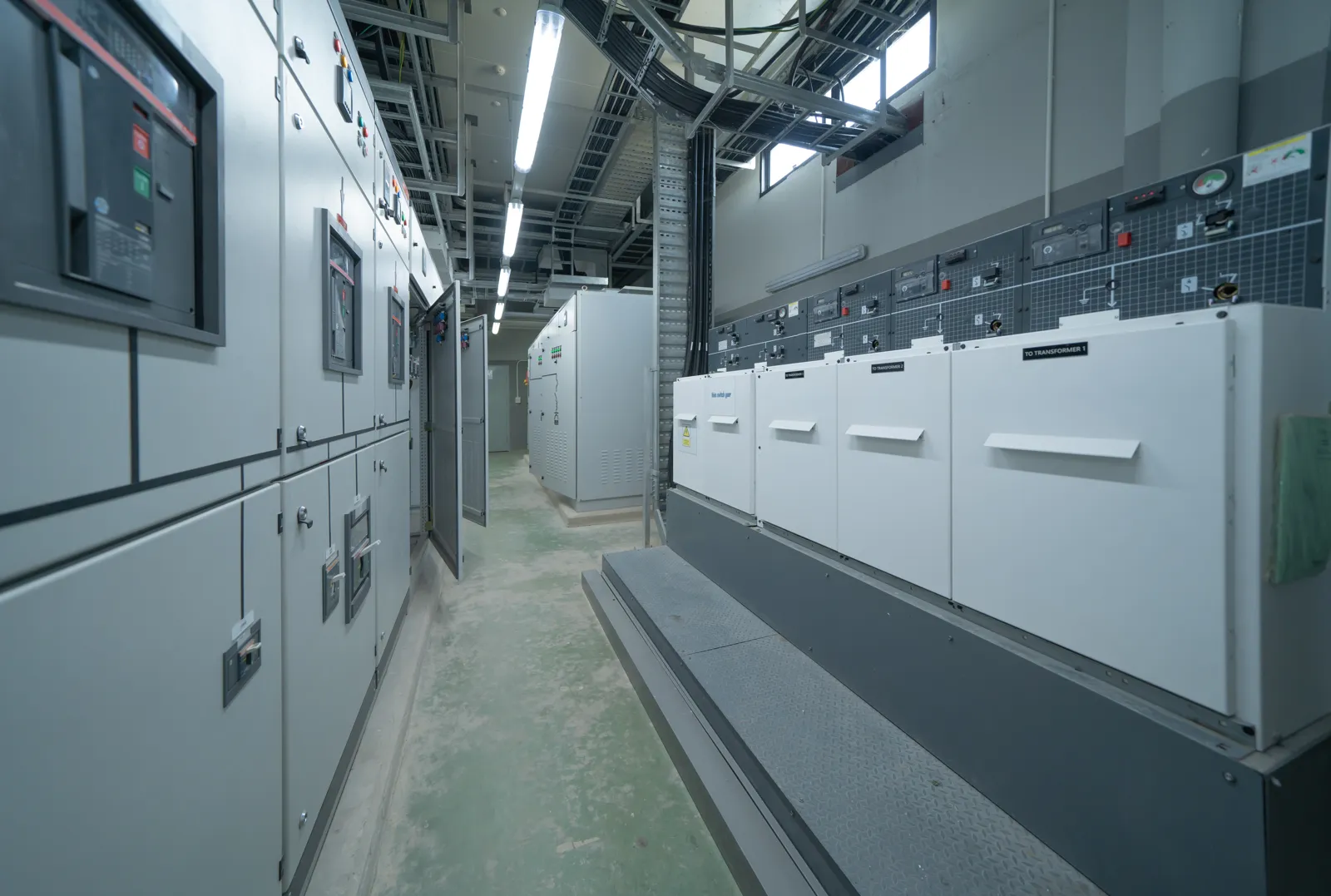
For outdoor systems, cabinets or containers must also be evaluated for ingress protection, corrosion resistance, thermal performance, spacing, service access, and emergency response requirements. For indoor systems, ventilation, room classification, structural loading, fire separation, and access control become more important.
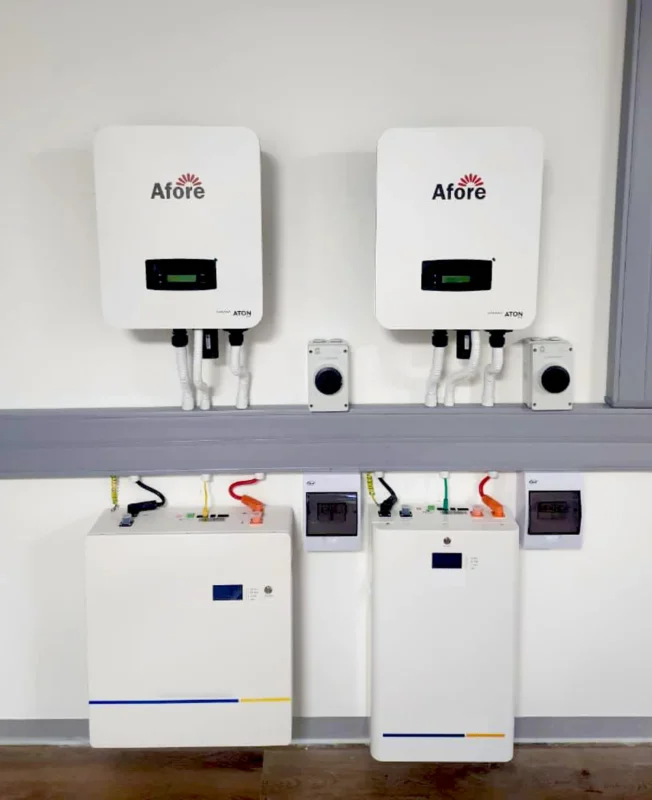
The strongest commercial storage projects usually begin with a clear operating objective. A system designed for demand charge management may have a very different power-to-energy ratio than a system designed for four hours of backup power. Similarly, a PV plus storage system designed to absorb curtailed solar generation may require different controls than a system designed to support EV charging peaks.
Peak shaving is one of the most common C&I applications. In many markets, demand charges can represent a major share of a commercial electricity bill. A battery can discharge during short or recurring demand peaks to reduce the site’s billed maximum demand. This is especially relevant for facilities with large motors, compressors, refrigeration equipment, process loads, or simultaneous EV charging events.
Solar self-consumption and peak shaving often work together. A commercial PV system may produce more energy than the site can consume at midday, especially on weekends or during seasonal production changes. Storage can absorb surplus PV and discharge later during evening loads, higher tariff periods, or demand peaks. In markets with export limits or low feed-in compensation, this can materially improve PV economics.
Backup power is another common driver, but it must be designed carefully. A commercial energy storage system does not automatically provide backup just because it has batteries. Backup functionality requires transfer equipment, islanding capability, protection coordination, critical load panels, control logic, and sometimes grid-forming inverter capability. The backup duration depends on usable battery capacity and the size of the supported loads.
Storage can also support grid services where market rules allow. C&I systems may participate in demand response, frequency regulation, reserve services, voltage support, or virtual power plant programs, often through an aggregator. These opportunities can improve revenue stacking, but they add requirements for metering, communications, dispatch response, cybersecurity, and warranty review.
Commercial battery storage is different from residential storage in scale, voltage, permitting, safety review, operating strategy, and service responsibility. Residential systems are usually designed around household backup and self-consumption. Commercial systems must account for more complex tariffs, larger electrical infrastructure, utility interconnection rules, higher fault currents, and detailed coordination with PV inverters, switchgear, transformers, and building management systems.
C&I projects also require stronger operational planning. A homeowner may accept a simple app-based battery mode, but a commercial facility owner expects demand savings, uptime, alarms, service response, performance reporting, and predictable operating costs. EPCs and system integrators must therefore evaluate storage as a long-term infrastructure asset, not only as an accessory to PV.
Storage should be evaluated early by EPCs, PV installers, system integrators, electrical consultants, resellers, developers, and facility managers. Delaying the storage decision can create avoidable design conflicts. Battery storage affects PV array sizing, inverter selection, interconnection applications, transformer capacity, protection settings, electrical room layout, outdoor pad location, fire setbacks, civil works, procurement lead times, and financial modeling.
For example, a warehouse planning rooftop solar may later decide to add EV charging for delivery vehicles. If storage was not considered during the original PV design, the site may lack spare switchgear capacity, available transformer capacity, space for battery cabinets, or an interconnection approval that allows the intended operating mode. Early evaluation reduces redesign and change orders.
Designing a commercial energy storage system starts with the relationship between power, energy, duration, site loads, PV generation, and operating rules. A technically correct system is not automatically an economically optimized system. The design must match the business case.
The power rating, measured in kW or MW, defines how much power the system can charge or discharge at a given moment. The energy capacity, measured in kWh or MWh, defines how much energy the system can store. Duration is the relationship between the two. A 500 kW / 1,000 kWh system has a nominal two-hour duration at full power.
High-power systems are often used for demand charge reduction when peaks are short and predictable. Longer-duration systems are more suitable for load shifting, backup power, or sites with sustained evening demand. Hybrid strategies are common in commercial PV projects because a single system may need to reduce peaks, absorb surplus solar, and preserve backup reserve.
| Parametru de proiectare | Why it matters in C&I storage |
|---|---|
| kW rating | Determines peak shaving capability and discharge power |
| kWh capacity | Determines runtime, solar shifting potential, and backup duration |
| Durată | Helps match system behavior to load shape and tariff structure |
| Capacitate utilă | Reflects practical energy after DoD, losses, reserves, and degradation |
| Eficiența în ambele sensuri | Affects net savings from charging and discharging |
| Durata ciclului de viață | Influences long-term performance and warranty compliance |
Typical commercial systems have AC-to-AC round-trip efficiency that varies depending on battery chemistry, PCS efficiency, operating temperature, auxiliary loads, and control strategy. In practice, system-level efficiency is influenced by how all components interact rather than a fixed performance range. This matters because every charge-discharge cycle has an energy cost. A storage model that ignores efficiency losses may overstate savings.
A reliable storage design requires interval load data, ideally in 15-minute intervals and at least covering a full year. Hourly data may be useful for early screening, but it can miss short demand spikes that drive billing demand. EPCs should analyze weekdays, weekends, seasonal peaks, production schedules, shutdown periods, weather-sensitive loads, and abnormal operating days.
For PV plus storage systems, solar production modeling should be compared against load behavior. A factory with daytime process loads may already consume most PV output directly, leaving less surplus energy for battery charging. A school, office, or retail site may have lower weekend demand and higher export risk. A cold storage facility may have recurring compressor peaks that are well suited for peak shaving.
The key is not to size the battery around average daily consumption. Storage should be sized around the economic event it is expected to control: a 15-minute demand peak, a four-hour evening tariff window, a midday export limit, or a critical load backup requirement.
Commercial PV plus storage systems are generally AC-coupled, DC-coupled, or built around invertoare hibride. In an AC-coupled design, the PV inverter and storage PCS connect on the AC side. This is often easier for retrofits because the battery system can be added to an existing PV installation without replacing the PV inverter. AC-coupled systems can also offer design flexibility when PV and storage are installed in different locations on the site.
In a DC-coupled design, the battery connects on the DC side of the PV system, often sharing conversion equipment. This can improve solar charging efficiency in some designs and help capture PV energy that would otherwise be clipped or curtailed. DC coupling may be attractive for new-build PV plus storage projects where the system can be engineered as a unified architecture from the start.
However, DC-coupled systems can introduce additional complexity around inverter compatibility, controls, metering, safety isolation, and interconnection approval. AC-coupled systems may be simpler to permit and expand, but they can have additional conversion losses when charging from PV. The best choice depends on whether the project is a retrofit or new build, the export rules, the PV inverter strategy, and the required operating modes.
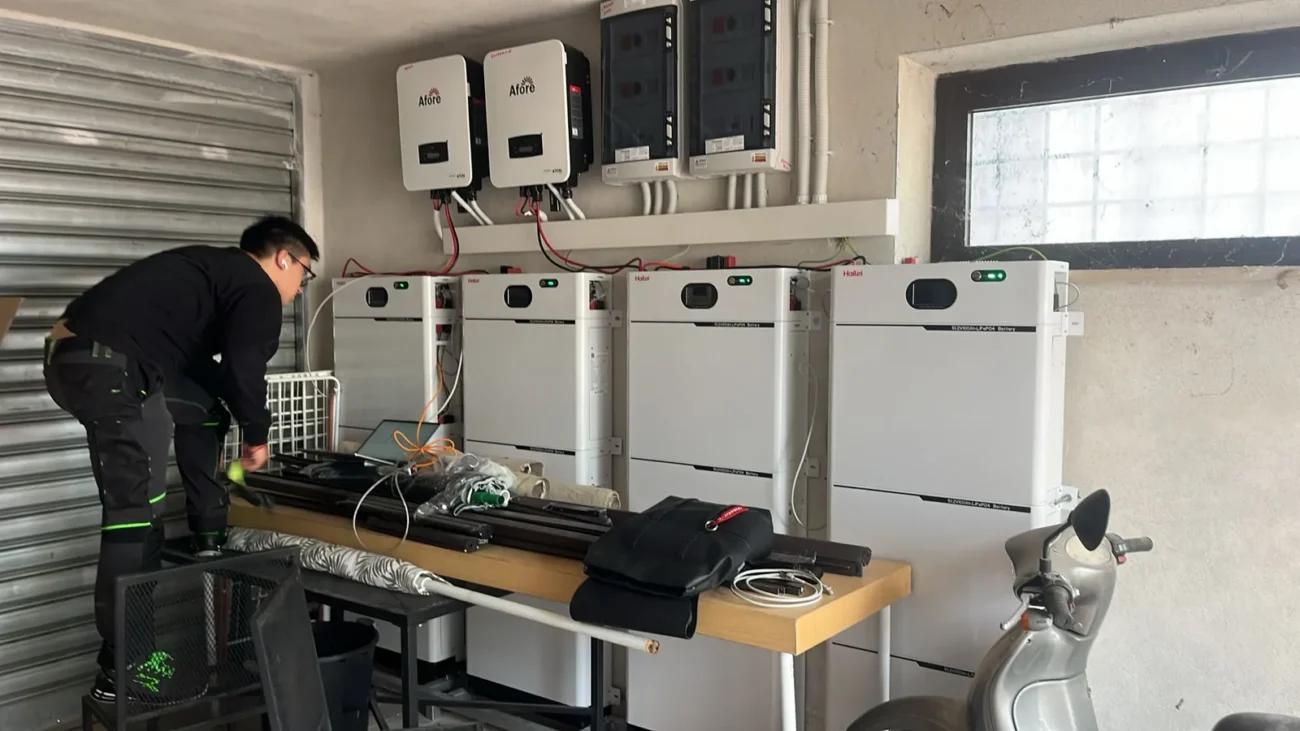
Lithium iron phosphate is widely used in C&I battery energy storage because it offers a favorable balance of thermal stability, safety, cycle life, and cost for stationary applications. Other chemistries and technologies may be considered for specialized applications, but LFP has become a common choice for commercial battery storage systems where reliability and safety review are central to project approval.
Cycle life is not a fixed number independent of operation. Depth of discharge, operating temperature, C-rate, cycling frequency, state-of-charge window, and thermal management all influence degradation. Commercial lithium-ion warranties vary by supplier and project configuration, and are typically defined by a combination of time-based coverage, cycle limits, or total energy throughput, whichever limit is reached first.
This has direct financial implications. A dispatch strategy that aggressively cycles the battery every day may increase short-term bill savings but accelerate degradation or trigger warranty limits. A conservative strategy may preserve capacity but leave some value unrealized. The EMS should therefore optimize not only for immediate savings, but also for long-term asset health.
A commercial energy storage system succeeds when all components operate as a coordinated system. Many project problems occur not because the battery cells are poor quality, but because integration details were underestimated.
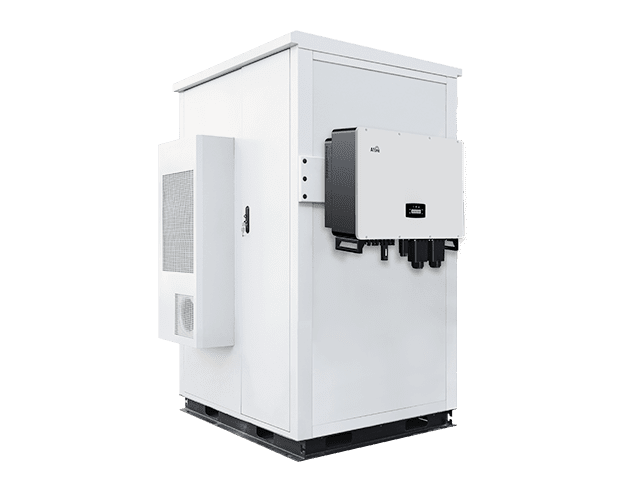
Commercial systems may be deployed as indoor racks, outdoor cabinets, or containerized systems. Cabinet-based designs are common for small and mid-sized commercial sites because they are modular and easier to place near electrical infrastructure. Containerized systems are often used for larger industrial projects, logistics sites, campuses, or facilities with outdoor space.
Thermal management is a core design requirement. Battery performance and life are strongly affected by temperature. HVAC systems, liquid cooling, ventilation, insulation, filters, and environmental controls should be reviewed as part of the technical evaluation. Auxiliary power consumption from thermal management also affects net efficiency and operating cost.
Outdoor projects require attention to water ingress, dust, salt mist, corrosion, UV exposure, flood risk, drainage, and service clearances. Indoor projects require careful review of ventilation, fire rating, access routes, and structural loading. In both cases, serviceability should be considered before procurement. A system that is difficult to access will be more expensive to maintain.
The power conversion system controls the flow of energy between the battery and the site’s AC network. It must be compatible with the site voltage, transformer configuration, protection requirements, communications protocol, and intended operating mode. For PV-integrated projects, the storage PCS must coordinate with PV inverters, export control devices, metering, and the EMS.
Compatibility should not be assumed based only on voltage and power rating. The project team should verify communication protocols, ramp-rate control, active and reactive power capabilities, anti-islanding behavior, fault response, and grid code functions. In some jurisdictions, larger C&I systems must support remote control, monitoring, or power factor requirements similar to generation assets.
Hybrid inverters can simplify some PV plus storage designs, especially in new projects. However, they may reduce flexibility if future expansion requires different battery capacity, additional PV inverter capacity, or multiple operating modes. EPCs should evaluate both current and future site requirements.
The battery management system and energy management system have different responsibilities. The BMS protects the battery. The EMS optimizes site-level energy flows. Confusing these roles can lead to unrealistic expectations.
The EMS should be able to execute the project’s commercial logic. For demand charge management, it must predict or respond to peak events before the billing threshold is exceeded. For solar self-consumption, it must charge from surplus PV while preserving capacity for later peaks. For export-limited sites, it must coordinate with PV curtailment and metering to avoid violations. For backup applications, it must preserve reserve capacity and coordinate with transfer equipment.
Monitoring dashboards should provide more than basic battery status. Commercial owners and EPC service teams need visibility into state of charge, state of health, temperature, alarms, cycles, demand reduction, PV self-consumption, downtime, dispatch accuracy, and remote diagnostics. For multi-site portfolios, standardized monitoring becomes even more important.
Balance-of-system design can materially affect CAPEX, installation time, reliability, and serviceability. Key items include switchgear, transformers, disconnects, fuses, breakers, protection relays, meters, communications hardware, cabling, grounding, fire detection, auxiliary power supplies, and civil works.
A project that appears competitive based on battery price alone may become expensive after switchgear upgrades, transformer changes, trenching, fire protection, permitting revisions, and commissioning support are included. EPCs should compare proposals based on total installed cost and operating capability, not only battery cabinet cost.
Sizing should start with the business case, not with a catalog capacity. The same 500 kWh battery could be oversized, undersized, or appropriate depending on the site’s load profile, tariff, PV generation, and control logic.
A system designed for peak shaving needs enough power to reduce demand peaks and enough energy to sustain discharge through the peak window. A system designed for backup needs enough usable energy to support critical loads for the required duration. A system designed for PV export limitation needs enough capacity to absorb surplus solar during constrained periods. A system designed for EV charging support needs to respond to high-power, sometimes unpredictable charging events.
In practice, many C&I projects combine several objectives. However, the financial model should identify the primary value driver. If the main value is demand charge management, backup reserve settings should not consume so much capacity that peak shaving becomes ineffective. If the main value is resilience, daily cycling should not leave the system depleted when backup is required.
Demand charge modeling should be based on interval data and actual tariff rules. EPCs should identify the peak magnitude, peak duration, frequency, and repeatability. A short 10-minute spike from equipment startup may require a different strategy than a sustained two-hour production peak.
A high-power, shorter-duration battery may be effective for brief peaks. A longer-duration system may be needed when demand remains elevated for several hours. The model should also account for how the EMS detects peaks. If the control strategy is too slow or too conservative, theoretical savings may not be achieved.
Nameplate capacity is not the same as usable capacity. Real-world usable energy is affected by depth-of-discharge limits, round-trip efficiency, temperature, degradation, auxiliary loads, and any backup reserve. A 1 MWh battery may not provide 1 MWh of usable economic dispatch under warranty-compliant operating conditions.
Financial models should use warranted usable capacity over time. If the project assumes constant full capacity for 10 years, the ROI may be overstated. A more realistic model includes capacity retention, degradation reserve, O&M costs, and potential augmentation if the project requires a specific output late in life.
End-of-life planning should also include augmentation triggers. Battery augmentation may be required when usable capacity drops below a defined capacity floor, when backup duration can no longer meet critical load requirements, or when the system can no longer achieve the required demand reduction target under warranty-compliant operating conditions.
In these cases, system expansion or module replacement is often more cost-effective than full system replacement, but it must be planned during the original system design phase.
Commercial facilities change. Warehouses add EV chargers. Factories add production lines. Offices electrify heating. Retail chains install refrigeration upgrades. Additional PV may be added after the first phase. These changes can alter the load profile and storage value.
Resellers and installers should evaluate modular battery cabinets, scalable PCS capacity, available switchgear space, transformer headroom, and EMS support for future expansion. Planning for expansion does not always mean buying more capacity upfront. It means designing the electrical and control architecture so future phases do not require major rework.
Interconnection and permitting can determine whether a commercial energy storage system is feasible. These requirements vary by country, utility, grid operator, site voltage, system size, and operating mode.
Utilities may treat commercial energy storage systems differently depending on operating restrictions such as PV-only charging, grid charging allowance, export prohibition, or export permission for both PV and battery discharge. These interconnection rules directly define how the system can charge, discharge, and interact with the grid.
In PV plus storage projects, operating restrictions have a direct impact on control logic, tariff savings potential, backup readiness, and commissioning settings. For example, a PV-only charging rule limits arbitrage opportunities but reduces regulatory complexity, while grid-charging permission enables tariff optimization but may require stricter metering and protection studies.
The table below summarizes how interconnection operating modes affect project design.
| Operating Mode | System Behavior | Control Logic Impact | Economic Impact | Commissioning Impact |
|---|---|---|---|---|
| PV-only charging | Battery charges only from solar PV | EMS prioritizes PV surplus charging only | Limited arbitrage, higher self-consumption value | Simpler approval and testing |
| Grid charging allowed | Battery can charge from grid and PV | EMS supports TOU optimization | Higher savings potential | Requires tariff + metering validation |
| Export prohibited | No export allowed to grid | EMS must enforce zero export limit | Savings rely on load shifting only | Requires strict export control testing |
| PV + battery export allowed | PV and battery can export | EMS enables full dispatch flexibility | Highest revenue stacking potential | Most complex interconnection review |
Safety review is central to commercial battery storage. Commonly referenced safety and performance standards for commercial energy storage systems include UL 9540, UL 9540A, NFPA 855, and IEC standards such as IEC 62619 and IEC 62933, which are defined within the International Electrotechnical Commission (IEC) framework for electrical and energy storage systems. Requirements differ by jurisdiction, but the general focus is consistent: thermal runaway mitigation, fire propagation testing, electrical safety, enclosure integrity, ventilation, emergency access, signage, and installation limits.
EPCs should verify certificates, test reports, installation manuals, enclosure ratings, and local authority requirements before finalizing procurement. Common AHJ and insurer documentation requests include UL 9540 listing documentation, UL 9540A test summaries, site layout drawings with fire setbacks, emergency response plans, single-line diagrams, ventilation and fire suppression design narratives, equipment datasheets, and installation manuals.
Product certification alone does not guarantee local approval, because Authorities Having Jurisdiction (AHJ) may apply additional requirements based on site risk classification, occupancy type, and installation environment.
Fire safety planning for commercial energy storage systems should begin during site selection, as recommended by NFPA 855, which defines fire risk mitigation requirements including separation distances, emergency response planning, ventilation design, and system layout constraints for battery energy storage systems. Clearance distances, emergency access, ventilation, fire detection, fire suppression strategy, signage, drainage, and separation from occupied buildings may all affect system layout. Outdoor cabinet or container placement can reduce some indoor constraints, but it does not remove fire and electrical review requirements.
Authorities Having Jurisdiction (AHJ) and insurers typically require a structured documentation package that includes site plans, single-line diagrams, emergency response plans, ventilation and suppression narratives, and equipment specifications. These documents are reviewed before permitting approval and may require revisions during the approval process.
Local fire officials may impose additional spacing, barrier, or access requirements beyond manufacturer recommendations based on site risk and occupancy classification.
Even when a system meets electrical and fire code requirements, insurers may still request additional details on thermal runaway mitigation strategies and fire propagation control measures before approving coverage.
Export limits can significantly increase the value of a commercial energy storage system, but only when the operating mode is clearly defined during interconnection approval. Common operating scenarios include PV-only charging, grid charging allowed, non-export operation, and export-limited systems where only a portion of energy can be exported to the grid.
In PV-only charging systems, the battery absorbs surplus solar energy and reduces curtailment. In grid-charging allowed systems, the battery can also shift electricity cost across time-of-use tariffs. In non-export systems, all energy must be consumed or stored on-site, which increases the importance of accurate load forecasting. In export-limited systems, EMS control must dynamically balance PV output, battery state of charge, and site load to avoid violations while maximizing usable energy.
When export restrictions are strict, the storage system is no longer only an optimization tool but also a compliance control system.
The design should also consider seasonal variation. A battery sized to absorb midday surplus in winter may be insufficient during summer solar peaks. Conversely, a battery sized only for rare export events may be underutilized most of the year. The best design balances compliance, economics, and operational simplicity.
Commercial storage procurement requires deeper evaluation than comparing battery price per kWh. Documentation quality, warranty structure, service support, logistics, and software capability can have a major impact on project risk.
Before selecting a commercial battery storage system, EPCs should review datasheets, single-line diagrams, installation manuals, commissioning procedures, warranty terms, degradation curves, certification documents, thermal limits, communication protocols, and recommended maintenance schedules. For grid-connected projects, inverter certifications and grid code documentation may be as important as battery specifications.
Incomplete documentation can delay engineering review, permitting, interconnection approval, and commissioning. For resellers managing multiple projects, repeatable documentation and standard design packages are especially valuable.
Battery warranties often include multiple conditions: years of coverage, throughput limits, cycle limits, capacity retention, temperature ranges, depth-of-discharge limits, maintenance obligations, and remote monitoring requirements. The PCS, EMS, HVAC, and other components may have separate warranty terms.
EPCs should confirm whether the warranty covers equipment only or includes labor, shipping, replacement logistics, and field service. They should also review what happens if the system is used for stacked revenue streams, such as demand charge management plus grid services. A control strategy that exceeds warranted cycling or temperature limits may reduce coverage.
Commercial storage equipment is heavy, sensitive, and often subject to specific transportation and storage rules. Procurement planning should address shipping weight, unloading requirements, forklift or crane access, site staging, battery storage before installation, customs documentation, spare parts availability, and field service response time.
These factors are particularly important for installers and resellers handling multiple commercial PV projects. A technically attractive product may be difficult to deploy if lead times are unpredictable, spare parts are unavailable, or commissioning support is limited.
For channel partners, the best storage product is not always the one with the highest technical specification. It is the one that can be designed, installed, commissioned, monitored, and serviced repeatedly across target customer segments.
Resellers should evaluate product modularity, training requirements, software usability, certification coverage, design support, remote diagnostics, and escalation procedures. Standardization reduces engineering time and improves service quality across portfolios.
Commercial energy storage projects often fail at the interfaces: between utility approval and site wiring, between PCS settings and EMS logic, between fire review and physical layout, or between supplier scope and EPC scope.

A complete site survey should assess electrical room space, outdoor pad requirements, structural loading, cable routes, drainage, flood risk, ambient temperature, ventilation, proximity to service entrances, and equipment access. Crane or forklift access should be confirmed before delivery, not on installation day.
Constructability also includes serviceability. Technicians need safe access to disconnects, doors, filters, HVAC units, communications cabinets, and emergency stop devices. Poor layout can increase maintenance cost and reduce uptime.
Electrical design should cover conductors, overcurrent protection, disconnects, grounding, isolation, transformers, meters, protection relays, and switchgear integration. Protection settings must match the approved interconnection design and the operating mode of the system.
For PV plus storage systems, the EPC should coordinate storage drawings with PV inverter settings, export control logic, utility metering, and site load panels. A mismatch between design documents and field configuration can delay commissioning or create operational restrictions.
Commissioning should verify that the system operates according to the technical and financial model. Typical checks include visual inspection, pre-energization verification, insulation resistance testing where applicable, communication checks, BMS and EMS configuration, PCS startup, charge and discharge testing, emergency stop validation, alarm testing, thermal system verification, and remote monitoring setup.
Acceptance criteria should include measurable performance thresholds such as response time to peak demand events, verified compliance with export limits under all operating conditions, successful backup transfer performance where applicable, communications uptime, and stability of thermal system setpoints under load conditions.
Functional testing should include the actual operating modes: peak shaving response, PV charging, export limitation, backup transfer where applicable, and alarm escalation. Without functional verification, the system may appear energized but fail to deliver expected savings.
For non-export systems, commissioning must include documented verification of zero unintended export under representative PV generation and battery dispatch conditions, including edge cases where PV output exceeds load and battery state of charge is near full.
A billing-cycle validation should be performed using live interval data to confirm that peak shaving performance aligns with actual utility demand charge calculations, rather than only simulation-based results.
A post-commissioning performance review period of 30 to 90 days is recommended to validate real-world system behavior against design assumptions, EMS control logic, and financial model predictions.
Common risks include incomplete utility approval, delayed fire marshal review, mismatched inverter settings, communications failures, underestimated auxiliary power, inadequate site access, unclear commissioning responsibility, and insufficient operator training. These risks can be reduced through clear scopes of work, commissioning checklists, supplier support agreements, and early coordination with authorities.
A commercial energy storage system is an operating asset. Its value depends on dispatch accuracy, availability, efficiency, and long-term capacity retention.
Owners and EPC service teams should track state of charge, state of health, charge and discharge cycles, round-trip efficiency, temperature, alarms, downtime, demand reduction, PV self-consumption, dispatch accuracy, and auxiliary consumption. These KPIs help confirm whether the system is meeting design expectations.
For example, if demand reduction is lower than modeled, the issue may be poor peak prediction, insufficient available state of charge, conservative control settings, or a load profile that changed after commissioning. Monitoring data is essential for diagnosis.
O&M may include firmware updates, HVAC inspection, filter replacement, thermal system checks, enclosure inspection, electrical torque checks, communications testing, fire system verification, and review of alarms or event logs. Maintenance requirements should be included in OPEX assumptions and service contracts.
Commercial owners often underestimate the importance of service planning. Even if batteries require less routine service than generators, thermal systems, controls, communications, and safety systems still need periodic attention.
Battery degradation is influenced by temperature, C-rate, depth of discharge, cycling frequency, and state-of-charge behavior. Aggressive dispatch may improve short-term savings but reduce available capacity or exceed warranty limits. The EMS should balance economic performance with asset health.
For projects with long-term savings guarantees, degradation assumptions should be transparent. If the battery is expected to provide a specific demand reduction in year ten, the model must account for reduced usable capacity or planned augmentation.
Remote monitoring is valuable for fleet management, diagnostics, and software updates. However, commercial sites may require IT approval before connecting storage equipment to networks. Cybersecurity planning should cover password policies, role-based access, encrypted communications, network segmentation, firmware management, remote access logs, and data ownership.
For critical infrastructure, manufacturing, healthcare, data centers, and logistics facilities, cybersecurity review may be part of procurement and commissioning. Integrators should involve the customer’s IT team early.
Financial projections for commercial energy storage systems are only valid when the assumed operating mode, warranty-compliant dispatch profile, and EMS control response behavior accurately match real-world system operation.
The economics of a commercial energy storage system depend on total installed cost, operating strategy, tariff structure, incentives, degradation, and service costs. Simple cost-per-kWh comparisons rarely capture the full picture.

Battery packs are often one of the largest cost components, but they are not the entire project cost. A realistic CAPEX model includes batteries, PCS, EMS, enclosures, switchgear, transformers, civil works, engineering, permitting, fire safety measures, installation labor, commissioning, freight, taxes, and contingency.
| Categoria de costuri | Relevanță tipică |
|---|---|
| Battery system | Core storage capacity and safety systems |
| PCS or hybrid inverter | Power conversion and grid interface |
| EMS and monitoring | Dispatch optimization and data visibility |
| Switchgear and transformers | Site integration and protection |
| Civil and electrical works | Pads, cabling, trenching, installation labor |
| Permitting and engineering | Interconnection, fire review, design documentation |
| O&M and software | Long-term service and monitoring costs |
Comparing proposals on battery price alone can lead to poor decisions. The better metric is total installed cost relative to usable capacity, operating capability, warranty coverage, and expected lifecycle value.
Ongoing costs may include monitoring subscriptions, preventive maintenance, HVAC service, software support, component replacement, insurance, spare parts, and possible augmentation.
End-of-life planning should define decommissioning responsibility, including system removal, transport, and recycling or disposal pathways for battery modules and electrical components. In many projects, ownership of end-of-life handling is shared between EPCs, asset owners, and manufacturers, and must be clearly defined in the contract structure.
Residual value is uncertain and should not be assumed as guaranteed, especially for battery assets exposed to cycling degradation and evolving safety regulations.
Battery replacement and decommissioning logistics should also be included in OPEX planning. This includes hazardous material handling, certified transport of lithium-ion systems, site safety procedures during removal, and compliance with local environmental regulations. These costs can be significant and are often underestimated in early-stage ROI models.
These costs should be included in the financial model.
Warranty terms also affect lifecycle value. A low upfront price may be less attractive if the warranty excludes labor, requires costly maintenance, or limits the intended dispatch profile. EPCs should align the operating strategy with warranty conditions before presenting ROI estimates.
Savings may come from demand charge reduction, time-of-use arbitrage, increased solar self-consumption, avoided generator fuel, utility incentives, and resilience value. In many commercial projects, the strongest economics come from stacked benefits rather than a single revenue source.
Facilities with high demand charges, strong tariff spreads, export limits, recurring load peaks, or critical backup needs tend to show stronger storage economics. Sites with flat tariffs, low demand charges, or irregular peaks may require a more conservative business case.
There is no universal payback period for a commercial energy storage system. Payback depends on local tariffs, incentives, installed cost, utilization rate, warranty limits, and the value assigned to resilience. In some markets, PV plus storage projects with strong demand charge exposure and incentives may target paybacks in the mid-single-digit to high-single-digit year range. Projects relying only on energy arbitrage may take longer.
A credible ROI model should include interval load data, tariff rules, PV generation, usable battery capacity, efficiency losses, degradation, O&M, warranty limits, and expected control behavior. If these inputs are missing, the payback estimate is not ready for investment approval.
Commercial storage is increasingly deployed across portfolios, campuses, retail chains, logistics networks, and industrial facilities. Scalability therefore matters at both system and business-process level.
Modular battery cabinets, expandable racks, scalable PCS options, and flexible EMS platforms allow owners to phase investment as load grows. This is useful for facilities expecting EV charging, electrification, expanded PV, new production equipment, or additional buildings.
Future-ready design should reserve electrical capacity, physical space, communications architecture, and EMS capability. Even if the first phase is modest, the project should not block later expansion.
EV charging can create sharp demand peaks that make storage more valuable. A battery can buffer charging loads, reduce transformer stress, and improve the economics of commercial charging infrastructure. However, EV charging profiles can be unpredictable, so the EMS must manage charging schedules, site demand limits, and battery state of charge.
Storage can also support microgrids and backup systems, but these applications require intentional design. Backup operation may need transfer switches, critical load panels, generator coordination, grid-forming capability, black-start logic, and load prioritization. These features should be specified early, not added after procurement.
Portfolio owners and EPCs managing multiple systems need standardized dashboards, remote alarms, performance benchmarking, firmware management, spare parts planning, and service ticket workflows. A storage platform that is manageable at one site may become inefficient across fifty sites if data formats, alarms, or service processes are inconsistent.
Fleet-level visibility also helps identify underperforming systems, compare dispatch results, and improve future project designs. For resellers and integrators, this can become a major differentiator.
Before approving a commercial energy storage system, decision-makers should verify that the use case is clear, load data is reliable, the system architecture is compliant, supplier documentation is complete, the financial model is realistic, the service plan is defined, and the expansion strategy is understood.
A strong storage project is not simply the largest battery within budget. It is a system that solves a defined commercial problem, operates safely within site and grid constraints, and delivers measurable value over its life.
A commercial energy storage system is a battery-based system typically installed behind the meter at commercial, industrial, or institutional sites. It stores electricity for later use when it is most needed and helps optimize on-site energy consumption. It is commonly integrated with solar PV systems and EV charging infrastructure to improve self-consumption, reduce demand charges, and provide backup power capability where required.
EPCs start by modeling the site’s specific use case, such as peak shaving, self-consumption, or backup. Sizing is based on interval load and tariff data rather than monthly electricity bills. The key inputs include load profile, tariff structure, and operating objective. Usable capacity and warranty constraints also define real deliverable energy. Final sizing is validated through simulation of real dispatch scenarios.
AC-coupled storage is generally preferred for retrofit projects because it integrates with existing PV systems. DC-coupled storage is more suitable for new-build PV plus storage systems with unified design.
AC coupling offers higher flexibility for expansion and system modification. DC coupling can improve efficiency by reducing conversion losses and capturing clipped PV energy. The best choice depends on project design constraints and interconnection rules.
Key standards include UL 9540 for system certification, UL 9540A for fire propagation testing, NFPA 855 for installation requirements and fire safety guidelines, along with IEC 62619 for battery safety and IEC 62933 for energy storage system frameworks. Installation must also comply with local electrical and fire codes, and final approval depends on Authority Having Jurisdiction (AHJ) review.
https://www.eia.gov/energyexplained/electricity/energy-storage-for-electricity-generation.php
https://www.iec.ch/ords/f?p=103:7:0::::FSP_ORG_ID:9463
https://www.nfpa.org/codes-and-standards/nfpa-855-standard-development/855








 Turkish