





Selecting the best hybrid inverter for solar battery storage is not simply a matter of comparing efficiency figures and choosing the most recognized product. In commercial PV projects, an inverter must fit the electrical design, battery system, grid connection, operating strategy, control platform, service model, and overall project economics.
A technically impressive inverter may still be unsuitable if it lacks the correct three-phase configuration or cannot communicate with the selected battery management system. It may also fail project requirements if it does not have the required grid certification or export-control functions. Likewise, a low-cost unit can become expensive when commissioning takes longer than expected, software integration is restricted, or replacement equipment is unavailable.
This guide is intended for PV installers, EPC companies, system integrators, resellers, facility managers, and commercial asset owners. It explains how to shortlist and compare a commercial hybrid Solarwechselrichter, when an integrated hybrid architecture is appropriate, and how battery compatibility, commissioning, energy management, compliance, and total cost of ownership should influence procurement.
No hybrid inverter is universally best. The correct choice depends primarily on the project requirements rather than the product catalogue.
A small retail building aiming to increase PV self-consumption may prioritize straightforward battery integration, reliable export limitation, and simple monitoring. A farm with pumps and refrigeration may need stronger overload performance and carefully designed backup capability. An office operating under time-of-use tariffs may place more value on scheduling, external meter accuracy, and energy management system integration. A multi-site portfolio may require documented APIs, fleet-level monitoring, and consistent firmware management.
Project size is equally important. Mainstream hybrid inverter units are commonly available at approximately 3–20 kW, although regional ranges vary. These units are well suited to homes, farms, offices, retail properties, and other light-commercial installations. Larger commercial and industrial projects often require parallel units or a separate PV inverter and battery power conversion system.
The selected inverter should therefore pass all technical and regulatory requirements while delivering acceptable lifecycle value under the site’s actual operating conditions.
The operating objective determines both the inverter functions and the battery size. A system designed to maximize PV self-consumption does not necessarily need the same discharge power as one designed to reduce short demand peaks. Similarly, a battery intended for tariff arbitrage may cycle differently from a battery held partly in reserve for backup.
For example, a warehouse may have substantial daily consumption but only brief peaks caused by conveyors and compressors. Its economic case may depend more on inverter discharge power and response time than on a very large battery. By contrast, an office shifting solar energy into an evening tariff window may require more battery capacity but lower instantaneous power.
Commercial storage capacity is sometimes screened as a percentage of daily PV generation during early feasibility studies. That range can be useful for early screening, but it is not a design rule. Final sizing should come from interval load data, simulated PV generation, tariff structures, battery degradation assumptions, export constraints, and the required operating reserve.
A disciplined procurement process separates mandatory requirements from desirable features. Products should be eliminated before commercial scoring if they do not have the required grid certification, phase arrangement, battery approval, PV input capability, environmental rating, communications interface, or local support structure.
This avoids a common tender problem: giving a high total score to an attractively priced inverter that cannot legally or practically be connected.
A suitable pass/fail review should confirm the exact model number and firmware version, not only the general product family. Certification, battery compatibility, backup functionality, and parallel operation can differ between regional variants carrying similar names.
Once non-compliant products have been removed, EPCs can compare the remaining offers using a controlled specification matrix.
| Comparison field | What to verify |
|---|---|
| Nominal AC power | Continuous output at expected site temperature |
| Phase configuration | Single-phase or three-phase connection and imbalance limits |
| PV input | Maximum voltage, MPPT window, current and short-circuit current |
| Array oversizing | Permitted DC-to-AC ratio and clipping implications |
| Battery interface | Voltage range, current, charge and discharge power |
| Backup output | Continuous power, surge rating, transfer time and phase behavior |
| System expansion | Supported parallel quantity and cluster architecture |
| Communications | CAN, RS485, Modbus TCP/RTU, Ethernet, API or SunSpec support |
| Grid compliance | Exact regional certification and approved firmware |
| Garantie | Term, exclusions, labor, shipping and commercial-use conditions |
| Service | Local technical support, spare stock and replacement procedure |
All values should be checked against current regional datasheets, approved battery lists, grid-code certificates, and warranty documents immediately before procurement.
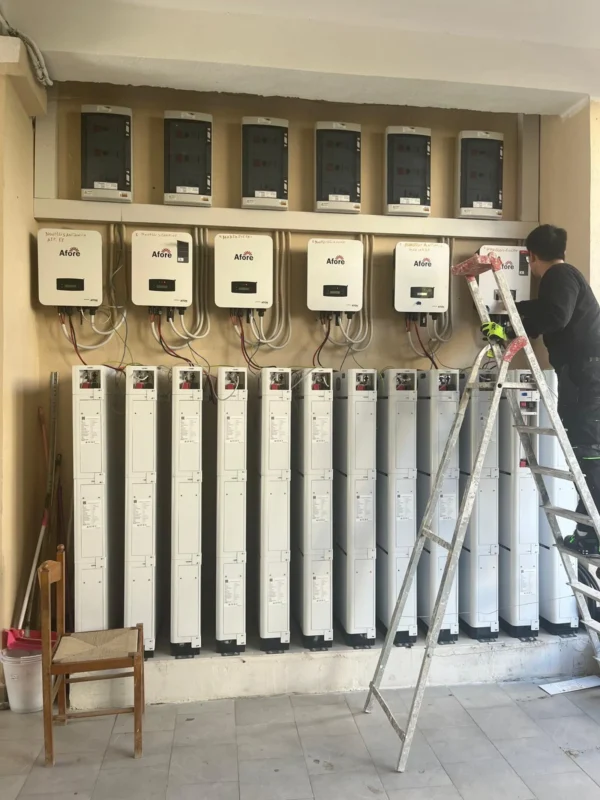
A hybrid inverter combines PV conversion, battery charging and discharging, grid interaction, and system control within an integrated platform. For projects requiring integrated PV and battery management, selecting a suitable Hybrid-Solarwechselrichter can reduce integration complexity and improve operational coordination.
Typical applications include retail premises, offices, agricultural buildings, clinics, hospitality properties, and smaller workshops. In these environments, a hybrid platform may simplify wiring, metering, commissioning, and responsibility for troubleshooting. DC coupling can also allow solar energy to charge the battery without first being converted to AC.
However, the hybrid approach should not be assumed to be the default for every C&I project. For larger C&I systems, separate PV inverters and battery PCS solutions are often considered. The exact crossover point depends on available equipment, connection voltage, required power, project topology, and local service capability.
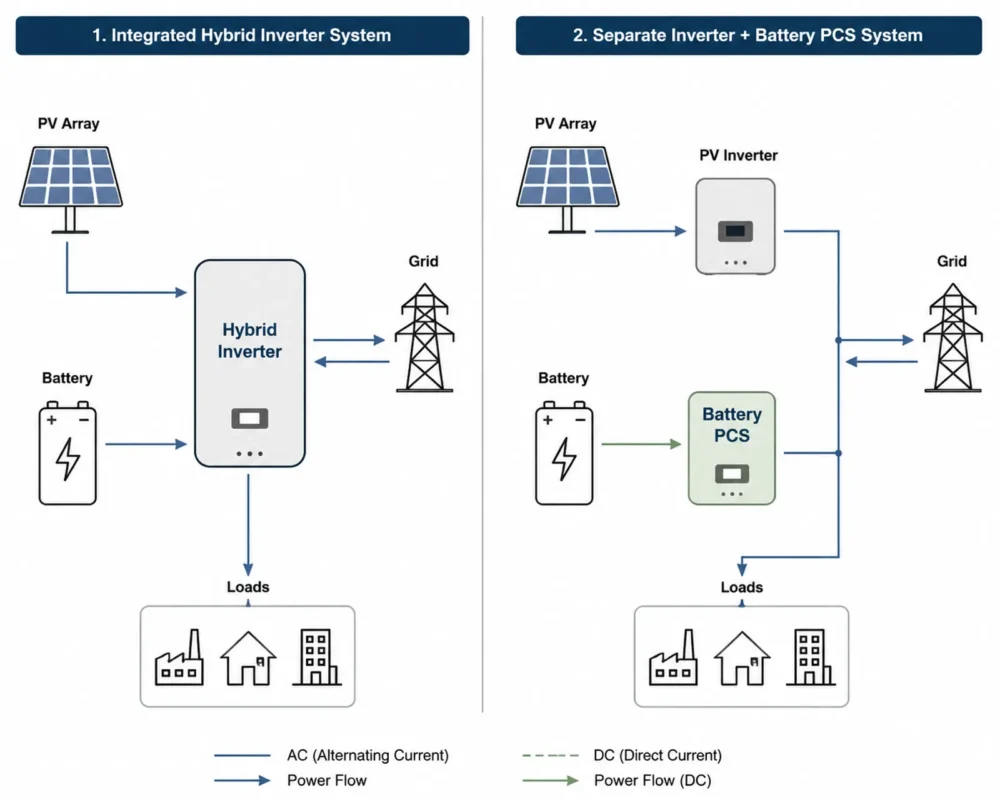
An integrated solar plus battery inverter reduces the number of power conversion devices and can simplify the control chain. For a new installation, this can lower installation effort and provide coordinated operation through one platform.
A separate PV inverter and battery power conversion system, or PCS, treats generation and storage as independently scalable assets. This is often useful when the PV array is much larger than the required battery power, when storage will be added later, or when the owner wants to procure batteries independently.
| Design issue | Integrated hybrid inverter | Separate PV inverter and battery PCS |
|---|---|---|
| Component count | Unter | Höher |
| New-build DC coupling | Straightforward | Depends on system design |
| Retrofit suitability | May require PV redesign | Generally more flexible |
| Independent scaling | More constrained | Strong |
| Battery choice | Usually limited to approved combinations | Potentially wider |
| Redundancy | Depends on parallel architecture | PV and storage blocks can be separated |
| Control complexity | Often lower | Requires coordinated site controls |
| Typische Passform | Residential and light commercial | Larger or more complex C&I systems |
The separate approach is not inherently better. It simply moves complexity from the integrated product into system engineering and controls. EPCs should compare the complete architecture rather than inverter prices alone.
In a DC-coupled system, PV generation and the battery connect through a common DC-side architecture managed by the hybrid inverter. Solar energy can charge the battery with fewer conversion stages. This can be efficient for a new installation and may allow energy that would otherwise be clipped at the AC rating to be stored, provided the inverter explicitly supports that operating condition.
In an AC-coupled system, the PV inverter supplies the AC bus and a separate battery inverter charges or discharges the battery. Solar energy stored in the battery generally passes through additional conversion stages, but the design is often more practical for retrofits because the existing PV plant can remain substantially unchanged.
Control is critical in both topologies. The project team must establish which device controls export, how meters are shared, what happens if communication is lost, and whether PV production can continue during backup operation. A topology diagram alone does not prove that all devices will coordinate correctly.
Parallel hybrid inverters can increase site power and may provide partial redundancy, but total capacity cannot be calculated by simply multiplying nameplate ratings. The manufacturer must explicitly support the proposed number of units, phase arrangement, battery topology, backup configuration, firmware version, meter architecture, and common control method.
Clustered systems require synchronization, stable communications, coordinated state-of-charge management, and predictable load sharing. Designers should also establish whether each inverter uses a separate battery stack or whether multiple units can share a battery bus.
Failure behavior deserves particular attention. If the master controller, common meter, or communications gateway fails, the entire cluster may lose coordinated operation even when individual power stages remain healthy. Redundancy should therefore be evaluated at the control level as well as the hardware level.
Sizing should begin with interval data rather than monthly utility bills. The dataset should cover representative operating and seasonal conditions, with sufficient resolution to capture demand peaks that are commercially significant.
A practical sizing sequence is:
The AC rating should reflect the site objective. If the main purpose is peak shaving, the inverter must supply enough power to reduce the targeted peaks. If the objective is self-consumption, charging power must be sufficient to capture the relevant PV surplus. Oversizing battery capacity without adequate inverter power can leave much of the stored energy operationally inaccessible during short high-demand periods.
Continuous output and surge output are different specifications. A unit may support a high overload for only a few seconds, under a restricted temperature range or only while operating in backup mode. That does not mean it can sustain a commercial motor load for several minutes.
Pumps, compressors, refrigeration equipment, HVAC systems, lifts, transformers, and production machinery can produce starting currents that exceed normal running demand. Variable-speed drives may reduce starting current but can introduce harmonics and power-quality considerations.
A three-phase hybrid inverter is generally necessary for balanced commercial loads. Engineers should verify permissible phase imbalance, neutral current, backup behavior by phase, and the treatment of single-phase loads during islanded operation. Whole-building backup may be impractical even when total annual consumption appears modest because the inverter must handle the worst simultaneous load and starting event.
PV input design must consider maximum open-circuit voltage at the lowest expected module temperature, the MPPT operating window, maximum current per tracker, and short-circuit current limits. High-current modules can exceed tracker limits even when string voltage and total DC power appear acceptable.
The number of MPPTs also affects design quality. Roofs with different orientations, shading profiles, or module types may require independent trackers. Combining electrically dissimilar strings can reduce energy yield and complicate fault diagnosis.
Array oversizing is often commercially beneficial because PV modules rarely operate at nameplate output. However, the permitted DC-to-AC ratio varies by product and region. Designers should determine whether excess PV is clipped, redirected into the battery, or limited by another internal constraint. Future array expansion must also remain within voltage, current, power, warranty, and grid-connection limits.
Modern products commonly report peak PV-to-AC efficiency around 97–98.5%. Battery-related system round-trip efficiency is often above 90% under defined test conditions. These figures are useful, but they do not describe annual site performance by themselves.
Part-load efficiency matters where the inverter spends long periods below rated power. Temperature derating can reduce output during hot afternoons when PV production is high. Standby consumption, battery heating or cooling, communications equipment, meters, and other auxiliary loads also reduce net delivered energy.
EPC models should use efficiency curves where available rather than a single peak figure. They should also account for cable losses, transformer losses, battery efficiency, availability, and curtailment. In many business cases, accurate control and high uptime create more value than a marginal difference in headline conversion efficiency.
No. Matching nominal voltage is not enough.
Most lithium-ion systems require an approved inverter-battery combination. Compatibility depends on battery chemistry, operating voltage, maximum charge and discharge current, BMS protocol, firmware, contactor logic, pre-charge behavior, fault handling, and system certification.
An unsupported battery may appear to operate initially but fail to communicate safe current limits or temperature restrictions. It may also invalidate warranties and complicate responsibility when faults occur. Procurement should therefore be based on a written compatibility statement covering the exact inverter, battery model, module quantity, firmware, and connection topology.
In a closed-loop system, the battery management system communicates state of charge, temperature, alarms, cell conditions, and permitted current to the inverter. The inverter then adjusts charging and discharging within the battery’s real-time limits.
This control is important because a battery’s available power is not constant. Low temperature may restrict or prohibit charging. High temperature, low state of charge, cell imbalance, or an internal alarm may reduce permissible current. Battery warranty terms may also define usable state-of-charge windows and maximum throughput.
C-rate must be considered alongside capacity. A 100 kWh battery limited to 0.5C can nominally provide 50 kW, subject to further thermal and state-of-charge restrictions. If the selected hybrid inverter can discharge only 20 kW, the system cannot deliver 50 kW regardless of battery capacity.
A commercial hybrid inverter for an energy storage system should not be evaluated only through its mobile application. The selected Energiespeicher-Wechselrichter should also support reliable communication, battery coordination, and integration with site-level energy management systems. Professional projects may require several communication options. These can include Modbus TCP, Modbus RTU, CAN, RS485, Ethernet, SunSpec support, digital inputs, external meter interfaces, or documented APIs.
Open and stable interfaces allow a site-level energy management system to coordinate storage with EV chargers, HVAC, heat pumps, generators, and flexible production loads. They also support portfolio dispatch, ESG reporting, demand response, and independent performance analysis.
Listing “Modbus” on a datasheet alone is not sufficient for system integration. Integrators need the register map, update frequency, read/write permissions, scaling conventions, error behavior, and firmware-change policy. They should confirm whether external commands can control real and reactive power without disabling built-in safety functions or violating battery constraints.
A tightly integrated inverter-battery-cloud package can reduce commissioning risk. There is one validated control chain and, ideally, one accountable support path. This can be valuable for standardized reseller portfolios and repeat installations.
The trade-off is reduced flexibility. Procurement teams should investigate whether replacement batteries will remain available, whether old and new battery generations can be combined, whether capacity can be expanded later, and whether data can be accessed without ongoing licensing.
Over a 10–15-year operating horizon, platform continuity matters. The owner should retain access to local controls and operational records even if a cloud service changes. Contractual provisions covering data ownership, software availability, firmware support, and replacement compatibility can reduce this risk.
Grid-connected inverters may need anti-islanding protection, active power limitation, reactive power control, Q(U) or volt-var functions, frequency-watt response, voltage and frequency ride-through, and remote disconnection.
Technical capability alone is insufficient. The exact model and firmware must be accepted under the applicable connection rules. The EU Network Code on Requirements for Generators provides a framework for grid connection requirements, while implementation depends on national rules and system operator requirements.
Safety documentation should also cover the power conversion equipment and complete installation. Relevant IEC electrotechnical standards provide internationally recognized requirements that may support equipment safety and project compliance assessments.
European projects may need to demonstrate conformity with EN 50549-1 or EN 50549-2, depending on the connection category, voltage level, and national implementation rules. Additional national requirements, protection settings, and distribution system operator (DSO) procedures may apply.
National implementation can vary significantly between markets. For example, in Poland, the responsible distribution system operator may define project-specific conditions related to connection power, export limitations, reactive power control, protection settings, metering, and remote control functions. Requirements may differ between connection areas and voltage levels. EPCs should therefore obtain the latest connection conditions directly from the responsible operator rather than relying only on previous project experience.
The European network-code framework and related implementation information can be reviewed through the European Network of Transmission System Operators for Electricity (ENTSO-E). However, final approval requirements are determined by the applicable national rules and the current connection documentation issued by the responsible DSO.
Before placing an order, the EPC should obtain type-test certificates, declarations of conformity, applicable grid-code certificates, equipment safety documentation, safety certification records based on applicable standards such as the IEC 62109 series for photovoltaic power conversion equipment, approved battery lists, protection-setting instructions, and regional installation manuals.
The project file should also include the approved single-line diagram, protection study where required, export-control design, firmware records, commissioning settings, and final test evidence.
Outdated or incomplete documentation can delay permitting, energization, financing, and project acceptance. It can also create a difficult contractual situation if equipment has already arrived, but the exact variant cannot be approved.
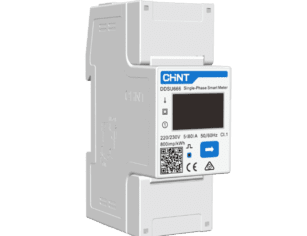
Zero-export operation generally depends on an external meter or current transformers installed at the point of grid connection. The controller measures site import or export and adjusts inverter output accordingly.
Engineers should verify control response time, measurement accuracy, CT ratio and orientation, communications latency, and behavior when the meter signal is lost. A no-export agreement may require fail-safe reduction or shutdown rather than continued operation at the last valid command.
Commissioning tests should create realistic changes in PV output and site load. The team should confirm the export limit under normal operation, battery charging, battery saturation, load rejection, communications failure, and inverter restart. Test results should be retained as handover evidence.
Product capability varies by country. A product family available as a three-phase unit in one market may have different battery approvals, backup functionality, warranties, or grid certificates elsewhere.
For that reason, a professional comparison should use exact regional model numbers. Evaluators should assess three-phase availability, parallel operation, backup performance, battery ecosystem, fleet monitoring, open interfaces, environmental protection, acoustic output, and local grid-code coverage.
Brand reputation alone cannot compensate for missing certifications or unsuitable battery interfaces. Conversely, a technically compliant unit may still create project risk if regional service capacity is weak.
For EPCs and resellers, local channel capability can be as important as hardware specifications. Relevant questions include whether distributors hold replacement stock, how technical cases are escalated, whether commissioning support is available in the project language, and how quickly a failed unit can be replaced.
Lead time should be assessed together with product-generation risk. A quoted model may be replaced before a multi-phase project is completed. Supply contracts should control substitutions and require evidence that replacement products retain battery compatibility, certifications, communications functions, and physical integration.
Installer training also has commercial value. A familiar commissioning workflow reduces labor, while a clear escalation path limits time spent diagnosing firmware, meter, and BMS issues.
Headline warranty length does not reveal who pays for site labor, access equipment, shipping, diagnostics, or replacement installation. Commercial buyers should review exclusions for outdoor exposure, high temperature, high cycling, unapproved batteries, internet disconnection, backup operation, and clustered systems.
They should also confirm registration deadlines, maintenance requirements, remote monitoring obligations, and turnaround targets. Where downtime is financially significant, an extended warranty without a defined service response may provide less value than local spare stock and a contractual replacement procedure.
Before equipment is ordered, the EPC should confirm the load profile, phase arrangement, fault level, cable sizing, protection coordination, earthing, environmental conditions, communications routes, battery location, fire strategy, and DSO settings.
Battery placement requires particular care. Temperature, ventilation, separation distances, access control, floor loading, and emergency response requirements may affect the design. The inverter and battery operating ranges should be evaluated together rather than as separate products.
The final bill of materials should identify meters, CTs, gateways, backup switchgear, protection devices, communications cables, and auxiliary supplies. These components are often omitted from early pricing even though they are essential to operation.
Commissioning should follow a controlled sequence. After electrical and mechanical inspection, the team should verify firmware, battery module configuration, BMS communications, meter direction, CT polarity, grid protection settings, and portal registration.
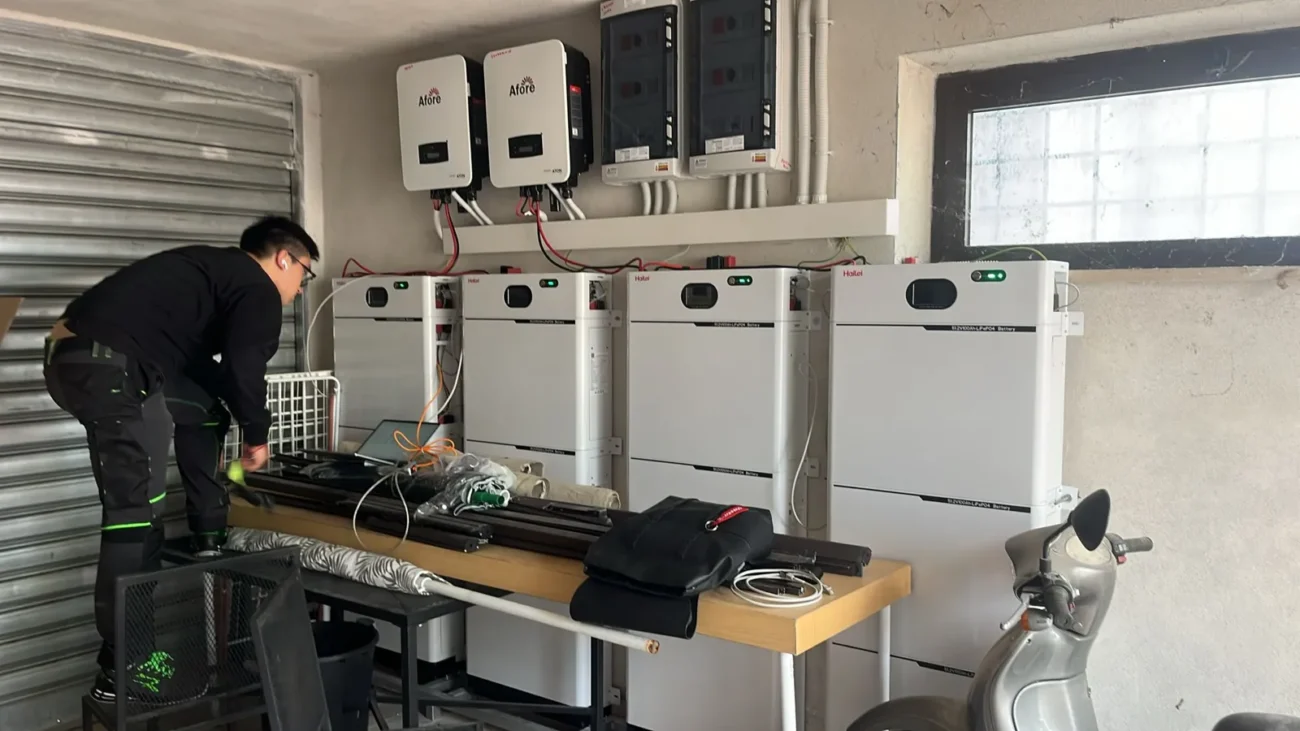
The operating strategy should then be tested. This includes charge and discharge schedules, reserve state of charge, import and export limits, external EMS commands, and recovery after communications loss. Backup testing should be performed only after the normal grid-connected controls are stable.
Evidence should include parameter exports or screenshots, firmware records, meter readings, alarm logs, photographs, test results, and responsible-person sign-off. This creates a baseline for warranty claims and future troubleshooting.
Emergency backup capability does not always provide uninterrupted power. Transfer times may be acceptable for lighting and general loads but too long for servers, sensitive controls, or medical equipment. A separate uninterruptible power supply may still be required.
The design must verify backup power, phase behavior, neutral configuration, motor starting, battery reserve, and black-start capability. It should also establish whether PV can restart and charge the battery while the site is islanded.
Testing should use realistic loads rather than an unloaded transfer demonstration. Whole-building backup should not be promised unless the system can handle the maximum coincident demand and the electrical installation has been designed for island operation.
The handover package should include as-built single-line diagrams, equipment schedules, parameter records, compatibility documentation, test results, portal credentials, warranty certificates, maintenance requirements, and emergency procedures.
Facility staff should understand normal operating modes, battery reserve settings, alarm escalation, shutdown procedures, and the distinction between backup and normal grid operation. Access permissions should prevent untrained users from changing grid protection or battery settings.
Fanless cooling can reduce moving parts and acoustic noise, but it does not eliminate thermal derating. Forced-air cooling may support higher power density while introducing filters, fans, and maintenance requirements.
The specified enclosure rating should be reviewed alongside actual exposure to dust, humidity, salt, direct sunlight, condensation, and water. Altitude can also reduce cooling performance or affect electrical clearances.
A product rated for outdoor installation may still require shade or specific mounting clearances. Warranty conditions and derating curves should therefore be checked against the proposed location and commercial duty cycle.
Professional monitoring should provide useful data resolution, configurable alarm routing, remote diagnostics, report export, role-based access, and portfolio views. Local access is valuable when the site requires independent EMS integration or cannot rely on permanent cloud connectivity.
Owners should define who receives alarms and who is responsible for action. Monitoring without an operational response process does not improve availability.

Data ownership should also be documented. Commercial operators may need long-term access to interval data for tariff verification, performance guarantees, financing reports, and sustainability disclosures.
Remote firmware updates can correct faults and add grid functions, but uncontrolled updates can also change operating behavior. EPCs should record approved versions, test significant updates, and determine whether rollback is possible.
The communications design should use strong passwords, role-based permissions, encrypted connections where available, and network segmentation. Default credentials should never remain active after commissioning.
Responsibility for post-handover changes must be clear. Only authorized parties should alter grid settings, battery limits, export controls, or energy schedules. Change logs are particularly important where the system participates in demand response or operates under a performance contract.
Practical failure points include fans, relays, communications boards, sensors, meters, gateways, firmware, and inverter-battery interfaces. A failure may appear to be an inverter fault even when the cause is a reversed CT, unstable network, outdated BMS firmware, or external control command.
The O&M plan should define remote diagnosis, site-response times, replacement procedures, escalation contacts, and spare availability. For clusters, the design should establish whether one failed unit can be isolated while the others continue operating.
The economic comparison should include the inverter, battery, meters, switchgear, communications equipment, installation, commissioning, software fees, preventive maintenance, replacement labor, warranty extensions, and expected downtime.
A lower-priced inverter may increase lifecycle costs if it requires custom integration, produces unreliable data, or has weak regional service. Conversely, paying more for functions that the operating strategy will never use does not improve the business case.
Self-consumption, peak shaving, time-of-use arbitrage, backup value, export management, and demand-response revenue should be modeled separately. This prevents the same battery cycle from being counted more than once.
The project team must then confirm that the inverter and EMS can prioritize these objectives. For example, using most battery capacity for evening arbitrage may leave insufficient reserve for peak shaving or backup. Aggressive cycling may also conflict with battery warranty conditions.
Levelized cost of storage is affected by installed cost, usable energy, cycling, degradation, efficiency, maintenance, replacement assumptions, and project life. Availability can be particularly important in peak-shaving projects because a short outage during the site’s annual maximum demand may eliminate a large share of expected savings.
Sensitivity analysis should vary tariff escalation, battery degradation, conversion losses, control accuracy, downtime, and replacement timing. Small differences in peak efficiency often matter less than dispatch quality and service response.
Supply and EPC contracts should define approved equipment, permitted substitutions, acceptance tests, firmware obligations, response times, spare availability, and warranty administration. Performance testing should reflect the intended use case rather than only confirming that the inverter powers on.
Resellers should also review minimum order quantities, training obligations, stock rotation, product discontinuation, and compatibility between successive generations. These factors affect both margin and long-term customer support.
Future expansion should be designed before procurement. The project team should check maximum battery module quantity, mixing rules for old and new modules, additional PV input capacity, parallel inverter limits, and grid connection headroom.
Expansion may be constrained by firmware, battery generation, cluster size, switchgear rating, or DSO-approved connection power. “Expandable” should therefore be translated into a documented future configuration.
Open interfaces also matter where the site may later add EV charging, heat pumps, generators, HVAC controls, or flexible industrial loads. A site-level EMS may become more valuable than individual device applications as the energy system grows.
After the pass/fail stage, the remaining solutions can be assessed through a weighted scorecard.
| Kategorie | Example weighting |
|---|---|
| Technical and electrical fit | 20% |
| Grid compliance and documentation | 15% |
| Kompatibilität der Batterien | 15% |
| EMS and monitoring integration | 10% |
| Installation and commissioning effort | 10% |
| Service infrastructure | 10% |
| Garantiebedingungen | 5% |
| Total cost of ownership | 10% |
| Expansion potential | 5% |
Weightings should follow the project’s priorities. A resilience project may allocate more weight to backup performance and service response. A multi-site portfolio may prioritize communications, cybersecurity, and fleet monitoring. A peak-shaving project may give greater weight to control accuracy, discharge power, and availability.
The final selection should be recorded in a design-basis document. It should include load assumptions, operational objectives, system architecture, sizing calculations, compatibility confirmation, certification evidence, economic modeling, rejected alternatives, and residual risks.
This document creates an auditable procurement decision. It also reduces disputes between the owner, EPC, distributor, battery supplier, and inverter supplier if the project’s operating conditions later change.
The practical takeaway is straightforward: choose the architecture and control strategy first, eliminate products that fail mandatory technical or regulatory requirements, and only then compare efficiency, warranty, and price. For a commercial project, the best hybrid inverter for solar battery storage is the solution that remains compliant, controllable, serviceable, and economically productive throughout the asset’s operating life.
There is no single hybrid inverter that fits every battery storage project. The best option depends on the site requirements, including power demand, battery system, grid connection rules, control needs, and expected operating goals. A model that works well for a small commercial building may not be suitable for a larger facility with complex loads. Buyers should compare the complete system solution rather than only looking at inverter specifications.
The main factors include electrical compatibility, battery support, system control features, certifications, service availability, and long-term operating costs. The inverter should match the PV array design, storage requirements, and local grid conditions. Communication functions and supplier support are also important because commercial systems often require monitoring and remote management. A lower purchase price may not provide better value if integration or maintenance becomes difficult later.
You should confirm that the inverter and battery are designed to operate together through official compatibility information. Important checks include battery model approval, communication method, operating limits, expansion options, and warranty requirements. Different battery systems may have different control rules even when their voltage ranges appear similar. Proper matching helps avoid commissioning issues and ensures safer long-term operation.
A hybrid inverter can be a practical choice when a project needs a combined PV and battery solution with easier project integration. It is especially useful for new installations where reducing equipment complexity and improving energy management are priorities. However, larger commercial projects or existing solar sites may benefit from separate conversion equipment. The best choice depends on the project scale, future expansion plans, and operational strategy.
A hybrid inverter can support whole-building backup only when the system is designed for the building’s actual electrical requirements. The available backup power, battery capacity, transfer method, and load characteristics must all be evaluated before making this claim. Many commercial sites choose to protect selected critical loads instead of the entire facility. This approach can reduce system size and improve backup reliability.








 Turkish
  Romanian