





Off-grid solar inverter wholesale decisions directly affect project cost, commissioning risk, system uptime, warranty exposure, and long-term serviceability. For EPC companies, installers, system integrators, distributors, and facility owners, the goal is not simply to find the lowest unit price. The real task is to source inverter platforms that match commercial load behavior, battery architecture, environmental conditions, regulatory requirements, and after-sales expectations across one project or an entire deployment portfolio.
In a commercial off-grid solar system, the inverter is the operating center of the power architecture. It converts DC power from PV arrays and batteries into usable AC power, manages battery charging, coordinates backup generation, protects downstream equipment, and often provides the monitoring data needed for remote service. If the inverter is incorrectly specified, even high-quality modules and batteries cannot compensate for poor surge capability, weak battery communication, inadequate thermal performance, or limited field support.
This is especially important in B2B procurement. A reseller may carry warranty liability across hundreds of units. An EPC may need consistent commissioning procedures across multiple sites. A telecom operator may need remote diagnostics because every truck roll is expensive. A facility manager may be comparing solar-plus-storage against diesel fuel logistics and outage risk. In all of these cases, off-grid Solarwechselrichter wholesale sourcing must be treated as a technical and commercial risk-management process, not just a purchasing exercise.
This guide explains how professional buyers can evaluate suppliers, compare inverter specifications, integrate storage and generators, manage compliance, plan commissioning, and assess lifecycle economics before committing to bulk orders or project specifications.
Wholesale procurement becomes more complex when the inverter is used in commercial or industrial environments. Residential buyers often focus on nominal power and price. B2B buyers must also consider documentation quality, firmware stability, spare parts, battery compatibility, certification validity, logistics, and supplier response time. A low quotation can become expensive if it increases installation failures, warranty claims, or project delays.
A qualified wholesale solar inverter supplier should be evaluated on both product capability and organizational reliability. Manufacturing capacity matters because distributors and EPCs need consistent availability, especially when projects are phased over several months. Export experience is also important because documentation, labeling, customs paperwork, and certification packages vary by destination market.
Professional buyers should request complete technical documentation before placing any meaningful order. This includes datasheets, installation manuals, wiring diagrams, battery compatibility guidance, communication protocol documentation, warranty terms, test reports, and compliance declarations. The absence of clear documentation is often a warning sign. It may not affect a single sample purchase, but it can create major problems when installers are commissioning dozens or hundreds of units across different sites.
Firmware support is another overlooked issue. Modern off-grid and hybrid inverters rely heavily on software for battery communication, parallel operation, generator logic, monitoring, and fault detection. Before wholesale procurement, buyers should understand whether firmware updates are available, how updates are performed, whether updates require special tools, and how the supplier handles version control across production batches.
Spare parts availability should also be verified. Fans, displays, communication modules, control boards, breakers, and terminals are common service items. A warranty that requires the entire inverter to be shipped internationally for minor repairs may be impractical for commercial projects. For an off-grid PV inverter distributor, the value of the supplier relationship depends heavily on how quickly faults can be diagnosed and resolved.
The most important technical specifications are not always the most visible on a sales sheet. Rated power is only the starting point. Commercial off-grid loads often include motors, pumps, compressors, HVAC systems, refrigeration equipment, power tools, telecom loads, and water treatment systems. These loads may require high starting current, stable voltage, and strong overload tolerance.
Surge capacity is therefore critical. A 10 kW inverter with weak surge performance may fail in an application where an 8 kW inverter with stronger overload capability performs reliably. Buyers should confirm both the surge rating and the duration for which that surge can be sustained. A short surge rating measured in milliseconds is not the same as a sustained overload rating that can support motor startup.
MPPT voltage range, maximum PV input power, battery voltage, conversion efficiency, parallel operation capability, and operating temperature range should also be reviewed carefully. Protection functions are equally important. A professional-grade inverter should include protections against overload, short circuit, overtemperature, reverse polarity where applicable, battery overvoltage, battery undervoltage, PV input overvoltage, and AC output faults.
| Spezifikation | Why it matters in commercial off-grid projects | Typical B2B review poin |
|---|---|---|
| Rated AC output | Determines continuous load support | Match to real operating load, not only PV size |
| Surge capacity | Supports motors, pumps, compressors, and HVAC | Confirm multiplier and duration |
| MPPT voltage range | Affects PV string design and energy yield | Check cold-weather open-circuit voltage |
| Spannung der Batterie | Influences current, cable size, and system scale | 48 V and higher are common for larger systems |
| Wirkungsgrad | Impacts battery runtime and lifecycle energy cost | Compare weighted efficiency, not only peak value |
| Parallel operation | Enables scalable commercial systems | Confirm max units, firmware requirements, and phase support |
| Betriebstemperatur | Affects reliability in harsh locations | Check derating curves, not just headline limits |
| Monitoring interface | Reduces field service cost | Verify Wi-Fi, Ethernet, RS485, CAN, or cellular options |
Minimum order quantity is not only a pricing issue. It affects inventory risk, cash flow, warranty exposure, and project scheduling. A distributor may receive attractive pricing at container-level volume, but if local demand is uncertain or product certification is incomplete, inventory may sit for months. EPCs face a different risk: if bulk units are ordered before final system validation, a design error may affect the whole project pipeline.
Wholesale pricing is usually shaped by order volume, product configuration, private label requirements, packaging, certification needs, and payment structure. Buyers should clarify whether the quotation is based on standard packaging, customized branding, special firmware, destination-market documentation, or accessories such as communication modules and battery cables. Small differences in included items can distort unit-price comparisons.
Lead time should be divided into sample lead time, production lead time, inspection time, shipping time, customs clearance, and local delivery. For project-based procurement, the landed delivery date matters more than the factory completion date. Payment terms also influence risk. Staged payment tied to sample approval, production inspection, and shipping documentation is safer than paying most of the order value before technical validation.
Not every inverter marketed for off-grid use is suitable for the same application. Professional buyers should distinguish between pure off-grid inverters, hybrid solar inverter with battery storage platforms, low-frequency designs, high-frequency designs, single-phase systems, and three-phase systems. The right choice depends on load profile, availability of generator backup, environmental conditions, and future expansion plans.
Pure off-grid inverters are designed for systems that operate independently from the utility grid. They are common in remote facilities, farms, island sites, mining camps, rural clinics, telecom towers, agricultural pumping systems, and temporary industrial operations. In these applications, the inverter may be the primary source of AC power, making reliability essential.
A pure off-grid system must be designed around continuous load, peak demand, battery autonomy, and seasonal solar availability. For example, a remote workshop with welders, grinders, and compressors behaves very differently from a rural clinic with lighting, refrigeration, and IT equipment. Even if both sites consume similar daily energy, the workshop may require significantly higher surge handling and a more robust inverter platform.
Environmental conditions also influence product selection. Agricultural sites may expose equipment to dust, humidity, insects, and unstable ambient temperatures. Coastal installations may require better corrosion resistance. Telecom sites may need wide temperature tolerance and reliable remote communication. In these cases, enclosure rating, thermal design, and field service access are not secondary details; they are part of system reliability.
A hybrid off-grid inverter integrates several functions into one platform. It may accept PV input, charge batteries, deliver AC output, communicate with a battery management system, accept generator input, and manage energy dispatch based on programmed priorities. This architecture is widely used in solar-plus-storage system design because it reduces the need for separate charge controllers and simplifies control logic.
For EPC projects, hybrid systems are valuable where solar, batteries, and diesel generators must operate together. The inverter can prioritize solar generation during the day, charge batteries when excess PV is available, start a generator when batteries fall below a defined state of charge, and maintain AC supply during periods of low irradiance. This can reduce generator runtime, fuel consumption, maintenance intervals, and noise.
However, hybrid functionality must be validated before procurement. Buyers should confirm generator charging limits, transfer time, supported battery communication protocols, programmable operating modes, and black-start behavior. If a generator is oversized, unstable, or poorly controlled, the inverter may reject its input or charge batteries inefficiently. For commercial sites, generator compatibility should be tested under realistic load conditions before bulk deployment.
Low-frequency inverter platforms typically use transformer-based designs and are often selected for heavy inductive loads. They tend to be heavier and larger, but they can offer strong surge capability and robust tolerance for difficult load behavior. This makes them attractive for pumps, compressors, motors, workshops, and industrial equipment.
High-frequency inverter platforms are usually lighter, more compact, and cost-efficient. They may be suitable for telecom equipment, office loads, lighting, electronics, and commercial buildings with predictable load profiles. They can also simplify installation where wall space and weight limits matter. However, buyers should avoid assuming that a high-frequency inverter with the same nominal power rating will perform identically under high-surge conditions.
The best choice depends on the load, not on the technology label alone. A professional procurement team should request overload curves, surge duration data, thermal derating information, and field application guidance. In a commercial off-grid solar system, inverter behavior during abnormal or transient events is often more important than nominal efficiency under laboratory conditions.
| Platform type | Common advantage | Common limitation | Typical commercial fit |
|---|---|---|---|
| Low-frequency inverter | Strong surge handling and load tolerance | Heavier, larger, often higher cost | Pumps, motors, compressors, industrial loads |
| High-frequency inverter | Compact size and cost efficiency | May have lower surge tolerance depending on design | Telecom, offices, lighting, electronics |
| Hybrid-Wechselrichter | Integrated PV, battery, and generator management | Requires careful compatibility checks | Solar-plus-storage and diesel reduction projects |
| Modular parallel inverter | Scalable capacity and redundancy | Requires strict configuration discipline | Multi-site EPC projects and growing facilities |

An off-grid inverter should never be selected only by matching its output rating to the PV array size. Commercial systems must be designed from the load outward. The inverter must support real equipment behavior, battery characteristics, solar production variability, and protection requirements.
Load analysis begins with daily energy consumption, but it cannot stop there. EPC teams should identify continuous loads, intermittent loads, peak simultaneous loads, starting currents, power factor, and mission-critical circuits. A refrigeration compressor that runs for short periods may consume modest daily energy but require high starting current. A water pump may run only a few hours per day but dominate inverter sizing.
Power factor is especially important in commercial environments. Many motors and industrial devices draw apparent power higher than their real power consumption. If inverter sizing is based only on watts, the system may be underdesigned in terms of VA capacity. Buyers should confirm whether inverter ratings are given in watts, VA, or both, and how the unit behaves with low power factor loads.
Future expansion should also be included. Remote facilities often grow after reliable power becomes available. Farms add cold storage, workshops add tools, resorts add guest rooms, and telecom sites add equipment. A design with no expansion margin may require premature replacement. Parallel-capable inverter architecture can reduce this risk, provided the supplier supports stable multi-unit operation.
MPPT design affects both energy yield and system safety. The inverter’s MPPT voltage window determines how PV strings should be configured. If string voltage is too low, the inverter may not track efficiently. If open-circuit voltage exceeds the maximum input rating during cold weather, the inverter can be damaged or shut down.
Installers should calculate string voltage using the lowest expected site temperature, not only standard test conditions. They should also verify maximum PV input current, number of MPPT channels, allowed string configurations, and clipping behavior. Oversizing PV relative to inverter input can be acceptable in some designs, but only when current and voltage limits are respected and the supplier confirms acceptable DC/AC design ratios.
A commercial system may also benefit from multiple MPPT channels when arrays face different orientations or experience partial shading. For example, a facility with roof-mounted PV on multiple buildings may need separate tracking to avoid energy loss. If the inverter has only one MPPT channel, array layout options may be limited.
Battery compatibility is one of the most important topics in off-grid solar inverter wholesale. Lithium iron phosphate batteries, lead-acid batteries, gel batteries, and other chemistries behave differently in charging, discharging, temperature sensitivity, cycle life, and usable depth of discharge. An inverter that works well with one battery type may not be suitable for another without correct settings or communication.
Lithium battery systems usually require reliable communication between the inverter and the battery management system. CAN and RS485 are common communication methods, but protocol compatibility is not guaranteed just because the physical port exists. Buyers should verify tested battery lists, protocol documentation, charge and discharge limits, state-of-charge reporting, low-temperature charging protection, and fault response behavior.
Lead-acid and gel batteries may not require digital communication, but they do require correct voltage settings, absorption time, float voltage, temperature compensation, and depth-of-discharge limits. Poor charging settings can shorten battery life significantly. For wholesale buyers, battery compatibility should be tested using the battery brands and models that will actually be deployed, not only generic lab conditions.
A single inverter can support multiple load zones if its output capacity, surge capability, distribution design, and protection equipment are suitable. However, mixed commercial loads often require segmentation. Critical loads such as communications, refrigeration, security systems, medical equipment, or control systems may need higher backup priority than workshops, HVAC, or non-essential lighting.
In larger facilities, modular inverter banks or separate circuits may be safer than one oversized unit. Parallel operation can increase capacity and provide redundancy, but it requires strict compliance with supplier instructions. Identical models, compatible firmware, correct communication wiring, and approved protection devices may be required. Unsupported parallel configurations are a common source of faults and warranty disputes.
Three-phase loads require additional attention. Some commercial equipment cannot run properly on single-phase power. If a facility uses motors, pumps, elevators, or industrial machinery, EPCs should confirm whether the inverter platform supports stable three-phase output, phase balancing, and future expansion using the same hardware and firmware family.
Off-grid systems succeed or fail based on energy balance. The inverter must coordinate PV generation, battery charging, load supply, and backup generation in a way that protects equipment and meets business continuity goals. This is where commercial projects differ sharply from small residential systems.
Battery autonomy should be calculated from actual load profiles, required backup duration, allowable depth of discharge, round-trip efficiency, seasonal solar availability, and battery aging. A simple “one-day backup” assumption may be too optimistic for commercial sites with variable operations or seasonal weather patterns.
For example, a rural processing facility may operate at higher loads during harvest season, exactly when cloud cover or rain may also reduce PV generation. A telecom site may have steady consumption but strict uptime requirements. A clinic may have low average energy demand but critical refrigeration or medical loads that cannot be interrupted. Each case requires a different autonomy strategy.
Depth of discharge directly affects usable capacity and battery life. Lithium iron phosphate batteries often allow deeper usable discharge than many lead-acid systems, but site temperature, charge rates, and BMS limits still matter. Lead-acid batteries may require more conservative discharge limits to preserve cycle life. The inverter must be programmed to respect these limits.
Many remote commercial sites use solar-plus-storage-plus-generator systems. In these projects, the inverter is responsible for coordinating generator start and stop logic, battery charging current, transfer switching, and load support. Poor generator coordination can reduce fuel savings and increase system instability.
A well-designed hybrid system may run the generator at more efficient loading, charge the battery bank during optimal operating windows, and then shut down while solar and batteries carry the load. This reduces runtime and maintenance compared with using a generator as the primary power source. However, the inverter must accept generator frequency and voltage behavior, especially under changing loads.
Procurement teams should confirm generator input limits, automatic start relay functions, programmable state-of-charge thresholds, maximum AC charging current, transfer time, and fault handling. If generator integration is central to the business case, sample testing should include real generator operation rather than only grid-simulated AC input.
Not every facility needs full-site off-grid backup. In many cases, supporting essential circuits delivers better economics than powering every load. Critical circuits may include IT systems, communications, refrigeration, emergency lighting, controls, security, and selected production equipment. Non-critical loads may be shifted, curtailed, or operated only during solar-rich periods.
Defining critical loads early prevents unnecessary CAPEX. Oversizing inverters and batteries to support non-essential loads can increase procurement cost, installation complexity, and maintenance burden. For facility managers and EPCs, load prioritization is one of the most effective ways to improve project ROI without compromising resilience.
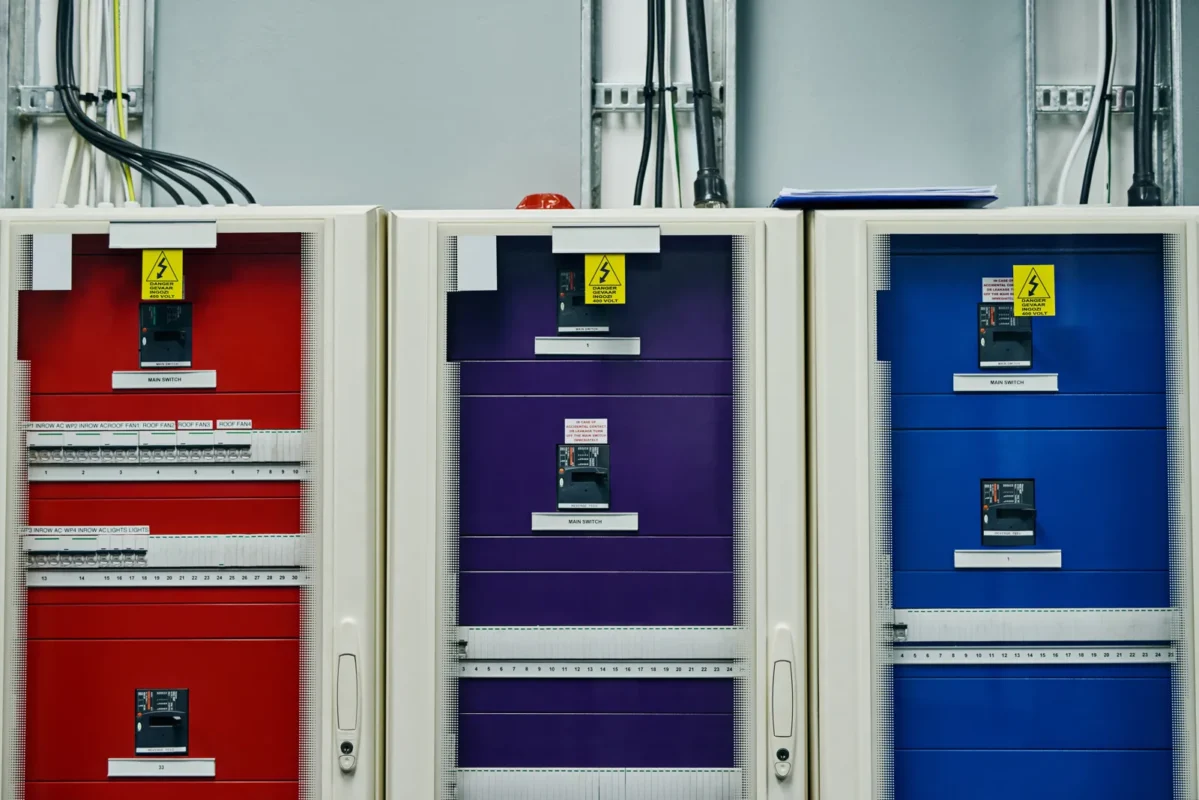
Compliance requirements vary by country, application, voltage class, and whether the system interacts with the grid. Wholesale buyers should verify certification validity before placing bulk orders because documentation gaps can delay customs clearance, prevent resale, or create permitting problems.
Common documentation may include CE declarations for applicable European markets, IEC-based safety test reports, EMC compliance evidence, RoHS documentation, and local electrical approvals. Inverter safety standards such as IEC 62109 are widely referenced for power conversion equipment used in photovoltaic systems. Buyers should consult the relevant standard and local authority requirements when specifying commercial projects, especially where public facilities, healthcare, telecom, or industrial operations are involved.
Certification claims should be checked carefully. A logo on a datasheet is not enough. Buyers should request certificate numbers, test reports, model coverage, manufacturing site details, validity dates, and the name of the issuing body. They should also confirm that the certified model is exactly the same as the model being purchased, including power rating, hardware version, and intended market configuration.
Even systems described as off-grid may interact with utility supply, generators, or transfer switches. If an inverter can operate in grid-tied mode, export power, or connect to a building electrical system that also receives utility power, additional interconnection and anti-islanding requirements may apply. Grid codes and permitting rules differ significantly between markets.
This distinction matters for hybrid systems. A system that is electrically isolated from the grid has different compliance implications from a system that can synchronize with utility power. EPCs should define the operating architecture before procurement and confirm whether the inverter is approved for the intended mode. Local electrical inspectors, energy regulators, and grid operators may require specific documentation before commissioning.
For resellers and distributors, import compliance is part of product viability. Customs documentation, HS codes, country-of-origin information, labeling, serial number tracking, packaging marks, user manuals, warranty cards, and compliance files should be prepared before shipment. Incomplete documents can delay clearance and create additional warehousing costs.
Serial number tracking is particularly important for warranty management. A distributor should be able to trace each unit to a production batch, shipment, customer, and installation location. This supports faster claims handling and helps identify whether a field issue is isolated or batch-related.
Off-grid inverter failures are often blamed on product quality, but many originate from installation environment, wiring practices, battery mismatch, or commissioning errors. Wholesale buyers should therefore assess whether the inverter platform is easy to install, configure, monitor, and service under real field conditions.
Commercial installations may expose inverters to heat, dust, humidity, insects, vibration, salt mist, or poor ventilation. A unit installed in a clean indoor electrical room faces very different stress from one installed in a farm shed, telecom shelter, island utility room, or mining camp.
Thermal management deserves close attention. Inverter output may derate at high ambient temperatures. If the installation space lacks airflow, the inverter may overheat even when operating within its nominal power range. Buyers should review derating curves, cooling method, clearance requirements, fan serviceability, altitude limitations, and ingress protection rating.
Enclosure rating should match the site. Indoor-rated equipment should not be placed in dusty or humid environments without suitable protection. However, placing an inverter inside a sealed cabinet without thermal design can also create overheating. The correct installation balances environmental protection and heat dissipation.
A standardized commissioning process reduces failure claims and improves project handover quality. For EPCs deploying the same inverter across multiple sites, commissioning discipline is one of the strongest tools for risk control.
A practical commissioning sequence should include these steps:
This process should be supported by photos, test records, and configuration files. Good documentation reduces disputes between suppliers, installers, and end users if performance issues appear later.
Remote diagnostics can materially reduce operating cost in distributed commercial portfolios. Wi-Fi may be sufficient for some buildings, but Ethernet, RS485, or cellular monitoring is often more reliable for remote sites. In telecom, agriculture, and island applications, cellular or local data logging may be necessary where internet access is unstable.
Monitoring should provide useful operational data, not only basic status. EPCs and asset owners benefit from visibility into PV input, battery voltage, state of charge, AC output, load percentage, temperature, alarms, generator runtime, and historical faults. Clear fault codes help installers decide whether a problem is caused by overload, battery communication, PV input, overheating, or internal hardware.
For distributors, monitoring capability supports warranty decision-making. Instead of replacing units based only on customer descriptions, technical teams can review data and distinguish product faults from installation or configuration issues.
The most common failures are preventable. Undersized inverters trip under peak load. Oversized inverters may operate inefficiently or require unnecessary battery capacity. Incorrect battery settings shorten battery life. Inadequate cable sizing causes voltage drop and overheating. Weak grounding creates safety risks and unstable operation. Insufficient ventilation leads to thermal shutdown. Unsupported parallel configurations cause communication faults.
Generator settings are another frequent issue. If generator voltage or frequency fluctuates beyond inverter input tolerance, the inverter may disconnect repeatedly. If charging current is too high, the generator may overload or become unstable. These problems should be identified during commissioning, not after handover.
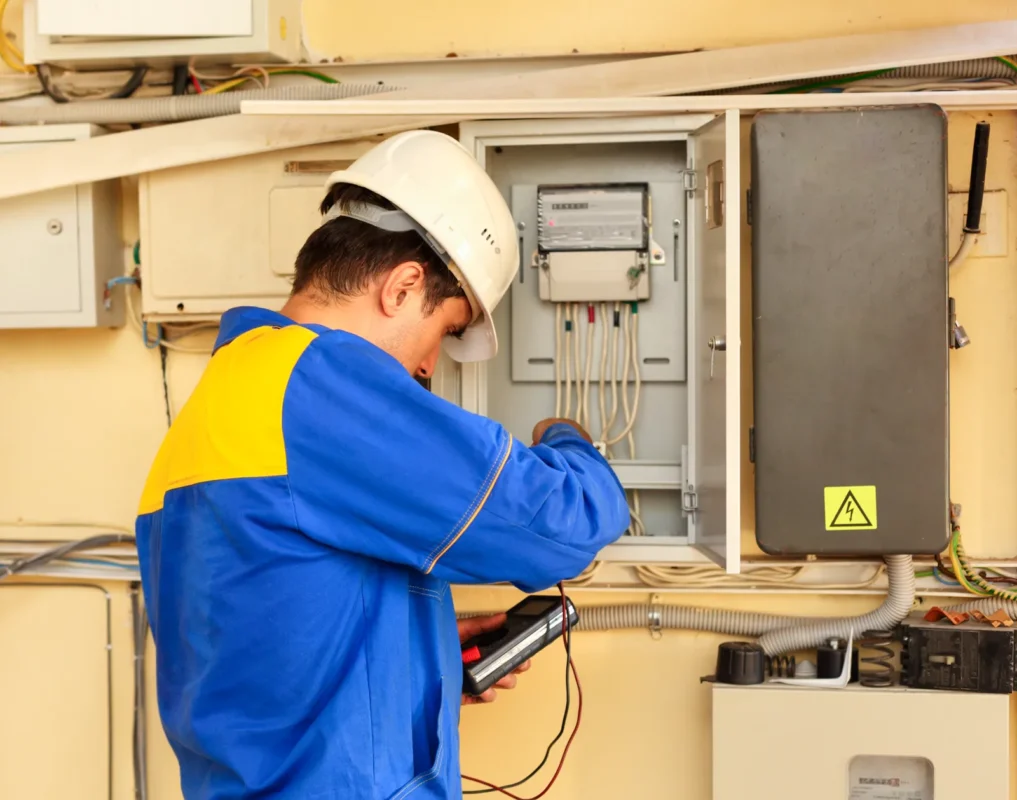
Professional procurement requires evidence. A quotation and datasheet are not enough for bulk purchasing. Buyers should validate supplier capability, product consistency, quality assurance systems, warranty execution, and technical support before scaling volume.
A factory audit can review production capacity, incoming component inspection, assembly controls, electrical safety testing, burn-in procedures, calibration records, and batch traceability. ISO-style quality management systems are useful, but buyers should still verify how processes are applied to the specific inverter model being purchased.
Batch consistency is critical for distributors and EPCs. If firmware versions, internal components, communication boards, or terminal layouts change without notice, installers may face unexpected commissioning problems. Buyers should request change-notification procedures and confirm whether production batches can be locked to an approved configuration for project deliveries.
Third-party pre-shipment inspection can be valuable for large orders. Inspection may include visual checks, packaging review, label verification, sample functional testing, serial number recording, and documentation review. This does not replace technical validation, but it reduces the risk of receiving incorrect or incomplete shipments.
Warranty value depends on claim handling speed, not only the number of years stated. A five-year warranty with slow response and unclear replacement procedures may be less useful than a shorter warranty supported by local spare parts and responsive engineering assistance.
Buyers should clarify whether the warranty covers parts, labor, shipping, replacement units, or repair only. They should also understand failure-analysis requirements. Some suppliers require photos, fault logs, installation records, and serial numbers before approving claims. This is reasonable, but the process should be clear before units are sold to end customers.
Spare parts strategy should match deployment scale. A distributor managing hundreds of units may need stock of fans, communication modules, displays, and control boards. An EPC operating remote assets may need advance replacement units to minimize downtime. Service planning should be included in wholesale negotiations.
Private label and OEM programs can help distributors differentiate in local markets, but they also increase responsibility. Custom branding, packaging, manuals, firmware screens, monitoring portals, and regional documentation must be controlled carefully. If the product carries the distributor’s brand, customers will expect local support regardless of the original manufacturer.
Minimum volumes for private label programs are often higher than standard wholesale orders. Buyers should evaluate whether expected sales justify the inventory commitment. They should also confirm who owns compliance documentation, whether certificates remain valid under the private label, and how firmware customization affects future updates.
Market exclusivity may be attractive, but it should be linked to realistic sales volumes, support commitments, and territory definitions. Exclusivity without supply reliability or technical support does not create a sustainable channel advantage.
Risk reduction starts with sample testing. Samples should be evaluated with the batteries, PV input ranges, load types, monitoring setup, and generator models expected in real projects. A bench test with resistive loads is not enough for commercial off-grid applications.
Pilot deployment is the next step. Installing a small number of units in representative field conditions reveals issues that laboratory testing may miss. EPCs should track commissioning time, fault behavior, monitoring stability, thermal performance, customer feedback, and supplier response.
Bulk orders should be staged when possible. Instead of moving directly from quotation to container-scale procurement, buyers can use a progression from sample order to pilot batch to production order. This approach may take longer upfront, but it reduces the probability of large-scale rework or warranty exposure.
The inverter is only one part of the total project cost, but it strongly influences lifecycle economics. A cheaper inverter may increase balance-of-system cost, commissioning labor, battery wear, downtime, and service expense. A higher-quality platform may justify its price if it reduces failures and supports remote management.
Total CAPEX includes PV modules, batteries, inverter equipment, mounting, combiner boxes, protection devices, cabling, distribution panels, monitoring hardware, installation labor, engineering, freight, duties, commissioning, and documentation. In this context, inverter unit price is only one variable.
| Kostenkategorie | Inverter-related impact |
|---|---|
| Batterien | Compatibility affects usable capacity and cycle life |
| Cabling and protection | Battery voltage and current influence cable size and breaker cost |
| Labor | Clear documentation and wiring design reduce installation time |
| Monitoring | Integrated communication may reduce additional hardware needs |
| Generator integration | Built-in control logic may reduce external components |
| Service | Remote diagnostics can reduce truck rolls and downtime |
A low-cost inverter may require additional external devices or more complex commissioning. It may also lack reliable battery communication, forcing conservative settings that reduce usable storage capacity. Therefore, procurement teams should compare landed system cost and service cost, not only factory price.
OPEX is especially important for remote sites. A service visit to a city warehouse may be inexpensive. A service visit to an island facility, telecom tower, remote farm, or mining site may involve long travel time, special equipment, or production interruption. In these cases, monitoring and reliability have measurable financial value.
Downtime costs vary by application. For telecom, downtime may affect network availability. For cold storage, it may risk product loss. For rural healthcare, it may affect critical services. For industrial facilities, it may stop production. Procurement should account for the cost of failure, not only probability of failure.
Maintenance access also matters. If fans or communication modules can be replaced quickly, service is easier. If the entire unit must be removed from the wall for minor repairs, downtime increases. Field serviceability should be considered before large-scale deployment.
Many commercial off-grid projects are justified by reducing diesel generator runtime. Solar-plus-storage can reduce fuel consumption, extend generator maintenance intervals, lower fuel transport risk, and improve energy availability. The inverter enables this value by coordinating solar generation, battery charging, and generator operation.
ROI should be modeled around avoided fuel, reduced maintenance, avoided outages, and improved operational continuity. Solar generation cost alone does not capture the full value of reliable off-grid power. In remote areas, fuel delivery can be expensive and uncertain. Reducing dependence on fuel logistics can be as important as reducing energy cost.
Levelized cost of energy is useful when comparing diesel-only, solar-plus-storage, and hybrid systems. The basic concept is to divide lifecycle costs by lifecycle energy delivered. For commercial systems, the calculation should include inverter efficiency, expected replacement cycle, battery life, O&M cost, generator fuel, generator maintenance, downtime assumptions, and residual value.
A simplified LCOE view is helpful, but buyers should avoid false precision. Assumptions about battery degradation, load growth, fuel price, and maintenance access can change results significantly. The purpose of LCOE is not only to produce a number; it is to reveal which design assumptions drive long-term value.
Wholesale decisions often affect more than one project. EPCs, distributors, and asset owners may standardize on a limited set of inverter platforms to simplify training, inventory, monitoring, and service. This can reduce complexity, but only if the selected platform is scalable and well-supported.
Modular architecture allows capacity to grow with demand. Parallel-capable inverters, scalable battery banks, and flexible PV input design are valuable for farms, resorts, telecom portfolios, remote businesses, and industrial sites that expect expansion. However, modularity must be planned from the beginning.
The electrical room, cable routes, battery layout, protection devices, and distribution boards should allow additional equipment. If expansion requires replacing the entire inverter system, the initial design is not truly scalable. Buyers should confirm maximum parallel units, three-phase configuration options, battery expansion limits, and whether future units must match the original firmware version.
Many industrial and commercial loads require three-phase power. Three-phase off-grid systems must maintain stable voltage and frequency across phases while handling unbalanced loads and motor startup. This is more demanding than supplying basic single-phase loads.
EPCs should confirm whether the inverter supports native three-phase output or requires multiple units configured together. They should also verify phase-balancing limits, neutral configuration, protection requirements, and compatibility with industrial equipment. If expansion is expected, the procurement plan should ensure future availability of identical or compatible models.
Standardization can reduce operational complexity. When installers work with the same inverter family across multiple projects, commissioning becomes faster and errors decrease. Distributors can stock fewer spare parts. Technical support teams can become familiar with fault codes and configuration settings. Monitoring data is easier to compare across sites.
However, standardization should not override application fit. A telecom site, farm workshop, and island resort may require different inverter capacities or environmental ratings. The best approach is often to standardize within a platform family while allowing different power ratings or configurations for specific use cases.
The right architecture depends on grid availability, reliability goals, export rules, backup requirements, battery economics, and load criticality. A fully off-grid system is appropriate where utility power is unavailable or unreliable enough that independent operation is required. A hybrid system may be better where grid power exists but backup, self-consumption, or diesel reduction is important. A grid-tied-plus-backup system may be preferable where export rules are favorable and outages are occasional.
Choosing a fully off-grid design when grid support is available can increase battery and inverter cost unnecessarily. Conversely, choosing a grid-tied system for a site with severe outage risk may fail to meet operational needs. B2B decision-makers should define the reliability target first, then select the architecture that meets it at the lowest lifecycle risk.

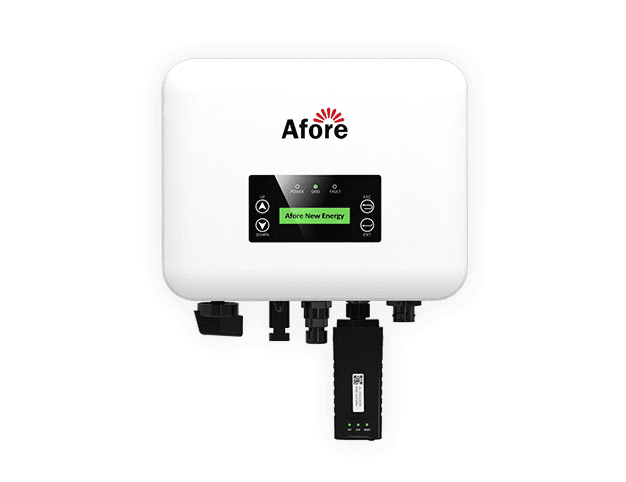
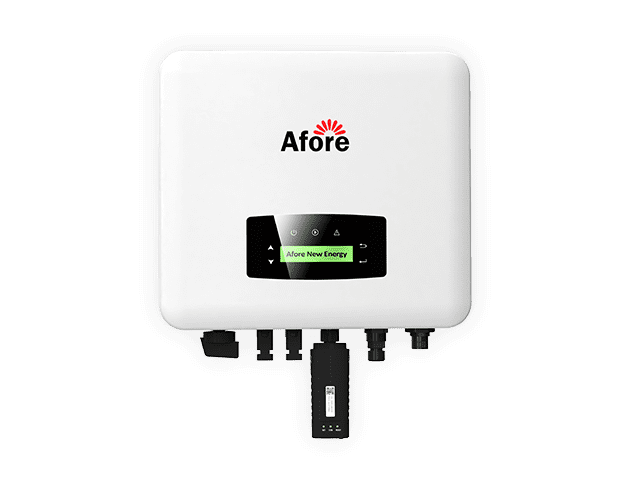
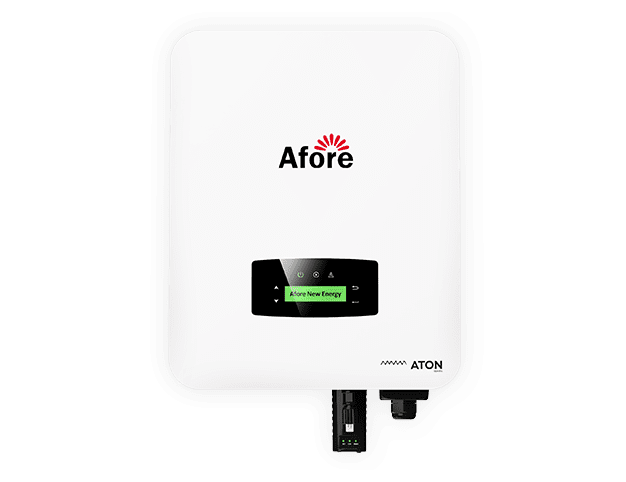
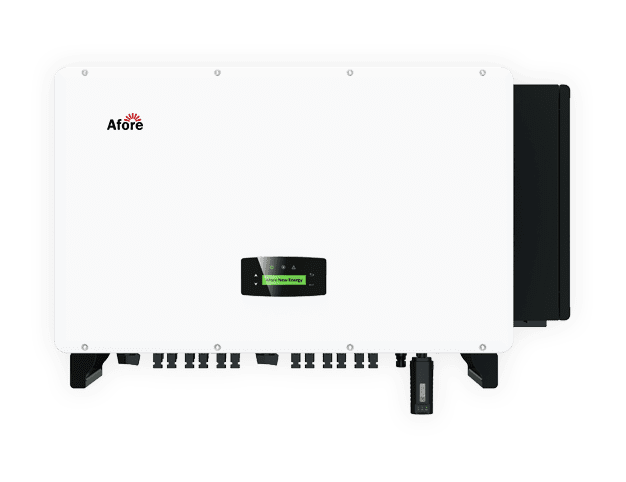
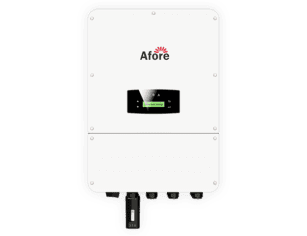
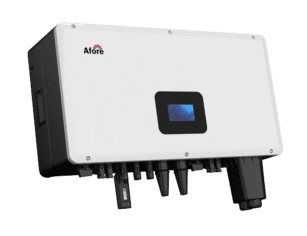
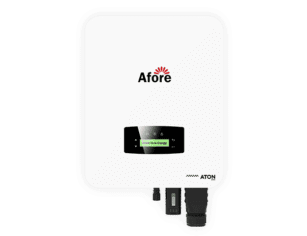
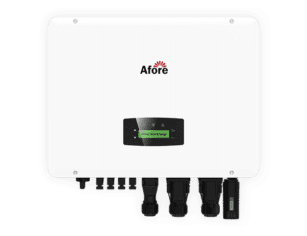
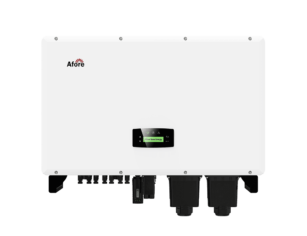
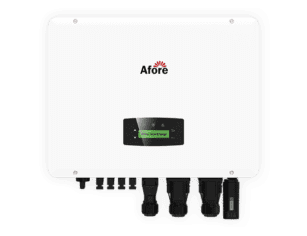
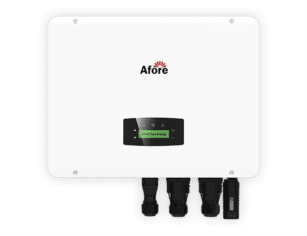
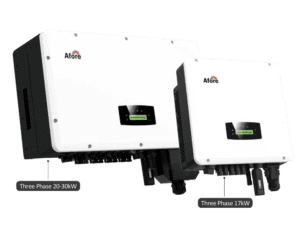
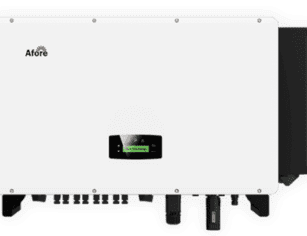
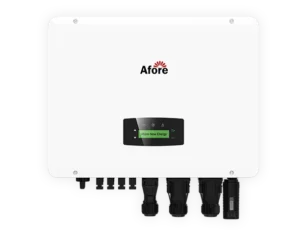
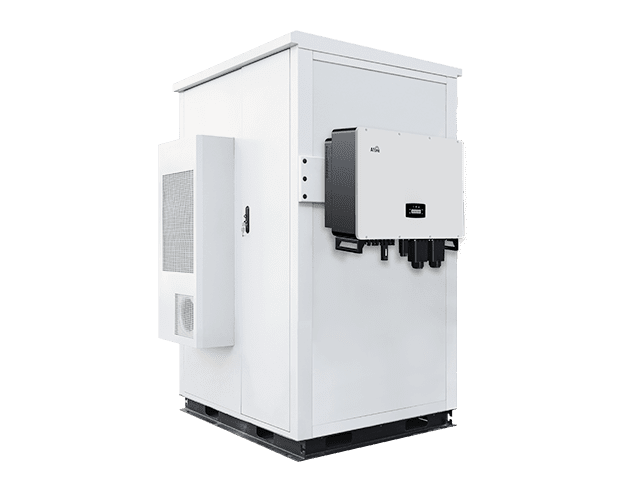
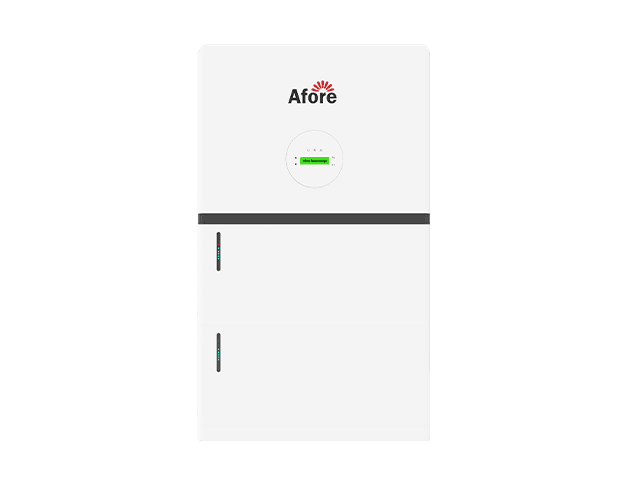
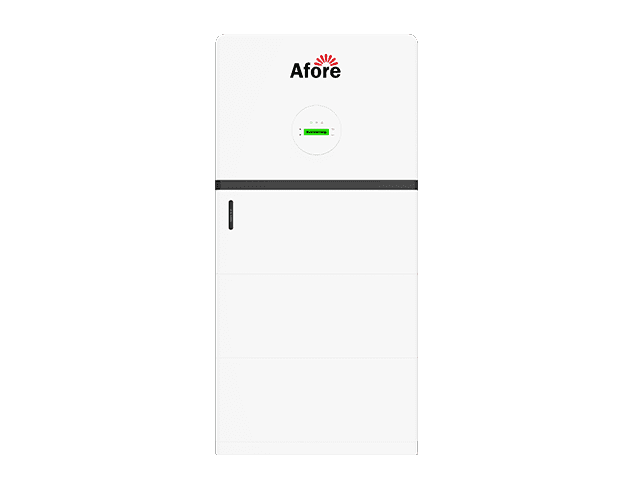
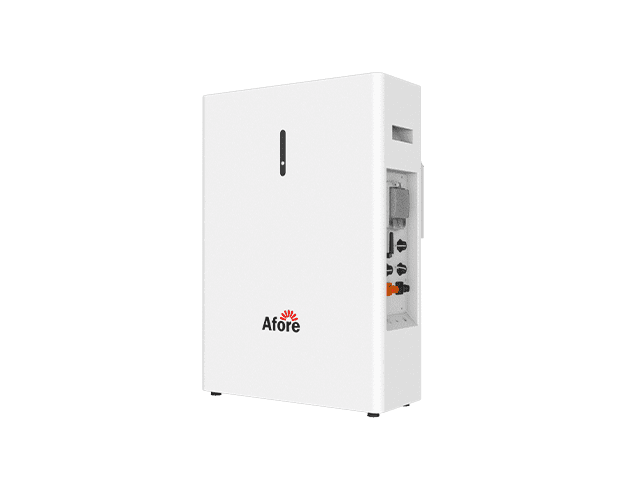
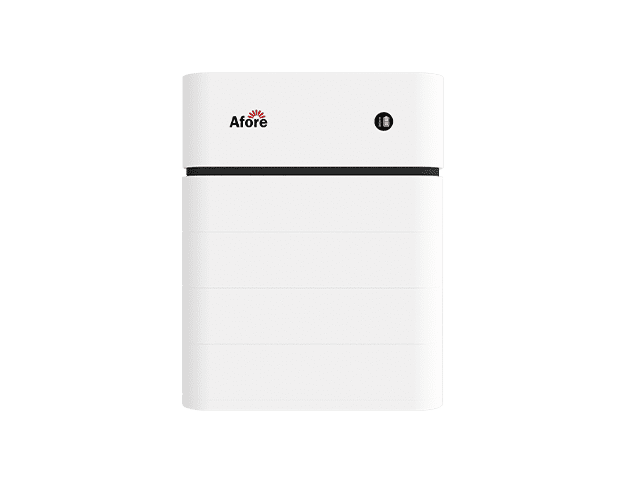
The best wholesale supplier for off-grid inverters should be a trusted off-grid inverter manufacturer with robust industrial-grade production capacity, full certifications, and expertise in remote site solar solutions and wholesale off-grid ESS. Prioritize suppliers like Afore with a proven Afore off-grid series, reliable OEM/ODM support, and strong after-sales service for B2B buyers.
Yes, low-frequency industrial off-grid inverters can handle industrial motor loads, thanks to their strong surge capacity (3–7x rated current) and pure sine wave output. These models are ideal for industrial off-grid power scenarios like pumps, compressors, and workshop machinery, while high-frequency units are better for light commercial loads.
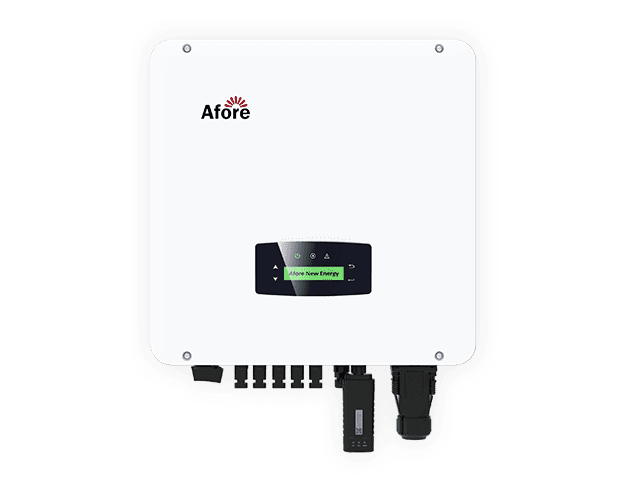
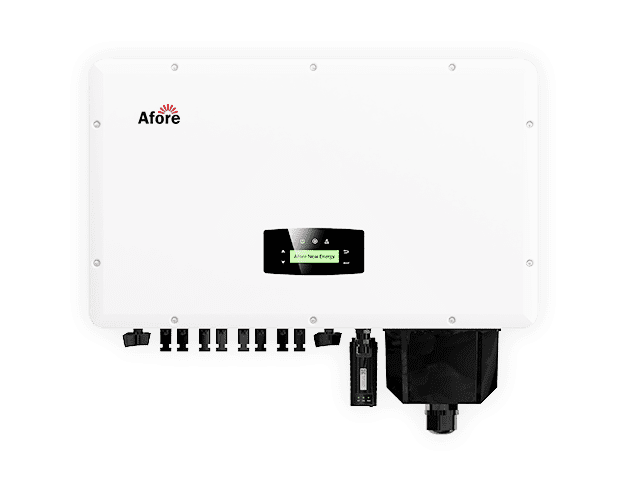
Yes, Afore provides high-power off-grid solutions via its Afore off-grid series, including 3–50kW three-phase hybrid inverters designed for commercial and industrial standalone PV systems. These models support high-voltage batteries, parallel operation, and seamless generator integration for large-scale remote site solar solutions.
Pure off-grid inverters operate independently of the grid, relying solely on solar and battery power for standalone PV systems. Hybrid inverters combine off-grid and grid-tied functions, supporting solar, battery, generator, and grid input—making them ideal for wholesale off-grid ESS and sites needing backup power.
Yes, Afore off-grid inverters comply with UL 1741, IEC 62109, and other key standards, meeting certification requirements for North American and global industrial off-grid power projects. This ensures safety and compatibility for remote site solar solutions and commercial standalone PV systems.
High-quality off-grid inverters (like the Afore off-grid series) are built for reliability in remote areas, with wide temperature tolerance, dust/humidity resistance, and robust thermal management. They minimize maintenance needs for remote site solar solutions, while remote monitoring features reduce costly on-site service trips.
https://www.energy.gov/eere/solar/solar-photovoltaic-system-design-basics








 Turkish
  Romanian