




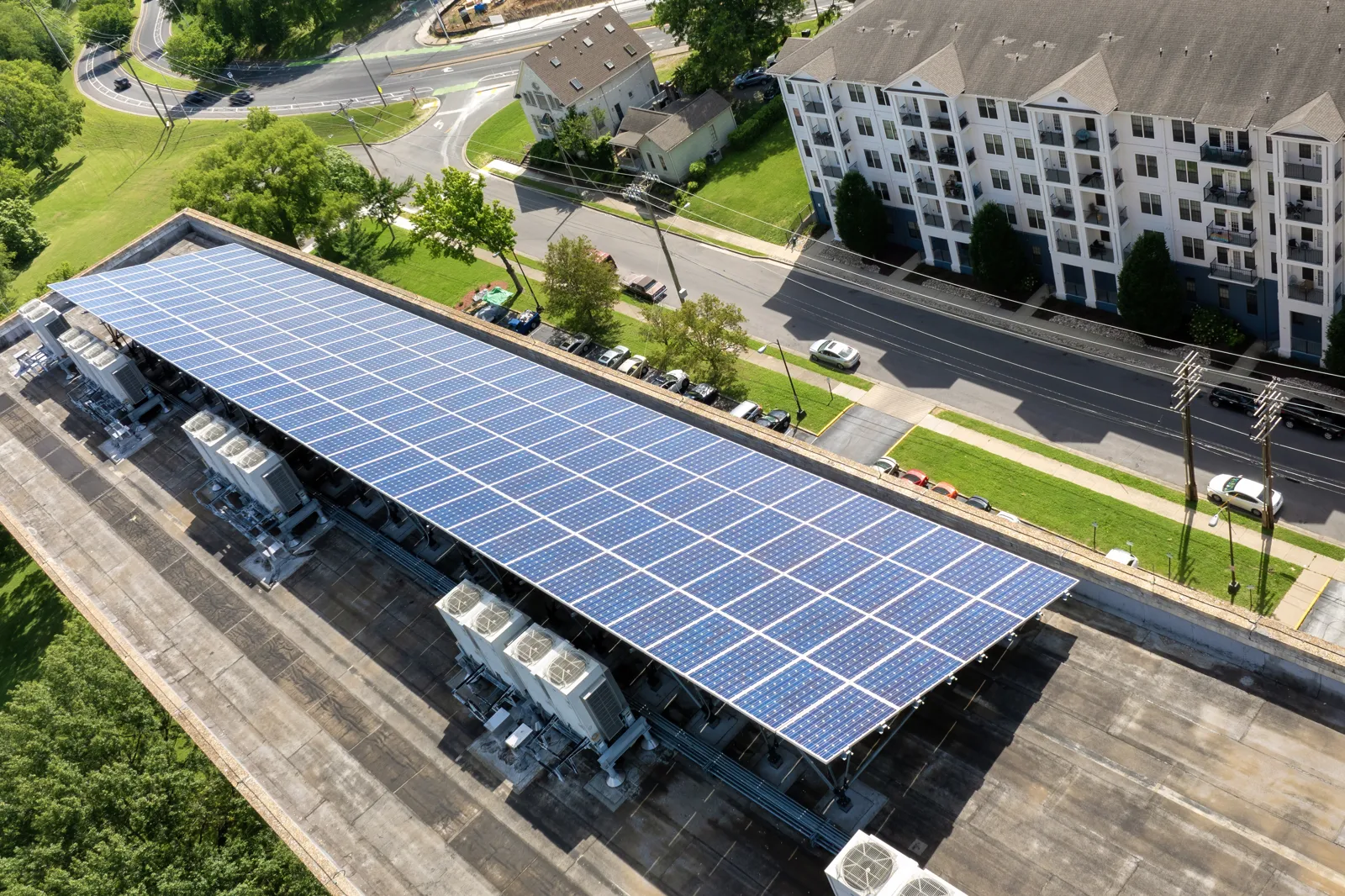
For commercial PV teams, AC coupled vs DC coupled battery storage is not just a wiring preference. It is a core architecture decision that affects inverter selection, round-trip efficiency, grid interconnection, export control, commissioning complexity, fire-code review, warranty boundaries, and long-term project economics.
For EPCs, installers, system integrators, resellers, and facility owners, architecture selection should start with the project’s operating requirements and constraints. A storage retrofit on an operating rooftop PV system has different priorities from a new-build solar-plus-storage project on an industrial site. A battery designed for demand-charge reduction is evaluated differently from one intended for backup power, clipping recapture, or grid-service participation.
This guide explains the practical differences between AC-coupled and DC-coupled battery energy storage systems for commercial and industrial PV projects. It starts with a direct comparison, then expands into architecture, energy flow, sizing, compliance, procurement, installation, O&M, and financial evaluation so project teams can make bankable, site-specific decisions.
In an AC-coupled battery energy storage system, the PV array and battery connect on the AC side. The PV array feeds one or more PV inverters, which convert DC solar power into AC power. The battery has its own bidirectional battery inverter or power conversion system, commonly called a PCS, which converts AC power into DC power for charging and converts DC battery power back into AC power for loads or grid export.
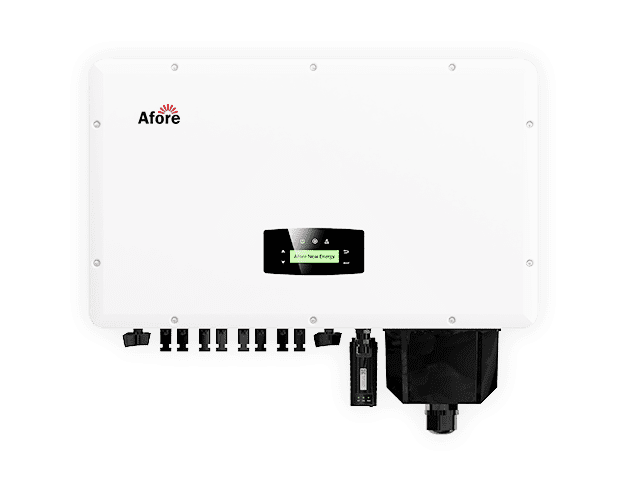
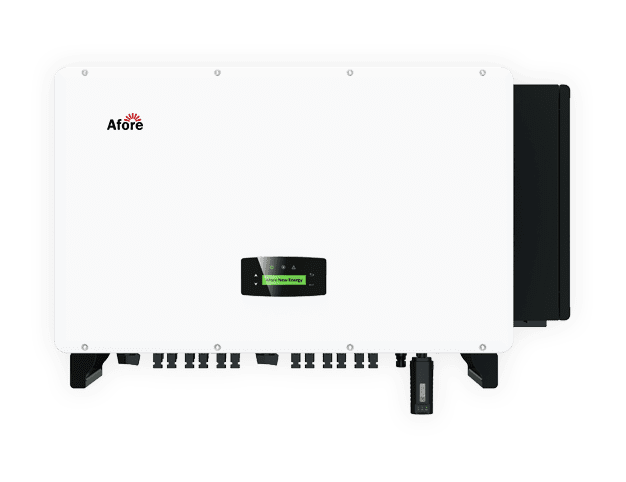
In a DC-coupled solar-plus-storage system, the PV array and battery connect to a shared DC architecture before power is converted to AC. This may involve a inversor híbrido, a central inverter with DC-coupled storage inputs, or DC/DC converters that manage voltage matching and battery charging. In this topology, PV energy can charge the battery on the DC side before passing through an inverter.
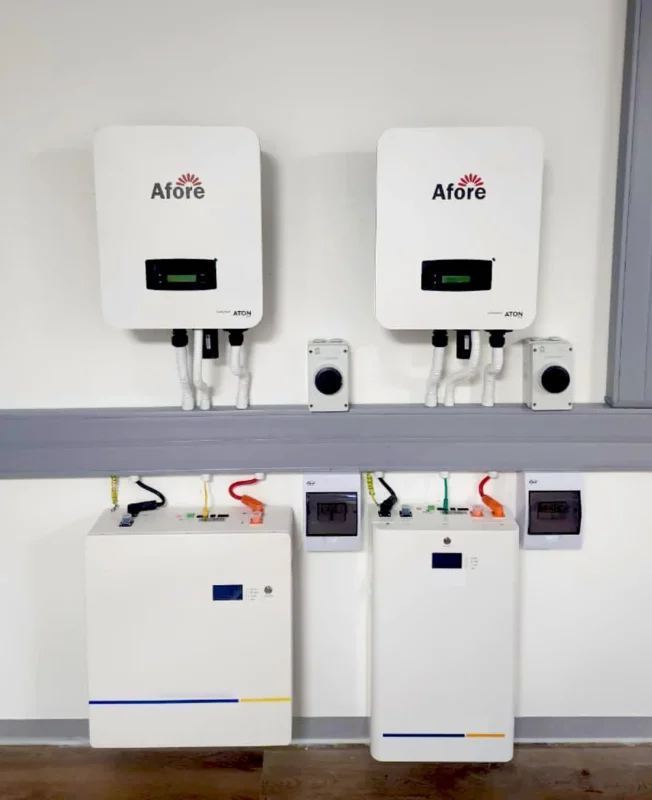
The practical difference lies in the energy flow path. In AC coupling, PV-to-battery charging typically follows this sequence: PV DC power is converted to AC by the PV inverter, then converted back to DC by the battery PCS for charging. When the battery discharges to AC loads, energy is converted again from DC to AC. In DC coupling, PV energy can charge the battery with fewer conversion stages, and the shared inverter converts stored energy to AC when needed.
That difference affects more than efficiency. It influences how the system is metered, how export limits are enforced, how the utility reviews the project, which equipment can be combined, how commissioning is performed, and how future upgrades are planned.
Note that backup capability is not inherent to either topology; it depends on islanding design, grid-forming functions, and transfer equipment. Both AC-coupled and DC-coupled systems require dedicated design considerations if backup power or microgrid operation is part of the project objective.
AC-coupled battery storage is often preferred for retrofit projects where a commercial PV system is already installed and operating. Because the battery connects to the AC distribution system, the EPC can often preserve the existing PV architecture. This may include PV inverters, PV strings, combiner boxes, existing warranties, and DC-side approvals.
This approach is often the least disruptive retrofit path, provided the existing AC infrastructure can accept the added PCS without major switchgear or transformer upgrades. EPCs should still confirm switchboard capacity, transformer loading, protection coordination, and utility requirements before finalizing the design.
For example, if a factory has a 1 MW rooftop PV system commissioned five years ago, modifying the DC design may trigger engineering review, downtime, warranty questions, and potentially revised permitting. Adding an AC-coupled battery PCS at the main switchboard or medium-voltage interconnection point may reduce project disruption while preserving the existing PV architecture.
AC coupling is also attractive for phased deployments. A commercial property owner may want storage added building by building, or a reseller may need a repeatable solution across sites with different PV inverter brands. Because the battery system is electrically independent from the existing PV inverter architecture, AC coupling can provide greater vendor flexibility and modular expansion.
DC-coupled storage is often attractive for new-build solar-plus-storage projects because the PV array, battery, inverter, controls, and interconnection can be designed as an integrated system. This is especially relevant for sites with high DC/AC ratios, export limitations, or frequent inverter clipping.
In a high-irradiance commercial project, the PV array may produce more DC power than the inverter can export at peak hours. Without storage, this excess energy is clipped. A DC-coupled battery can absorb some of that otherwise-lost energy on the DC side, improving PV utilization without increasing the AC interconnection rating.
DC coupling may also reduce duplicated conversion equipment. Instead of using separate PV inverters and a separate battery PCS, the project may use a shared inverter architecture. However, this benefit depends on the actual design. DC-coupled systems require tighter coordination among PV strings, MPPT channels, battery voltage windows, DC/DC converters, inverter current limits, protection devices, and the energy management system.
The table below provides first-pass selection logic. It should not replace site-specific modeling, but it helps narrow the architecture before detailed engineering.
| Decision factor | AC-coupled battery storage often fits best | DC-coupled solar-plus-storage often fits best |
|---|---|---|
| Project type | Existing PV retrofit, phased storage addition | New-build integrated PV+BESS |
| Existing PV inverters | Keep existing equipment and warranties | Replace or specify hybrid/shared inverter platform |
| Efficiency priority | Good for grid-charged or independently dispatched storage | Stronger for PV-to-battery energy flows |
| Clipping recapture | Limited unless controlled through AC-side export strategy | Strong advantage where PV clipping is material |
| Interconexión | May require review as additional AC generation capacity | May simplify export-limit implementation within a shared inverter architecture, subject to utility acceptance and certification |
| Vendor flexibility | Higher modularity and mixed equipment options | More integrated, often supplier-dependent |
| Expansion strategy | Easier to add storage blocks later | Best when future DC capacity is planned early |
| Controls complexity | More AC-side coordination between devices | More integrated but tighter compatibility requirements |
The key point is simple: AC coupling generally favors retrofit flexibility and operational independence, while DC coupling generally favors integrated new-build optimization, DC-side efficiency, clipping recapture, and shared interconnection planning.
A commercial AC-coupled BESS usually includes PV modules, string or central PV inverters, battery racks or cabinets, a bidirectional PCS, battery management system, transformer, switchgear, site meters, communications gateways, and an energy management system. In larger C&I systems, a site controller coordinates PV production, battery charging, load demand, grid import, and export limits.
The battery can charge from PV-generated AC power, from the grid, or from both depending on tariff rules, incentive requirements, and interconnection permissions. This flexibility is valuable where off-peak grid charging, demand response, or ancillary services are part of the business case.
However, AC coupling shifts attention to AC infrastructure. EPCs need to confirm switchboard capacity, breaker ratings, transformer loading, protection coordination, short-circuit levels, meter placement, and the point of common coupling. If the battery PCS is large, the existing electrical room may not have enough space or thermal capacity. A seemingly simple retrofit can become expensive if switchgear or transformers must be upgraded.
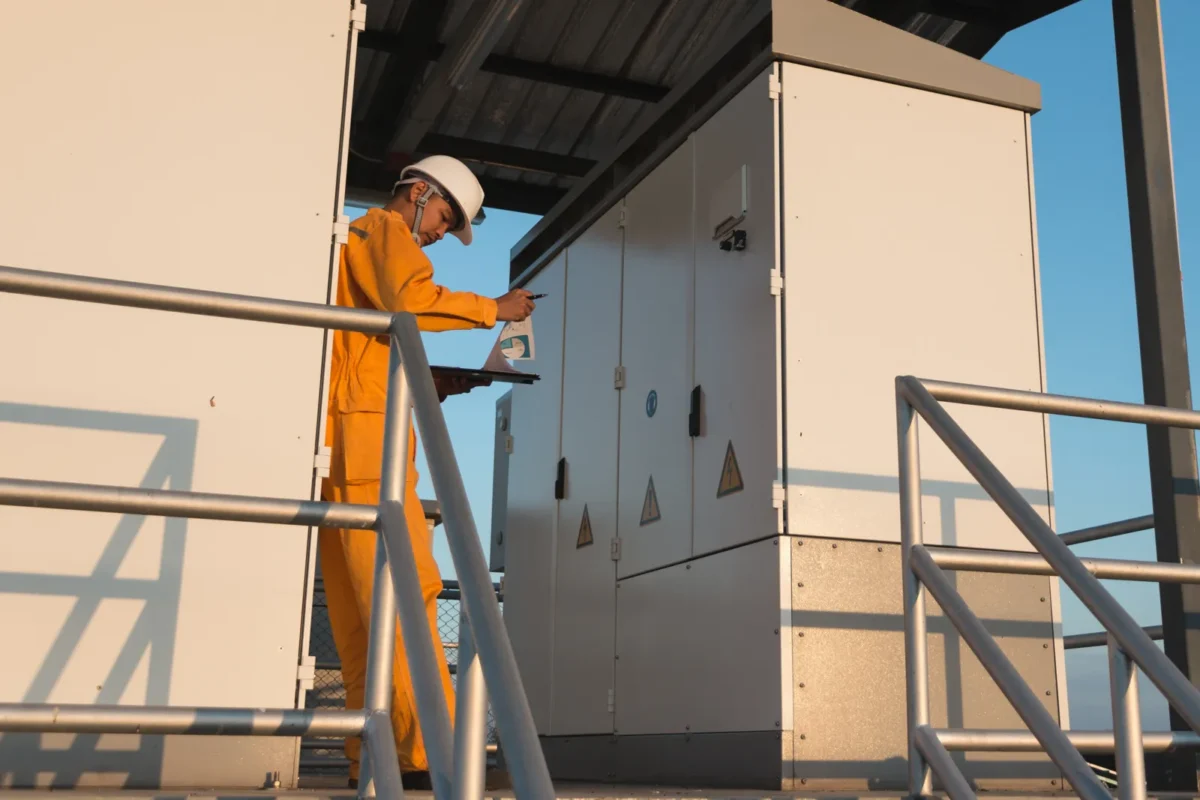
A DC-coupled commercial system typically includes PV strings, combiner boxes, DC disconnects, fuses, surge protection, DC/DC converters where required, battery racks, a hybrid inverter or central inverter, and an EMS. The PV array and battery share a DC-side architecture before conversion to AC.
This design requires careful validation of MPPT configuration, string voltage, battery voltage window, maximum current, DC cable sizing, fault protection, and operating limits under temperature extremes. If the battery charges directly from the PV array through DC/DC conversion, the system must manage current flow between PV, battery, and inverter without exceeding component ratings.
Compared with AC coupling, DC coupling is more supplier-dependent. The inverter, battery, DC/DC converter, firmware, and control platform must be approved to work together. Procurement teams should avoid assuming that any battery can be connected to any hybrid inverter. Compatibility must be confirmed at the exact model, voltage, firmware, and certification level.
Terminology can create confusion in commercial procurement. A PV inverter converts solar DC power into grid-synchronous AC power. A battery inverter or inversor de almacenamiento de energía converts AC power to DC for charging and DC battery power back to AC for discharge. A hybrid inverter manages both PV and battery energy through an integrated architecture, often on the DC side. A DC/DC converter manages voltage matching, charging control, and current regulation between PV, battery, and the shared DC bus.
In AC-coupled systems, the PV inverter and battery PCS are usually separate grid-interfacing devices. In DC-coupled systems, the project may rely on a hybrid inverter or a central inverter with DC-coupled battery functionality. For EPCs and resellers, the critical checks are inverter rating, battery voltage range, C-rate, grid-code functions, communication protocol, firmware compatibility, and warranty approval.
AC coupling can involve more conversion stages when PV energy is stored in the battery. In a typical AC-coupled system, solar energy is converted from DC to AC by the PV inverter, then converted back to DC by the battery PCS during charging. During discharge, the battery energy is converted again from DC to AC for site loads or grid export.
DC coupling can reduce some conversion steps when solar energy is stored directly from the PV side. This is why DC-coupled systems can achieve a modest efficiency advantage in PV-to-battery applications. However, this advantage is mainly related to energy that originates from solar generation. If the battery is frequently charged from the grid, the efficiency difference between AC and DC coupling may become smaller because both architectures still depend on battery charging, discharging, and auxiliary energy consumption.
The efficiency comparison should also consider different energy paths. PV-to-battery-to-load efficiency measures how much solar energy reaches the facility after storage losses. Grid-to-battery-to-load efficiency evaluates energy stored from the grid and later used by the site. Annual system value considers not only conversion losses, but also avoided curtailment, demand-charge savings, export limitations, and operating strategy.
The DC-coupled advantage may also be limited in some commercial projects. For example, systems with low inverter clipping, low solar contribution, frequent grid charging, or high auxiliary loads may see only a small improvement compared with AC coupling. In these cases, the overall project value depends more on system design, tariff structure, and operational requirements than on conversion efficiency alone.
Typical commercial assumptions are shown below. Actual project values vary by inverter loading, temperature, transformer losses, auxiliary loads, and dispatch strategy.
| Performance metric | Typical commercial range |
|---|---|
| Modern PV inverter efficiency | Approximately 97–99% at favorable loading |
| Battery PCS efficiency | Approximately 95–98% depending on operating point |
| AC-coupled PV-to-battery-to-AC round-trip efficiency | Commonly around 85–88% in modeled scenarios |
| DC-coupled PV-to-battery-to-AC round-trip efficiency | Commonly around 88–90% in modeled scenarios |
| Typical DC-coupled advantage for PV-stored energy | Often around 2–3 percentage points |
These figures should be treated as modeling inputs, not universal guarantees. A well-designed AC-coupled system can outperform a poorly matched DC-coupled system. EPCs should compare modeled annual delivered kWh, project value, and lifecycle economics rather than only nameplate efficiency.
Treat conversion efficiency as only one input. In commercial projects, interconnection constraints, clipping recovery, and retrofit cost often outweigh a modest difference in stored-energy conversion losses.
For existing commercial PV assets, AC coupling is often the practical starting point because it allows the battery to connect to the existing AC distribution system without redesigning PV strings, rooftop wiring, combiner boxes, or PV inverter MPPT configuration. This can reduce engineering effort, minimize downtime, and simplify integration with operating PV assets.
However, AC coupling is not automatically suitable for every retrofit. The project team should verify available switchgear capacity, transformer loading, protection coordination, and utility requirements before installation. Metering should also be reviewed, especially when the battery may charge from the grid, because tariff rules or incentive programs may require separate tracking of PV generation and battery operation. In retrofit projects, avoiding major redesign often has more impact on project economics than a small efficiency advantage. Although DC coupling may reduce some conversion losses, the additional engineering, equipment replacement, and downtime required for an existing PV system may outweigh the energy benefit.
For new-build commercial and industrial projects, DC coupling deserves strong consideration because the PV array, battery, inverter, and interconnection can be optimized as one integrated system. The EPC can design the DC/AC ratio, battery power rating, usable capacity, inverter loading, and export-control strategy together from the beginning.
A common case is an export-limited site. Suppose an industrial facility can only export 1 MW at the point of interconnection, but the roof and carport areas can support 1.4 MWdc of PV. A DC-coupled battery can help absorb excess PV production during peak irradiance and discharge later during site demand peaks. The project may increase solar utilization without requesting a larger AC interconnection.
AC coupling may still be the better choice in new builds where storage capacity must be independently scalable, where the battery will participate in grid services separate from PV operation, or where the owner wants flexibility to replace PV and storage equipment on different timelines.
Many commercial portfolios are not built in a single phase. A property group may install PV first, then add batteries later as tariffs change or as EV charging loads appear. In these cases, architecture planning should start before batteries are purchased.
AC-coupled storage can often be added building by building or meter by meter. DC-coupled expansion is possible, but it requires pre-planned inverter capacity, compatible DC infrastructure, physical space for battery cabinets, and approved control logic. If future storage is likely, EPCs should leave space in electrical rooms, specify compatible switchgear, reserve communications pathways, and document export-control options during the initial PV design.
Yes, batteries can often be added to an existing commercial solar PV system. The best architecture depends on the installed inverter platform, switchgear capacity, utility rules, battery location, fire-code setbacks, available communications, and the owner’s operating objectives.
AC-coupled storage is usually simpler for existing PV assets because it avoids major PV DC redesign. DC coupling may be feasible if the original inverter platform was designed for storage integration or if the project owner is already planning inverter replacement. The decision should be based on engineering feasibility, downtime tolerance, interconnection impact, and lifecycle economics.
Battery sizing should start with interval load data, not with a standard product size. For demand-charge reduction, the power rating must be sufficient to reduce short peak events, while usable capacity must sustain discharge long enough to cover the peak window. For time-of-use shifting, duration becomes more important because the battery may need to charge during solar or low-price periods and discharge for several hours.
Battery duration selection should consider more than the target discharge time. EPCs should evaluate the inverter clipping profile, available charging windows during solar production, export limitations, and battery reserve strategy. These factors determine whether the battery can actually absorb available energy and deliver value during the required operating periods.
In commercial PV+BESS projects, public studies often evaluate PV systems from roughly 100 kW to several MW, with battery power commonly sized at 0.25 to 1.0 times PV AC or DC capacity depending on the use case. However, tariff structure is more important than a generic ratio. A cold-storage warehouse, a logistics depot, and a manufacturing plant can have very different demand profiles even with similar PV system sizes.
AC vs DC coupling affects how the battery charges and how power limits are managed. AC-coupled systems typically have an independent battery PCS, allowing battery power to be sized separately from the PV inverter. DC-coupled systems may achieve higher PV utilization, but battery charging and discharge power can be constrained by shared inverter capacity and DC-side operating limits.
For example, consider a 2-hour battery installed on a commercial site where the PV inverter is already operating close to its AC export limit. In an AC-coupled design, the battery PCS can often charge or discharge independently from the PV inverter rating, depending on the interconnection limit and site controls. In a DC-coupled design, the shared inverter architecture may improve clipping recovery, but available battery power can be limited by inverter capacity, PV production conditions, and the need to manage PV and battery power flows together.
In both architectures, the correct battery size depends on the operating objective. Demand-charge reduction, solar self-consumption, clipping recovery, export control, and backup reserve requirements can all lead to different optimal power and duration choices.
DC/AC ratio is central to the DC-coupled value proposition. Many commercial PV systems are intentionally designed with more PV module capacity than inverter AC capacity. This improves inverter utilization across the year, but it can create clipping during high-production hours.
A DC-coupled battery can capture part of the energy that would otherwise be clipped when PV DC output exceeds inverter AC export capability. However, a high DC/AC ratio alone does not guarantee high clipping recovery value. The actual benefit depends on when clipping occurs, whether the battery has available charging capacity, and whether the system controls allow charging during those periods.

To estimate clipping recovery potential, EPCs should evaluate several project inputs, including:
Clipped energy is not fully recoverable in every operating condition. Recovery may be limited if the battery is already full, battery power is undersized, backup reserve is maintained, or export-control settings prevent additional charging during peak PV production.
The value of clipping recovery also depends on project priorities. For example, a system designed mainly for backup power may keep battery capacity available for outages instead of maximizing solar capture. A system focused on self-consumption or export-limited operation may use more battery capacity for PV absorption.
For AC-coupled systems, clipped DC energy is usually not available because it is lost before the PV inverter output reaches the AC bus. AC coupling can still support export control and energy shifting, but it typically cannot recover inverter clipping in the same direct way.
Round-trip efficiency should be modeled at system level. A project model should include PV module losses, wiring losses, inverter efficiency curves, DC/DC conversion losses, battery charge and discharge efficiency, transformer losses, HVAC energy, standby consumption, and EMS behavior.
However, annual delivered energy and avoided curtailment can be more important than instantaneous conversion efficiency. A system with slightly lower component efficiency may create higher project value if it captures more solar energy, reduces demand charges, avoids export limitations, or improves operational flexibility.
The most useful comparison is not “which architecture has the highest theoretical efficiency?” It is “which architecture delivers the highest net value over the project term?” A DC-coupled system may deliver more PV energy because of clipping recapture. An AC-coupled system may deliver better project economics if it reduces retrofit cost, shortens deployment time, or enables participation in grid-service markets.
EPCs should compare annual delivered kWh, avoided curtailment, peak-demand reduction, expected cycling, capacity degradation, and revenue under conservative and optimistic dispatch assumptions.
The energy management system coordinates PV generation, battery charging, battery discharge, facility load, grid import, grid export, and reserve requirements. In commercial projects, common operating modes include self-consumption, peak shaving, time-of-use arbitrage, backup reserve, demand response, frequency response where market rules allow, and zero-export control.
AC-coupled systems usually require the EMS to coordinate multiple AC-side devices: PV inverters, battery PCS, meters, and sometimes generators or EV chargers. DC-coupled systems may centralize more control through the hybrid inverter, but this can increase dependency on one control ecosystem.
Export limitation is a practical concern. A non-export commercial project must respond quickly to load changes and PV fluctuations. Meter placement, CT orientation, communication latency, inverter ramp rates, and failsafe behavior should be validated during commissioning, not assumed from datasheets.
Architecture can materially affect utility review. In an AC-coupled retrofit, the battery PCS may appear to the utility as additional generation capacity because it is a separate AC-connected power conversion device. Utilities may also review whether the PCS increases available fault contribution at the point of interconnection and whether the system configuration changes the site’s apparent generation capacity.
DC-coupled systems can sometimes simplify export limitation because PV and battery share an inverter export limit. However, this does not automatically make interconnection easier. Utilities may still require verification that the export-limiting method is acceptable, that non-export controls are properly certified or validated, and that the hybrid inverter configuration meets required ride-through and protection settings.
For both architectures, clear documentation reduces review delays. Project teams should provide single-line diagrams, equipment certificates, operating modes, export-limit logic, metering diagrams, and commissioning test procedures early in the process.
Although both architectures must meet interconnection requirements, utilities may focus on different technical questions depending on the system topology.
In AC-coupled systems, review attention often focuses on the battery PCS as an additional grid-connected device. Utilities may evaluate whether the PCS changes fault contribution, affects protection coordination, or creates additional generation capacity at the point of interconnection. Export-control methods must also be clearly defined, especially for projects operating under zero-export or limited-export requirements.
In DC-coupled systems using hybrid inverters, utilities may focus more on integrated inverter behavior. Review items can include ride-through performance, trip settings, control coordination between PV and battery functions, and how the system responds during abnormal grid conditions or communication failures.
Regardless of architecture, utilities commonly request documentation such as:
Early alignment with the utility can reduce redesign risk and prevent delays during commissioning.
Commercial PV and storage inverters are expected to provide grid-support and protection functions such as anti-islanding, voltage and frequency ride-through, reactive power control, power factor settings, Volt-VAR behavior, Volt-Watt behavior, and Frequency-Watt response where required.
In the United States, IEEE 1547 is a major interconnection reference for distributed energy resources. In Europe, requirements are implemented through European network codes and national grid-code frameworks. Other markets have their own certification and utility approval processes.
The important procurement point is specificity. EPCs should verify certification for the exact inverter, PCS, hybrid inverter, firmware version, and configuration being supplied. A product family certificate may not be sufficient if the project uses a different battery, operating mode, or firmware release.
Battery permitting is often one of the longest lead-time items in commercial storage projects. The authority having jurisdiction (AHJ) typically reviews the complete battery installation rather than only the electrical topology. Key review areas may include enclosure ratings, thermal management, spacing, fire detection, emergency shutdown, signage, ventilation, access paths, water exposure, seismic anchoring, and emergency responder documentation.
EPCs should distinguish between three different compliance areas:
Recognized safety frameworks include UL 9540 for energy storage systems, UL 9540A for thermal runaway fire propagation testing, NFPA 855 for stationary energy storage installations, and IEC-based frameworks in international markets. The final requirements depend on the AHJ and can vary significantly between indoor electrical rooms, outdoor containerized systems, rooftop installations, and parking structures.
During plan review, AHJs commonly evaluate items such as:
AC vs DC coupling does not remove the need for battery safety compliance. The coupling topology affects electrical integration and equipment arrangement, but battery chemistry and enclosure design can have a greater impact on permitting requirements. Fire-code review is usually centered on battery characteristics, energy capacity, enclosure type, location, spacing, detection, and emergency procedures.
There is no universal answer. AC coupling may simplify a PV retrofit because the existing DC array is not redesigned. However, it can introduce interconnection questions if the battery PCS is treated as additional generation or if grid charging changes tariff treatment.
DC coupling may simplify export control through a shared inverter, especially in new-build projects. However, it can require deeper review of integrated equipment, DC protection, hybrid inverter certification, and supplier-specific operating modes.
The final permitting path depends on jurisdiction, utility practice, system capacity, installation location, battery chemistry, and documentation quality. For commercial projects, early engagement with the utility, fire authority, and equipment suppliers is usually more valuable than choosing an architecture solely because it appears simpler on a diagram.
Compatibility is one of the highest-risk procurement areas in commercial storage. EPCs should verify voltage windows, current limits, charge and discharge power, C-rate, battery management system communication, ambient operating range, firmware version, approved battery lists, enclosure rating, and warranty conditions.
DC-coupled systems usually require tighter compatibility among inverter, battery, and DC/DC components. If one element changes during procurement, the whole design may need review. AC-coupled systems provide more modularity, but they still require EMS compatibility, grid-code alignment, and reliable communication between PV inverters, battery PCS, meters, and site controllers.
A professional procurement process should treat software as part of the equipment package. Firmware update policy, cybersecurity, data access, remote diagnostics, and control ownership can affect long-term performance as much as hardware efficiency.
Balance-of-system differences can shift the economics of AC vs DC coupling. AC-coupled systems may require additional breakers, AC switchboards, relays, transformers, metering, and protection coordination for the battery PCS. DC-coupled systems may require additional DC combiners, fuses, disconnects, DC/DC converters, arc-fault detection, rapid-shutdown coordination where applicable, and larger DC cable pathways.
The footprint can also differ. AC-coupled storage may need more AC electrical equipment space near the main distribution board or transformer. DC-coupled systems may require optimized proximity among PV inverters, battery cabinets, and DC cable routes. The best layout is site-specific and should be validated before equipment is ordered.
Price is only one procurement variable. For commercial BESS projects, supplier evaluation should include bankability, warranty terms, local technical support, commissioning assistance, spare parts availability, cybersecurity, software update policy, documented certifications, logistics capability, and reference projects at similar scale.
Resellers and EPCs serving multiple commercial sites should also consider repeatability. A storage platform that works well for one ground-mount project may not be ideal for rooftop retrofits, multi-meter campuses, or industrial facilities with strict uptime requirements. The architecture should match the deployment model, not only the first project.
PCS units, battery cabinets, transformers, and switchgear can have long lead times. Architecture choice may be influenced by what can be delivered, certified, commissioned, and supported within the project schedule.
AC-coupled systems can sometimes offer greater sourcing flexibility because PV and battery equipment are electrically separated. DC-coupled systems may depend more heavily on a single integrated supplier ecosystem. Practical logistics also matter: shipping classification, unloading equipment, crane access, temporary storage temperature, installation sequencing, and warranty start dates should be reviewed before contract signing.
Commercial storage projects must account for battery cabinet footprint, working clearances, fire access, ventilation, cable runs, communications pathways, drainage, bollards, and proximity to switchgear or PV inverters. These constraints often determine whether the theoretically preferred architecture is practical.
AC-coupled systems may require additional AC equipment space and cable runs to the point of interconnection. DC-coupled systems may require shorter or more carefully routed DC cable runs and closer coordination between PV and battery equipment locations. Installers should validate site constraints during design, not after equipment delivery.
Commissioning should be architecture-specific. A typical commercial process includes mechanical inspection, torque verification, insulation resistance testing, polarity checks, grounding verification, firmware configuration, battery activation, PCS or inverter testing, EMS configuration, meter validation, export-control testing, alarm verification, and utility witness testing where required.
AC-coupled systems require careful validation of CT orientation, PCS response, PV inverter coordination, and site meter signals. DC-coupled systems require validation of DC voltage windows, PV-battery current limits, hybrid inverter modes, DC/DC converter behavior, and shared inverter export control.
Common commissioning risks include communication failures, firmware mismatch, incorrect meter scaling, transformer setting errors, inverter trip settings, SOC calibration issues, export-control misconfiguration, and utility test failures. These risks affect both architectures but appear differently depending on control topology.
A commercial monitoring platform should track PV generation, battery state of charge, charge and discharge power, inverter status, thermal conditions, alarms, grid import and export, curtailed energy, operating mode, and revenue-impacting events.
AC-coupled systems may involve multiple inverter platforms, so EMS integration is critical. DC-coupled systems may offer a more unified control interface, but diagnostics can become supplier-dependent. For portfolio owners, standardized alarms, remote access permissions, cybersecurity controls, and data export capability should be part of the O&M specification.
Battery performance depends on depth of discharge, cycle count, C-rate, temperature, state-of-charge window, calendar aging, and thermal management. Architecture influences degradation indirectly by shaping operating strategy. For example, a DC-coupled system designed for clipping recapture may cycle frequently during high-production days, while an AC-coupled system focused on demand-charge reduction may cycle around facility peak events.
Owners should evaluate usable capacity, warranted throughput, end-of-warranty capacity, augmentation options, HVAC energy consumption, and operating restrictions. A battery with attractive nameplate capacity may deliver less economic value if usable capacity is limited by warranty or thermal constraints.
AC-coupled systems separate PV and storage conversion equipment. This can increase component count, but it also allows PV and battery systems to be maintained independently. If the battery PCS is offline, the PV system may continue operating. If the PV inverter is under maintenance, the battery may still provide demand management or backup depending on design.
DC-coupled systems may reduce duplicated equipment, but a shared inverter can become a single point of dependency. If that inverter fails, both PV export and battery discharge may be affected. Redundancy can be designed through multiple inverter blocks, but this must be considered early in project design.
Warranty boundaries can become complex when the PV inverter, battery, PCS, EMS, installer, and asset manager are separate entities. AC-coupled systems may involve more vendors, which can complicate fault responsibility. DC-coupled systems may offer tighter integrated warranties, but with less equipment interchangeability.
Project teams should clarify who is responsible for availability, capacity retention, round-trip efficiency, firmware updates, response times, cybersecurity patches, and performance reporting. These details belong in procurement and O&M contracts, not only in technical datasheets.
Storage assets affect grid export, facility demand, backup power, and sometimes revenue market participation. Secure remote access, encrypted communications, role-based permissions, firmware management, audit logs, and data ownership should be evaluated as lifecycle risks.
This is especially important for EPCs and resellers managing multiple commercial sites. A weak EMS or insecure remote-access pathway can create operational and compliance exposure across an entire portfolio.

AC-coupled systems may require a separate battery PCS, additional AC switchgear, protection devices, and sometimes a dedicated transformer. DC-coupled systems may reduce some duplicated conversion equipment but require integrated design, compatible components, DC-side protection, and careful engineering validation.
Total CAPEX should include engineering hours, permitting, interconnection studies, switchgear upgrades, transformers, meters, controls, communications, logistics, crane work, commissioning support, and utility testing. Comparing only battery and inverter prices can lead to poor architecture decisions.
Ongoing costs include monitoring subscriptions, preventive maintenance, HVAC energy, firmware support, inverter service, spare parts, battery augmentation, insurance requirements, and end-of-life planning.
AC-coupled systems may allow independent maintenance and future replacement of PV and storage assets. DC-coupled systems may require supplier-specific service procedures and more integrated troubleshooting. Lifecycle cost should be modeled over the project term, not only year-one installation cost.
Financial performance depends on use case. Demand-charge management, time-of-use arbitrage, PV self-consumption, avoided curtailment, backup power, grid services, and resilience each produce different value streams.
Architecture selection should include a detailed comparison of cost drivers. AC-coupled projects may require additional battery PCS equipment, AC switchgear upgrades, transformer capacity review, and protection coordination. DC-coupled projects may reduce some duplicated conversion equipment but can introduce integrated inverter constraints, redesign complexity, and tighter compatibility requirements between PV, battery, and controls.
DC coupling can improve returns where clipping recapture, PV self-consumption, or interconnection-limited charging is important. AC coupling can improve returns where retrofit speed, vendor flexibility, and operational independence reduce cost and risk.
Project teams should model at least three dispatch scenarios:
A robust financial model should test tariff escalation, battery degradation, dispatch strategy, demand reduction accuracy, export compensation changes, downtime, augmentation timing, warranty throughput limits, and the risk of downtime from shared inverter dependency. These variables are commonly included in PV-plus-storage economic models because project value depends on both technical performance and operating conditions.
Minimum bankability model inputs should include:
Architecture should be selected based on risk-adjusted cash flow, not a generic claim that one topology has better ROI.
Neither architecture is universally better. DC-coupled storage may produce stronger returns in optimized new-build solar-plus-storage projects with high PV oversizing, frequent clipping, low export value, or constrained interconnection capacity.
AC-coupled storage may offer better ROI in retrofit projects where avoiding PV redesign, preserving existing equipment, reducing downtime, and accelerating deployment are more valuable than a small efficiency gain. The correct ROI comparison is site-specific and should be based on modeled cash flows over the full project life.
AC-coupled battery storage often supports modular portfolio rollouts where sites have different PV inverter brands, electrical layouts, and utility requirements. It allows resellers and EPCs to standardize battery blocks while adapting interconnection and controls at each site.
DC-coupled solutions can be highly efficient for standardized new-build templates, especially where the same engineering approach is repeated across rooftops, carports, ground-mount systems, or industrial campuses. The trade-off is tighter dependency on compatible inverter and battery platforms.
Both AC and DC coupling can support resilience, but backup capability is not determined by coupling topology alone. The ability to operate during a grid outage depends more on inverter operating mode, control strategy, transfer architecture, and system commissioning. A battery system designed for energy savings may not automatically provide islanded backup power.
Before selecting a storage architecture for backup applications, EPCs should verify:
AC-coupled systems are common in microgrid architectures because multiple distributed energy resources can connect on an AC bus. However, the battery PCS must support the required islanding and grid-forming functions.
DC-coupled systems can be efficient for PV-charged backup reserves, but they also require compatible inverter architecture, control logic, and transfer equipment. For mission-critical facilities, backup performance should be validated through functional testing, not only equipment ratings.
Many commercial battery systems are marketed primarily for demand-charge reduction, self-consumption, or energy arbitrage. These systems are not necessarily configured for islanded backup operation by default. Backup functionality must be specified during design and confirmed through commissioning.
Commercial energy systems are changing quickly. EV charging depots, electrified process loads, heat pumps, cold storage, and backup generators can all affect storage architecture.
AC-coupled systems may simplify integration with diverse AC loads and distributed energy resources. DC-coupled systems may be attractive where future PV expansion and battery charging will be planned around a shared inverter and DC bus. The right strategy depends on whether future growth is expected primarily on the load side, PV side, storage side, or all three.
Before specifying architecture, project teams should answer the following design questions in sequence.
| Decision question | Por qué es importante |
|---|---|
| Is the project a retrofit or new build? | Determines how much redesign is acceptable |
| What is the primary value stream? | Demand reduction, backup, arbitrage, clipping recapture, and grid services favor different designs |
| Is export limited or zero-export required? | Affects metering, EMS, and interconnection strategy |
| What is the planned DC/AC ratio? | High ratios can improve the case for DC coupling |
| Can existing switchgear and transformers support storage? | Retrofit feasibility often depends on AC infrastructure |
| Are batteries planned in phases? | AC coupling may simplify staged expansion |
| What certifications and fire-code approvals are required? | Permitting timelines can dominate project schedule |
| Who owns EMS performance and cybersecurity? | Controls reliability affects revenue and compliance |
| What happens during inverter or PCS failure? | Determines availability risk and redundancy needs |
| How will the site expand over 5–15 years? | EV charging, generators, and repowering can change the best architecture |
The best choice in AC coupled vs DC coupled battery storage depends on project risk, operating strategy, and lifecycle value. AC coupling is usually the practical choice for retrofits, phased storage deployment, vendor flexibility, and independent operation. DC coupling is often stronger for integrated new-build solar-plus-storage, high DC/AC ratios, clipping recapture, and shared export-limit optimization.
For EPCs, installers, system integrators, and facility owners, the decision should be made through site-specific modeling and engineering review. Start with the business case, interconnection limit, load profile, PV design, safety requirements, and expansion plan. Then select the coupling architecture that delivers the most reliable value over the full project life, not just the simplest one-line diagram.
DC-coupled battery storage is usually more efficient for PV-to-battery charging because it can reduce some energy conversion steps. The advantage mainly applies when the battery is charged directly from solar generation. If the battery is mostly grid-charged, the efficiency difference between AC and DC coupling may become much smaller, and AC coupling can deliver similar overall performance.
Usually, but not always. AC-coupled storage is often preferred for existing commercial PV systems because it can be added without redesigning the PV DC system or replacing existing inverters. However, AC coupling can become expensive if the site requires major switchgear upgrades, transformer replacement, or complex utility re-approval.
DC-coupled storage is attractive for new-build solar-plus-storage projects because it can improve PV utilization, capture clipped solar energy, and optimize the PV, battery, inverter, and export limit as one system. It is especially valuable for projects with high DC/AC ratios, limited grid export capacity, or frequent inverter clipping.
Yes. A commercial campus may use DC-coupled storage for a new PV installation while adding AC-coupled batteries to existing buildings. A mixed architecture can provide better flexibility when different sites have different PV systems, expansion timelines, or operating requirements.
Yes, but mainly indirectly. Coupling topology affects warranty through operating conditions, such as cycling frequency, temperature, C-rate, and whether the battery is paired with approved inverter and control systems. Using unapproved equipment combinations can create warranty risks regardless of AC or DC architecture.








 Turkish
  Romanian