




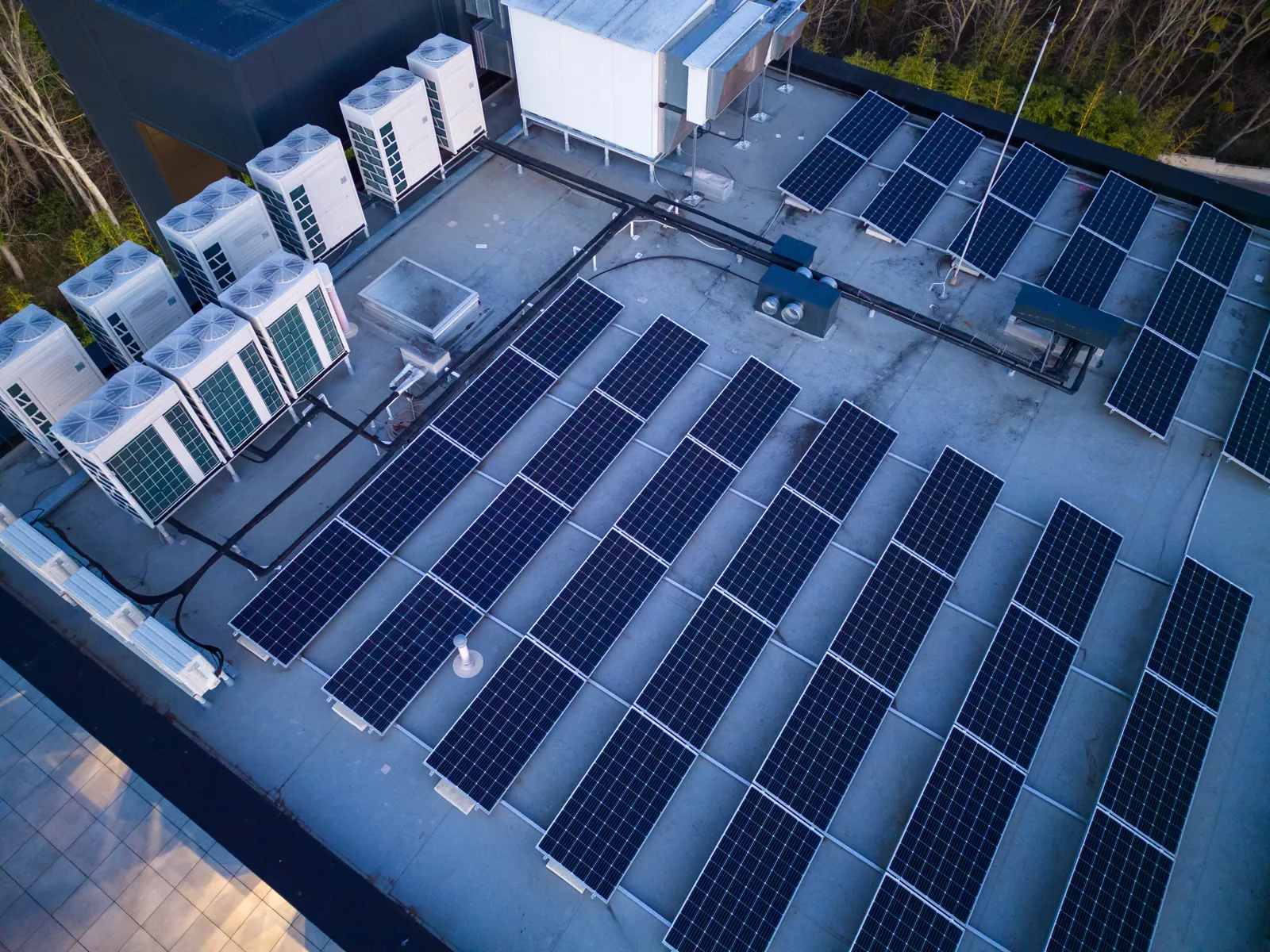
Battery storage for commercial buildings is becoming a core design consideration in commercial and industrial PV projects. For many sites, the question is no longer whether batteries can store solar energy. The real question is whether a battery energy storage system can reduce demand charges, increase PV self-consumption, manage grid constraints, provide backup power, and deliver a bankable return over its operating life.
For EPC companies, PV installers, resellers, system integrators, and commercial facility decision-makers, battery storage changes the project conversation. A PV-only system is usually assessed against annual generation, self-consumption, export value, and simple payback. A commercial solar-plus-storage project requires a broader view of load profiles, tariff windows, power limits, controls, degradation, interconnection rules, fire safety, commissioning quality, warranty terms, and long-term O&M responsibilities.
This guide explains how to evaluate battery storage for commercial buildings from a practical project perspective. It covers the main use cases, sizing logic, technical specifications, system architecture, compliance requirements, installation planning, economics, lifecycle risks, and future trends affecting commercial PV-plus-storage deployment.
Commercial PV projects are increasingly affected by conditions that reduce the value of exporting solar energy directly to the grid, a trend widely reflected in broader energy storage deployment patterns described in U.S. Department of Energy energy storage research and policy guidance. These include lower daytime export tariffs, zero-export interconnection requirements, grid congestion, transformer limits, and rising demand-based electricity charges. A commercial battery energy storage system can improve project value by shifting energy in time and controlling how much power the building imports from or exports to the grid.
Unlike residential batteries, commercial systems are usually justified by multiple value streams. Backup power may be important, but it is rarely the only reason to install storage. In many C&I projects, the financial case is built around demand charge management, peak shaving, time-of-use tariff optimization, PV self-consumption, and operational resilience. This is why system design must begin with the building’s actual load behavior, not with a generic kWh capacity target.
Globally, lithium-ion battery systems dominate stationary commercial storage because of their efficiency, modularity, falling cost, and mature inverter integration. Many commercial systems fall in the 100 kW to multi-MW range, with energy capacity from several hundred kWh to multiple MWh. Smaller commercial premises may use systems below 100 kW, while factories, logistics centers, cold storage facilities, data centers, and large campuses may require multi-MWh installations.
The most common business case for commercial battery storage is demand charge reduction.
| Building Type | Primary Objective | Battery Dispatch Behavior |
|---|---|---|
| Warehouses | Peak shaving + TOU optimization | Evening discharge after loading operations |
| Almacenamiento en frío | Reducción de la tarifa de potencia | Short bursts during compressor start cycles |
| Offices | Self-consumption + TOU shifting | Afternoon discharge during cooling peaks |
| Manufacturing | Peak control + process stability | Fast response to motor-driven spikes |
| Fleet depots | EV load management | Overnight charging + daytime peak smoothing |
While the table above shows typical use cases by building type, the actual system architecture should be selected based on operational priorities rather than building category alone.
Two sites with the same building type can require completely different battery strategies depending on tariff structure, load volatility, and resilience requirements.
Key decision factors include:
In practice, most commercial systems combine multiple objectives, but one use case should always be prioritized in the control strategy to avoid conflicting dispatch behavior.
In tariffs where customers pay for the highest measured kW demand during a billing period, even a short peak can significantly increase the monthly bill. A battery can discharge during these peaks to reduce grid import and lower the demand charge.
Time-of-use optimization is another major use case. If electricity prices are low during certain hours and high during others, a battery can charge during low-cost periods and discharge during peak-tariff windows. When paired with PV, the battery can store excess midday solar production and discharge later in the day when electricity prices rise or when the building’s demand exceeds PV output.
Battery storage also supports PV self-consumption. This is especially relevant where export compensation is low, export is restricted, or the utility requires export limitation. Instead of curtailing solar production or exporting at low value, the site can store energy for later use.
Different building types also show different battery dispatch patterns.
Warehouses typically have low daytime load and benefit from evening discharge after logistics activity. Cold storage facilities require frequent short bursts of power to manage compressor loads. Office buildings tend to experience predictable afternoon peaks driven by HVAC demand. Manufacturing sites often require fast response discharge during motor or process equipment start-up. Fleet depots are increasingly driven by EV charging demand, which creates new peak load profiles.
Backup power and resilience remain important, particularly for facilities with refrigeration, IT infrastructure, security systems, medical loads, process equipment, or high outage costs.
Backup design typically falls into two categories. Whole-site backup supports the entire building load during an outage, but requires large battery capacity and higher cost. Partial critical-load backup only supports selected circuits such as refrigeration, servers, emergency lighting, or essential production lines, and is more commonly used in commercial projects.
A peak-shaving system may only operate during normal grid conditions for 15–60 minutes per event, while a resilience-focused system may need to sustain critical loads for several hours depending on outage requirements.
Grid services are also emerging in some markets. Commercial batteries may participate in demand response, capacity programs, frequency regulation, or virtual power plant platforms where regulations and metering rules allow. These opportunities can improve project economics, but they also add operational complexity because capacity used for grid services may not always be available for backup or peak shaving.
Commercial PV generation often peaks around midday, while many buildings experience their highest load in the late afternoon, evening, or during specific production periods. Warehouses may have relatively flat daytime loads but limited weekend consumption. Factories may have shift-based peaks. Supermarkets and cold storage facilities often have continuous refrigeration demand but may still experience HVAC-related peaks. Office parks may see demand rise in the afternoon when cooling loads increase, while logistics centers may face new peaks from EV charging.
A battery energy storage system helps align solar production with the building’s actual consumption. During periods of excess PV generation, the battery charges. Later, it discharges when PV output falls, grid tariffs rise, or demand peaks occur. This can increase the on-site utilization of solar energy and reduce exposure to low export rates.
For example, a commercial warehouse with a large roof may generate more solar energy than it consumes during weekend afternoons. If export is limited by the utility, part of the PV output may otherwise be curtailed. Adding storage allows the site to capture more of that energy and use it during evening operations, early morning loading activity, or high-tariff periods. In a manufacturing facility, the battery may instead be dispatched to reduce short peaks caused by motors, compressors, furnaces, or process equipment.
The key point is that commercial solar battery storage should not be sized only around the PV array. It must be sized around the interaction between PV generation, building load, tariff structure, interconnection limits, and the customer’s operational priorities.
Commercial battery storage projects should pass a basic feasibility screen before detailed modeling.
A project is usually worth deeper analysis when at least one of the following conditions is present:
If none of these conditions exist, storage value is usually limited and payback is difficult to achieve.
Battery storage for commercial buildings is not automatically profitable. In some cases, adding storage increases project cost without creating enough measurable value. This can happen where demand charges are low, electricity tariffs are flat, export compensation is attractive, or the building has limited operating hours and little load during solar generation periods.
Poor data is another common reason for weak project outcomes.
| Condition | Por qué es importante | Modeling Implication |
|---|---|---|
| High demand charges | Peak reduction drives savings | Requires 15-min interval simulation |
| Sharp load spikes | Battery can effectively shave peaks | High power, short duration sizing |
| Time-of-use pricing | Energy arbitrage becomes viable | Requires tariff time-block modeling |
| PV export limitation | Excess solar cannot be sold | Requires self-consumption optimization |
| EV charging load | Creates new demand peaks | Requires future load scenario modeling |
Without 15-minute or hourly interval data, it is difficult to know whether demand peaks are short and battery-addressable or broad and sustained. A battery can shave a sharp 30-minute peak effectively, but it may be uneconomic if the facility’s peak lasts for six hours and requires a very large energy capacity.
EPCs and installers should be cautious about proposing commercial solar-plus-storage based only on annual electricity consumption. Annual kWh usage does not reveal demand spikes, seasonal load variation, tariff exposure, or the timing mismatch between PV output and load. A credible proposal should include interval data analysis, tariff modeling, PV production simulation, battery dispatch assumptions, degradation estimates, and sensitivity analysis.
A successful commercial battery storage project begins with clear operating objectives. The same physical battery cannot be optimized for every purpose at the same time without trade-offs. If the system is reserved for backup, less capacity is available for daily arbitrage. If it cycles aggressively for grid services, degradation may accelerate. If it is undersized for peak shaving, savings may disappoint. If it is oversized, the project may struggle to reach target payback.
Battery sizing for commercial buildings follows a structured engineering workflow that starts with data validation and ends with application-specific design.
Key inputs include:
If these inputs are not available, battery sizing should be paused until adequate data is collected.
Once data is available, the next step is to analyze the building’s load profile over at least 12 months. This includes understanding daily and seasonal variations, demand peaks, and how these align with tariff structures and PV generation patterns.
Demand charge windows, TOU pricing periods, and export limitations should all be mapped against the load profile. This step determines whether the site has strong peak-shaving or energy shifting potential.
A critical distinction in commercial battery design is between power and energy.
Power (kW or MW) defines how much load the battery can support at a given moment. Energy (kWh or MWh) defines how long the battery can sustain that output.
Peak shaving applications are typically power-driven and focus on short, high-intensity demand spikes. Solar self-consumption applications are energy-driven and require longer discharge durations to shift midday solar into evening usage. Backup applications require separate critical load analysis based on required autonomy and load priority.
Peak shape has a direct impact on system economics.
Short duration peaks (15–30 minutes) are well suited for battery discharge and often produce strong demand charge savings. Longer duration peaks (4–6 hours) require significantly larger energy capacity and increase system cost, which can reduce project ROI.
Different commercial use cases require different sizing priorities:
Each application requires a different balance of kW and kWh, and in most commercial systems, a single battery must be optimized for a prioritized use case rather than all functions equally.
A simplified sizing framework is shown below, but professional projects should use detailed simulation rather than rules of thumb.
| Design objective | Primary sizing driver | Typical design focus |
|---|---|---|
| Gestión de las tarifas por consumo máximo | Peak kW reduction and peak duration | High power response, accurate metering, predictive dispatch |
| PV self-consumption | Midday PV surplus and evening load | Energy capacity, PV forecasting, export control |
| Time-of-use optimization | Tariff spread and discharge window | Daily cycling, round-trip efficiency, tariff calendar |
| Energía de reserva | Critical load kW and required autonomy | Load segmentation, islanding controls, reserve SoC |
| Grid services | Program rules and response requirements | Communications, availability, metering, operational priority |
Commercial buyers often compare systems by nominal kWh price, but nominal capacity alone can be misleading. Usable capacity, depth of discharge, round-trip efficiency, degradation, warranty limits, and control strategy determine real project value.
C-rate describes how quickly a battery charges or discharges relative to its energy capacity. A 1C battery can discharge its full rated energy in approximately one hour, while a 0.5C system discharges over roughly two hours. Demand charge management may require higher power capability, while solar shifting may favor longer duration.
Depth of discharge, or DoD, indicates how much of the battery’s capacity is used during cycling. Operating a battery at very high DoD can increase usable energy in the short term but may accelerate degradation. Many commercial systems reserve part of the battery’s capacity to protect life, maintain backup availability, or comply with warranty conditions.
Round-trip efficiency indicates how much energy is recovered after charging and discharging. For lithium-ion stationary storage systems, efficiency can vary significantly depending on inverter configuration, auxiliary loads, temperature control, battery aging, and operating conditions. For solar-plus-storage financial modeling, these losses should be included because they affect both savings and PV utilization.
| Especificaciones | Why it matters in commercial projects |
|---|---|
| Rated power, kW/MW | Determines peak shaving capability and critical load support |
| Nominal energy, kWh/MWh | Indicates total installed battery capacity before use limits |
| Usable energy | More relevant than nominal capacity for dispatch modeling |
| Tasa C | Defines discharge duration and inverter-to-battery ratio |
| Round-trip efficiency | Affects arbitrage value and PV self-consumption economics |
| Cycle life and throughput | Determines expected operating life under planned dispatch |
| Temperatura de funcionamiento | Affects safety, derating, HVAC needs, and degradation |
| Warranty retained capacity | Shows expected usable capacity at later project years |
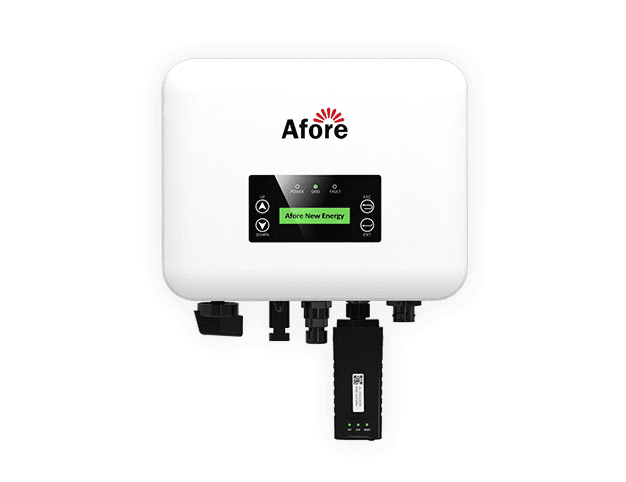
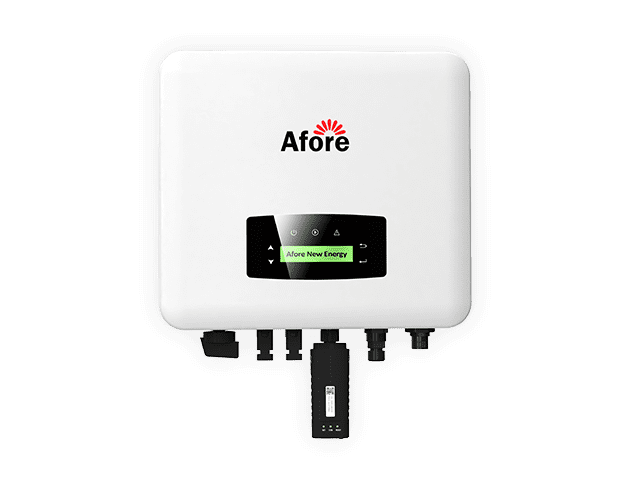
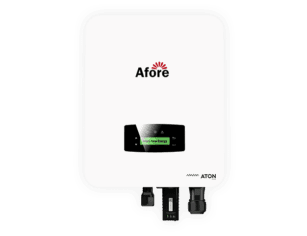
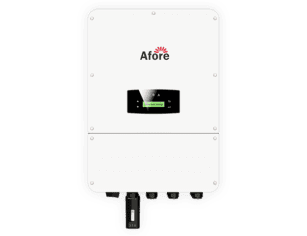
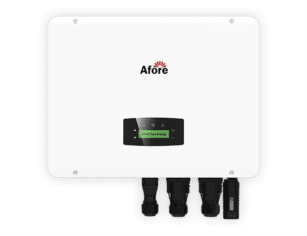
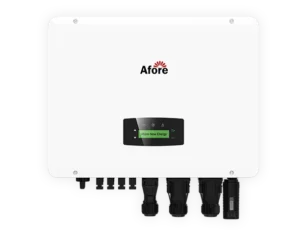
PV battery storage integration is typically designed as either AC-coupled or DC-coupled. In an AC-coupled system, the PV array and battery each have their own inverters and connect to a common AC bus, typically supported by an inversor de almacenamiento de energía that manages bidirectional power flow and system coordination. This approach is common for retrofits because it can often be added to an existing PV installation without replacing the PV inverter. It also gives EPCs flexibility to select battery inverters, PV inverters, and controls independently.
In a DC-coupled system, PV and battery assets share a DC bus through a hybrid or integrated power conversion architecture. This may reduce conversion steps when charging the battery directly from PV and can be attractive for new-build solar-plus-storage systems. DC coupling may also help manage clipped PV energy where the array is oversized relative to inverter capacity.
However, architecture selection should not be based only on theoretical efficiency. EPCs must evaluate site layout, inverter compatibility, export limits, metering requirements, available switchgear capacity, future expansion plans, and serviceability. AC-coupled systems may simplify staged deployment and independent operation. DC-coupled systems may offer advantages where PV-to-battery energy transfer is central to the business case. Both can work well when engineered correctly.
Lithium iron phosphate, commonly known as LFP, is widely evaluated for commercial building storage because of its thermal stability, cycle life, and suitability for stationary applications. Other lithium-ion chemistries, including nickel manganese cobalt variants, have historically offered higher energy density, which can be useful where space or weight is constrained. However, stationary commercial projects often prioritize safety, lifetime, availability, warranty structure, and total cost of ownership over maximum energy density.
Flow batteries, sodium-ion batteries, and other technologies may become more relevant in specific C&I applications, especially where long duration, high cycling, or non-lithium supply chains are important. At present, most commercial solar battery storage projects are still based on lithium-ion systems because they offer mature inverter integration, compact design, high efficiency, and broad supplier ecosystems.
Chemistry selection should be reviewed alongside certifications, enclosure design, battery management system capability, thermal management, degradation curves, and warranty exclusions. A technically strong battery module can still underperform if the full system is poorly integrated or operated outside recommended conditions.
Product selection for EPCs and installers should begin with the project use case. A battery selected for short-duration peak shaving may not be ideal for multi-hour backup. A system optimized for indoor installation may not fit an outdoor logistics depot. A low-cost battery without strong monitoring, documentation, or commissioning support can create higher lifetime risk than a more expensive but better-supported system.
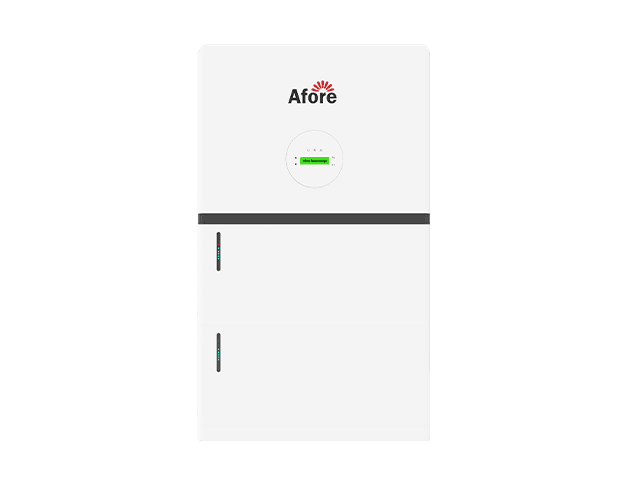
A commercial battery energy storage system should be evaluated as an integrated asset, not just as battery modules. The inverter or power conversion system, EMS, BMS, enclosure, thermal management, protection equipment, metering, and software platform all affect performance.
Important selection criteria include inverter compatibility, modularity, usable capacity, enclosure rating, thermal management method, fire safety features, communications protocols, monitoring capability, warranty terms, certifications, commissioning support, and regional after-sales service. For commercial buildings, serviceability is especially important because downtime can reduce savings, compromise backup readiness, and damage customer confidence.
The lowest price per nominal kWh is rarely the best selection metric. A better comparison is lifecycle value per usable kWh under the intended duty cycle, including efficiency, degradation, warranty coverage, O&M cost, and supplier support.
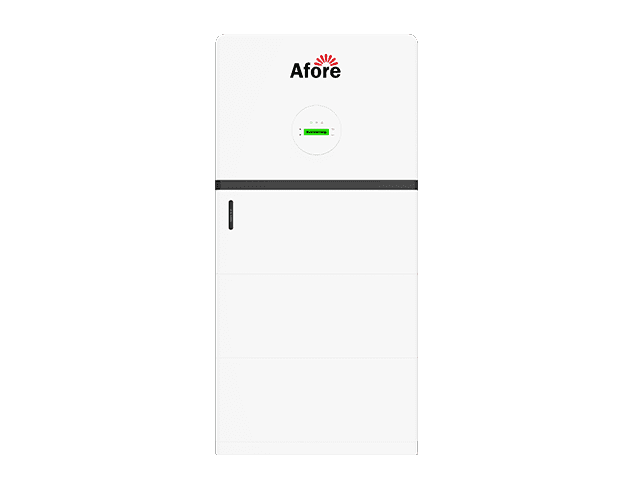
Modular commercial battery storage systems can reduce design risk and simplify future expansion. For EPCs serving multi-site customers, repeatable configurations can streamline engineering, installer training, documentation, spare parts planning, and performance benchmarking.
A retail chain, for example, may not need a unique design for every store. Sites can be grouped by load profile, tariff, roof PV capacity, and switchgear constraints. A standardized package may then be adapted for each location with minor adjustments. This approach helps resellers and EPCs scale deployment while maintaining quality control.
However, standardization should not replace site-specific modeling. Two buildings with similar annual consumption can have very different peak behavior, export restrictions, or resilience requirements. Portfolio deployment works best when standard product blocks are combined with disciplined feasibility screening.
Commercial procurement should assess more than datasheets. Lead times, regional availability, spare parts, technical documentation, installer training, commissioning support, warranty claim handling, and local service capability all influence project risk.
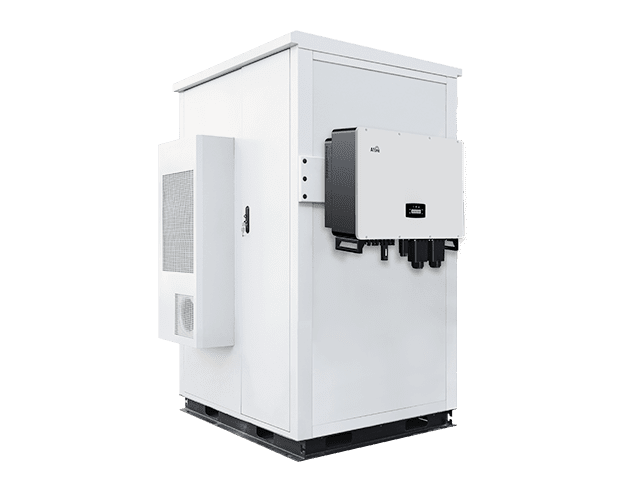
For international EPCs and resellers, logistics can become a major factor. Battery systems may involve hazardous goods classification, shipping constraints, customs documentation, storage requirements, and site delivery planning. Large enclosures or containerized systems may require cranes, road permits, foundation preparation, and coordinated delivery windows.
After-sales support is particularly important in B2B channels. If a system fault occurs, the building owner expects rapid diagnosis and clear responsibility. Ambiguity between battery supplier, inverter supplier, EMS provider, installer, and O&M contractor can delay resolution. Responsibilities should be defined before contract signing, not after commissioning.
Integration is one of the most common sources of delay in commercial solar-plus-storage projects. The battery system must communicate reliably with inverters, meters, protection equipment, EMS platforms, and sometimes building management systems. Common communication and interoperability considerations include Modbus, CAN, cloud monitoring, local controls, and API access.
Cybersecurity is an increasingly important consideration in commercial battery systems. EMS platforms, inverters, and monitoring systems should follow defined access control policies, encryption standards, and user authentication rules to reduce operational risk.
Remote access should be governed through role-based permissions, ensuring that only authorized personnel can modify control parameters or dispatch settings.
For larger commercial sites, network segmentation is recommended to separate energy management systems from general building IT networks. This reduces exposure to cyber risks and improves system reliability.
Metering accuracy is critical for demand charge management. If the EMS sees delayed or inaccurate load data, the battery may discharge too late and fail to reduce the billing peak. Export control also depends on fast, reliable measurement at the point of interconnection.
System integrators should confirm compatibility before procurement. Remote access permissions should be clearly defined during commissioning, including who can access EMS dashboards, modify dispatch strategies, and perform firmware updates.
This includes supported communication protocols, control response times, grid-forming or grid-following requirements, islanding behavior, generator coordination, firmware versions, cybersecurity requirements, and data ownership.
Battery storage introduces regulatory and safety considerations that are more complex than PV-only projects. Requirements vary by jurisdiction, system size, installation location, battery chemistry, building occupancy, and whether the battery can export to the grid.
Commercial battery projects may need to comply with product safety standards, installation codes, fire codes, grid interconnection standards, and local permitting rules. In the United States, commonly referenced standards and codes include UL 9540 for energy storage systems, UL 9540A for thermal runaway fire propagation testing, UL 1973 for stationary battery safety, NFPA 855 for installation of stationary energy storage systems, and NEC Article 706 for energy storage systems. In international projects, the IEC 62933 series is often referenced for electrical energy storage systems, along with relevant IEC standards for battery safety and power conversion equipment.
For grid interconnection, requirements may include anti-islanding protection, voltage and frequency ride-through, protection settings, metering, export limitation, and utility review. In the US, IEEE 1547 is a key reference for interconnection and interoperability of distributed energy resources. Requirements differ globally, so EPCs should confirm applicable rules with the local authority having jurisdiction, utility, fire officials, and electrical inspectors early in design.
Authoritative standards and code references are available from standards organizations and public agencies, including NFPA, IEEE, and the U.S. Department of Energy. These references should be supplemented by local codes and utility requirements because compliance obligations can vary significantly by region.
Battery storage can complicate interconnection because the system may behave as both load and generation, particularly in grid-connected commercial systems where export control and inverter behavior are governed by interconnection standards such as IEEE 1547.
If the battery charges from PV or grid power and later discharges, the utility must understand whether the system is allowed to export energy, whether export capacity is limited, and how the system behaves during grid outage conditions.
Commercial battery systems are typically deployed under several standard interconnection configurations.
In PV retrofit projects, batteries are often installed under non-export constraints, where excess solar generation is stored and used behind the meter without exporting to the grid.
In grid-charged, non-export systems, batteries are allowed to charge from the grid during off-peak periods but are not permitted to export energy, making them suitable for peak shaving and demand charge management applications.
For transformer-constrained sites, batteries are used to limit total site import by discharging during peak load periods, avoiding or deferring transformer upgrades.
In utility-approved export cap projects, export is strictly limited at the point of common coupling (PCC), and battery dispatch is controlled to ensure compliance with export thresholds.
Utilities typically require clear definition of operating behavior before approving interconnection.
This includes whether the battery charges from PV only or from the grid, whether export is permitted or restricted, how export limits are enforced, and how anti-islanding protection is implemented.
In many cases, additional studies, metering configurations, and protection settings may be required depending on system size and export behavior.
The operating mode must be clearly defined in utility interconnection applications. EPCs are expected to specify system behavior under normal operation, peak shaving mode, and grid outage conditions.
This includes charge and discharge logic, export limitation strategy, and system response during grid failures or restoration.
Clear and consistent operating definitions are critical to avoid delays in approval, redesign requirements, or additional utility review cycles.
Fire safety planning should begin during site selection, especially for commercial battery systems where installation design is typically aligned with recognized standards such as NFPA 855 for energy storage system safety and spacing requirements. Battery systems require clearances for installation, service, thermal management, emergency access, and fire response. Indoor installations may require dedicated rooms, ventilation, fire-rated separation, gas detection, suppression systems, signage, and emergency shutdown procedures. Outdoor installations may simplify some building fire concerns but still require foundations, bollards or mechanical protection, drainage, clear access, environmental protection, and separation from occupied areas or combustible materials.
Thermal runaway risk is managed through multiple layers, including cell chemistry, module design, BMS monitoring, temperature sensors, electrical isolation, enclosure design, ventilation, fire detection, and emergency response planning. Manufacturer installation instructions must be followed, but they do not replace local code review.
Coordination with authorities having jurisdiction, fire marshals, insurers, and building owners should happen early. Late-stage fire safety changes can affect layout, cable routes, civil works, and permitting timelines.
Common causes of delay include incomplete drawings, missing certifications, unclear shutdown procedures, insufficient fire separation, lack of structural review, unverified floor loading, inadequate ventilation design, and uncertainty around export controls. Another frequent issue is treating the battery as a simple PV add-on rather than a separate energy asset with distinct protection, controls, and safety requirements.
A strong permitting package should include one-line diagrams, site layout, equipment datasheets, certification documents, battery capacity details, operating modes, protection settings, emergency shutdown procedures, fire safety design, structural details, and commissioning plans. EPCs that build compliance review into the design phase are less likely to face expensive rework.
Installation quality directly affects battery performance, safety, warranty compliance, and customer satisfaction. Commercial batteries require careful coordination between electrical, mechanical, civil, fire safety, controls, and facility operations teams.
A battery site assessment should review physical space, floor loading, foundations, cable routes, existing switchgear, transformer capacity, ventilation, ambient temperature, flood risk, corrosion exposure, access for lifting equipment, and proximity to PV inverters or main distribution boards. Electrical studies may be needed to evaluate short-circuit levels, protection coordination, harmonic impacts, transformer loading, and islanding requirements.
Hidden constraints can materially change project cost. A basement installation may appear convenient but fail due to access, ventilation, or fire code limitations. A rooftop location may have structural and thermal challenges. An outdoor yard location may require civil works, fencing, security, and long cable runs. The site assessment should identify these issues before final pricing.
Commissioning is more than turning the system on. It verifies that the battery, inverter, EMS, meters, protection devices, communications, and safety systems operate as designed.
Typical commissioning tasks include visual inspection, torque checks, insulation resistance testing, grounding verification, communication checks, BMS configuration, inverter setup, EMS programming, metering validation, firmware confirmation, protection setting review, alarm testing, charge-discharge testing, export control testing, and functional testing under expected operating modes.
For backup systems, commissioning should also verify critical load transfer, islanding behavior, generator coordination where applicable, and return-to-grid operation. For demand charge management, metering and dispatch response must be tested under realistic load conditions. Poor commissioning can cause nuisance trips, missed savings, false alarms, or warranty disputes.
Many commercial buildings already have diesel generators, UPS systems, building management systems, EV chargers, HVAC controls, or controllable process loads.
Battery storage may operate in different outage modes depending on system design. Some systems provide battery-only backup for short duration outages, while others operate in hybrid mode together with PV and diesel generators to extend runtime and improve reliability.
In more advanced configurations, the system may also support black start capability, allowing the battery to energize the system and stabilize voltage before PV or generator sources come online. Transfer behavior between grid, battery, PV, and generator must be clearly defined to avoid control conflicts during outage conditions.
When resilience is a priority, many projects also reserve a portion of battery state-of-charge and avoid full daily cycling. This ensures backup capacity remains available during unexpected outages, even if it reduces short-term economic optimization.
Adding battery storage without a clear control hierarchy can create operational conflicts.
For example, a generator may start during an outage while the battery inverter is also attempting to regulate voltage and frequency. EV chargers may create sudden peaks that exceed battery discharge limits. A building management system may shed loads at the same time the EMS is trying to maintain operations. These interactions must be modeled and tested.
System integrators should define operating priorities before installation. The site owner should understand whether the battery prioritizes cost savings, backup reserve, PV self-consumption, EV charging support, grid services, or critical load continuity. When priorities conflict, the control strategy must decide which objective wins.
Battery storage requires additional training beyond standard PV installation. Installers need competency in high-voltage DC safety, lockout/tagout procedures, battery handling, thermal management inspection, software configuration, communications troubleshooting, emergency shutdown procedures, and remote diagnostics.
Resellers and EPCs should evaluate whether their installer network can support the system after deployment. A product may be technically attractive, but if local technicians cannot diagnose faults, update firmware, replace modules, or coordinate warranty claims, long-term customer satisfaction will suffer.
The economics of battery storage for commercial buildings depend heavily on site-specific conditions. Demand charges, time-of-use tariffs, PV production, load profile, export rules, incentives, battery cycling, financing structure, and O&M costs all affect the return.
There is no universal payback period for commercial battery storage. Commercial battery storage payback is strongly influenced by tariff mechanics. Projects with high demand charges and short peak windows tend to deliver faster payback because batteries can directly reduce billing peaks. Time-of-use tariffs with large price spreads between peak and off-peak hours also improve arbitrage value. In contrast, flat electricity tariffs reduce the financial benefit of storage because there is no meaningful price signal to optimize. Export restrictions can also increase storage value by forcing excess PV energy to be consumed on-site. However, if export compensation is already high, the economic case for storage becomes weaker.
In favorable conditions with high demand charges, strong incentives, significant PV surplus, and predictable load peaks, payback can be relatively attractive. In low-tariff or flat-rate environments, battery payback may exceed the customer’s investment threshold.
A credible ROI model should use interval consumption data, actual tariff schedules, PV production estimates, expected dispatch logic, usable battery capacity, round-trip efficiency, degradation, O&M costs, and financing assumptions. Sensitivity analysis is essential. EPCs should show how results change if demand savings are lower than expected, tariffs change, incentives are reduced, or battery degradation is faster than forecast.
For commercial decision-makers, the key financial question is not only “How fast is the payback?” It is also “Which value streams are reliable, which are uncertain, and who carries the performance risk?”
Initial CAPEX includes more than the battery modules. A commercial energy storage system may require power conversion equipment, EMS software, switchgear, metering, protection devices, cabling, civil works, enclosures, HVAC or thermal management, fire safety systems, engineering, permitting, commissioning, and installer training.
OPEX may include preventive maintenance, monitoring subscriptions, software licenses, periodic inspections, firmware updates, spare parts, capacity testing, insurance requirements, and eventual replacement or augmentation reserves. These costs should be included in total cost of ownership.
| Categoría de costes | Typical project elements |
|---|---|
| Battery and power electronics | Battery racks or cabinets, PCS/inverters, DC protection |
| Controls and monitoring | EMS, meters, communications, cloud or local monitoring |
| Electrical balance of system | Switchgear, transformers, cabling, protection devices |
| Site and safety works | Foundations, bollards, ventilation, fire detection, signage |
| Soft costs | Engineering, permitting, utility applications, commissioning |
| Lifecycle costs | O&M, software, spare parts, degradation reserves, recycling |
End-of-life costs should also be included in total cost of ownership modeling. These may include system decommissioning, transportation, recycling fees, and hazardous waste handling requirements depending on local regulations.
Lifecycle value depends on usable capacity, degradation, efficiency, warranty coverage, service response, and dispatch quality. A cheaper system may have a higher real cost if it loses capacity quickly, lacks local support, or fails to deliver expected demand savings.
Demand charge management is often one of the strongest value streams for commercial battery storage systems. The battery discharges during short high-load periods to reduce the maximum grid demand recorded during the billing interval.
Different tariff structures affect storage value in different ways. Non-coincident demand charges are based on the site’s highest peak regardless of grid conditions. Coincident peak charges depend on system-wide or utility peak periods. Ratchet charges require customers to maintain a minimum billing demand based on historical peaks. Seasonal demand charges vary between summer and winter months. Some utilities use 15-minute intervals, while others use 30-minute demand windows, which directly affects battery dispatch strategy.
Facilities with intermittent high-power loads, such as manufacturing equipment, HVAC peaks, cold storage compressors, large pumps, or EV charging stations, may see stronger value if tariffs penalize peak demand.
| Tariff Feature | Por qué es importante | Modeling Implication |
|---|---|---|
| Non-coincident demand charge | Based on max monthly peak | Requires full-month peak tracking |
| Coincident peak charge | Depends on utility peak hours | Requires external grid signal modeling |
| Ratchet charge | Locks in historical peak | Reduces flexibility of savings |
| Seasonal demand charge | Changes by season | Requires seasonal load separation |
| 15-min interval billing | More sensitive to spikes | Requires high-resolution simulation |
| 30-min interval billing | Smoother peak measurement | Reduces short peak impact |
Predictive controls are important because the battery must respond before the billing peak is set. A simple reactive strategy may not be enough if peaks develop quickly. Advanced EMS platforms use load forecasting, PV forecasting, tariff calendars, and state-of-charge management to decide when to discharge and when to preserve energy for later peaks.
Time-of-use optimization works best when the price difference between low-cost and high-cost periods is large enough to overcome battery losses, degradation, and opportunity cost. If tariff spreads are small, arbitrage alone may not justify the battery.
Incentives can materially improve project economics, but they vary by region and often include detailed eligibility requirements. These may relate to battery size, charging source, metering, domestic content, ownership structure, operating behavior, or participation in approved programs. EPCs should verify incentive rules before finalizing the design because compliance obligations can affect metering and dispatch.
Financing structures include direct CAPEX purchase, lease models, energy-as-a-service arrangements, shared savings contracts, and bundled solar-plus-storage PPAs. Each structure allocates risk differently. In a shared savings model, for example, performance measurement and baseline methodology are critical. In a customer-owned model, the building owner may carry more technology and O&M risk but retain more upside.
Investment risk should be addressed transparently. Tariffs may change. Grid service revenue may not be guaranteed. Battery capacity will degrade. Business operations may shift. A professional proposal should document assumptions and avoid presenting best-case outcomes as guaranteed results.
Battery storage is an active energy asset. Its value depends on how it is operated every day, not only on how it is sized at installation.
The EMS is central to commercial battery performance. It manages dispatch decisions, system visibility, and operational optimization across peak shaving, tariff management, PV self-consumption, and backup readiness.

Data generated by commercial battery systems—including load profiles, dispatch logs, and performance history—should have clearly defined ownership and retention policies.
Retention rules are important for warranty validation, performance reporting, and financial auditing. In most commercial deployments, data access is shared between asset owners, EPCs, EMS providers, and sometimes aggregators.
Key performance indicators for commercial battery systems typically include:
These KPIs are used for both operational optimization and financial performance tracking.
Measurement and verification is required to confirm that actual savings align with modeled expectations. It compares post-installation performance against a defined baseline and validates financial outcomes in tariff-based savings models.
Baseline methodology must be clearly defined, especially for performance-based contracts or shared savings models. The baseline may be based on historical consumption data, simulation models, or tariff-based assumptions.
Pre- and post-installation comparisons must account for tariff changes, seasonal variation, and operational shifts to avoid misleading performance conclusions.
For HVAC-heavy commercial sites, weather normalization is often required to separate energy savings from temperature-driven load variation.
Without normalization, cooling or heating demand changes may be incorrectly interpreted as system performance variation.
Where virtual power plant (VPP) participation is enabled, aggregators may require controlled access to battery dispatch functions.
Access must be governed through predefined rules to ensure backup reserve protection, compliance with operational priorities, and limitation of external overrides.
Remote access should be restricted through role-based permissions, ensuring only authorized users can modify dispatch strategies or system configurations.
Firmware updates for EMS, inverters, and battery systems should follow a controlled governance process, including testing, approval, and scheduled deployment to prevent operational disruption.
Network segmentation is recommended in larger sites to separate energy systems from general IT infrastructure, reducing cybersecurity exposure.
Battery degradation is influenced by multiple factors including cycle aging, calendar aging, temperature exposure, depth of discharge, charging rate, and state-of-charge behavior.
In many commercial battery projects, revenue streams are often front-loaded in the early years because system performance is highest at the beginning of life. If dispatch assumptions are not continuously updated, financial models may overestimate long-term savings as battery capacity declines over time.
Cycle aging is driven by how frequently the battery is charged and discharged. Calendar aging occurs even when the battery is not actively used and becomes more significant over long project lifetimes.
Temperature has a direct impact on degradation rates, with higher operating temperatures generally accelerating capacity loss.
Maintaining a higher reserve state of charge for backup readiness can also reduce usable capacity for daily operations, which should be reflected in performance modeling.
Warranty terms should be reviewed carefully. Commercial warranties may specify years of coverage, retained capacity, cycle limits, energy throughput, operating temperature limits, maintenance requirements, and exclusions. A 10-year warranty is not meaningful unless the expected operating profile fits within the warranty’s throughput and usage conditions.
Commercial buyers should compare warranty conditions against the proposed dispatch model. If the financial model assumes heavy cycling but the warranty limits annual throughput, there may be a mismatch between savings expectations and warranty protection.
Preventive maintenance may include enclosure inspection, HVAC or thermal system checks, filter replacement, firmware updates, communication health checks, alarm review, thermal imaging, torque verification, capacity testing, fire safety system inspection, and emergency procedure validation. Maintenance frequency depends on product design, local environment, operating intensity, and code requirements.
A clear O&M plan reduces downtime and protects long-term project value. It should identify who monitors alarms, who responds to faults, what spare parts are available, how warranty claims are handled, and how performance is reported to the building owner. Contractual agreements should clearly define responsibility for end-of-life removal and disposal, including compliance with local environmental and battery recycling regulations.
Commercial battery storage lifespan depends on chemistry, operating temperature, cycle depth, usage profile, maintenance quality, and warranty terms.
Most lithium-ion commercial systems are designed for approximately 10–15 years of operational life. Cycle life is typically specified in the range of several thousand cycles, but actual service life depends heavily on how the system is dispatched, operated, and maintained in real-world conditions.
However, battery degradation is driven by both cycle aging and calendar aging. Even when a system is not frequently cycled, capacity will gradually decline over time. Higher cycling intensity, deep discharge patterns, and elevated operating temperatures can accelerate this process.
For commercial projects, lifecycle modeling should not assume constant usable capacity over time. Instead, performance should be evaluated at both beginning-of-life and end-of-life conditions. As capacity fades, the system’s ability to deliver peak shaving, energy shifting, and demand charge reduction will gradually decrease. This directly affects long-term savings and ROI projections, especially in tariff structures where savings depend on consistent peak reduction performance.
From a lifecycle planning perspective, two main strategies are commonly used:
The appropriate strategy depends on tariff stability, site criticality, and expected long-term load growth. In many commercial projects, augmentation is used to extend system performance without full system replacement.
For example, a system initially designed to shave a 500 kW peak in the first year may no longer fully offset the same peak in later years if degradation is not included in the design model. Without oversizing or planned augmentation, demand charge savings can gradually decline over the system lifecycle.
This is particularly important in commercial solar-plus-storage projects because photovoltaic systems typically operate for 25 years or more, while batteries often require one or more replacement or augmentation cycles during the same period.
Aligning these different asset lifetimes is a key consideration in long-term system planning and financial modeling.
In some cases, second-life applications may be considered for retired commercial batteries, where remaining capacity is repurposed for lower-demand applications such as backup power or stationary storage with reduced cycling requirements.
However, feasibility depends on battery chemistry, remaining cycle life, performance consistency, and regulatory acceptance. In most commercial projects, second-life use remains application-specific rather than standard practice.
Battery storage creates valuable flexibility, but it also introduces technical, commercial, and safety risks that must be actively managed.
Common technical risks include oversizing, undersizing, incorrect dispatch assumptions, poor inverter matching, inaccurate metering, inadequate thermal management, communication failures, and insufficient protection coordination. These issues can reduce savings, delay commissioning, or create safety concerns.
Simulation should be reviewed by qualified engineers and, where appropriate, by the battery and inverter suppliers. Site-specific engineering is essential, especially for systems connected to existing switchgear, generators, critical load panels, or complex building management systems.
Commercial battery storage projects involve multiple stakeholders, including EPCs, OEMs, asset owners, lenders, investors, and insurers. Each party evaluates risk from a different perspective, making contractual clarity essential for project success.
Lenders typically assess OEM bankability, warranty strength, and whether performance guarantees or backstops are in place. Investors focus on revenue stability, dispatch assumptions, and sensitivity to degradation over the project lifecycle.
Financing approval typically requires structured technical and commercial documentation, including:
Replacement reserve assumptions are often included in financial models to account for future battery augmentation or full system replacement during the project lifecycle.
For performance-based contracts, baseline methodology defines how savings are calculated. It may rely on historical consumption data, simulation models, or standardized tariff assumptions.
Operational changes such as tenant mix variation, EV charging expansion, or production schedule shifts can significantly impact load profiles. These changes must be reflected in contractual assumptions to avoid misalignment between modeled and real performance.
Insurance underwriters evaluate both safety and operational risk before approving coverage. Key review areas include:
Contracts must clearly define responsibility across OEMs, EPCs, EMS providers, and service contractors. Key areas include:
Unclear allocation of responsibility is a common source of dispute in multi-vendor systems.
Battery performance and revenue are sensitive to degradation, dispatch assumptions, and operating conditions. In most commercial projects, performance is stronger in early years and gradually declines over time as capacity fades.
Lifecycle financial models must account for this decline by incorporating degradation curves, updated dispatch strategies, and replacement or augmentation planning. Without these adjustments, long-term revenue projections may be overstated.
The most common risk drivers in commercial battery projects include:
Clear contractual structure and transparent assumptions are essential to ensure long-term bankability and performance stability.
Commercial batteries introduce high-energy electrical and fire safety considerations. Installers must provide clear labeling, emergency shutdown procedures, operating manuals, training, and documentation. Building owners should understand their responsibilities after handover, including access control, emergency response coordination, maintenance, and reporting of alarms or abnormal conditions.
Fire department coordination is particularly important for larger systems. Emergency responders should know where the battery is located, how to isolate it, what hazards may be present, and what procedures apply during an incident. Insurance providers may also require review of fire separation design, emergency shutdown procedures, and on-site emergency response planning before underwriting commercial battery systems.
Poor data can lead to incorrect battery sizing and unrealistic financial projections. Reliable modeling requires interval load data, full tariff schedules, demand charge history, seasonal analysis, PV production estimates, operating schedules, and planned future load changes.
EPCs should document assumptions transparently in proposals. If EV charging is expected within two years, the battery model should include that scenario. If production shifts may change the load profile, sensitivity analysis should reflect it. Data quality is not an administrative detail; it is central to commercial project success.
Commercial battery storage is increasingly linked with broader electrification, grid flexibility, and portfolio-scale energy strategies.
EV charging can significantly increase commercial building demand, especially at workplaces, logistics depots, retail sites, and fleet facilities. Battery storage can reduce the peak demand impact of chargers, coordinate charging with PV generation, and in some cases defer electrical service upgrades.
However, EV loads can change quickly as fleets expand. A battery sized for today’s building load may be inadequate after charger deployment. EPCs should model phased EV adoption and ensure the EMS can coordinate chargers, PV, building loads, and storage.
Where market rules allow, commercial batteries can participate in virtual power plants, demand response, capacity markets, or ancillary service programs. Aggregated C&I batteries may provide valuable flexibility to grid operators while generating additional revenue for building owners.
These programs require careful review. Participation may affect state-of-charge availability, backup readiness, cycling intensity, metering, communications, and warranty conditions. Grid service revenue should not be assumed unless eligibility, operational requirements, and contractual terms are clear.
As commercial storage adoption grows, EPCs and resellers are moving toward standardized system packages for common building types and load ranges. Standardization can simplify quoting, engineering, training, spare parts, commissioning, and service support.
The most effective approach is not a single universal battery size. It is a repeatable design framework with modular capacity blocks, defined inverter options, approved EMS configurations, standard documentation, and clear escalation paths for complex sites.
Future expansion should be considered during initial design. This may include reserving physical space, selecting modular battery racks, allowing inverter headroom, planning switchgear capacity, designing scalable communications, and ensuring the EMS can manage additional assets.
Future-proofing must be balanced against unnecessary upfront CAPEX. It may be sensible to install conduits, allocate space, or choose expandable switchgear, but not always economical to oversize the battery before the load growth or tariff value exists.
Battery storage for commercial buildings can significantly improve the value of a PV project when the site has high demand charges, time-sensitive tariffs, limited export value, resilience needs, or grid constraints. It can also add unnecessary cost if the load profile, tariff structure, and operating strategy do not support the investment.
For EPCs, installers, resellers, and commercial building owners, the best outcomes come from treating storage as a system-level asset. Start with interval data and tariff modeling. Define the primary use case. Select technology based on usable capacity, controls, safety, compatibility, service support, and warranty structure. Confirm interconnection and fire safety requirements early. Commission the system carefully and monitor performance over its lifecycle.
Commercial solar-plus-storage is not a generic product add-on. It is an engineered energy strategy, and its success depends on matching the battery system to the building’s real electrical, operational, regulatory, and financial conditions.
Battery sizing starts by defining the use case, such as peak shaving, demand reduction, PV self-consumption, or backup power. It requires analysis of interval load data and tariff structures to identify peak demand windows and cost exposure. Power (kW) is sized to match peak loads or critical loads, while energy (kWh) is sized for discharge duration. Design is validated through dispatch simulation including degradation, losses, and reserved state of charge.
Payback period varies significantly depending on tariff design, demand charge intensity, PV surplus, and available incentives. Projects with high demand charges or limited export value typically achieve stronger returns due to higher peak-shaving and arbitrage value. Battery cycling frequency and operational strategy also affect lifetime savings and degradation cost. As a result, payback is highly site-specific and cannot be defined as a fixed range.
Neither is universally better. AC-coupled storage is often easier for retrofits and allows independent inverter selection. DC-coupled storage can improve PV-to-battery efficiency in some new-build projects and may capture clipped solar energy. EPCs should choose based on site layout, inverter compatibility, export rules, metering strategy, and expansion plans.
In the United States, commercial battery systems are commonly required to meet UL 1973 and UL 9540 standards, with UL 9540A used for fire safety testing. Installation is typically governed by NFPA 855 and NEC Article 706, while interconnection is commonly based on IEEE 1547. In other regions, equivalent IEC standards and local codes may apply depending on the authority having jurisdiction.
Commercial batteries typically last about 10–15 years depending on chemistry, temperature, and cycling. Usable life may be shorter if degradation reduces effective capacity and performance. Warranty terms, depth of discharge, and operating temperature directly affect lifespan. Most projects require augmentation or replacement planning within the PV system lifecycle.
https://www.energy.gov/oe/energy-storage
https://www.nfpa.org/codes-and-standards/nfpa-855-standard-development/855








 Turkish
  Romanian