




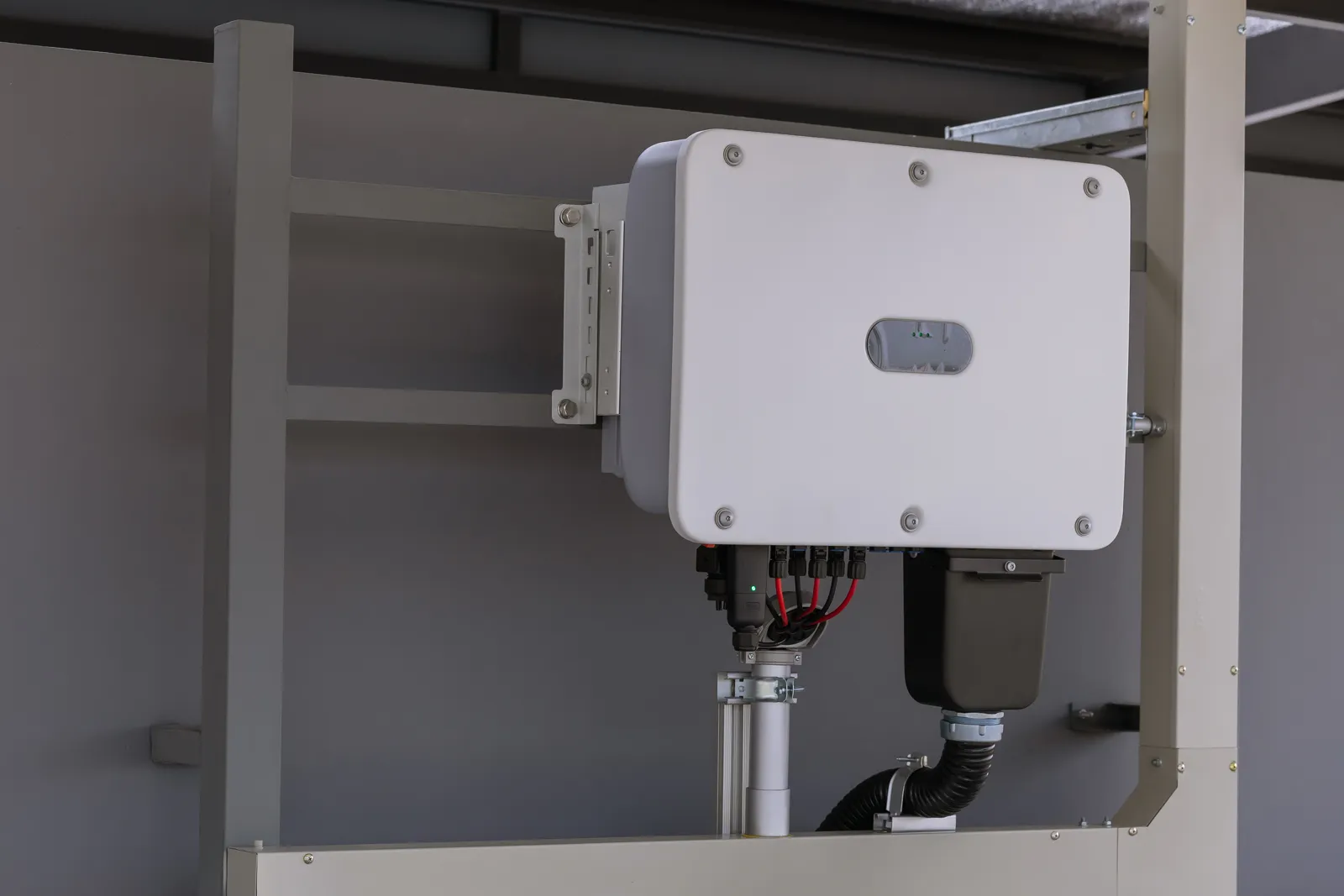
An off grid inverter charger is not just another inverter in a solar PV system. In commercial and industrial projects, it is often the power-conversion device that determines whether a remote site, backup system, or hybrid PV-battery-generator installation operates reliably under real load conditions. It converts battery DC power into AC power for loads. It charges batteries from AC sources such as a generator or utility input, while solar charging depends on system design, such as built-in MPPT controllers, external DC charge controllers, or AC-coupled PV inverters. It also manages how power sources interact when utility supply is absent, unstable, or intentionally isolated.
For EPCs, installers, system integrators, resellers, and facility owners, the consequences of choosing the wrong inverter charger are rarely limited to poor efficiency. A poorly specified unit can cause overload trips, generator instability, battery communication failures, commissioning delays, non-compliance with local electrical rules, and expensive service visits to remote sites. In many commercial PV projects, the inverter charger is a relatively small share of total installed cost, but it has a disproportionate impact on uptime, fuel consumption, battery life, and lifecycle value.
This guide approaches the off grid inverter charger as a project-critical component within a complete PV-storage power system. It focuses on the decisions professionals need to make before procurement: application fit, sizing, battery compatibility, generator integration, compliance, commissioning, O&M, and project economics.
An off-grid inverter charger combines three core functions in one device. First, it acts as an inverter by converting DC power from a battery bank into AC power for site loads. Second, it acts as a battery charger by converting AC power from a generator, grid input, or other AC source into controlled DC charging current. Third, it functions as a power management device, coordinating transfer, charging priority, low-voltage protection, generator start logic, and in many cases communication with batteries and monitoring systems.
This makes it different from a basic standalone inverter. A simple inverter only converts DC to AC. An off-grid onduleur solaire charger, by contrast, is designed for battery-based systems where the AC supply may need to be formed locally, maintained during source changes, and supported by stored energy when PV or generator output is unavailable.
In many installations, the inverter charger becomes the grid-forming device: it establishes the local voltage and frequency that other equipment depends on. According to the U.S. Department of Energy, inverters are increasingly recognized as key components in solar integration, providing not only power conversion but also grid support functions in modern energy systems.
Commercial-grade units may include an internal transfer switch, programmable charger settings, communication ports, generator input control, parallel capability, and fault protection. Some models also integrate MPPT solar charge controllers, while others rely on external MPPT controllers or AC-coupled PV inverters. For EPCs, the key question is not only whether the unit can convert power, but whether its control logic matches the operating strategy of the whole site.
Off-grid inverter chargers are typically designed for battery-centric systems where generator or AC input is optional. In contrast, all-in-one solar inverter chargers integrate MPPT solar charging, battery management, and inverter functions in a single unit.
Les principales différences sont les suivantes :
The terms “off-grid inverter charger” and “hybrid inverter” are often used loosely, but they are not always interchangeable. A hybrid inverter is typically designed for PV, battery, and grid interaction. It may support grid export, self-consumption, time-of-use optimization, backup operation, and utility interconnection functions. An off-grid inverter charger is primarily designed for standalone or backup-oriented operation where batteries are central to maintaining AC supply.
A grid-tied inverter depends on the utility grid to operate and shuts down during outages unless paired with approved backup equipment. A battery inverter may manage battery charge and discharge but may not include generator charging, transfer switching, or off-grid grid-forming capability. A solar battery inverter charger sits closer to the off-grid category because it manages both AC output and battery charging, but the exact capabilities depend on product architecture.
| Inverter type | Primary role | Battery dependence | Grid export | Typical commercial use |
|---|---|---|---|---|
| Grid-tied PV inverter | Convert PV DC to grid-synchronized AC | Non | Usually yes, if approved | Standard commercial PV |
| Off-grid inverter charger | Form AC power from batteries and charge batteries from AC sources | Haut | Usually no, unless specifically certified | Remote sites, backup, PV-battery-generator systems |
| Onduleur hybride | Manage PV, battery, grid, and backup functions | Medium to high | Often yes, subject to interconnection | Grid-interactive storage and backup |
| Battery inverter / PCS | Charge and discharge battery storage | Haut | Depends on certification and system design | Larger C&I storage, microgrids |
For EPCs, the practical differences matter during permitting and commissioning. If a system will ever connect to utility supply, export power, or operates in parallel with the grid, local interconnection rules may apply even if the inverter charger is primarily used for backup. These requirements are defined in grid interconnection standards such as IEEE 1547, which specifies how distributed energy resources behave during grid connection and islanding conditions.

After defining equipment types, selection should be based on system behavior and certification scope:
The classification depends on how the system operates, not how the product is labeled.
Off-grid inverter chargers are commonly used where reliability and autonomy are more important than simple solar self-consumption. Typical applications include telecom towers, rural healthcare buildings, farms, construction camps, island resorts, remote warehouses, water pumping stations, mining facilities, security sites, and commercial backup systems for critical loads.
These projects usually have different priorities from residential PV systems. A telecom site may need continuous DC and AC supply with minimal maintenance visits. A farm may require high surge capability for pumps and motors. A remote resort may need quiet nighttime operation, generator fuel reduction, and stable power quality for refrigeration, lighting, and guest services. A warehouse backup system may only support critical loads during grid outages but must transfer reliably and safely.
In these applications, the inverter charger is part of a broader commercial off-grid solar system. The best design is rarely the one with the lowest equipment price. It is the one that balances PV generation, battery capacity, generator runtime, load priority, local environmental conditions, and serviceability.
| Application | Key load issue | Inverter charger priority |
|---|---|---|
| Telecom tower | Continuous uptime, low maintenance | High reliability, remote monitoring, generator integration |
| Farm / pump station | High motor starting surge | High surge capacity, motor-friendly design |
| Rural clinic | Critical load separation, safety | Stable power, battery autonomy, certified backup operation |
| Island resort | Quiet operation, fuel savings | Hybrid PV-battery optimization, power quality |
| Construction camp | Variable loads, temporary setup | Flexible configuration, robust protection |
| Cold storage | Temperature-sensitive continuous load | High reliability, fast transfer, monitoring support |
Before specifying an inverter charger, EPCs should determine whether the project is truly standalone or grid-interactive. A pure off-grid system has no utility interconnection and relies on PV, batteries, and usually a generator for long-term autonomy. A grid-interactive backup system may normally use utility power but island critical loads during outages. A hybrid system may also export power or optimize energy costs.
This distinction affects equipment choice, protection design, permitting, and operating strategy. A remote mining camp may need an off-grid inverter charger with generator assist and three-phase support. A commercial facility with unreliable grid supply may need a certified hybrid system with anti-islanding and approved transfer arrangements. A rural clinic may require strict critical-load separation, battery autonomy targets, and remote monitoring for service teams.
The key point is that “off-grid capable” is not the same as “approved for every backup or grid-interactive use.” Project teams should verify the product’s certification scope and local utility requirements early, not after procurement.
Project conditions should be mapped to the correct system architecture before equipment selection. The goal is to match grid interaction, backup strategy, and system complexity with the right device class.
Typical mapping includes:
The key decision factor is grid interaction. If the system can ever operate in parallel with utility power, export energy, or reconnect automatically, it should be treated as a grid-interactive system rather than a pure off-grid design.
The first sizing error in many projects is selecting an inverter charger based only on total equipment nameplate ratings. Commercial loads rarely operate as a flat number. Pumps, compressors, refrigeration, HVAC systems, welders, elevators, and industrial controls may have high inrush currents, poor power factor, or short-duration peaks that exceed normal running power.
The continuous output rating defines how much AC load the inverter charger can supply for sustained periods. Surge rating defines its ability to start motors or absorb temporary peaks. For professional design, both must be compared with the real load curve. A 10 kW site with multiple motor-starting loads can be harder to support than a 15 kW site dominated by lighting and IT equipment.
A practical approach is to identify continuous loads, intermittent loads, starting surges, and the maximum likely simultaneous demand. EPCs often apply a margin of around 20–25% above the calculated continuous critical load, then separately verify surge capability. This can be expressed as a basic sizing rule: Required inverter kW = Maximum simultaneous critical load × design margin.
However, margins should reflect the application. Remote healthcare, telecom, and industrial control systems may justify higher redundancy than non-critical commercial lighting.
Battery voltage has a major effect on system design. At 48 V, a 10 kW load requires very high DC current, often exceeding 200 A, which increases cable size and losses. In higher-voltage DC systems, the same power can be delivered with significantly lower current, improving efficiency and reducing thermal stress on cables and connectors.
Small systems may use 24 V or 48 V battery banks, while larger commercial storage platforms increasingly use higher-voltage DC architectures to reduce current, conductor size, voltage drop, and thermal stress.
At this point, the comparison across voltage classes can be summarized as follows:
| Battery voltage class | Utilisation courante | Limites | Commercial relevance |
|---|---|---|---|
| 12 V | Small off-grid systems, RVs | Very high current, low efficiency, cable losses | Not suitable |
| 24 V | Small residential backup | High current for >3 kW loads | Limited use |
| 48 V | Small to mid C&I systems | Moderate current, widely supported | Standard for small commercial |
| High-voltage DC (96–600 V+) | Large C&I, microgrids | Higher complexity, stricter safety requirements | Preferred for industrial systems |
At the same power level, lower voltage means higher current. A 10 kW load at 48 V requires very high DC current before losses, while the same power at a higher DC voltage can be managed with lower current and more efficient cabling.
For small commercial sites, 48 V remains common because equipment availability is broad and battery options are mature. For larger C&I projects, higher-voltage battery systems or modular power conversion systems may be more suitable.
The decision affects not only inverter charger selection but also cable sizing, DC protection, busbars, battery cabinet design, and service safety.
In low-voltage systems, DC current can be estimated using the relationship:
DC current ≈ AC load ÷ inverter efficiency ÷ battery voltage, which explains why lower voltage systems require significantly higher current and heavier cabling.
Efficiency should be evaluated at expected operating points, not only peak datasheet efficiency. Many inverter chargers reach peak efficiency near moderate to high load but perform less efficiently at very light loads. In remote systems with long overnight low-load periods, no-load consumption and part-load efficiency can materially affect battery capacity and generator starts.
Commercial loads often require stable, clean AC power. A pure sine wave output is important for IT equipment, medical devices, controls, refrigeration electronics, variable-speed drives, security systems, and communication equipment. Poor waveform quality can increase heat, cause nuisance faults, or reduce the life of connected equipment.
Power quality should be evaluated using metrics such as total harmonic distortion, voltage regulation, frequency stability, overload response, and transfer time. Commercial-grade inverter chargers commonly specify voltage THD in the low single digits under rated conditions, but performance depends on load type. Nonlinear loads and poor power factor can increase distortion and stress the inverter.
Transfer time is also important for backup applications. Some loads can tolerate a short interruption when switching between inverter and AC input. Others, such as servers, medical equipment, or control systems, may require UPS-level continuity or a separate UPS downstream. EPCs should avoid assuming that every inverter charger behaves like a double-conversion UPS.
Most off-grid inverter chargers are designed around battery-based operation. Batteries stabilize the DC bus, absorb PV variability, supply surge loads, and provide energy when PV or generator power is unavailable. Without batteries, many inverter chargers cannot start or cannot maintain stable AC output.
Some inverter systems support PV-direct or batteryless operation, but this requires a specific architecture and should be confirmed through manufacturer documentation. In commercial projects, batteryless operation is rarely a safe assumption because load transients, cloud events, and motor starts require short-term energy buffering. If the project objective is daytime-only operation without batteries, EPCs should select equipment specifically designed for that use case rather than forcing a battery-based inverter charger into an unsupported mode.
Sizing starts with the load, not the inverter. EPCs should calculate peak demand, continuous critical load, surge load, daily energy consumption, required backup duration, and future expansion. A structured sizing workflow typically includes converting kW to kVA using power factor, verifying continuous critical load, checking ambient temperature and altitude derating, validating motor starting surge, confirming battery discharge capability, and ensuring charger current limits match generator or grid input capacity. The inverter charger must carry the maximum simultaneous critical load while maintaining enough headroom for starts, transients, and environmental derating.
Undersizing causes overload trips, generator starts, voltage dips, and customer dissatisfaction. Oversizing increases CAPEX and may reduce part-load efficiency, particularly in sites with low overnight demand. For many commercial off-grid solar systems, modularity is more valuable than simply selecting the largest possible unit. Multiple inverter chargers can sometimes be paralleled for higher output, three-phase supply, or N+1 redundancy, provided the product is designed and certified for that configuration.
| Sizing item | Pourquoi c'est important | Professional design consideration |
|---|---|---|
| Continuous load | Defines sustained inverter output | Use measured or modeled load profile, not only nameplate data |
| Surge load | Determines motor-starting capability | Check locked-rotor currents, compressor starts, pump duty |
| Daily energy use | Drives PV and battery sizing | Use seasonal and operational assumptions |
| Backup duration | Determines usable battery capacity | Separate critical and non-critical loads |
| Expansion allowance | Avoids early redesign | Consider planned equipment, occupancy, production growth |
| Ambient conditions | Affects derating | Account for heat, altitude, dust, and enclosure ventilation |
A realistic example is a remote agricultural facility with 18 kW of connected loads but only 9 kW of normal simultaneous operation. If the site includes a large pump with a high starting surge, a 10 kW inverter charger may be insufficient even though the average load is lower. The better design may include a higher surge-rated inverter charger, soft starter, load sequencing, or a separate generator support strategy.
System design should be based on measured load profile data rather than nominal ratings. EPCs should evaluate battery C-rate limits to ensure charge and discharge rates remain within safe operating boundaries. Generator charging limits must be coordinated with inverter charger AC input capacity to avoid overload or instability.
PV array-to-battery ratio should be checked to ensure sufficient charging under seasonal conditions. Protection coordination between PV input, battery bank, inverter charger, and generator must be verified to prevent fault propagation and ensure system stability.
Small commercial buildings may be adequately served by single-phase AC output. However, many commercial and industrial facilities require split-phase or three-phase supply for motors, pumps, HVAC, production equipment, or regional distribution standards. In such projects, the inverter charger must support the required phase configuration directly or through approved parallel/stacked operation.
Three-phase systems require careful phase balancing. Uneven loading can reduce available capacity or cause one inverter module to overload while others remain underutilized. Parallel systems also require synchronization, communication cables, matching firmware, and manufacturer-approved installation practices. EPCs should verify whether parallel operation increases both continuous output and surge capacity, and what happens if one module fails.
For larger remote sites, redundancy may be more valuable than maximum single-unit capacity. An N+1 arrangement can allow partial operation during maintenance or failure. This is especially important where downtime requires a long service trip or disrupts revenue-generating operations.
Many off-grid commercial projects are not PV-battery-only systems. They are hybrid power systems combining PV, battery storage, inverter chargers, and diesel or gas generators. The inverter charger can reduce fuel consumption by allowing the generator to run fewer hours, operate at more efficient loading, and shut down when batteries can support the site.
Generator integration requires more than connecting AC input.
Generator compatibility should consider:
The inverter charger must accept the generator’s voltage and frequency quality, limit charger current to avoid overload, and coordinate automatic start/stop thresholds. Some systems support generator assist, where the inverter supplements a smaller generator during short peaks. This can reduce generator size but requires careful configuration.
A common mistake is oversizing the generator for rare peaks while allowing it to run inefficiently at light loads.
For example, if a generator is rated at 15 kVA and site load is 8 kW, the inverter charger must limit charging current so that combined load and battery charging does not exceed generator capacity.
Another is setting generator start thresholds too conservatively, causing unnecessary starts and poor fuel savings. EPCs should model generator runtime, minimum loading, charging current, battery SOC limits, and maintenance intervals as part of the project economics.
| Paramètres | Plomb-acide | Lithium (LFP) |
|---|---|---|
| Bulk voltage | High fixed | BMS controlled |
| Absorption time | Exigée | Not required |
| Float voltage | Exigée | Optional or disabled |
| Equalization | Exigée | Not allowed |
| Temperature compensation | Exigée | Limited / BMS handled |
| Low-voltage disconnect | Voltage-based | BMS-controlled |
| Charge current limit | Modéré | Strict BMS limit |
| Communication | Rare | Required (CAN/RS485) |
Battery choice strongly affects inverter charger settings, lifecycle cost, and maintenance requirements. Flooded lead-acid batteries are familiar and tolerant in some off-grid environments, but they require ventilation, watering, equalization, and careful depth-of-discharge management. Sealed lead-acid options reduce maintenance but still have limited cycle life compared with lithium in many cycling applications.
Lithium iron phosphate batteries are increasingly common in commercial off-grid and backup systems and are widely used in commercial off-grid and backup energy storage inverter systems because they offer higher usable depth of discharge, better cycle life, lower maintenance, and more compact installation. However, lithium systems require correct communication and protection coordination. The inverter charger must respect BMS charge and discharge limits, low-temperature charging restrictions, and fault signals.
From a lifecycle perspective, the cheapest battery option is not always the lowest-cost solution. In high-cycle remote sites, a lithium system with compatible inverter charger communication can reduce truck rolls, generator runtime, and battery replacement frequency. In low-cycle backup applications, lead-acid may still be viable if maintenance access and environmental controls are acceptable.
For lithium systems, BMS communication is a critical integration point. Common interfaces include CAN, RS485, Modbus, or manufacturer-specific protocols. Communication allows the battery to share state of charge, voltage, current limits, temperature status, alarms, and protection commands with the inverter charger.
Without communication, the inverter charger may rely only on voltage-based control. This can work in some systems but is less precise, especially with lithium batteries whose voltage curve is relatively flat across much of the state-of-charge range. If the BMS disconnects under load because of overcurrent, low voltage, or temperature protection, the inverter charger may lose its DC source suddenly, causing AC output interruption.
EPCs should verify approved battery lists, firmware versions, communication cables, parameter files, and fault behavior before deployment. For portfolio projects, compatibility testing should be completed before standardizing a system package across multiple sites.
Off-grid inverter chargers may charge batteries from AC sources such as generators or utility input. Solar charging may be handled by integrated MPPT controllers, external MPPT charge controllers, or AC-coupled PV inverters feeding the local AC bus. Each architecture has design implications.
DC-coupled PV through MPPT charge controllers is common in off-grid systems because it charges batteries directly and can remain efficient during low-load periods. AC-coupled PV can be attractive for larger systems or retrofits because it uses standard PV inverters on the AC bus, but it requires the inverter charger to manage frequency, curtailment, and grid-forming behavior properly.
Important charging specifications include maximum charge current, programmable absorption and float settings, equalization support for lead-acid, lithium charge profiles, temperature compensation, and AC input current limits. Generator charging should be configured so the generator supports both loads and battery charging without voltage collapse or frequency instability.
AC coupling is commonly used in larger retrofits and commercial systems where existing PV inverters remain in service. In these architectures, PV inverters feed power into the AC bus while the inverter charger forms the local grid. This requires careful coordination between battery state, load demand, and PV output.
Key AC-coupling constraints include:
If these conditions are not properly managed, the system may become unstable during low-load, high-solar conditions. For example, in an AC-coupled off-grid system, if the battery is fully charged and site loads are low, the inverter charger must reduce PV output through frequency shifting. If the PV inverter does not respond correctly, AC frequency may rise and cause inverter trips or system shutdown.
Battery capacity should be based on critical load energy, required backup duration, allowable depth of discharge, round-trip efficiency, and degradation over time.
This can be calculated using the formula: Required battery kWh = Load kW × Backup hours ÷ Usable depth of discharge ÷ System efficiency.
A telecom site may require a defined number of hours of autonomy with predictable loads. A refrigeration site may have cycling compressors and high starting currents. A commercial building may need to separate lighting, IT, security, and essential outlets from non-critical HVAC or production loads.
The most reliable designs begin with critical load panels. Instead of backing up an entire building, EPCs often isolate essential circuits and size the inverter charger and battery system around those circuits. This reduces CAPEX and improves resilience because limited storage is not consumed by non-essential loads.
Battery degradation should also be included. A system designed with no capacity margin may meet runtime requirements on day one but fail to do so after several years of cycling. Commercial contracts should define whether backup duration is expected at beginning of life or after a specified operating period.
Battery design should separate loads into three categories:
This separation allows EPCs to reduce battery size while maintaining system reliability. In most commercial projects, only critical and essential loads are backed up by the inverter charger system.
Certifications for inverter chargers vary depending on regional regulatory requirements and grid interconnection rules.
Common standards include UL 1741, UL 1741 SA or SB for grid-support functionality, UL 9540 for energy storage systems, and UL 9540A for thermal runaway testing. Installation and grid connection are also governed by NEC Article 690 for solar PV systems, NEC Article 705 for interconnection, NEC Article 706 for energy storage systems, and NFPA 855 for stationary energy storage safety.
In IEC-regulated markets, inverter chargers are typically evaluated under IEC 62109 for safety, IEC 62477-1 for power electronic systems, and IEC 60364 for electrical installation requirements. Grid-parallel operation is further defined by local grid codes that specify voltage, frequency, and anti-islanding behavior.
For Australian and New Zealand markets, compliance commonly follows AS/NZS 4777.2 for grid connection of energy systems and AS/NZS 5139 for battery installation safety requirements.
Before specifying an inverter charger, EPCs must clearly define whether the system is standalone or grid-interactive. This decision affects equipment selection, protection design, certification, and permitting.
A standalone system has no utility connection and relies on PV, batteries, and often a generator. A grid-interactive system operates with utility supply and may support backup operation, self-consumption, or export depending on design.
Even systems designed as “off-grid” can fall under grid interconnection rules if they interact with utility power in any way. If the system can operate in parallel with the grid, export energy, or reconnect automatically after islanding, it may require compliance with standards such as IEEE 1547 and approval from the utility or authority having jurisdiction.
Les principaux éléments à prendre en compte sont les suivants :
An off-grid inverter charger is optimized for standalone operation and generator/battery support. A hybrid inverter is designed for grid interaction, including export and self-consumption optimization. However, in real projects, the classification depends on system behavior, not product labeling.
Commercial projects generally require more documentation than residential installations. A complete package may include single-line diagrams, equipment datasheets, battery safety documentation, grounding plans, protection coordination, cable schedules, enclosure ratings, signage, fire safety information, and commissioning procedures.
Battery systems may also require documentation for ventilation, spacing, emergency access, fire separation, temperature control, and labeling. Indoor lithium installations can face additional scrutiny from fire officials, insurers, and facility safety teams. EPCs should align the inverter charger, battery system, and enclosure design with permitting expectations early to avoid redesign during approval.
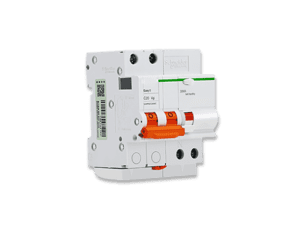
The balance of system around an off-grid inverter charger is just as important as the inverter itself. DC disconnects, battery fuses, AC breakers, surge protection devices, grounding, busbars, combiner boxes, isolators, and correctly sized conductors all affect safety and reliability.
Low-voltage battery systems can involve very high DC currents. Undersized cables, poor terminations, and inadequate ventilation can create heat, voltage drop, and nuisance shutdowns. Torque settings should be followed carefully, especially on high-current battery terminals and busbars. In dusty, humid, or corrosive environments, enclosure selection and sealing are also critical.
AC-side integration must address neutral-ground bonding under different operating modes, including inverter-only operation, generator mode, and grid-connected transfer switching. Bonding configuration may change depending on whether the system is a separately derived system or shares grounding with utility supply.
Key considerations include transfer switch pole configuration, RCD or GFCI compatibility, split-phase or three-phase grounding design, local electrical code requirements, and manufacturer wiring diagrams. Incorrect bonding configuration can lead to nuisance tripping, unsafe fault paths, or system protection failures.
Incorrect bonding is a common source of commissioning problems and can create safety hazards. Requirements vary by jurisdiction and system topology, so professional electrical design and local code review are essential.
A commercial inverter charger installation should include coordinated protection at the device, battery, PV, generator, and distribution levels. Integrated protections may include overload, short-circuit, over-temperature, over-voltage, under-voltage, reverse polarity, and earth fault detection. However, internal protections do not replace external overcurrent devices, disconnects, or surge protection.
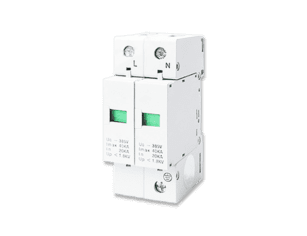
Protection coordination is especially important because inverter-based sources have different fault-current behavior from rotating generators or utility transformers. Breakers and fuses must be selected to interrupt available fault current and coordinate with inverter trip settings. Surge protection is strongly recommended in remote regions with lightning exposure or long cable runs.
Battery overcurrent protection deserves particular attention. A large battery bank can deliver extremely high fault current. Battery fuses, DC-rated breakers, isolators, and clear emergency shutdown procedures should be part of the design package.
Commissioning should be treated as a formal project stage, not a quick power-on test. Many inverter charger failures and nuisance faults originate from incorrect settings rather than defective hardware. Before energization, technicians should verify polarity, battery voltage, insulation resistance where applicable, grounding continuity, conductor torque, firmware version, communication status, charge parameters, AC input limits, phase configuration, and protective device settings.
After energization, the system should be tested under realistic load conditions. This includes verifying inverter mode, charger mode, transfer behavior, generator start/stop, PV charging, battery communication, alarms, and remote monitoring. For three-phase or parallel systems, phase rotation, load sharing, and failover behavior should be documented.
Professional commissioning records are valuable for warranty claims, O&M teams, and future troubleshooting. They should include final settings, firmware versions, wiring diagrams, test results, and any deviations from the original design.
The most common field risks are often practical rather than theoretical. Poor ventilation can cause derating or thermal shutdown. Undersized DC cables can cause voltage drop and overheating. Incompatible batteries can create charging faults or BMS disconnects. Incorrect neutral-ground bonding can cause protection issues. Lack of surge protection can expose equipment to lightning damage. Generator instability can cause AC input rejection.
Service clearance is another overlooked issue. Remote commercial installations may need filter cleaning, fan replacement, firmware updates, cable inspection, or board replacement. If equipment is installed in cramped rooms or overheated enclosures, maintenance becomes slower and more expensive.
For EPCs, preventing these risks starts during design review. Site layout, enclosure rating, cable routing, ventilation, generator quality, and battery compatibility should be checked before materials arrive on site.
Remote monitoring is no longer optional for many commercial off-grid systems. EPCs and asset owners need visibility into inverter status, battery state of charge, load demand, PV production, generator runtime, alarms, temperature, and historical performance. For telecom, mining, agricultural, and island projects, a single avoided truck roll can justify better monitoring hardware.
Fleet-level monitoring is particularly valuable for resellers and EPCs managing multiple sites. It allows teams to compare performance, identify weak batteries, adjust generator thresholds, detect abnormal load growth, and support customers without immediate site visits. For critical infrastructure, monitoring architecture should also consider cybersecurity, user access control, and secure firmware updates.

A well-designed inverter charger system still requires maintenance. Periodic inspections should check terminal tightness, cable temperature, ventilation paths, filters, fans, enclosure seals, surge protection status, firmware versions, battery health, generator interface, and monitoring connectivity. Lead-acid systems require additional maintenance such as electrolyte checks, equalization where appropriate, and ventilation verification.
Fans and electrolytic capacitors are common life-limiting components in power electronics. High ambient temperature accelerates aging, so systems installed in hot rooms or outdoor cabinets may require more frequent inspection. Maintenance schedules should align with warranty requirements and site criticality. A remote healthcare site should not follow the same maintenance assumptions as a non-critical storage building.
Common faults include overload, low battery voltage, high temperature, communication loss, charger failure, frequency instability, and generator input rejection. A decision-oriented troubleshooting process asks whether the fault originates from loads, batteries, wiring, firmware, settings, environmental conditions, or the AC source.
For example, repeated low-battery shutdowns may indicate insufficient PV generation, excessive load growth, incorrect SOC settings, battery degradation, or generator start failure. Generator input rejection may be caused by unstable frequency, poor voltage regulation, excessive charger current, or harmonic distortion. High-temperature faults may reflect blocked airflow, excessive ambient temperature, dust accumulation, or continuous operation above rating.
Good commissioning records make troubleshooting faster because technicians can compare current settings and performance against the original baseline.
Commercial buyers should evaluate suppliers based on operational support capability rather than product lifespan claims alone. Key criteria include warranty response time, availability of regional repair centers, and confirmed spare part supply chain. Technical support quality during commissioning and troubleshooting is critical for reducing installation risk in field projects.
Additional evaluation points include firmware update policy, documentation completeness, and availability of long-term software support. Lead time for replacement units and clarity of warranty terms also directly impact system downtime risk in remote or critical installations.
The inverter charger is only one part of total system cost. Major cost drivers include batteries, PV modules, mounting structures, generator integration, protection devices, cabling, enclosures, engineering, installation, and commissioning.
Although batteries and PV typically dominate CAPEX, inverter charger selection strongly affects operational cost through efficiency, generator coordination, and maintenance requirements. Poor integration can increase fuel consumption, service visits, and downtime risk.
Payback for off-grid and backup-oriented PV-storage systems should be modeled around avoided costs and operational value. Key drivers include diesel fuel savings, reduced generator maintenance, avoided grid extension costs, lower downtime risk, improved power quality, and continuity for critical operations.
Hybrid PV-battery-generator systems can materially reduce generator runtime when properly sized. The actual fuel savings depend on solar resource, load profile, battery capacity, generator efficiency, and control settings. A telecom site with steady loads may achieve predictable savings, while a construction camp with variable loads may require more conservative modeling.
Simple upfront-cost comparison is inadequate. EPCs should model equipment replacement cycles, battery degradation, inverter replacement risk, fuel price volatility, maintenance visits, and the cost of lost production or service interruption.
A complete payback model should include:
Annual fuel savings = Diesel baseline fuel cost – hybrid system fuel cost
Simple payback = Incremental CAPEX ÷ annual net savings
Higher-quality inverter chargers, compatible lithium batteries, and robust monitoring can increase upfront cost but reduce failures, maintenance, generator runtime, and commissioning time. These trade-offs are especially important in remote or multi-site deployments.
For example, a remote cold-storage facility may justify higher CAPEX for better surge capability, lithium battery communication, and remote diagnostics because refrigeration downtime has immediate financial consequences. A non-critical rural workshop may prioritize simpler architecture and lower initial cost. The right answer depends on site criticality, access cost, and contractual performance obligations.
Levelized cost of energy can help compare PV-storage-generator systems with diesel-only generation or grid extension. The calculation should include CAPEX, fuel, maintenance, battery replacement, inverter replacement, financing, and expected energy production over the project life.
For remote sites, fuel logistics are often a major hidden cost. Delivery, theft, storage, environmental risk, and generator maintenance can make diesel-only power expensive even when the generator itself is cheap. A well-sized commercial off-grid solar system can reduce these costs, but only if the inverter charger, batteries, PV array, and generator controls are integrated as one system.
Total cost of ownership can be expressed as:
TCO = CAPEX + fuel + maintenance + replacements + downtime cost
This provides a more realistic comparison between diesel-only systems, hybrid PV-storage systems, and grid extension alternatives.
Procurement teams should go beyond headline power ratings. Critical parameters include continuous output power, surge power, battery voltage range, maximum charge current, PV input range if MPPT is integrated, AC input current limit, transfer time, THD, operating temperature, IP rating, communication protocols, parallel capability, phase configuration, certifications, warranty terms, and service process.
| Procurement parameter | Why it matters for B2B projects |
|---|---|
| Rated and surge power | Determines load support and motor-starting capability |
| Battery voltage and chemistry support | Prevents integration failures |
| Charger current and AC input limits | Affects generator sizing and recharge time |
| Communication protocols | Enables BMS, monitoring, and EMS integration |
| Parallel and three-phase capability | Supports scalability and redundancy |
| Environmental rating | Matches indoor, outdoor, dusty, humid, or corrosive sites |
| Périmètre de la certification | Supports permitting and legal operation |
| Warranty and spare parts | Reduces lifecycle risk |
Datasheets should be checked against manuals and certification documents. If a feature is essential to the project, such as lithium BMS communication or three-phase stacking, it should be validated in writing before purchase.
Integrators should confirm compatibility with specific battery brands, monitoring platforms, generators, transfer switches, and protection devices. Approved component lists reduce commissioning risk, especially for repeatable commercial deployment.
Compatibility is not static. Firmware updates can change communication behavior, battery profiles, or grid-code settings. EPCs managing portfolios should maintain configuration records and avoid mixing untested firmware versions across sites unless the update is part of a controlled maintenance plan.
After-sales performance is a key factor in commercial off-grid projects where downtime is costly. EPCs should evaluate supplier capability in regional spare part availability, logistics lead time, and return or replacement procedures.
Important evaluation criteria include commissioning support during first installation, technical response speed, firmware update availability, and clarity of service documentation. The ability to provide consistent support across multiple project sites is more important than single-unit performance.
Portfolio scalability depends on system standardization and consistent monitoring architecture across sites. Key requirements include support for common communication protocols such as Modbus, CAN, or Ethernet, and the ability to integrate with third-party energy management systems.
Systems should support structured data export, alarm classification, multi-site dashboard aggregation, and role-based user access control. API availability is increasingly important for EPCs and asset owners who manage distributed fleets and require integration with SCADA or cloud platforms.
Standardizing inverter charger models across projects reduces training effort, simplifies spare parts management, and improves long-term operational consistency.
Commercial loads often grow after commissioning. New refrigeration, IT equipment, pumps, lighting, EV charging, or production machinery can quickly exceed the original design. Future expansion should be considered early by allowing space for additional battery cabinets, PV strings, inverter modules, breakers, busbars, and communication ports.
If expansion is likely, EPCs should prioritize inverter chargers with approved parallel capability and clear upgrade paths. Protection equipment and cable routes should be sized or arranged so future work does not require a complete rebuild.
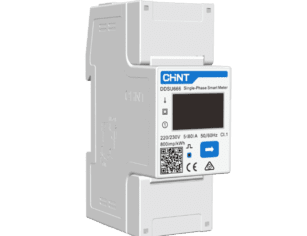
Larger projects may require coordination between inverter chargers, microgrid controllers, smart meters, generator controllers, building management systems, and load-shedding devices. Communication protocols such as CAN, RS485, Ethernet, and Modbus can be important for integrating equipment into a broader control system.
Energy management becomes particularly important when multiple distributed energy resources are present. PV, batteries, generators, and critical loads must be dispatched in a way that protects battery life, reduces fuel use, maintains voltage and frequency, and respects operating constraints.
Remote industrial and agricultural sites often expose inverter chargers to heat, humidity, dust, insects, vibration, corrosion, altitude, and unstable generator power. Operating temperature range, derating curves, enclosure rating, cooling strategy, and service access should be evaluated against actual site conditions.
A product rated for indoor electrical rooms may not be suitable for an outdoor tropical telecom cabinet or dusty mining site without proper enclosure design. Environmental mismatch is one of the most common reasons technically sound systems underperform in the field.
Standard off-grid inverter chargers are well suited to many small and medium commercial systems. However, larger C&I sites with multiple distributed energy resources, advanced three-phase loads, complex protection requirements, and utility interaction may require dedicated microgrid inverters or power conversion systems.
If the project needs advanced grid-forming controls, high fault-current management, black-start sequencing, large-scale AC coupling, SCADA integration, or multi-generator dispatch, EPCs should evaluate whether a microgrid inverter architecture is more appropriate. Choosing the right class of equipment early prevents under-specification and costly redesign.
For most EPCs and commercial project developers, inverter charger selection should be driven by system architecture rather than equipment specifications alone. Load profile, battery chemistry, generator integration requirements, grid interaction, future expansion plans, and compliance obligations should all be evaluated together. A correctly matched inverter charger can improve reliability, reduce fuel consumption, and lower total lifecycle cost across the project lifetime.
Off-grid inverter chargers form a standalone AC grid and are mainly used with batteries and optional generator charging. Hybrid inverters are designed for grid-connected systems with self-consumption and possible export. The main difference is grid interaction and certification scope for export or parallel operation. In practice, selection depends on whether the system is standalone or grid-interactive.
In most applications, off-grid inverter chargers are intended to operate with batteries. Some models can support batteryless or battery-optional operation, but this capability depends on the inverter architecture and manufacturer specifications. The battery stabilizes the DC bus, supplies surge power, and maintains system voltage during load changes. Only specific models designed and documented for batteryless or PV-direct operation can run without batteries. These are exceptions and must be confirmed in manufacturer specifications before system design.
Start by calculating continuous critical load, then identify surge loads separately, especially motors and compressors. Add a design margin based on application criticality, typically 20–25% for commercial systems. Verify that surge capacity can handle starting currents and apply derating for temperature, altitude, and installation conditions. Final selection should balance continuous power, surge capability, and real operating load profile.
BMS communication allows the inverter charger to receive real-time limits for charge current, discharge current, temperature, state of charge, and alarm conditions. Without communication, voltage-only control may misread lithium battery state and cause incorrect charging behavior. This can lead to nuisance trips, ignored charge limits, or unexpected battery disconnects under load. Proper communication ensures safe operation and extends battery life.
A standard inverter charger may not be suitable for large three-phase systems, multi-generator setups, or AC-coupled solar architectures. It can also be insufficient when advanced load shedding, SCADA integration, or utility-parallel operation is required. Projects with complex protection coordination or microgrid control logic often require dedicated PCS or microgrid inverters. In these cases, system-level architecture is more important than the inverter alone.
https://standards.ieee.org/standard/1547-2018.html
https://www.energy.gov/eere/solar/solar-integration-inverters-and-grid-services








 Turkish
  Romanian