





Peak shaving battery storage is becoming one of the most important design considerations in commercial and industrial solar PV projects. For many C&I facilities, the value of solar is no longer measured only by how many kilowatt-hours the PV system can generate. The larger financial question is often how much the project can reduce the facility’s highest grid demand during utility billing intervals.
That distinction matters. A warehouse, factory, cold storage facility, school campus, office park, or EV charging hub may consume a moderate amount of energy over a month but still pay significant demand charges because of a few short periods when load spikes. If those peaks occur outside the strongest PV generation hours, solar alone may not reduce the demand charge reliably. A battery energy storage system can discharge during those critical intervals, lowering grid import and helping the customer avoid part of the monthly demand charge.
For EPC companies, PV installers, system integrators, resellers, and commercial project owners, the key question is not simply whether a battery can reduce peaks. The real questions are more practical: how should the battery be sized, where should it be connected, what control strategy should the EMS use, which warranties matter, what standards apply, and how should ROI be modeled over the full system life?
This guide focuses on peak shaving battery storage for commercial PV projects from a professional project-development perspective. It connects tariff analysis, load profiling, system architecture, procurement, compliance, commissioning, operations, and lifecycle economics into one decision framework for B2B solar and storage stakeholders.
Paired with commercial solar PV, battery peak shaving storage helps businesses smooth grid power usage and cut unnecessary electricity costs. Unlike solar-only systems that rely entirely on real-time generation, battery storage adds flexible power dispatch capability to target costly load spikes, bringing more stable and economical energy operation for C&I sites.
Peak shaving battery storage is an on-site behind-the-meter battery system designed specifically to cut a commercial facility’s maximum grid power draw. When the site’s electricity load hits a preset high threshold, the battery automatically discharges stored energy to cover part of the demand, flattening costly load spikes from the grid.
Most C&I electricity tariffs charge expensive demand fees based on short-interval peak grid imports; this storage setup directly reduces those charges. Paired with solar panels, it stores surplus daytime PV generation for peak-hour use, acting as a flexible, controllable energy resource alongside the solar array.
In a typical PV-plus-storage system, solar generation serves the site load first. If PV output exceeds the facility’s immediate demand and export is allowed or economical, excess power may be exported to the grid. If export compensation is low, restricted, or unavailable, excess PV may instead charge the battery. Later, when the facility load rises and grid import approaches a preset demand limit, the battery discharges to keep grid demand below that threshold.
The basic principle is simple, but the execution is highly dependent on controls. The battery energy management system must monitor site load, PV production, battery state of charge, grid import, and tariff rules in near real time. If the EMS reacts too slowly, receives inaccurate metering data, or starts the peak shaving event with insufficient state of charge, the utility meter may still record a new peak.
This is why a commercial battery energy storage system should be designed as an integrated energy asset, not as a standalone cabinet added after the PV design is complete. Metering location, CT accuracy, inverter response time, EMS logic, communications reliability, and commissioning procedures all influence whether the battery actually reduces the billable peak.
Commercial facilities with predictable load patterns are often strong candidates. For example, a cold storage site may experience recurring compressor peaks, a school may peak during afternoon HVAC operation, and a manufacturing plant may have repeatable equipment start-up or production ramp events. Warehouses with conveyor systems, office parks with centralized HVAC, and commercial sites adding EV charging can also benefit when peaks are frequent enough and demand charges are meaningful.
Many solar PV proposals focus on energy savings: each kilowatt-hour generated by the PV system offsets a kilowatt-hour purchased from the grid. That logic is valid, but it does not fully capture the economics of many C&I utility bills. Demand charges can represent a substantial portion of monthly electricity costs, especially for facilities with high instantaneous loads.
A facility may install a large PV system and still see limited demand charge reduction if its peaks occur during cloudy periods, late afternoon hours, early evening production shifts, or process-driven load events. In these cases, adding more PV capacity may improve annual energy savings but not materially reduce the maximum monthly grid demand. Battery storage adds dispatchability, allowing the system to respond to the specific intervals that determine the demand charge.
For EPCs and developers, demand charge reduction should be modeled separately from energy arbitrage and PV self-consumption. These value streams may overlap, but they are not the same. A battery used aggressively for time-of-use arbitrage may be unavailable when a demand peak occurs. A battery reserved primarily for backup may not have enough usable capacity assigned to peak shaving. The EMS must prioritize the highest-value objective under the local tariff.
For a general explanation of how commercial utility bills can include demand-based charges, government energy efficiency resources such as the U.S. Department of Energy provide useful background.
Solar PV and battery storage can reduce demand charges reliably, but only when the system is designed around the actual load profile and tariff. PV alone is variable and may not coincide with the customer’s billing peak. Battery storage improves reliability because it can discharge on command, but it is still constrained by power capacity, usable energy capacity, state of charge, temperature, degradation, and control accuracy.
A common mistake is to size a battery based on average daily conditions rather than the worst peak events that drive demand charges. If the peak lasts 15 minutes, a high-power battery with moderate energy capacity may be sufficient. If the peak lasts two hours, the same battery may deplete before the interval ends. If multiple peaks occur in the same day, the EMS must ensure the battery has time and energy available to recharge before the next event.
Reliable peak shaving depends on the combined performance of the battery, PCS or hybrid inverter, EMS, meters, communications, and site operating behavior. It is a system-level outcome, not just a battery specification.
Solar-battery storage lets C&I facilities cut costly demand peaks via peak shaving, stabilizing power use and helping reduce electricity bills where demand charges and load profiles support the use case.
A peak shaving project should begin with data, not equipment selection. At minimum, EPCs should review 12 months of utility bills to understand demand charges, seasonal peaks, ratchet clauses, time-of-use periods, and historical maximum demand. Where available, interval data is even more important. Fifteen-minute or 30-minute load data allows designers to see whether peaks are short, long, predictable, seasonal, or random.
The goal is to identify how often the facility exceeds a practical demand threshold and how much energy would be required to reduce those peaks. A site with one unusual peak caused by a rare operational event may not justify a battery. A site with recurring monthly peaks caused by normal operations may be a strong candidate.
For resellers and EPCs, this analysis is also an efficient lead qualification tool. If demand charges are low, interval data is unavailable, or peaks are long and flat for many hours, the project may need a different storage value proposition, such as backup power, PV curtailment reduction, or energy arbitrage.
The shape of the load profile determines the storage architecture. Sharp peaks require enough power capacity to clip the demand spike. Sustained peaks require enough energy capacity to maintain discharge for the full duration. Facilities often have both types of peaks, which means sizing must balance kW and kWh rather than optimize one in isolation.
A manufacturing plant may have large equipment ramps at the start of a production shift. A warehouse may experience morning conveyor and charging peaks. A commercial building may peak when HVAC systems operate during hot afternoons. Cold storage facilities may have repeated refrigeration cycles, while EV charging hubs can create high and sometimes unpredictable demand spikes. Each load pattern requires a different dispatch strategy.
The important point is that battery size should follow the peak shape. A generic “one-hour” or “two-hour” assumption may be convenient, but it can misrepresent project economics.
Peak shaving is most attractive where demand charges are high enough to justify the installed cost and lifecycle cost of the battery system. Some tariffs also include seasonal demand rates, time-of-use demand windows, coincident peak programs, or demand ratchets that keep charges elevated for several months after a single high peak. These structures can significantly affect the value of demand charge reduction.
In other markets, demand charges may be low or absent, while energy prices vary strongly by time of day. In those cases, the battery may be more valuable for energy arbitrage or PV self-consumption. Export compensation also matters. If excess PV export is paid at a low rate, charging the battery from solar and discharging during peak periods may create more value. If export compensation is strong and demand charges are weak, the economics may shift.
EPCs should avoid using generic payback assumptions across regions. A storage proposal that works in one utility territory may fail in another because tariff design, interconnection rules, and incentive eligibility are different.
Peak shaving is not always the best use case for commercial battery storage. It may be weak where demand charges are low, peaks last for many hours every day, or the facility’s load is too volatile for reliable forecasting. It may also be unattractive if the site requires costly electrical upgrades, has limited space, faces strict fire separation constraints, or experiences long permitting delays.
Another concern is operational change. If a customer plans to add a new production line, expand cold storage capacity, install EV chargers, or change shift schedules, historical load data may no longer represent future peaks. In that case, the model should include load growth scenarios rather than assume past demand patterns will continue.
A credible storage proposal should identify when peak shaving is suitable and when it is not. Overpromising demand charge savings is one of the fastest ways to damage customer trust in commercial PV-plus-storage projects.
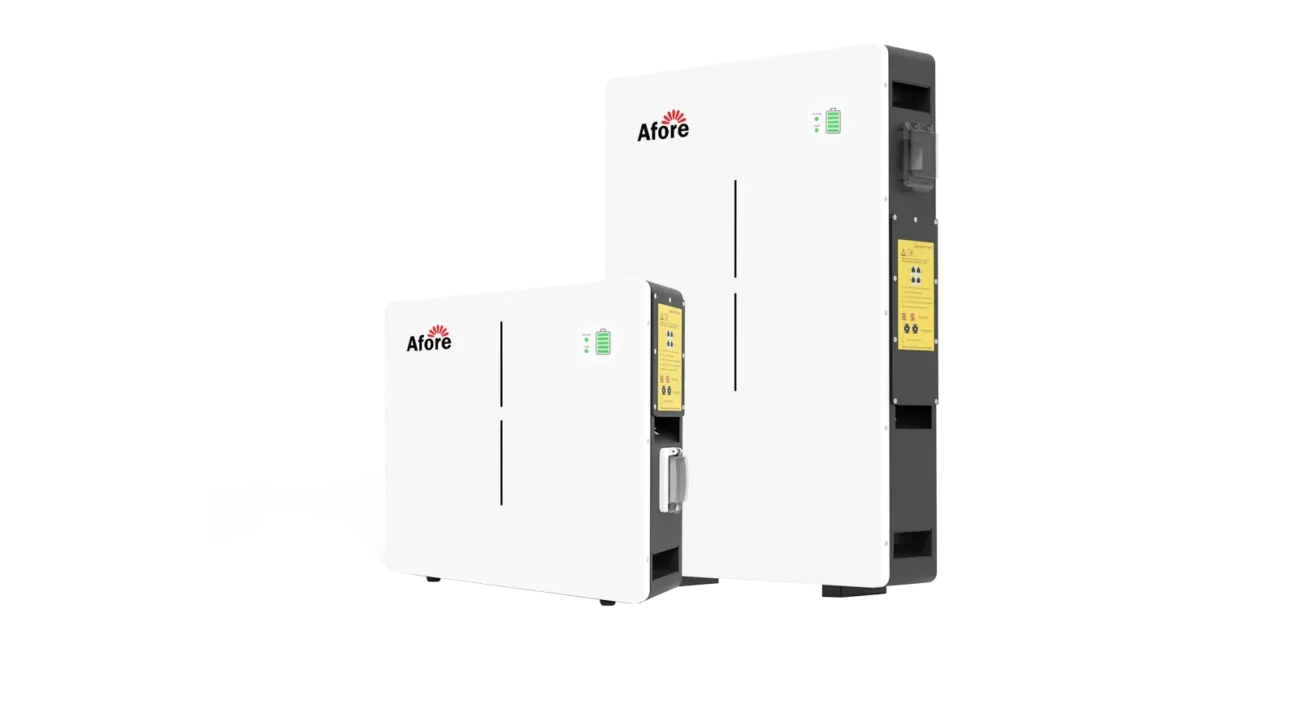
Effective peak shaving performance relies on properly sized battery assets and well-matched system architecture. Beyond basic capacity selection, EPCs need to balance power ratings, energy duration, and control configurations to fit a site’s unique peak characteristics and operational needs.
A battery for peak shaving must be sized in both power and energy. Power capacity, measured in kW, determines how much load the battery can offset at any moment. Energy capacity, measured in kWh, determines how long the battery can sustain that discharge.
A simplified sizing concept is straightforward. If a facility has a 1,200 kW peak and the target is to cap grid demand at 1,000 kW, the battery must provide up to 200 kW during the peak interval. If that peak lasts 30 minutes, the theoretical energy required is about 100 kWh before accounting for efficiency, usable depth of discharge, reserve settings, and degradation. In practice, the installed capacity would be higher because the system needs operational margin.
Key sizing inputs include target peak reduction, peak duration, tariff billing interval, usable state-of-charge window, round-trip efficiency, C-rate, degradation allowance, PV charging availability, backup reserve requirements, ambient temperature, and future load growth. The larger the financial penalty for missing a peak, the more conservative the design should be.
Battery sizing cannot be separated from the PCS or inverter rating. A system with large energy capacity but insufficient PCS power may not discharge fast enough to reduce a sharp peak. Conversely, a high-power system with too little energy may deplete before the peak interval ends.
C-rate describes how quickly the battery charges or discharges relative to its capacity. A 500 kWh battery discharging at 500 kW is operating at approximately 1C. Some applications require high-power discharge for short periods, while others require slower discharge over longer windows. The selected battery chemistry, thermal management system, and warranty conditions must support the expected duty cycle.
State-of-charge strategy is equally important. If the EMS allows the battery to discharge deeply for energy arbitrage before the demand peak occurs, peak shaving performance may suffer. Many commercial systems maintain a minimum SOC reserve for expected peak windows or backup requirements. Designers should also allow margin for capacity fade over time, because a battery that meets the target in year one may not meet it in year eight without augmentation or adjusted operation.
Commercial PV-plus-storage systems are commonly configured as AC-coupled or DC-coupled architectures. AC-coupled storage connects the battery through its own PCS on the AC side of the electrical system. This approach is often easier for retrofits because it can be added to existing PV installations without replacing the PV inverters. It also provides flexibility in locating the battery at a point where it can measure and control grid import effectively.
DC-coupled storage connects the battery on the DC side of the PV system through compatible conversion equipment. This architecture can improve PV-to-battery charging efficiency in some designs and may reduce clipping losses when PV generation exceeds inverter capacity. However, it can also increase design complexity and may be more dependent on inverter-battery compatibility.
For peak shaving, the best architecture is the one that gives the EMS accurate visibility and reliable control over grid import. Efficiency matters, but demand charge performance depends heavily on measurement and response.
The EMS is the operational brain of peak shaving battery storage. It must forecast load, monitor grid import, coordinate PV production, control battery charge and discharge, enforce SOC limits, and respond to tariff rules. For commercial applications, a basic timer is rarely sufficient.
Important EMS capabilities include fast response time, accurate demand interval tracking, configurable peak thresholds, local control if cloud communications fail, tariff logic, export limitation, alarm handling, and integration with site meters, PV inverters, PCS, and facility management systems. Communication protocols such as Modbus, CAN, SunSpec-compatible data models, or secure APIs may be required depending on the equipment ecosystem.
Control granularity matters because billing demand is often based on interval averages. The EMS does not always need to eliminate every second-by-second spike, but it must manage the average demand recorded by the utility meter. A well-configured EMS can avoid unnecessary cycling while still preventing a new billing peak.
Once the system sizing and architecture are finalized, proper product selection and standardized procurement become key to stable peak shaving performance and long-term project reliability. EPCs and resellers need to evaluate hardware quality, compatibility, certification qualifications and after-sales capabilities to avoid operational risks and unplanned project costs.
Commercial storage procurement should start with the application duty cycle. Lithium iron phosphate is widely used in C&I battery energy storage systems because of its thermal stability, cycle life, and safety characteristics compared with some other lithium-ion chemistries. However, chemistry alone does not determine project quality. Cell design, module integration, battery management system performance, enclosure design, and thermal management are all critical.
EPCs should review usable capacity, not only nominal capacity. They should also examine cycle life assumptions, operating temperature range, HVAC or liquid cooling requirements, enclosure rating, degradation curves, and warranty conditions. A cabinet that performs well in a mild indoor environment may not be suitable for a hot outdoor industrial site without adequate thermal management.
Thermal control is not only a safety issue. It also affects degradation and available power. High temperatures accelerate aging, while low temperatures may limit charge and discharge rates. The battery’s real operating environment should be reflected in both the design and the financial model.
The battery system must be compatible with the PCS or hybrid inverter, PV inverters, transformer, switchgear, protection devices, metering system, and monitoring platform. In larger C&I systems, these interfaces can create more project risk than the battery modules themselves.
Key technical criteria include rated power, voltage range, grid-following or grid-forming functionality, reactive power capability, anti-islanding protection, harmonic performance, fault response, communication protocol support, and local grid-code compliance. If the system will provide backup power or microgrid operation, the inverter requirements become more complex because the storage system may need to form voltage and frequency during islanded operation.
For pure demand charge reduction, grid-following operation may be sufficient. However, if the customer expects resilience, backup power, or future microgrid capability, the project team should define those requirements before procurement. Retrofitting those capabilities later can be expensive or impractical.
Commercial storage projects require careful review of certifications and warranty terms. Relevant standards and documentation may include UL 9540, UL 9540A test data, UL 1973, IEC 62619, IEC 62933, CE compliance, grid-code certificates, and local fire or electrical requirements. Applicable standards vary by region and project type, so EPCs should confirm requirements with the authority having jurisdiction, utility, insurer, and project owner early in development.
Warranty review should go beyond the headline duration. A ten-year warranty may include throughput limits, cycle limits, capacity retention thresholds, temperature exclusions, commissioning conditions, software requirements, and maintenance obligations. If the peak shaving strategy involves frequent cycling, the warranty throughput limit may become more important than the calendar term.
This is especially important for resellers and channel partners. A technically attractive battery can create commercial risk if warranty claims are slow, spare parts are unavailable, or the supplier cannot support commissioning and diagnostics in the project region.
Commercial storage procurement is not only about unit price. Lead time, documentation quality, shipping method, spare parts availability, local technical support, remote diagnostics, training, and commissioning assistance all influence project success.
Containerized systems may be appropriate for larger C&I or utility-adjacent projects, while cabinet-based systems may suit smaller commercial sites. The right choice depends on capacity, site layout, fire access, installation method, and service requirements. EPCs should also confirm who is responsible for software configuration, grid-code settings, battery commissioning, EMS integration, and owner training.
Many storage projects fail commercially not because the battery cannot operate, but because support responsibilities were unclear. Before signing procurement contracts, the project team should know how alarms are handled, who can access the system remotely, how firmware updates are approved, and what response time applies when the system is unavailable.

Beyond hardware selection and system design, commercial peak shaving storage projects need to comply with local grid rules and safety standards. Proper interconnection setup, fire safety compliance and regulatory alignment help avoid installation delays, operational restrictions and safety risks for PV-plus-storage systems.
A battery energy storage system can affect grid interconnection because utilities may treat it as load, generation, or both. For PV-plus-storage projects, the utility may require export controls, protection settings, operational limits, or additional studies to ensure the battery does not unintentionally backfeed the grid.
Zero-export projects require particular attention. The EMS and metering system must prevent unintended export from PV, battery, or combined operation. If the battery charges from the grid and later exports, different tariff, tax, or market rules may apply. In some jurisdictions, whether the battery charges from PV or the grid can affect incentive eligibility.
Protection settings, anti-islanding behavior, voltage and frequency ride-through, and grid support functions should be reviewed against the local interconnection standard. IEEE 1547 is one recognized reference for distributed energy resource interconnection requirements in relevant markets.
Fire safety and permitting are central to commercial battery storage deployment. Authorities may review battery location, spacing, enclosure rating, ventilation, emergency shutdown, signage, fire detection, fire suppression, access for first responders, and separation from occupied spaces or critical infrastructure.
Requirements vary by jurisdiction, but projects may need to address NFPA 855, IFC provisions, NEC Article 706, UL 9540, UL 9540A test data, and local fire authority requirements. Early engagement with the authority having jurisdiction can prevent design rework and permitting delays.
Safety design should be integrated into site planning from the beginning. A battery location that appears convenient electrically may be unsuitable because of fire access, flood risk, ventilation constraints, or proximity to exits, property lines, or combustible materials.
Commercial storage systems must coordinate with the facility’s electrical infrastructure. This includes transformers, switchgear, breakers, protective relays, grounding systems, power factor correction equipment, and existing PV inverters. Larger systems may require short-circuit analysis, arc-flash review, harmonic assessment, and protection coordination studies.
Power quality requirements can include voltage regulation, frequency response, harmonic limits, reactive power support, and ride-through behavior. Weak-grid sites require particular care because battery operation may interact with voltage fluctuations or transformer constraints. If the battery is expected to support facility power quality, not just reduce demand charges, the PCS specification and control logic should reflect that requirement.
The point of interconnection is also critical. If the battery is connected downstream of major loads but the utility meter measures total site import upstream, the EMS may not see or control the correct demand point. Incorrect electrical placement or CT location is a common reason peak shaving systems underperform.
Incentives, tax credits, capacity programs, and demand response opportunities can materially change storage economics. However, these programs may impose conditions such as minimum system size, metering accuracy, telemetry, dispatch availability, charging source rules, or performance testing.
Value stacking should be reviewed carefully. A demand response program may require the battery to discharge during grid events, while the customer may need the same capacity reserved for monthly demand charge reduction. Incentive rules may require certain operating modes that conflict with pure peak shaving or backup reserve strategies. The EMS should be configured with clear priority rules so that the highest-value or contractually required use case is protected.
Once grid compliance and regulatory checks are complete, careful on-site installation, formal commissioning and risk mitigation become critical to ensure the peak shaving system operates as designed over time.
A commercial battery storage site survey should evaluate far more than available floor space. Installers should assess structural loading, equipment access, crane or forklift routes, ambient temperature, flood exposure, ventilation, fire access, cable pathways, transformer capacity, switchgear space, grounding, and communications availability.
Outdoor battery cabinets may require foundations, bollards, drainage, shading, or weather protection. Indoor installations may require ventilation, fire-rated rooms, gas detection, or restricted access. Sites in coastal, desert, high-altitude, or high-humidity environments may need additional environmental protection.
These factors can materially affect installed cost and schedule. A proposal based only on battery and PCS pricing may underestimate civil works, electrical upgrades, permitting, or communications infrastructure.
For peak shaving, the battery must be connected and controlled at the correct point in the facility electrical system. The EMS needs accurate measurement of grid import as seen by the utility billing meter. CT placement, meter hierarchy, breaker sizing, cable sizing, grounding, transformer loading, and protection coordination all influence system performance.
Retrofit projects require particular attention because existing PV systems may already have export controls, monitoring platforms, or protection settings. Adding storage can change power flows and may require revisions to the interconnection agreement. The battery may charge from PV, from the grid, or from both, depending on tariff rules and system configuration.
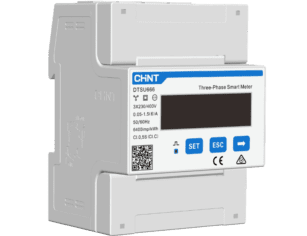
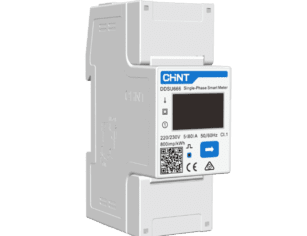
A practical commissioning issue is meter alignment. The EMS meter, PCS meter, PV meter, and utility meter may not report exactly the same values because of location, scaling, phase configuration, or communication delay. These differences should be identified before performance expectations are finalized.
Commissioning should prove that the storage system follows the demand reduction strategy, not only that it can charge and discharge. Functional tests should verify EMS setpoints, meter accuracy, inverter communication, charge and discharge response, SOC limits, export control, alarm handling, safety shutdown, and remote monitoring.
Where utility witness testing is required, the project team should prepare operating procedures and documentation in advance. After initial energization, the system should be observed under real facility load conditions. A battery may pass factory tests and still miss peaks if the EMS threshold is too low, the SOC reserve is misconfigured, or the load forecast does not match operations.
Many commercial systems benefit from a tuning period after commissioning. During the first billing cycles, operators can compare actual utility demand with EMS data and adjust thresholds, reserve margins, and charging rules.
Peak shaving systems rely on reliable data and control. Communications may include LAN, cellular, fiber, cloud platforms, gateways, and local controllers. For commercial portfolios, cybersecurity and user permissions are important because EMS platforms can influence facility energy flows.
Project stakeholders should define data ownership, remote access rights, firmware update procedures, password management, alarm escalation, and fallback behavior if communications fail. Local control capability is important for critical applications because cloud-only control may introduce latency or availability risk.
Remote monitoring should be set up before handover. If no one is responsible for reviewing alarms, tracking performance, or responding to downtime, the battery may lose value silently for weeks or months.

Consistent monitoring, routine operation management and long-term lifecycle planning help sustain stable peak shaving performance and preserve the system’s long-term economic value.
A peak shaving project should be measured against operational and financial KPIs. The most important metric is not simply battery discharge energy; it is whether the system reduced billable demand at the utility meter.
| indicateur clé de performance | Pourquoi c'est important | Common challenge |
|---|---|---|
| Peak demand reduction in kW | Measures actual demand charge impact | More conversion stages for PV-to-battery charging |
| Avoided demand charges | Converts technical performance into financial value | Greater equipment compatibility and control complexity |
| SOC availability during peak windows | Shows whether the battery was ready when needed | Vendor-specific design and commissioning requirements |
| EMS dispatch accuracy | Verifies control logic and metering quality | Larger reserve margin and more conservative ROI |
| Battery cycles and throughput | Supports warranty and degradation tracking | Balancing revenue optimization with battery lifetime preservation |
| Rendement aller-retour | Affects energy cost and lifecycle value | Energy losses from conversion equipment and temperature variations |
| Downtime and alarm frequency | Indicates reliability and O&M effectiveness | Limited fault visibility and delayed troubleshooting |
| Thermal events or temperature excursions | Helps manage safety and degradation risk | Complex thermal management requirements and uneven cell aging |
Battery capacity declines over time due to calendar aging, cycle aging, temperature, depth of discharge, C-rate, and operating conditions. For peak shaving, the relevant question is not only how much capacity remains, but whether the battery can still deliver the required kW and kWh during critical peak intervals.
Lifecycle modeling should include capacity fade, warranty retention thresholds, augmentation options, and the year in which the system may no longer meet the original demand reduction target. Some projects may be designed with extra initial capacity to account for degradation. Others may plan future augmentation if the economics justify it.
This is especially important for long-term service agreements. If the proposal assumes stable annual savings for ten years but the battery’s usable capacity declines materially, the ROI model may be too optimistic unless degradation is included.
An undersized or poorly controlled battery may still operate normally from a hardware perspective while failing financially. It may discharge too early, deplete before the peak interval ends, miss unexpected peaks, or cycle excessively without reducing the billing demand. The customer sees a working battery but lower-than-promised savings.
Poor control can also accelerate degradation. If the EMS chases every small fluctuation instead of managing the demand interval intelligently, the battery may accumulate unnecessary cycles. If arbitrage or self-consumption is prioritized without SOC guardrails, the system may lack reserve when the real peak occurs.
A strong control strategy includes forecasting, reserve margins, adjustable setpoints, demand interval awareness, and post-commissioning tuning. For complex facilities, coordination with operations staff can be as important as software configuration.
Commercial battery storage requires defined O&M responsibilities. Someone must monitor alarms, inspect thermal management systems, review firmware updates, verify communications, maintain safety systems, document operating conditions, and support warranty claims.
EPCs, resellers, owners, and O&M providers should agree on service levels before project handover. The agreement should specify who responds to alarms, how quickly faults are addressed, who contacts the manufacturer, who maintains records, and what happens if the battery is unavailable during a billing peak.
Good O&M protects lifecycle value. A storage system with high availability, clean data, and documented maintenance is more likely to deliver predictable savings and satisfy warranty requirements.
Accurate financial evaluation determines the true viability of peak shaving projects, accounting for real costs, multiple revenue streams, and long-term operational changes.
Payback should be calculated from all relevant value streams and all realistic costs. Savings may include avoided demand charges, time-of-use energy savings, increased PV self-consumption, reduced curtailment, incentives, demand response payments, and avoided infrastructure upgrades. Costs include battery modules, PCS, EMS, enclosures, installation, switchgear, metering, civil works, permitting, interconnection, commissioning, O&M, insurance, software fees, and possible augmentation.
A simple demand charge estimate starts with the expected monthly kW reduction multiplied by the applicable demand charge rate. However, this must be adjusted for seasonal tariffs, ratchets, peak windows, missed-event risk, degradation, and facility load growth.
For example, if a facility can reliably reduce billing demand by 200 kW and the demand charge is 20 currency units per kW per month, the gross monthly demand savings may be 4,000 currency units before considering other tariff details. If the battery misses two seasonal peaks or the tariff applies only during certain windows, actual savings may be lower. This is why interval simulation is more credible than headline calculations.
Upfront installed cost is only one part of storage economics. A lower-CAPEX system may have shorter cycle life, weaker thermal management, limited warranty coverage, higher downtime, or poor technical support. Lifecycle cost can therefore be more important than initial price.
Levelized cost of storage can help compare storage solutions, but it should be adapted to the actual duty cycle and value stream. Peak shaving often involves relatively short, high-value discharge events rather than continuous daily full cycling. A generic LCOS assumption based on full-cycle arbitrage may not reflect the project’s real economics.
Professional financial analysis should consider net present value, internal rate of return, degradation, O&M escalation, tariff escalation, incentive timing, tax treatment, and residual value. Simple payback is useful for screening, but it is not enough for investment-grade decision-making.
Many projects improve ROI by combining peak shaving with other value streams. A battery may support PV self-consumption, time-of-use arbitrage, backup power, demand response, EV charging optimization, or grid services. However, value stacking only works when dispatch priorities are clear.
If demand charge reduction is the highest-value use case, the EMS should reserve sufficient SOC for likely peak windows. If backup power is contractually important, the system may need an emergency reserve that is not used for daily peak shaving. If demand response participation is added, event dispatch must be coordinated with customer demand peaks and warranty limits.
Revenue stacking is not simply adding multiple savings lines in a spreadsheet. It is an operational strategy with constraints. The battery can only use the same kWh once.
Storage proposals should include sensitivity analysis because several variables can change over the project life. Demand charges may escalate, tariff structures may change, facility load may grow, PV output may vary, battery degradation may differ from assumptions, and incentives may expire or be delayed.
A credible proposal models base, conservative, and upside cases. It should show how payback changes if demand reduction is lower than expected, if battery capacity fades faster, if future EV charging increases peaks, or if utility tariff rules change. This improves decision quality and reduces the risk of disputes after installation.
Scaling peak shaving storage across multiple sites requires standardized workflows, future-flexible designs, and consistent portfolio-level performance management.
EPCs, resellers, and integrators working across multiple commercial sites can reduce engineering time and risk by standardizing storage designs. Standardization may include approved battery-inverter pairings, cabinet layouts, EMS templates, metering designs, commissioning checklists, safety documentation, and O&M procedures.
However, standardization should not replace site-specific analysis. The same battery configuration may perform differently under different tariffs and load profiles. A repeatable design platform works best when combined with project-specific sizing and control settings.
Commercial facilities are changing quickly. Many are adding EV chargers, electrifying heating processes, expanding refrigeration, increasing automation, or installing additional PV capacity. A peak shaving battery storage design should consider these future changes.
Future-ready planning includes transformer capacity, switchgear space, spare breaker positions, EMS scalability, modular battery expansion, communications architecture, and interconnection limits. If the facility expects major load growth, it may be better to install a modular system that can be expanded rather than oversize the initial system based on uncertain forecasts.
EV charging is particularly important. Fleet charging and public fast charging can create high demand peaks that materially alter the business case. Coordinated control between chargers, PV, and battery storage can reduce grid connection costs and demand charges, but only if the EMS is designed to manage all assets together.
For multi-site owners and reseller channels, centralized monitoring is valuable. Portfolio analytics can identify underperforming sites, tariff mismatches, communication failures, thermal issues, and EMS configuration problems. Benchmarking also helps EPCs improve future proposals by comparing modeled and actual savings across facility types.
A portfolio view is especially useful when systems are deployed across similar sites, such as retail chains, logistics facilities, schools, or industrial parks. If one site misses peaks while similar sites perform well, the issue may be local configuration, metering, operations, or maintenance rather than core technology.
Peak shaving storage is a more service-intensive offering than standalone PV. Resellers and installers need technical training, design support, warranty clarity, spare parts processes, commissioning capability, and escalation paths. They also need to understand tariffs and load data well enough to avoid unsuitable projects.
Before adding peak shaving systems to a commercial PV offering, channel partners should evaluate whether they can support remote diagnostics, EMS configuration, safety documentation, commissioning, and post-installation performance review. The commercial opportunity is significant, but so is the responsibility to deliver measurable financial performance.
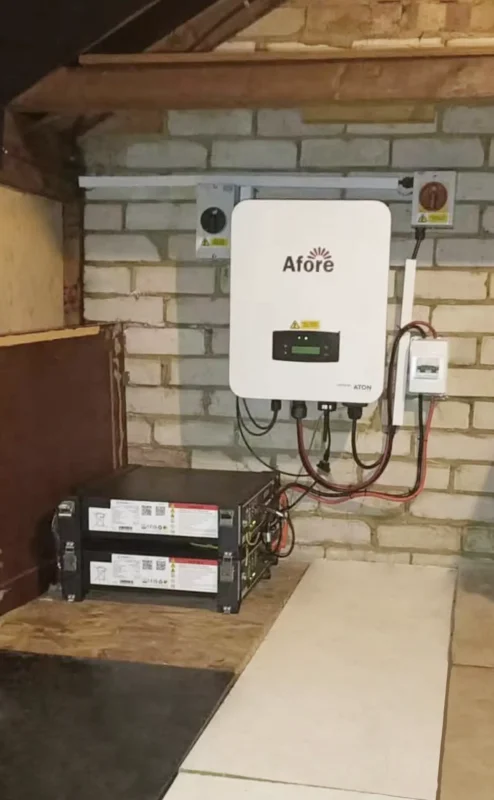
Peak shaving battery storage can materially improve the economics of commercial PV projects, but only when the system is designed around the facility’s tariff, interval load profile, electrical infrastructure, operating requirements, and lifecycle costs. The strongest projects begin with data analysis, match battery kW and kWh to real peak shapes, use a capable EMS, address interconnection and safety requirements early, and verify performance after commissioning.
For EPCs, installers, resellers, and C&I project owners, the practical planning rule is clear: treat the battery as a controlled financial and electrical asset, not just as extra capacity beside the PV system. When sizing, controls, compliance, commissioning, and O&M are aligned, peak shaving becomes a reliable part of commercial solar value creation.
Peak shaving battery storage is a commercial energy storage solution that uses batteries to reduce a facility’s maximum grid power demand during high-cost peak periods. The system monitors electricity consumption in real time and automatically discharges stored energy when grid demand approaches a predefined limit, helping reduce demand charges and smooth power usage.
Peak shaving is an energy management strategy that cuts a facility’s maximum grid power draw during high-demand billing periods. It specifically targets the short, sharp load spikes that trigger expensive utility demand charges each billing cycle. This tactic shifts power reliance away from the public grid during peak windows to avoid inflated monthly electricity fees.
Peak shaving works by offsetting on-site power demand spikes with stored on-site energy instead of grid electricity. The system first stores excess renewable power or off-peak grid power in batteries during low-load periods. When facility power usage rises to a preset threshold, batteries discharge instantly to cover the excess load and cap grid import levels.
Peak shaving can help lower commercial electricity costs by reducing demand charge exposure, depending on the tariff, load profile, and system design. It stabilizes a facility’s grid power consumption and avoids unpredictable monthly utility bill surges from random load spikes. It also maximizes the value of on-site PV systems by making full use of excess solar generation instead of wasting unused power.
https://standards.ieee.org/standard/1547-2018.html
https://www.nfpa.org/codes-and-standards/nfpa-855-standard-development/855











 Turkish
  Romanian