



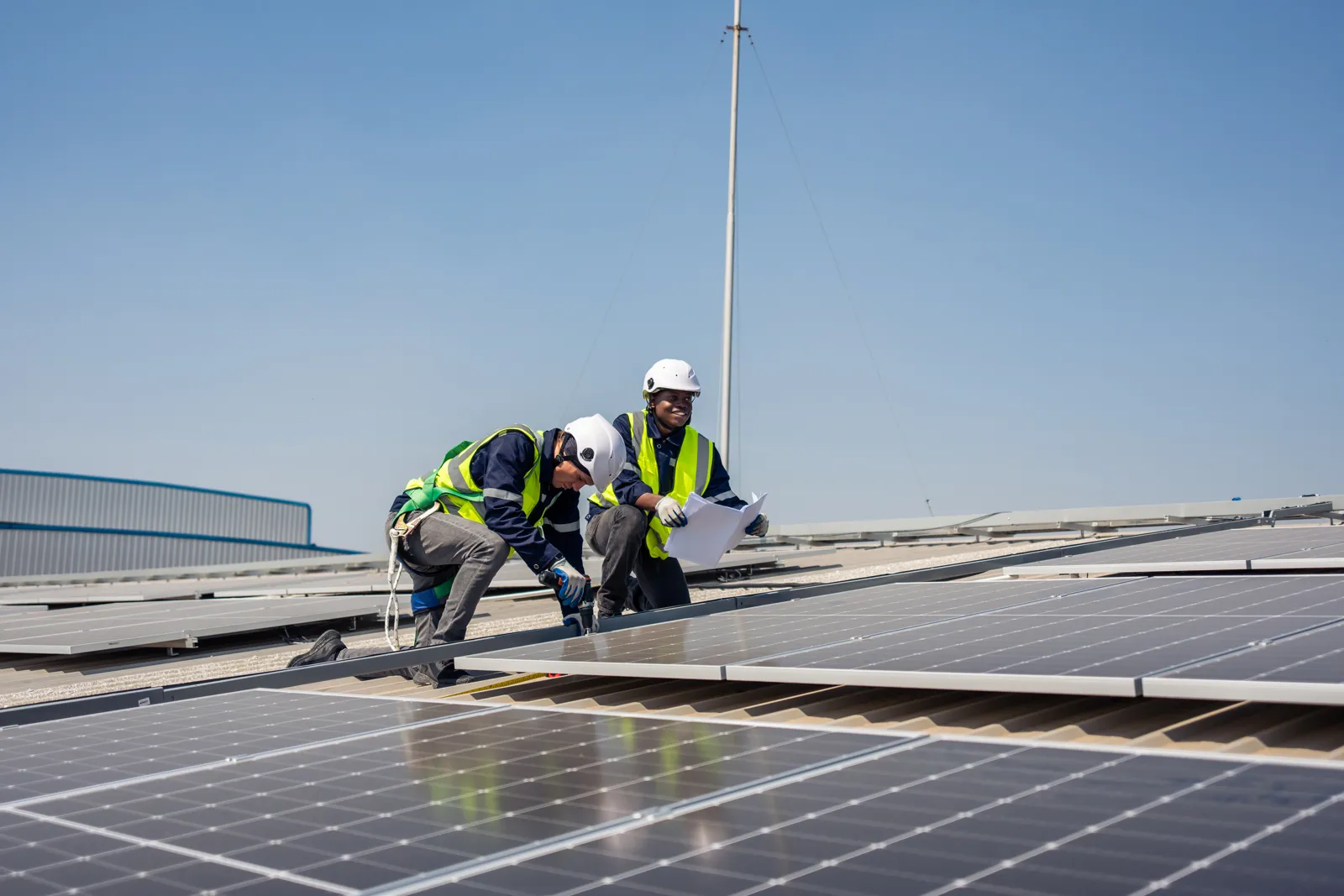
For EPCs, installers, resellers, system integrators, and commercial project owners searching for wholesale string inverters usa, the key question is not simply which inverter has the lowest unit price. In commercial and industrial PV, the inverter decision affects interconnection approval, energy yield, commissioning time, monitoring quality, O&M workload, replacement logistics, and lifecycle return on investment.
String inverters have become a common architecture for commercial rooftops, carports, distributed ground-mount systems, and multi-site portfolios because they offer modular conversion, flexible system design, and practical serviceability. A single inverter failure usually affects only a defined portion of the array, rather than the full plant. For C&I systems where uptime, rooftop access, facility operations, and permitting schedules matter, that modularity can be as important as initial cost.
However, wholesale procurement creates its own risks. A model that looks attractive on a price sheet may not match the site voltage, module current, local utility requirements, rapid shutdown strategy, monitoring platform, or long-term warranty expectations. For U.S. projects in particular, EPCs must consider code compliance, smart inverter certification, documentation quality, and authority having jurisdiction requirements before equipment is purchased.
This guide explains how professional buyers should evaluate wholesale solar inverters USA for commercial PV projects. It covers technical selection, U.S. compliance, supplier evaluation, installation and commissioning, O&M planning, storage readiness, and financial decision-making. The goal is to help buyers treat inverter procurement as a system-level project decision, not a commodity purchase.
Before investing in wholesale string inverters USA, understanding their core functions, ideal use cases, and buyer priorities is critical to avoid costly mistakes and ensure alignment with commercial PV project goals.
Commercial solar string inverters convert DC electricity from groups of PV modules into grid-compatible AC power. In a typical commercial PV design, modules are connected in series to form strings, and multiple strings feed one or more maximum power point tracking channels inside the inverter. The inverter then synchronizes its AC output with the building service, transformer, or project interconnection point.
This architecture is widely used on commercial rooftops, carports, warehouses, schools, cold-storage facilities, factories, logistics centers, municipal buildings, and distributed ground-mount arrays. It is especially useful where the array is divided across multiple roof planes, buildings, orientations, or phases of construction. Instead of routing large DC homeruns to a single central conversion station, string inverter systems distribute power conversion closer to the array.
For EPCs and installers, this can simplify design and deployment. Smaller inverter blocks can be repeated across a site, allowing engineering teams to standardize drawings while adapting to different roof sections or electrical rooms. For resellers and distributors, commercial string inverter platforms can also support repeat sales across many mid-size projects, provided that the product line remains available and properly certified for U.S. use.
Central inverters are still used in many large utility-scale projects, particularly where plant layouts are uniform, service roads are available, and centralized medium-voltage power conversion supports project economics. However, commercial PV often presents different constraints. Rooftop access, multiple service entrances, irregular array geometry, shading from HVAC units, limited crane access, and phased construction can make distributed string inverter architecture more practical.
String inverters reduce single-point failure risk because production loss is limited to the capacity connected to the affected inverter. They also tend to be easier to replace with smaller crews and standard lifting methods. This matters on operating commercial sites where downtime windows may be short and facility managers may restrict access during business hours.
The trade-off is that a string inverter system has more individual devices to monitor and maintain. Communications design, firmware management, spare unit strategy, and installation consistency become important. Therefore, the right choice is not always “string” or “central” in isolation. It depends on site layout, utility requirements, service strategy, installation labor, and the owner’s long-term operating model.
Different professional buyers approach commercial PV inverter procurement from different angles. A reseller may focus on inventory turnover, installer demand, model continuity, and margin structure. An EPC will usually prioritize bankability, compliance documentation, engineering fit, warranty reliability, and whether the inverter can support repeatable project execution. Installers care about mounting, wiring, commissioning tools, technical support, and how often field crews encounter avoidable setup problems.
System integrators often evaluate communications protocols, monitoring APIs, data acquisition system compatibility, and site controller integration. Commercial facility owners are more likely to focus on uptime, service response, energy yield, warranty coverage, and whether performance data is clear enough for internal financial reporting.
These priorities overlap, but they are not identical. A procurement decision that works for a reseller’s warehouse may not work for an EPC’s interconnection deadline. A technically advanced inverter may still be a poor fit if field crews lack training or replacement units are hard to obtain. Strong wholesale purchasing aligns the product, supplier, project pipeline, compliance obligations, and long-term O&M strategy.
The most common mistake is buying on lowest unit price alone. Inverters account for only one part of installed project cost, yet they influence permitting, installation labor, commissioning, monitoring, and downtime exposure. A lower-cost unit can become expensive if it requires redesign, lacks required certificates, delays permission to operate, or creates repeat truck rolls.
Another frequent issue is overlooking the exact U.S. certification status of the model and firmware version. Commercial projects often need evidence of compliance with applicable inverter standards, utility settings, and smart inverter functions. Buyers should not assume that a model sold in another region is automatically suitable for the U.S. market.
Technical mismatch is also common. High-current PV modules, bifacial designs, cold-weather open-circuit voltage, and three-phase site voltage must be checked before purchase. Communications compatibility is equally important. A grid-tied solar inverter may perform electrically but still create operational problems if it cannot integrate cleanly with the project’s monitoring, controls, or asset management platform.
Selecting the right wholesale string inverters USA requires careful evaluation of technical criteria, as these factors directly impact system efficiency, compatibility, and long-term performance for commercial PV projects.
The DC side of the inverter must match the selected PV modules, expected weather conditions, and project electrical design. EPCs should evaluate maximum DC voltage, MPPT operating range, maximum input current per MPPT, short-circuit current limits, and the number of strings supported per input. These values determine how modules can be arranged and whether the inverter can operate efficiently across seasonal and irradiance conditions.
Cold-weather voltage is a critical design point in many U.S. regions. PV module open-circuit voltage rises as temperature falls, so string length must be calculated using the lowest expected site temperature and the module’s voltage temperature coefficient. Exceeding the inverter’s maximum DC voltage can damage equipment and create inspection risk.
High-power modules have also changed inverter selection. Many newer modules produce higher current than older designs. If an inverter’s input current rating is too low, the system may require fewer parallel strings, different stringing, additional equipment, or a different inverter platform. Bifacial modules can add further current under high-albedo conditions, so engineering assumptions should be realistic rather than based only on standard test conditions.
| DC design factor | Why it matters for commercial PV |
|---|---|
| Tensão máxima CC | Previne sobretensão em condições de frio |
| MPPT operating range | Determines energy harvest across temperature and irradiance changes |
| Input current per MPPT | Must support high-current modules and parallel strings |
| Corrente nominal de curto-circuito | Affects code-compliant string and protection design |
| MPPT count | Improves flexibility for multiple orientations or partial shading |
A well-selected inverter supports the module platform without forcing inefficient stringing. This is especially important for repeat commercial projects where one procurement decision may influence multiple system designs.
Commercial string inverters are typically selected around AC output capacity, three-phase service compatibility, and the facility’s electrical infrastructure. U.S. commercial sites may involve service voltages such as 208 V or 480 V, while larger projects may use transformers to step up voltage for distribution or interconnection. The inverter’s AC output must coordinate with panelboards, switchgear, transformers, protection devices, and utility requirements.
Three-phase string inverter selection should also consider AC combiner design, neutral requirements, power factor capability, breaker sizing, conductor routing, and available fault current. A project that looks straightforward at the array level can become complicated if the AC side does not align with the building’s existing service equipment.
For rooftop C&I projects, electrical rooms are often congested, and shutdown requirements may limit available interconnection options. For ground-mount commercial systems, transformer placement, trenching distance, and AC collection design may drive total cost. Therefore, inverter selection should happen alongside electrical one-line development, not after the mechanical layout is already fixed.
Maximum inverter efficiency is useful, but it is not enough to predict project performance. Commercial buyers should evaluate efficiency curves, weighted efficiency, partial-load behavior, thermal derating, and the expected DC/AC ratio. In real projects, inverters rarely operate at peak test conditions all day. Production depends on irradiance, temperature, orientation, soiling, shading, module degradation, grid conditions, and curtailment events.
DC/AC ratio is a key financial variable. Oversizing the DC array relative to inverter AC capacity can improve energy production during lower irradiance periods and reduce installed cost per watt, but it can also increase clipping during high-production hours. Whether this is beneficial depends on tariff structure, demand charges, export compensation, project owner goals, and interconnection limits.
For example, a warehouse roof with east-west arrays may tolerate a higher DC/AC ratio because peak output is spread across the day. A south-facing ground-mount system in a high-irradiance region may experience more midday clipping. The right ratio should be modeled using site-specific production software and realistic utility assumptions, not copied from another project.
Commercial inverters operate in demanding environments. Rooftop units may face high surface temperatures, limited airflow, reflected heat, and exposure to wind-driven rain. Desert sites may face dust, intense heat, and wide daily temperature swings. Coastal sites add humidity and corrosion risk. Industrial properties may expose equipment to airborne chemicals or particulates.
Environmental ratings such as NEMA or IP classifications indicate enclosure protection, but buyers should also review operating temperature range, cooling design, altitude derating, corrosion resistance, and installation clearance requirements. Thermal derating can reduce AC output during high-temperature periods, affecting energy yield and financial projections. It may also increase stress on internal components if equipment is poorly ventilated.
Inverter location is therefore a design decision. Mounting in direct sun may reduce installation complexity but increase thermal stress. Placing equipment near service access may simplify O&M but lengthen DC runs. The best layout balances heat management, conduit cost, electrical safety, and future service access.
Compliance with U.S. grid connection rules and codes is non-negotiable when sourcing wholesale string inverters USA, as it ensures seamless interconnection, avoids project delays, and meets utility and AHJ requirements.
For U.S. grid-tied solar inverter projects, certification and compliance must be verified before procurement. Commercial inverters are generally expected to comply with applicable product safety standards, grid interconnection standards, and utility-specific requirements. Commonly referenced requirements include inverter safety certification, anti-islanding performance, grid support functions, and smart inverter behavior aligned with modern interconnection rules.
IEEE 1547 is a central reference for distributed energy resource interconnection performance in the United States, including voltage and frequency ride-through behavior and grid support functions. EPCs should also verify the inverter listing and certification details required by the local utility and authority having jurisdiction. The exact model, firmware version, grid profile, and configuration may matter.
The important point for procurement teams is that “certified” is not specific enough. Before issuing a purchase order, buyers should request current certificates, applicable test reports where available, grid support documentation, and confirmation that the supplied units match the approved configuration. A mismatch discovered during interconnection review can delay construction, commissioning, or permission to operate.
The National Electrical Code influences inverter selection and installation through requirements related to PV circuits, rapid shutdown, arc-fault protection, grounding, disconnecting means, conductor sizing, labeling, working clearances, and rooftop installation practices. NEC requirements are especially important for commercial rooftops where firefighters, inspectors, and facility personnel may interact with PV equipment over the system life.
Rapid shutdown is a common design driver. Inverter compatibility with the selected rapid shutdown method, module-level equipment, or control strategy must be documented clearly. Arc-fault detection may also be relevant depending on system architecture and code cycle. Grounding and bonding details must match both the inverter manual and the project’s electrical design.
AHJ interpretation can vary significantly across jurisdictions. Some inspectors may require specific labels, equipment locations, or documentation packages. Others may focus closely on rooftop pathways, shutdown initiation, or conductor routing. Selecting inverter platforms with clear installation manuals and established U.S. code support can reduce permitting friction and inspection rework.
Utility interconnection requirements are increasingly important for commercial PV. Inverters may need to support volt-var control, frequency-watt response, ride-through behavior, fixed power factor settings, export control, ramp-rate limits, or remote update capability. In areas with high distributed solar penetration, utilities may scrutinize inverter functions before approving interconnection.
Export limitation is particularly relevant for commercial facilities with constrained service capacity or utility restrictions on backfeed. In those cases, the inverter may need to coordinate with meters, site controllers, or energy management systems to limit export dynamically. If battery storage is planned later, the controls architecture should be considered early.
Commissioning teams should confirm that utility-required settings can be applied, documented, and verified. A technically capable inverter is only useful if the installer can configure it correctly and provide evidence to the utility. Procurement should therefore include access to configuration tools, commissioning guides, and support escalation.
Incomplete documentation is one of the easiest ways to slow commercial PV projects. Wholesale buyers should secure the required document package before equipment is shipped, especially when projects are being permitted across multiple jurisdictions.
For portfolio EPCs, document control should be treated as part of procurement. If model revisions, firmware changes, or certification updates occur, engineering teams need to know before designs are submitted.
Evaluating distributors and refining procurement strategies is key to securing high-quality wholesale string inverters USA, ensuring timely delivery, reliable support, and alignment with commercial PV project needs.
A professional PV inverter distributor or wholesale supplier should be evaluated on more than price. Model availability, lead times, replacement inventory, technical response, warranty execution, logistics capability, and commercial PV experience all affect project outcomes. A low unit cost has limited value if the supplier cannot provide accurate documentation, replacement units, or timely support when commissioning issues arise.
EPCs should ask whether the supplier understands U.S. interconnection requirements and whether they have experience with commercial-scale projects, not only small residential systems. They should also confirm how accessories, communications devices, mounting hardware, and replacement parts are stocked. Missing small components can delay commissioning just as much as missing inverters.
For resellers, supplier reliability affects reputation with installer customers. If an inverter platform has inconsistent availability or unclear warranty pathways, the reseller may carry the operational burden even if the original margin looked attractive.
Wholesale pricing often varies by purchase volume, delivery schedule, payment terms, forecasted demand, and stocking commitment. Larger orders may receive better pricing, but bulk purchasing also creates inventory risk. Certification changes, firmware updates, project delays, or module selection changes can make stock less useful than expected.
EPCs should align purchasing with a realistic project pipeline. If projects are under development but not yet permitted, it may be safer to reserve allocation rather than take full delivery. If multiple projects use the same inverter platform and similar electrical designs, bulk purchasing can reduce cost and simplify training. However, buyers should avoid overstocking models that are too narrowly matched to one project type.
A disciplined procurement strategy considers both price and timing. The lowest quote is not always the best value if the lead time does not match construction sequencing or if replacement units will not be available after commissioning.
Commercial project owners and financiers often care about inverter bankability because the inverter is central to revenue generation. Buyers should evaluate manufacturer longevity, installed base, warranty fulfillment history, U.S. service presence, and ability to support claims over the expected system life.
Warranty duration alone does not tell the full story. Coverage scope, exclusions, labor reimbursement, freight responsibility, advance replacement availability, and response timelines matter. If an EPC is responsible for long-term O&M, a slow RMA process can create financial exposure even when the failed unit is technically covered.
Strong warranty support is also valuable during commissioning. Some issues are caused by installation errors or grid conditions rather than product defects. A capable technical support team can help distinguish these quickly, reducing finger-pointing and schedule risk.
Commercial string inverters are not small accessories. They require appropriate pallet handling, storage conditions, inspection on delivery, and protection from shipping damage. Procurement teams should understand packaging dimensions, lifting requirements, warehouse constraints, and whether units can be stored safely before installation.
Replacement availability is equally important. A commercial site that loses an inverter may not suffer total shutdown, but the affected block still produces no energy until the unit is repaired or replaced. For portfolios, carrying spare units or arranging regional access can reduce downtime and truck rolls.
Logistics planning should also include communications accessories, connectors, data loggers, mounting kits, and any required external controls. Field teams lose time when the inverter arrives but the commissioning ecosystem is incomplete.

Proper installation and commissioning maximize performance of wholesale string inverters USA, covering layout planning, system testing, smart monitoring setup and professional field support for commercial PV deployments.
Inverter placement affects labor, thermal performance, conduit routing, safety, and long-term serviceability. On commercial rooftops, installers must consider structural loads, clearances, walkways, shading, exposure, and working space. On carports, equipment placement must account for vehicle clearance, public access, vandalism risk, and conduit protection. On ground-mount systems, service roads, flood elevation, dust, and equipment pad layout may drive decisions.
Service access should be designed into the system from the beginning. A low-cost mounting location may become expensive if technicians need special access equipment for routine inspections or replacement. Similarly, placing inverters where airflow is restricted can create thermal derating and shorten component life.
The most effective commercial designs coordinate inverter layout with structural, electrical, fire, and O&M requirements. This reduces change orders and helps ensure the system remains serviceable for decades.
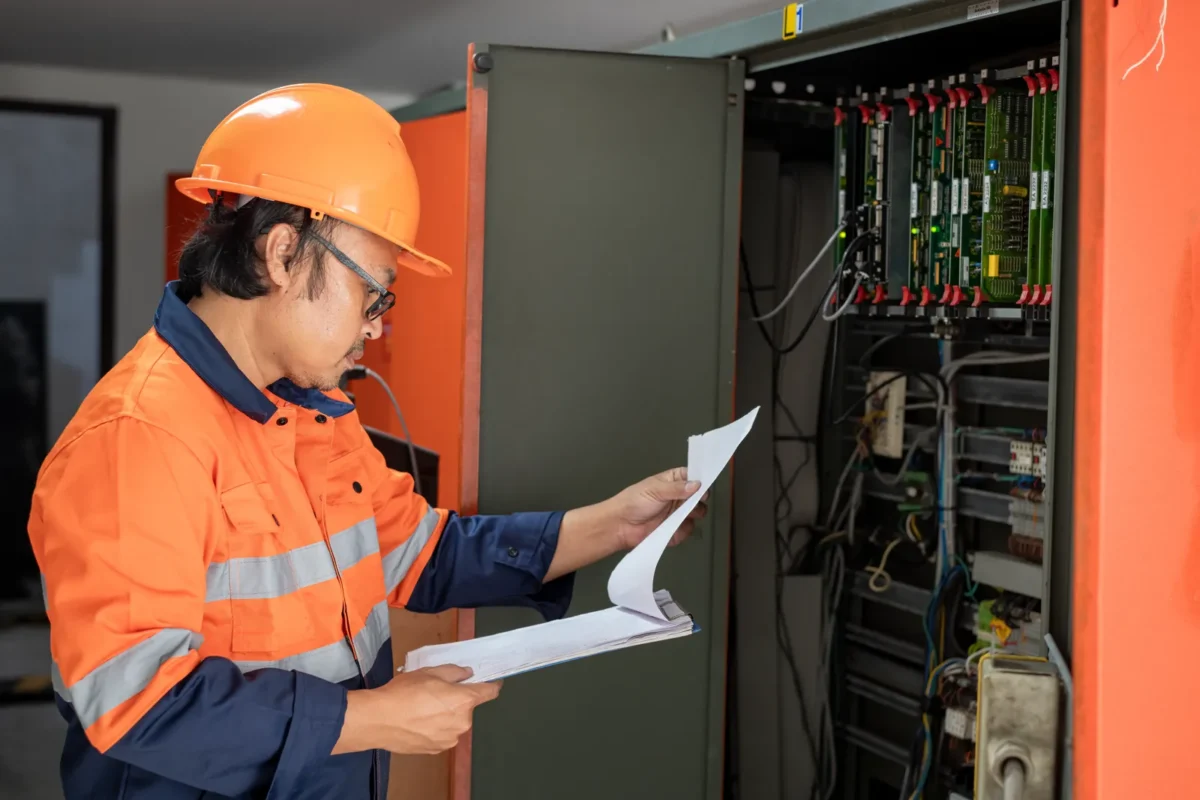
Commissioning is where design intent meets field reality. A typical process includes visual inspection, torque verification where required, polarity checks, string voltage checks, insulation resistance testing, AC verification, protective device review, communications setup, firmware confirmation, utility settings, monitoring activation, and final performance validation.
Common failure points include reversed polarity, incorrect string lengths, improper connector mating, open strings, ground faults, wrong grid profile settings, network misconfiguration, and mismatch between drawings and actual wiring. These issues are not unique to string inverters, but the number of devices and strings in commercial systems makes disciplined commissioning essential.
Good wholesale suppliers support commissioning with clear manuals, mobile tools, configuration instructions, and technical hotlines. EPCs should evaluate this support before purchase because commissioning delays can quickly erode project margin.
Commercial PV monitoring is no longer optional. Asset owners expect visibility into production, alarms, equipment status, and performance trends. Inverter communications may involve Ethernet, cellular, Wi-Fi, RS485, Modbus, SunSpec-compatible data structures, cloud platforms, local gateways, or integration with a data acquisition system.
The right communication architecture depends on project scale and owner requirements. A small commercial rooftop may use cloud monitoring with inverter-level alerts. A large industrial facility may require integration with building energy dashboards, utility controls, or a third-party asset management platform. A multi-site portfolio may need standardized data naming, remote diagnostics, and fleet-level performance comparison.
Buyers should confirm whether monitoring fees, cellular subscriptions, gateways, meters, or controllers are included in the wholesale quote. Communications hardware and software can affect both CAPEX and OPEX.
Installer familiarity directly affects field productivity. Even experienced PV crews need model-specific training for wiring compartments, commissioning apps, firmware updates, communication setup, fault interpretation, and safe replacement procedures. Training reduces installation errors and improves first-time commissioning success.
For wholesale buyers, support quality should be part of supplier evaluation. A strong supplier can provide training documents, recorded sessions, field checklists, troubleshooting guides, and escalation paths. For EPCs working across multiple states or subcontractor networks, standardized training is especially valuable.
The benefit is practical: fewer failed inspections, fewer truck rolls, faster PTO, and better project margins.
Effective operations and maintenance are critical to preserving the value of wholesale string inverters USA, minimizing downtime, optimizing performance, and managing risks for commercial PV systems long-term.
String inverter architecture distributes risk. If one inverter fails, only the array section connected to that inverter is affected. This can reduce production loss compared with a larger centralized failure point. For commercial owners, partial production can be financially preferable to a full-site outage, especially when solar offsets daytime demand charges or high retail energy rates.
However, distributed architecture requires effective monitoring. Without reliable alerts, a failed inverter or underperforming string may go unnoticed. This is particularly true for facilities where PV is not the core business and internal staff do not review system data daily.
A practical uptime strategy includes inverter-level monitoring, clear alarm routing, spare unit planning, defined service response times, and periodic performance review. The inverter platform should support these workflows, not simply produce AC power.
Modern commercial string inverters can provide fault codes, string-level or MPPT-level data, temperature information, grid event logs, and remote firmware update capability. This data helps asset managers distinguish between inverter faults, communication outages, grid disturbances, shading, soiling, and wiring problems.
Remote troubleshooting is valuable because truck rolls are expensive. If a technician can identify the likely issue before arriving on site, they can bring the right parts and reduce repeat visits. For multi-site portfolios, data granularity also supports benchmarking. If one site consistently underperforms similar sites, the asset manager can investigate before losses accumulate.
The key is to ensure that monitoring data is accessible, understandable, and compatible with the owner’s operational process. A platform that only the manufacturer can interpret may be less useful than one that supports open integration and clear reporting.
Warranty claims can be straightforward or frustrating depending on the supplier and manufacturer process. EPCs should understand the full RMA pathway before buying: who diagnoses the failure, who approves replacement, whether advance replacement is available, who pays freight, whether labor is reimbursed, and how long replacement typically takes.
Coverage scope should also be reviewed. Some warranties cover parts only. Others may include limited labor reimbursement or extended service options. Environmental exclusions, improper installation, grid events, unauthorized repairs, and firmware issues may affect claims.
For EPCs with long-term O&M contracts, warranty execution is a financial risk. If the owner expects rapid restoration but the warranty process is slow, the EPC may absorb pressure or cost. Procurement teams should therefore treat warranty strength as part of lifecycle value.
Routine inverter maintenance typically includes visual inspections, checking for blocked ventilation paths, reviewing fault logs, confirming communications health, inspecting enclosures and seals, verifying torque where required by procedures, checking signs of overheating, and managing firmware updates. The frequency depends on site conditions, manufacturer instructions, and O&M contract requirements.
Industrial sites may require additional attention to dust, corrosive environments, vibration, or restricted access procedures. Rooftop sites may require fall protection planning and coordination with facility operations. Ground-mount systems may need vegetation control and inspection after storms or flooding.
O&M planning should be included in the original design. If inverters are difficult to reach, poorly labeled, or inconsistently configured, every maintenance event becomes more expensive.
When evaluating wholesale string inverters USA, focusing on lifecycle value—beyond upfront costs—ensures optimal CAPEX, OPEX, and ROI for commercial PV projects, aligning with long-term financial goals.
The lowest wholesale price is not always the lowest lifecycle cost. Inverter economics include purchase price, installation labor, mounting hardware, AC and DC wiring, commissioning time, monitoring costs, replacement logistics, warranty quality, downtime risk, and expected service life.
A slightly more expensive inverter may reduce total cost if it supports faster commissioning, fewer accessories, better MPPT flexibility, lower derating, stronger monitoring, or more reliable warranty support. Conversely, a lower-priced inverter may be the right choice when it is well certified, easy to install, adequately supported, and matched to a standardized project design.
| Categoria de custo | How inverter choice affects lifecycle value |
|---|---|
| CAPEX | Equipment price, BOS requirements, installation labor |
| Commissioning | Setup time, utility settings, communications activation |
| OPEX | Monitoring fees, service labor, truck rolls, spare parts |
| Downtime | Lost production during failures or grid-related events |
| Garantia | Replacement speed, coverage scope, freight and labor terms |
| Termos da garantia | Clarifies coverage, exclusions, claim process, and service obligations |
| Commissioning guide | Supports first-time startup and utility-required settings |
Professional buyers should compare total installed and operated cost, not only dollars per watt on the purchase order.
Inverter sizing has direct financial implications. A higher DC/AC ratio can improve utilization of inverter capacity and increase annual energy production during low and moderate irradiance hours. However, excessive oversizing can increase clipping and reduce the value of added modules. The optimal balance depends on site-specific weather, array orientation, electricity rates, export rules, and project objectives.
For a facility focused on reducing demand charges, production timing may matter more than maximum annual kWh. For a project under a power purchase agreement, modeled annual energy and performance guarantees may dominate. For a site with export limits, inverter controls and load matching can be more important than simply maximizing DC capacity.
This is why inverter procurement should be connected to financial modeling. Engineering teams should test several inverter sizing scenarios and compare payback, net present value, and sensitivity to utility rate changes.
String inverter systems can simplify replacement because units are modular and failures are localized. However, they also increase the number of monitored devices, communication points, and potential alarm sources. Asset owners should account for this in OPEX planning.
The balance depends on scale and access. A rooftop portfolio with many small sites may benefit from standardized inverter blocks and spare units. A large ground-mount project may require more formal SCADA integration and structured maintenance workflows. In both cases, standardization can reduce training requirements and simplify spare inventory.
Labor access is often underestimated. A failed inverter on a roof with limited access may cost more to service than the equipment itself. Good design reduces this risk through thoughtful placement, labeling, and safe access planning.
For EPCs and resellers managing repeat C&I projects, inverter standardization can improve portfolio economics. Using a consistent platform reduces engineering time, installer training, commissioning variation, spare parts complexity, and O&M procedures. It also allows asset managers to compare performance across similar sites.
However, standardization should not become rigidity. The selected platform must support the range of site voltages, module currents, climate conditions, and utility requirements in the project pipeline. Procurement teams should periodically review whether the platform remains suitable as modules, codes, and interconnection rules evolve.
The best long-term strategy often combines platform consistency with technical flexibility.
Choosing future-ready wholesale string inverters USA means prioritizing storage compatibility, scalability, and adaptability to high-power modules, ensuring long-term relevance for commercial PV projects.
Standard grid-tied string inverters are designed to convert PV DC power to AC power. Battery storage may require a separate battery inverter, a hybrid inverter architecture, or an AC-coupled storage system with controls that coordinate PV, batteries, loads, and utility export.
Commercial buyers should clarify whether storage is part of the initial project or a future option. If batteries may be added later, the PV inverter selection should consider export control, metering, site controller compatibility, communications protocols, and interconnection constraints. A PV-only design can be storage-ready if the AC infrastructure, controls strategy, and monitoring plan allow future integration.
Storage planning is especially relevant for facilities with demand charges, backup power needs, limited export permission, or time-of-use rates. The inverter does not need to solve every future requirement, but it should not block a realistic energy strategy.
String inverter platforms are well suited to phased deployments. A commercial campus may begin with one building, then expand to additional rooftops or parking structures. A national facility owner may replicate similar systems across warehouses in different states. A public agency may install PV in budget cycles over several years.
For these scenarios, EPCs should verify model continuity, firmware compatibility, monitoring platform scalability, documentation consistency, and spare parts availability. If a product line changes frequently, future expansions may require redesign or mixed-platform monitoring.
Scalability is not only electrical. It includes procurement workflows, installer training, commissioning procedures, data management, and O&M response.
Inverter controls increasingly support broader facility energy goals. Export limitation, power factor control, load-following strategies, and integration with energy management systems can help projects fit within utility constraints and improve financial outcomes.
For facilities with constrained interconnection capacity, export control may allow a larger PV array than would otherwise be approved. For facilities with high demand charges, solar production data can be combined with battery controls or load management strategies. For portfolios, standardized inverter data can support corporate sustainability reporting and energy cost analysis.
The inverter should be viewed as part of the facility’s energy infrastructure, not only as a PV component.
PV modules continue to increase in wattage and current. This affects inverter input current limits, connector selection, string sizing, combiner design, and protection requirements. Buyers should avoid selecting legacy inverter models that restrict module options or force inefficient designs.
EPCs should compare inverter input ratings against the modules likely to be used over the next several project cycles. Resellers should also consider installer demand for platforms compatible with current high-power modules. A product that worked well for older module formats may not be the best stocking choice for future C&I projects.
Future-ready procurement means checking both today’s project and tomorrow’s module supply.
To evaluate wholesale string inverters USA effectively, focus on product-channel fit, datasheet accuracy, and support ecosystems—rather than brand names—to ensure commercial PV project success.
Resellers should evaluate product-channel fit based on repeatable demand, not headline specifications alone. A strong wholesale product should match common project sizes, local installer preferences, available modules, standard racking approaches, and regional code requirements. It should also come with reliable documentation and a warranty process that resellers can explain clearly to customers.
Inventory decisions should reflect project mix. A distributor serving commercial rooftops may prioritize compact three-phase string inverter models with strong rapid shutdown documentation. A supplier serving ground-mount EPCs may prioritize higher-power units, robust communications, and field-replaceable components.
The best channel strategy supports predictable sales and manageable support obligations.
Datasheets should be reviewed by both procurement and engineering teams. Procurement may focus on price, lead time, warranty, and availability, while engineering focuses on voltage windows, MPPT count, current limits, AC output, environmental ratings, and certifications. Both perspectives are necessary.
A practical comparison matrix should include rated AC power, maximum DC voltage, MPPT range, number of MPPTs, maximum input current, short-circuit current limits, supported AC voltages, efficiency, enclosure rating, operating temperature range, communications, certifications, warranty, and required accessories.
The datasheet should not be treated as marketing material. It is a design document. If a value is unclear, buyers should request written clarification before purchase.
The support ecosystem around the inverter can determine how smoothly projects move from design to operation. Commissioning software, monitoring tools, design resources, installation manuals, technical bulletins, and responsive support teams all reduce risk.
For commercial buyers, documentation quality is especially important because multiple parties interact with the system: developers, engineers, installers, inspectors, utilities, owners, and O&M providers. Clear documentation reduces ambiguity across the project chain.
Support also matters after commissioning. Firmware updates, grid setting changes, monitoring platform updates, and warranty claims may occur years after installation. Buyers should choose suppliers that can support the full asset lifecycle.
Warning signs include unclear certification documents, vague model numbers, inconsistent availability, limited U.S. warranty support, slow technical responses, missing installation manuals, unclear return policies, and pricing that appears disconnected from service obligations. Another red flag is reluctance to provide documentation before purchase.
Buyers should also be cautious when a supplier cannot explain lead times, replacement availability, accessory requirements, or commissioning support. In commercial PV, uncertainty usually becomes cost. A reliable supplier should be able to support both the purchase order and the operating asset.

Wholesale string inverters convert DC power from PV module strings into grid-compatible AC power for commercial rooftops, carports, ground-mount arrays, and distributed C&I systems. EPCs and installers favor them for modular design, flexible multi-MPPT configuration, easy replacement, and scalable deployment across multiple sites, making them ideal for wholesale string inverters USA projects.
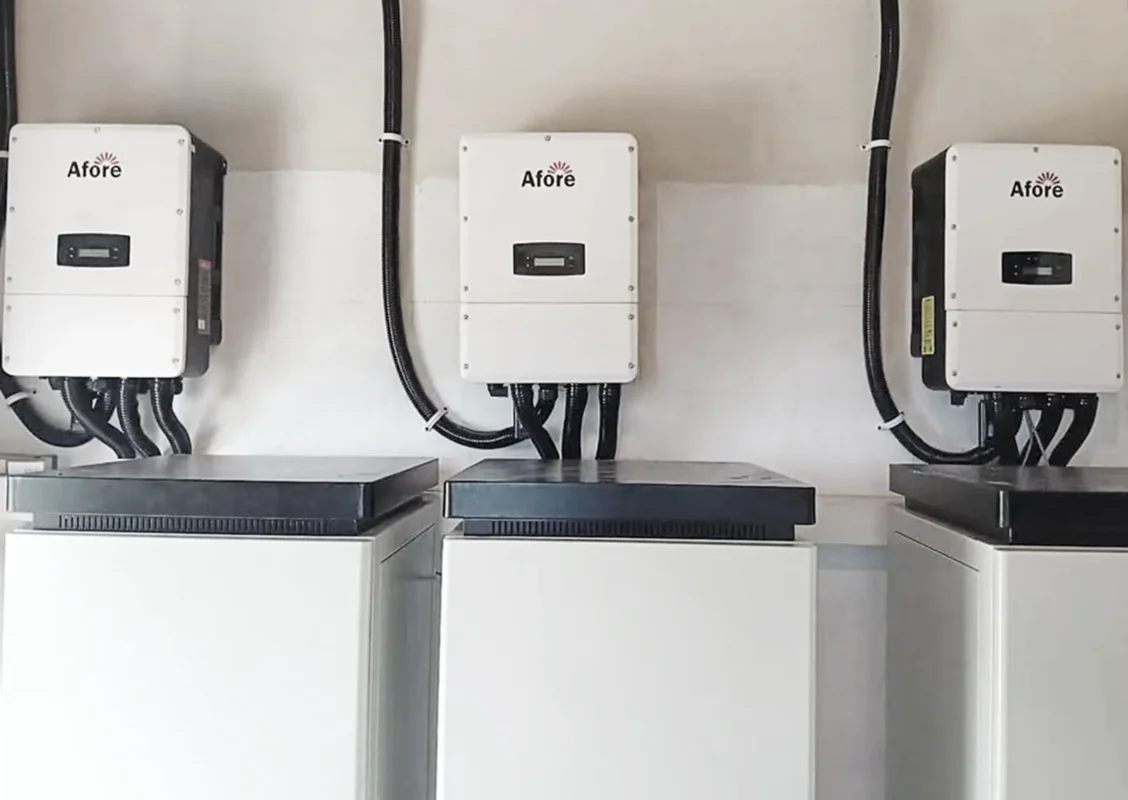
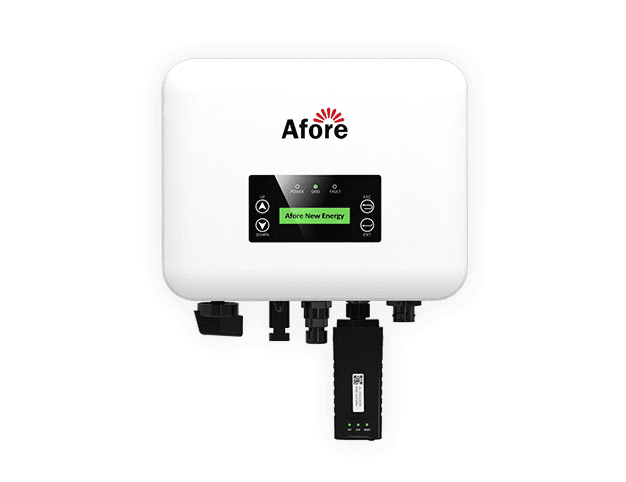
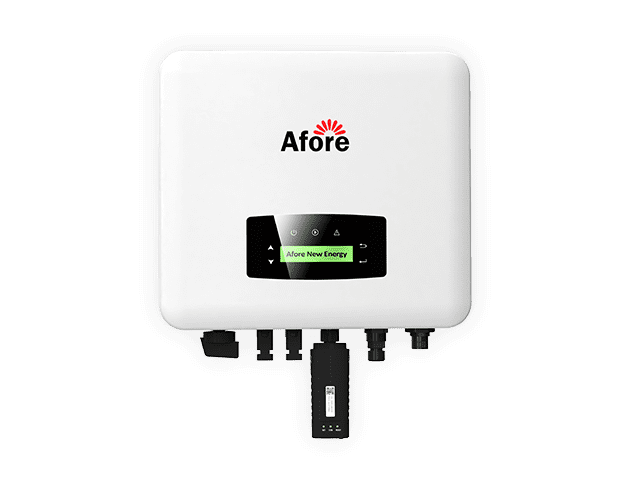
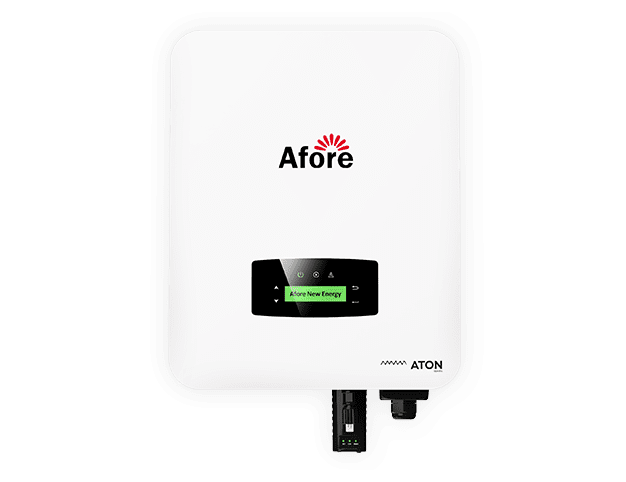
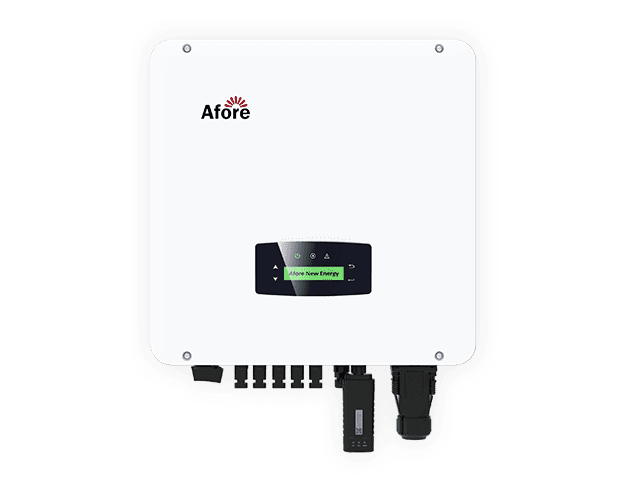
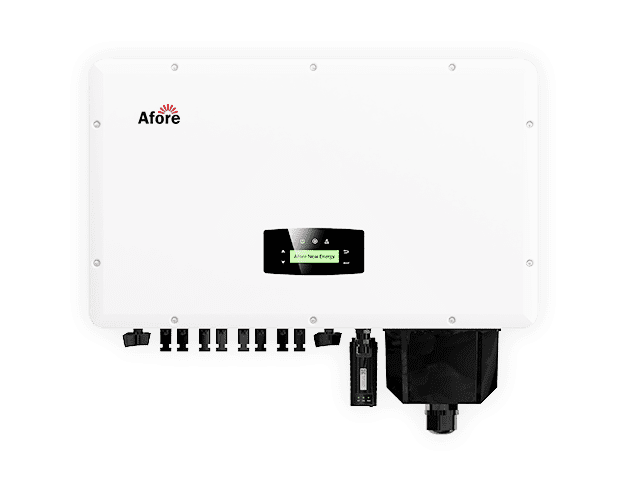
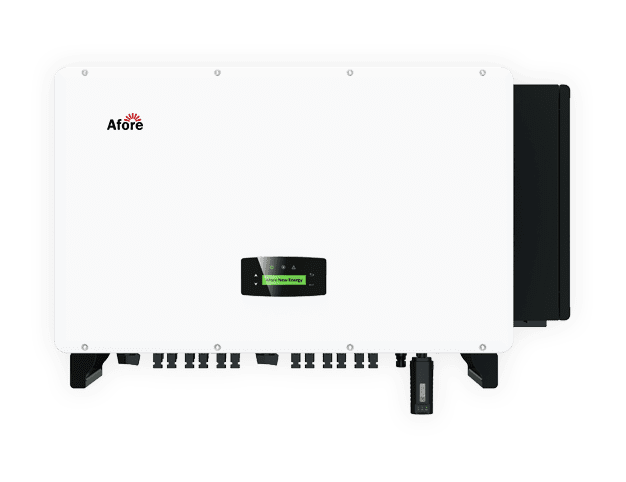
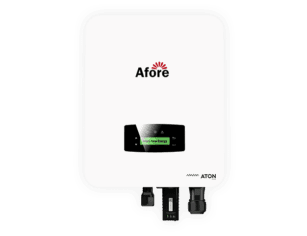
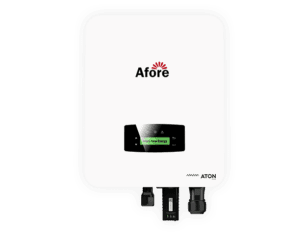
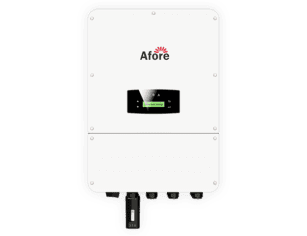
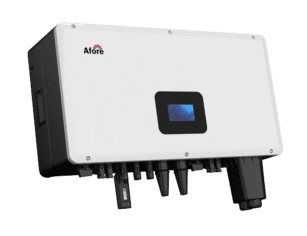
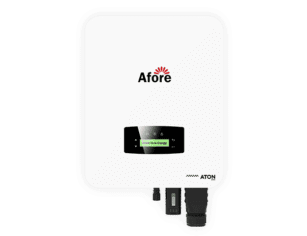
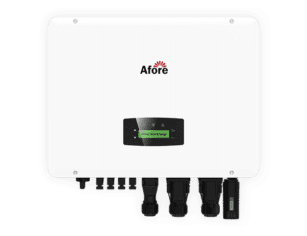
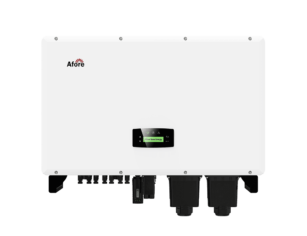
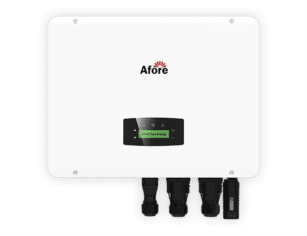
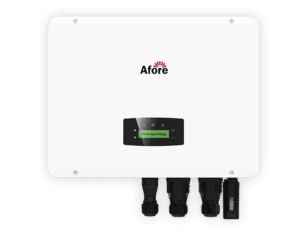
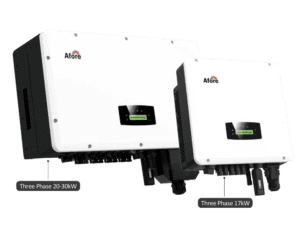
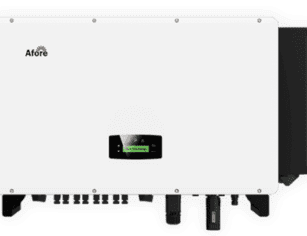
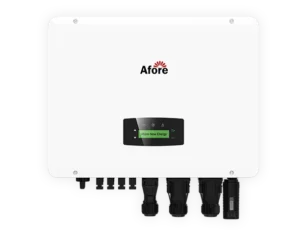
Afore string inverters feature 2 to 4 MPPT channels across single-phase and three-phase models, supporting flexible PV array design for commercial and residential PV inverter wholesale needs. High-efficiency Afore string inverter models (3–110kW) include independent MPPTs to handle multi-orientation rooftops, shading conditions, and high-power bifacial modules, optimizing energy yield for bulk solar string inverters applications.
String inverters outperform microinverters for commercial and industrial PV due to lower upfront costs, simpler installation, and easier O&M, making them perfect for wholesale string inverters USA bulk orders. Unlike microinverters, they support multi-MPPT optimization for uniform arrays, have fewer devices to monitor, and enable cost-effective scaling—critical for EPCs, resellers, and project owners prioritizing lifecycle value and grid-tied string inverters reliability.
Yes, Afore string inverters are available for bulk shipping to the USA, with flexible MOQs (10+ units) and volume discounts for resellers and EPCs. The manufacturer supports steady production capacity (up to 10,000 units weekly) and complies with U.S. grid-tied standards, ensuring timely delivery of high-efficiency string inverters for commercial and residential wholesale projects.
String inverters are often better for commercial PV when projects involve multiple roof planes, phased construction, service access constraints, or a need to reduce single-point failure risk. Central inverters may still be suitable for large, uniform utility-scale sites. The best choice depends on project layout, interconnection design, O&M strategy, and lifecycle economics.
Commercial grid-tied inverters in the U.S. should have applicable safety certification and grid interconnection compliance for the project location. EPCs should verify current documentation for the exact model and firmware version, including smart inverter functions required by the utility or AHJ.
Standard grid-tied string inverters may work in AC-coupled storage systems, but they are not always battery inverters. Commercial buyers should determine whether future storage will require separate battery inverters, site controllers, export control, metering upgrades, or a hybrid architecture.
https://standards.ieee.org/ieee/1547/5915
https://www.energy.gov/eere/solar/solar-photovoltaic-system-cost-benchmarks








 Turkish
  Romanian