



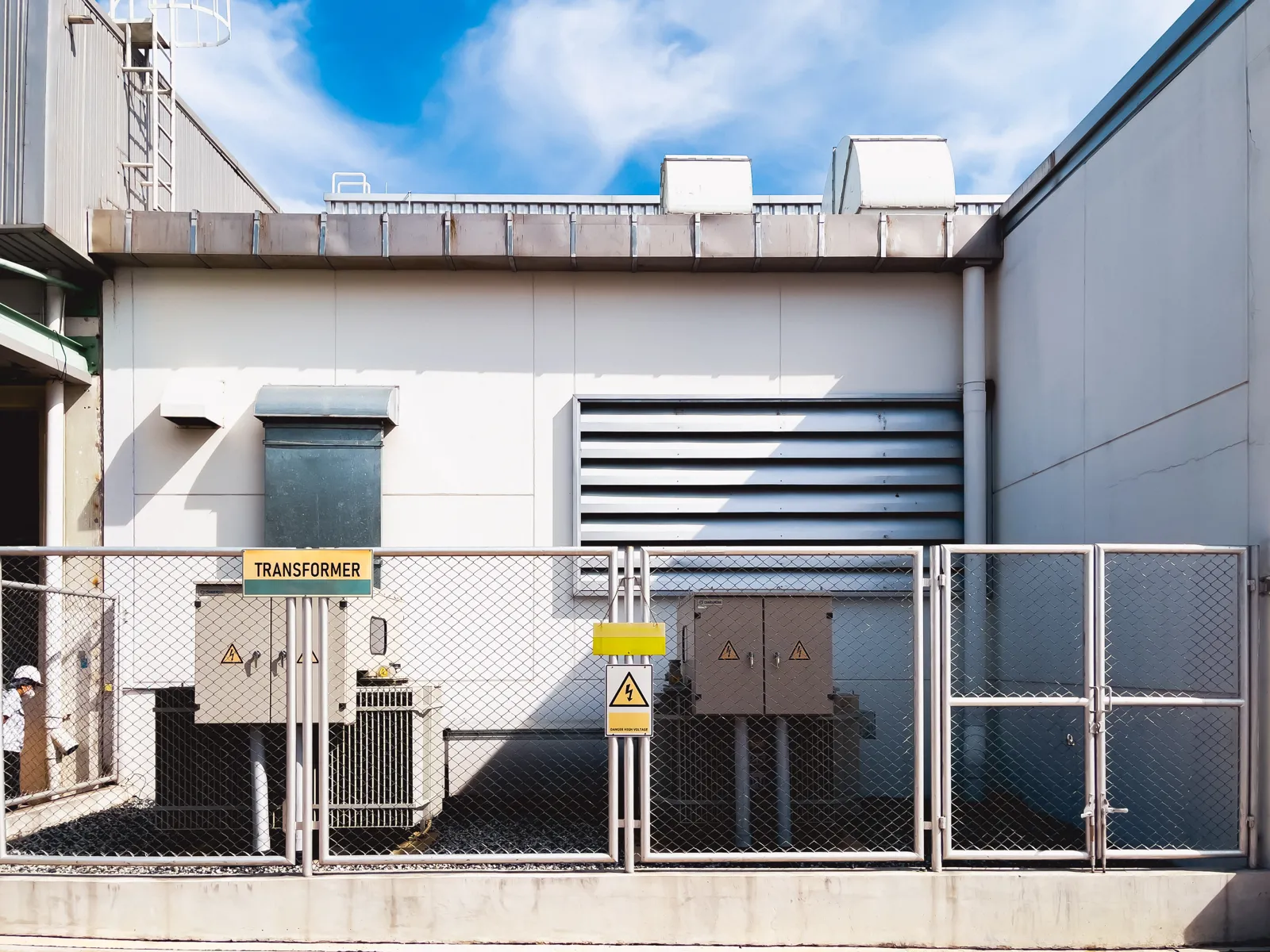
Los inversores para exteriores con clasificación IP66 se utilizan cuando los sistemas fotovoltaicos comerciales e industriales necesitan una conversión de energía fiable en entornos expuestos. En muchos proyectos comerciales e industriales, el inversor ya no se encuentra protegido dentro de una sala eléctrica específica. Puede estar instalado en la azotea de una fábrica, bajo la marquesina de un aparcamiento, junto a un parque de paneles montado en el suelo, en una estructura agrícola o cerca de una instalación industrial, donde el polvo, la humedad, la lluvia, el agua de limpieza y las partículas en suspensión forman parte de las condiciones normales de funcionamiento.
Para empresas de EPC, instaladores, integradores de sistemas, distribuidores y propietarios de proyectos comerciales, profesional fabricación de inversores solares Hace que la clasificación IP66 sea algo más que una simple etiqueta en una caja protectora. Influye en el lugar donde se puede instalar el inversor, en cómo se cablea el sistema, en la facilidad con la que los técnicos pueden realizar el mantenimiento, en el nivel de riesgo medioambiental que conlleva el proyecto y en la confianza con la que el propietario de la instalación puede planificar las operaciones a largo plazo. Un inversor fotovoltaico para exteriores bien especificado puede reducir la complejidad del resto del sistema y evitar una infraestructura interior innecesaria. Uno mal especificado o mal instalado puede dar lugar a disputas sobre la garantía, intervenciones técnicas in situ, pérdidas de producción y costes evitables a lo largo del ciclo de vida.
La cuestión clave no es simplemente si el grado de protección IP66 es “mejor” que otro. La pregunta más útil es si el IP66 se adapta al riesgo ambiental del proyecto, a los requisitos de la red eléctrica, a las condiciones térmicas, a la estrategia de mantenimiento y al modelo financiero. Un almacén logístico situado en un clima templado puede tener necesidades diferentes a las de una fábrica costera, una explotación agrícola con mucho polvo o un parque solar comercial instalado en suelo en una región cálida. El grado de protección es importante, pero debe evaluarse junto con el diseño térmico, la protección eléctrica, el cumplimiento de la normativa de la red eléctrica, la monitorización, la calidad de la instalación y el soporte del proveedor.
Esta guía explica qué significa la clasificación IP66 para las cajas de los inversores solares, cuándo es necesaria, en qué se diferencia de las clasificaciones IP65 e IP67, y cómo deben evaluar los compradores profesionales las soluciones de inversores solares con clasificación IP66 para proyectos fotovoltaicos en tejados, en suelo, en marquesinas, industriales, agrícolas y comerciales distribuidos.
Para comprender plenamente su utilidad práctica en proyectos solares comerciales, es fundamental analizar en detalle la definición, el alcance de la protección y las limitaciones reales de la norma IP66 sobre carcasas.
IP66 es un índice de protección contra la entrada de agua y polvo definido en IEC 60529. El primer dígito describe la protección frente a objetos sólidos y polvo, y su estanqueidad al polvo se ha verificado plenamente en las condiciones oficiales de ensayo de la norma IEC 60529. Si el primer dígito es un “6”, significa que la carcasa es estanca al polvo en las condiciones del ensayo normalizado. El segundo dígito describe la protección frente al agua. Un segundo dígito “6” significa que la carcasa está protegida contra chorros de agua potentes procedentes de cualquier dirección en condiciones de ensayo definidas, utilizando una boquilla de 12,5 mm, un chorro de agua de alto caudal, una distancia fija definida y una duración de ensayo normalizada según la norma IEC 60529; esta clasificación no equivale a un lavado a presión comercial ni a la inmersión total del equipo.
En el caso de un inversor solar, esto significa que la carcasa está diseñada para resistir la entrada de polvo y los chorros de agua a alta presión en las condiciones de ensayo de la norma IEC 60529 mejor que muchas carcasas para exteriores con una clasificación inferior. En términos prácticos de energía fotovoltaica comercial e industrial, un inversor fotovoltaico para exteriores con clasificación IP66 es adecuado para muchos lugares de instalación expuestos en los que cabe esperar lluvia, polvo arrastrado por el viento, chorros de agua de limpieza y contaminación exterior en general.
Sin embargo, la clasificación IP66 tiene sus límites. No significa que el inversor sea sumergible, ni permite automáticamente el lavado a presión a corta distancia, el lavado con productos químicos, la limpieza con vapor o la exposición prolongada al agua estancada. Tampoco implica automáticamente que la unidad sea a prueba de corrosión, resistente a productos químicos, apta para niebla salina, a prueba de inundaciones o que no requiera mantenimiento. Tampoco compensa las prácticas de instalación deficientes, como prensaestopas mal apretados o juntas dañadas. La clasificación IP66 solo es válida para una carcasa montada correctamente con entradas de cable bien ajustadas, puertos de comunicación sellados y juntas intactas y sin daños. Para los compradores profesionales, esta distinción es importante porque confiar excesivamente en la clasificación IP principal puede llevar a suposiciones erróneas durante el diseño, la adquisición y la entrega.
Una comparación simplificada resulta útil a la hora de analizar las especificaciones con las partes interesadas del proyecto.
| Valoración | Protección sólida | Protección del agua | Aplicaciones prácticas de los inversores fotovoltaicos |
|---|---|---|---|
| IP54 | Protección limitada contra el polvo | Salpicaduras de agua | Normalmente requiere lugares más protegidos |
| IP65 | A prueba de polvo | Chorros de agua | Habitual en los equipos eléctricos para exteriores |
| IP66 | A prueba de polvo | Potentes chorros de agua | Una opción ideal para instalaciones al aire libre en entornos industriales y comerciales expuestas a la intemperie |
| IP67 | A prueba de polvo | Inmersión temporal | Es relevante cuando se tiene en cuenta el riesgo de inmersión temporal, pero no es necesariamente mejor para la disipación del calor ni para la facilidad de mantenimiento. |
En las normas norteamericanas sobre cajas de protección, la clasificación IP66 se ajusta en gran medida a las clasificaciones NEMA Tipo 4 y NEMA Tipo 4X para la protección de equipos en exteriores, aunque existen ligeras diferencias en los requisitos relativos a los materiales y la corrosión entre los distintos marcos normativos. Lo importante es que IP66 es una clasificación derivada de ensayos, no una garantía completa de rendimiento ambiental. Debe interpretarse junto con el manual de instalación del fabricante, el rango de temperaturas de funcionamiento, el método de refrigeración, la información sobre corrosión, las condiciones de garantía y las condiciones de montaje permitidas.
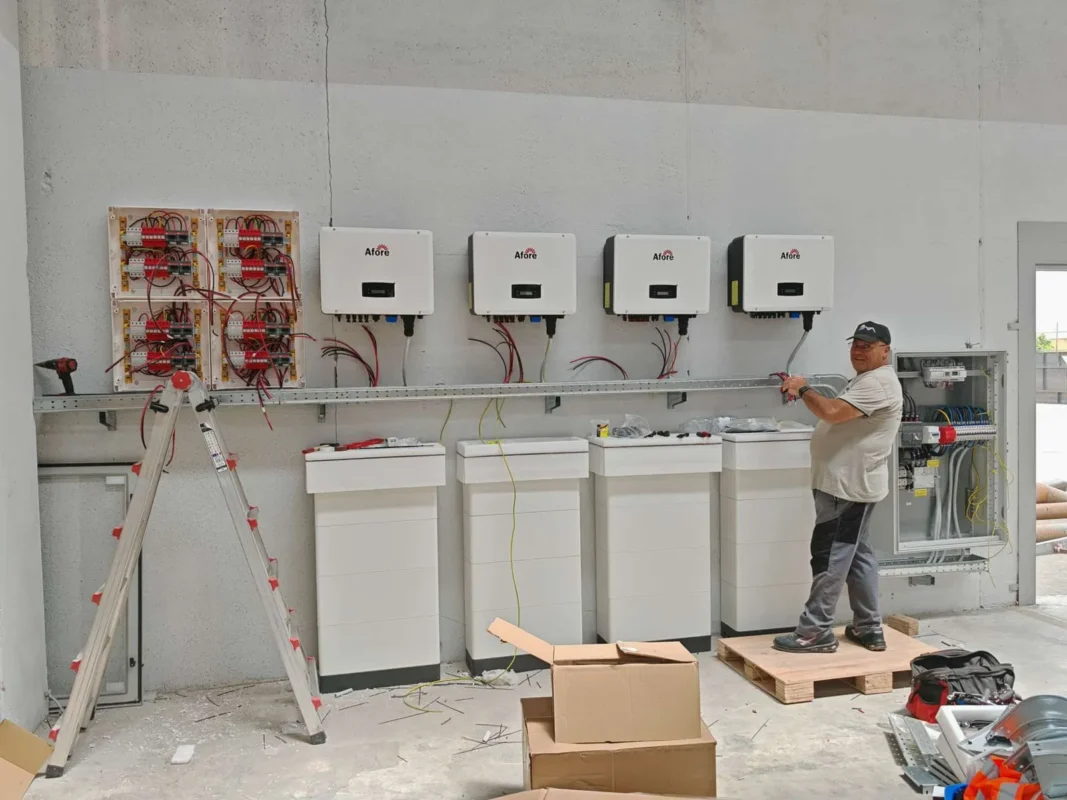
Los inversores para exteriores con clasificación IP66 aportan el máximo valor cuando el diseño del proyecto se beneficia de la instalación de los equipos de conversión de energía cerca del parque fotovoltaico, sin necesidad de construir una sala de inversores independiente ni un recinto protegido. Esto es habitual en sistemas fotovoltaicos comerciales e industriales instalados en tejados, marquesinas comerciales, proyectos industriales de montaje en suelo, instalaciones fotovoltaicas agrícolas, parques logísticos, plantas de tratamiento de aguas, infraestructuras relacionadas con la minería y carteras de generación distribuida.
En los tejados de las fábricas, los inversores pueden quedar expuestos a la lluvia, el polvo, el calor del tejado y los lavados periódicos. En los parques logísticos y los almacenes, la capacidad de las salas eléctricas interiores puede ser limitada, por lo que los inversores solares comerciales de cadena aptos para uso en exteriores pueden simplificar la instalación. En explotaciones agrícolas y instalaciones agroindustriales, los equipos pueden verse expuestos al polvo, a contaminantes atmosféricos relacionados con los fertilizantes, a la humedad, a las condiciones de los recintos para animales o a las actividades de limpieza que se realicen en las inmediaciones. En zonas costeras o industriales, la humedad y las partículas en suspensión pueden aumentar la importancia de la integridad de la carcasa y la selección de los materiales.
El valor no es solo medioambiental. La instalación en exteriores puede acortar los tramos de cable de CC, reducir la necesidad de espacio interior específico y facilitar una arquitectura de sistema modular. Por ejemplo, una empresa de ingeniería, compras y construcción (EPC) que diseñe varios sistemas fotovoltaicos de 250 kW en tejados de una cartera de almacenes podría preferir inversores de cadena distribuidos en el exterior, instalados cerca de las zonas de paneles, en lugar de largos tramos de cable de corriente continua que lleguen hasta una única sala interior. Esto puede simplificar el diseño de las cadenas, mejorar el aislamiento de fallos y facilitar la repetibilidad de futuras ampliaciones.
Al mismo tiempo, la instalación en exteriores modifica la planificación del servicio. Un inversor solar resistente a la intemperie instalado en una azotea debe seguir siendo accesible para los técnicos. Debe contar con pasarelas seguras, espacio libre suficiente, una resistencia de montaje adecuada y puntos de aislamiento adecuados. La clasificación IP66 ayuda a proteger el equipo contra la entrada de elementos externos, pero no elimina la necesidad de un acceso práctico para las tareas de operación y mantenimiento.
Para los contratistas de ingeniería, compras y construcción (EPC) y los distribuidores, el grado de protección de la carcasa guarda una relación directa con el riesgo del proyecto. La entrada de humedad, la contaminación por polvo, la corrosión, el deterioro de los conectores y el estrés térmico son factores habituales que contribuyen a las averías de los inversores en instalaciones al aire libre en entornos hostiles. Un inversor con clasificación IP66 puede reducir la probabilidad de que el polvo y el agua penetren en la carcasa si se instala correctamente, lo que puede ayudar a limitar los fallos prematuros y evitar las visitas de servicio técnico in situ.
Sin embargo, muchos problemas relacionados con las infiltraciones se deben a la instalación y no al diseño. Una unidad con clasificación IP66 en condiciones de laboratorio puede verse comprometida si los instaladores utilizan un prensaestopas del tamaño incorrecto, dejan sin sellar los puertos de comunicación que no se utilizan, colocan los conductos de forma que el agua penetre en la carcasa, dañan una junta durante el mantenimiento o montan el inversor en una orientación distinta a la permitida. En ese caso, las reclamaciones de garantía pueden resultar difíciles, ya que la clasificación solo es válida cuando el producto se instala de acuerdo con las instrucciones del fabricante.
Por eso, las empresas de ingeniería, compras y construcción (EPC) deben considerar el grado de protección IP66 como parte de un sistema de calidad más amplio. La especificación debe ir acompañada de listas de comprobación de la instalación, registros de par de apriete, documentación fotográfica, informes de puesta en servicio y formación de los técnicos. En el caso de los distribuidores, los resultados del servicio posventa no solo dependen de la venta de un producto resistente a la intemperie, sino también de ayudar a los instaladores a comprender los requisitos de sellado, montaje y mantenimiento que garantizan el mantenimiento de la clasificación en el campo.
La clasificación IP66 puede ser un requisito práctico cuando el inversor se vaya a instalar en lugares al aire libre totalmente expuestos a lluvia intensa, polvo arrastrado por el viento, alta humedad, lavados frecuentes en las inmediaciones o protección limitada. También suele ser la opción preferida en zonas industriales polvorientas, entornos agrícolas, instalaciones costeras y sistemas C&I montados en suelo, donde los equipos están directamente expuestos a las inclemencias meteorológicas.
En otros proyectos, la protección IP66 puede resultar beneficiosa, pero no es imprescindible. Una sala de instalaciones en una azotea cubierta, una sala eléctrica interior seca o una instalación bajo marquesina protegida pueden funcionar adecuadamente con una estrategia de protección diferente, dependiendo de la normativa local y las recomendaciones del fabricante. Los inversores para exteriores con clasificación IP65 se utilizan ampliamente en muchas aplicaciones fotovoltaicas comerciales y pueden ser adecuados en aquellos casos en los que no se prevea la presencia de chorros de agua potentes. Los sistemas clasificados para uso en interiores pueden seguir siendo adecuados cuando el equipo se instala en una sala eléctrica controlada con ventilación adecuada, control de acceso y protección ambiental.
La decisión debe basarse en el riesgo del emplazamiento, en lugar de partir de la suposición de que el grado de protección más alto visible es siempre la mejor opción. Un grado de protección más alto puede suponer un coste adicional y puede influir en el diseño de la refrigeración. Por el contrario, especificar un grado de protección inferior al necesario puede aumentar el riesgo de averías y el coste de mantenimiento. El enfoque adecuado consiste en documentar las condiciones del emplazamiento, identificar la exposición probable y elegir el grado de protección de la carcasa del inversor como parte del diseño global del sistema. El grado IP66 debe utilizarse como un factor más en la evaluación de los riesgos del emplazamiento, no como una especificación universal.
Matriz de decisión sobre los riesgos del emplazamiento
| Tipo de emplazamiento | Nivel de riesgo | Puntos clave de la evaluación |
|---|---|---|
| Azotea al aire libre | Alta | Distancia térmica, resistencia a los rayos UV, acceso para mantenimiento |
| Planta costera | Alta | Resistencia a la niebla salina, índice de corrosión oficial |
| Expoagrícola | Alta | Resistencia al amoníaco, protección contra el polvo, compatibilidad con productos químicos de limpieza |
| Indoor electrical room | Low to medium | Ventilation performance, indoor enclosure rating compliance |
| Flood-prone ground site | IP66 insufficient alone | Equipment elevation, site drainage design, formal flood risk study |
| Carport | Medium to high | Mechanical impact protection, public safety and access control |
When selecting outdoor solar inverters, understanding different IP protection grades, thermal performance limits, environmental durability, and industry certifications is critical for long-term system reliability across harsh working conditions.
IP65, IP66, and IP67 are often compared during procurement, but they address different exposure scenarios. IP65 provides dust-tight protection and protection against water jets. IP66 also provides dust-tight protection but increases the water-jet protection level. IP67 relates to temporary immersion under defined conditions.
In PV applications, IP67 is not automatically superior to IP66. Inverters generate heat and require reliable heat dissipation. A design optimized for immersion resistance may not be the most practical for high-power conversion equipment that needs airflow, heat sinks, or serviceable interfaces. Similarly, an IP66 solar inverter may be better suited to exposed rooftop or ground-mount conditions than a lower-rated enclosure, but only if it also meets thermal, electrical, grid, and service requirements.
For C&I system design, the “best” rating depends on installation orientation, expected weather exposure, cleaning practices, flood risk, mounting location, and maintenance workflow. If temporary flooding is a realistic risk, the solution may not be as simple as selecting IP67. The more robust answer may involve raising equipment above flood levels, improving drainage, relocating electrical infrastructure, and following local electrical safety rules.
A solar inverter converts DC power from PV modules into AC power for the facility or grid. Even high-efficiency equipment produces heat. In C&I systems, thermal behavior is one of the most important factors affecting performance, because high ambient temperature can lead to derating, reduced output, and accelerated component stress.
An IP66 enclosure must resist dust and water ingress, but it still needs effective heat dissipation. Depending on the design, this may involve heat sinks, natural convection, sealed thermal pathways, forced cooling, or controlled airflow through protected channels. A common mistake is to treat the enclosure rating as the main reliability factor while ignoring direct sunlight, rooftop surface temperature, insufficient spacing, blocked heat sinks, or poor ventilation.
Commercial PV projects should request official derating curves by ambient temperature, compare performance at 40°C, 45°C, 50°C, and 60°C, and confirm whether rated output is validated under direct sun exposure or only shaded ambient conditions; projects should also review fan-cooled versus fanless design tradeoffs, rooftop surface temperature impacts, and necessary air-gap clearance for heat dissipation, alongside the inverter’s operating temperature range, altitude limits, cooling method, and installation spacing requirements. Maximum efficiency values are useful, but they do not explain how the inverter behaves at 45°C ambient temperature on a dark rooftop surface or under partial-load operation across a long summer day. For yield modeling, the derating profile can be as important as the peak efficiency figure.
A small technical table can help project teams compare the right variables.
| Selection factor | Why it matters for outdoor C&I PV | Puntos clave de la evaluación | Aplicaciones prácticas de los inversores fotovoltaicos |
|---|---|---|---|
| Temperatura de funcionamiento | Defines permitted ambient conditions | Distancia térmica, resistencia a los rayos UV, acceso para mantenimiento | Normalmente requiere lugares más protegidos |
| Derating curve | Shows output behavior under heat stress | Resistencia a la niebla salina, índice de corrosión oficial | Habitual en los equipos eléctricos para exteriores |
| Método de refrigeración | Affects noise, maintenance, dust sensitivity, and service life | Resistencia al amoníaco, protección contra el polvo, compatibilidad con productos químicos de limpieza | Una opción ideal para instalaciones al aire libre en entornos industriales y comerciales expuestas a la intemperie |
| Installation clearance | Supports heat dissipation and technician access | Ventilation performance, indoor enclosure rating compliance | Es relevante cuando se tiene en cuenta el riesgo de inmersión temporal, pero no es necesariamente mejor para la disipación del calor ni para la facilidad de mantenimiento. |
| Exposición directa al sol | Can raise enclosure temperature and increase derating risk | Equipment elevation, site drainage design, formal flood risk study | |
| Altitude limit | Relevant for cooling and insulation performance in high-elevation sites | Mechanical impact protection, public safety and access control |
A weatherproof solar inverter that derates heavily in the local climate may underperform financially even if the enclosure rating is excellent. Therefore, enclosure protection and thermal design must be evaluated together.
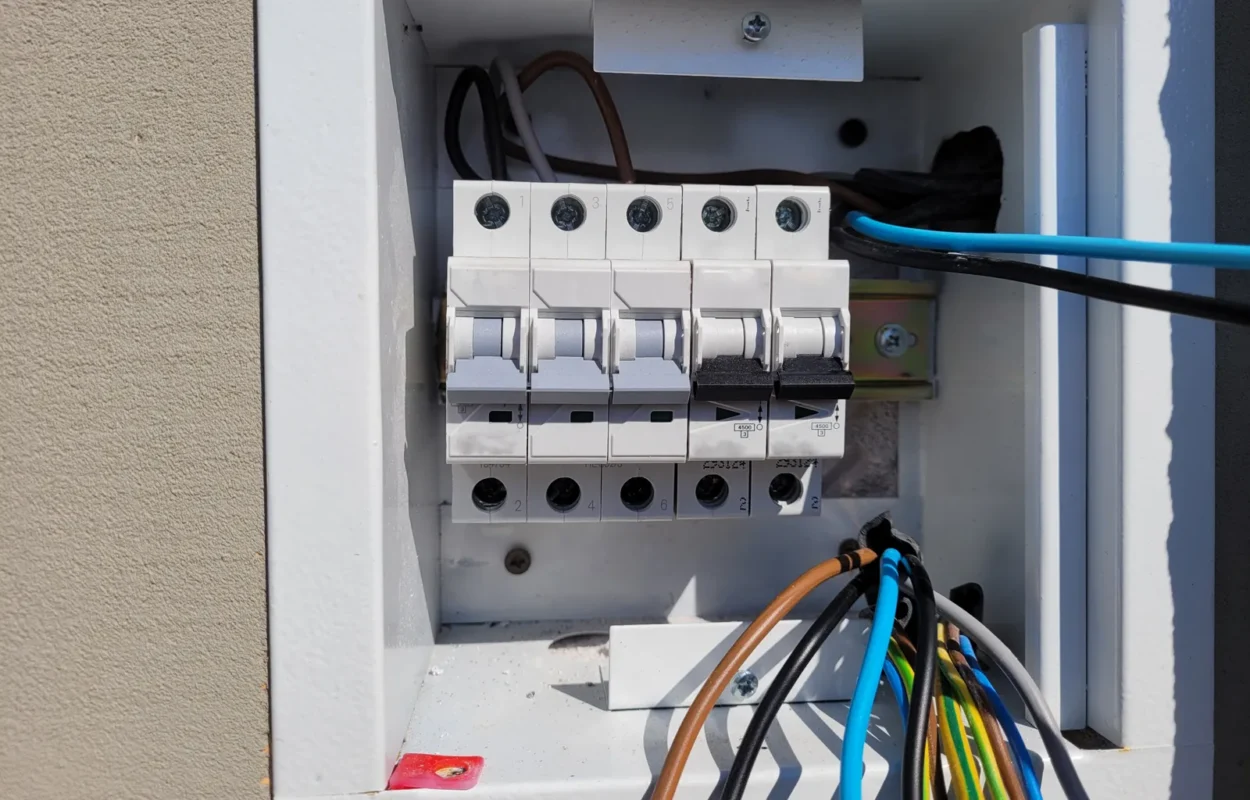
Sealed IP66 inverter enclosures still face internal condensation risks driven primarily by day and night temperature cycling, which creates humidity fluctuation inside the closed housing. Humid outdoor air trapped inside the enclosure during installation can also trigger persistent long-term condensation issues. Buyers and installers should verify manufacturer specifications for breathable membrane vents or pressure equalization devices designed to balance internal humidity. Drainage features may only be utilized strictly in line with the manufacturer’s official guidelines to avoid compromising IP66 ingress protection integrity.
IP66 water resistance does not automatically prove corrosion resistance. This is especially important for coastal, industrial, agricultural, and chemically exposed sites. Salt-laden air, ammonia, fertilizers, industrial emissions, and high UV exposure can degrade materials over time. Gaskets can harden, coatings can deteriorate, fasteners can corrode, and cable glands can become weak points.
Professional buyers should review enclosure materials, coating specifications, gasket materials, connector ratings, fastener materials, and any stated limitations for coastal or corrosive environments. Where relevant, salt-mist or salt-spray testing, UV stability, ISO 12944 corrosion category compliance, and chemical exposure guidance should be reviewed before tender approval. This is particularly important for resellers and EPCs working across multiple regions, as exposure levels vary distinctly between coastal zones, industrial corridors, agricultural sites, and chemical plant environments; coastal installations require clear shoreline distance consideration to mitigate salt-air degradation.
Material selection also affects long-term serviceability. Buyers should verify stainless steel fastener grade, aluminum enclosure coating quality, and gasket compatibility against UV radiation, ozone, ammonia, and industrial chemical exposure. For coastal or marine environments, inverters should meet C5-M or marine-grade coating standards. If fasteners corrode or connectors degrade, routine maintenance becomes slower and riskier. If gaskets are not available as spare parts, a minor service event can compromise the enclosure. These details rarely appear in headline product comparisons, but they matter in real asset management.
Coastal project buyers should actively request the manufacturer’s official corrosion category classification, formal salt-mist test results, approved safe shoreline installation distance, and detailed warranty exclusions for high-salt coastal operating environments.
IP66 is only one part of inverter qualification. For professional procurement, buyers should verify applicable safety standards, grid standards, regional approvals, and installation code requirements. IEC 60529 defines ingress protection ratings. IEC 62109 is widely referenced for safety of power converters used in photovoltaic systems. IP and NEMA enclosure ratings are not perfectly interchangeable in real-world project specification, while NEMA Type 4X is especially relevant for sites requiring enhanced corrosion resistance against moisture and airborne contaminants. Grid interconnection requirements vary by market and utility, covering anti-islanding, voltage and frequency response, reactive power control, ride-through behavior, export limitation, and power quality.
Depending on the target region, documentation may need to demonstrate compliance with CE requirements, local grid codes, national electrical rules, utility interconnection requirements, or regional standards such as IEEE, UL 1741, IEEE 1547, VDE, G98/G99, AS/NZS, or other market-specific frameworks. UL 1741 and IEEE 1547 serve as critical US grid-interconnection compliance checks for outdoor solar inverters. The exact requirement depends on jurisdiction, system size, connection voltage, and utility policy.
For EPCs, this verification should happen early. Selecting an inverter that appears technically suitable but lacks the required grid-code certificate can delay approvals, force redesign, or weaken a tender response. In international procurement, the same hardware platform may have different certification status in different countries, so certificates should be checked against the specific model, firmware version, and market.
When selecting IP66 rated outdoor inverters for commercial and industrial PV projects, it is critical to evaluate core technical attributes and deployment suitability across multiple key dimensions.
Commercial PV projects typically use string, hybrid, or central inverter architectures. IP66 rated outdoor inverters are especially common in string inverter designs because they allow distributed installation near PV array zones. This can reduce DC cable length, simplify string grouping, and improve fault isolation. For rooftops, carports, and mid-scale ground-mount systems, distributed commercial solar string inverter architecture often provides flexibility and easier phased deployment.
Inversores híbridos add battery integration capability, either directly through DC coupling or as part of a wider energy storage architecture. They can be attractive for commercial users pursuing peak shaving, backup power, demand charge management, or self-consumption optimization. However, hybrid selection requires deeper analysis of battery compatibility, energy management controls, backup load design, grid rules, and future expansion.
Central inverter architecture can still be suitable for larger ground-mount or utility-scale projects where high power blocks, medium-voltage integration, and centralized O&M strategies are preferred. In those systems, enclosure protection may be handled through outdoor-rated inverter stations, skid-mounted solutions, or dedicated shelters. The correct architecture depends on system size, site layout, O&M model, grid connection point, and financial priorities. Hybrid inverter selection must also confirm whether the paired battery inverter or dedicated PCS unit carries matching outdoor-rated enclosure protection suitable for on-site exposed installation conditions.
For C&I projects, inverter sizing is more than matching a nameplate power rating. EPCs should evaluate rated AC output, maximum DC voltage, MPPT count, maximum input current per MPPT, string current limits, start voltage, DC/AC ratio, and compatibility with the selected PV modules. This is increasingly important as high-power PV modules and bifacial designs can produce higher current levels than older module generations.
MPPT quantity and input flexibility influence array design. Multiple MPPTs can help manage different roof orientations, tilt angles, shading patterns, and string lengths. In carport or complex rooftop systems, this flexibility can improve energy harvest and reduce design compromises. In ground-mount systems, the need may be different, with more consistent orientations and longer string runs.
DC oversizing should be modeled carefully. A higher DC/AC ratio can improve inverter utilization and increase yield during lower-irradiance periods, but it can also increase clipping during peak conditions. The right ratio depends on irradiance profile, temperature, module orientation, export limits, tariff structure, and project economics. The inverter’s input limits must never be exceeded, including voltage under cold conditions and current under high-irradiance or bifacial gain scenarios.
Design teams must evaluate 1000 Vdc versus 1500 Vdc system architecture tradeoffs during initial layout. AC output class comparisons across 400 Vac, 480 Vac, 690 Vac, and 800 Vac should be included in selection. Contractors shall evaluate transformerless versus transformer-based inverter design implications for efficiency and site safety. Maximum short-circuit current per individual MPPT channel shall be used as a core comparison criterion. Compatibility validation is required for high-current TOPCon and HJT PV module technologies. Design must reserve sufficient current headroom to accommodate bifacial energy gain. String fuse protection requirements shall be mapped to each MPPT and string layout. Integrated DC switch and AC switch options should be compared for O&M simplicity and cost balance. The total number of MPPTs should be precisely matched to building roof orientations and array zoning layout.
Maximum inverter efficiency is useful, but it is not enough for commercial yield modeling. Weighted efficiency, partial-load performance, night-time consumption, thermal derating behavior, and availability are often more relevant to financial outcomes. An inverter with excellent peak efficiency may still deliver less value if it derates frequently in hot weather or lacks reliable monitoring to detect performance issues quickly.
Outdoor IP66 solar inverters should be evaluated against the project’s actual operating environment. A rooftop in a hot climate may experience higher enclosure temperature than ambient air data suggests. A dusty industrial site may require more frequent heat sink cleaning. A high-altitude site may affect cooling and insulation margins. A facility with variable loads and export restrictions may require fast and stable control behavior rather than only high conversion efficiency.
In commercial PV, a small difference in annual energy yield can be meaningful across multiple sites. However, reliability and uptime are equally important. The best economic result usually comes from balancing efficiency, thermal stability, monitoring quality, serviceability, and warranty support. EPCs should compare available AC output at 45°C ambient temperature, not only rated output at 25°C.
Outdoor inverter selection should include electrical safety and protection functions, not only enclosure rating. Common functions include DC reverse polarity protection, ground fault monitoring, insulation resistance monitoring, overvoltage protection, surge protection device coordination, anti-islanding, residual current monitoring, and arc-fault circuit interruption where required by local rules.
Rapid shutdown compatibility may be relevant in some rooftop markets, especially where firefighter safety requirements apply. Surge protection is important for exposed sites, long cable runs, and lightning-prone regions. Grounding and bonding design must match the inverter topology, module configuration, mounting system, and local electrical code.
These functions affect compliance and commissioning speed. They also influence long-term serviceability. If a monitoring system can identify a string fault, insulation issue, SPD status change, or communication failure remotely, the operator can respond faster and reduce production loss. For EPCs managing multiple C&I sites, diagnostic quality can be a major operational advantage.
Proper layout configuration and technical matching lay the foundation for stable operation of outdoor PV inverter systems across commercial and industrial sites.
Sizing IP66 outdoor inverters starts with the PV array capacity, but it should also consider AC export limits, facility load profile, local climate, utility requirements, future expansion, and the customer’s financial objective. A commercial rooftop designed for maximum self-consumption may use a different sizing strategy from a ground-mounted system designed to export power under a power purchase agreement.
The DC/AC ratio is central to this decision. A moderate oversizing strategy may increase annual yield and improve inverter utilization, especially where irradiance is variable or module orientation is not ideal. However, excessive oversizing can cause clipping, stress input limits, complicate protection design, or reduce the value of additional modules. EPCs should model realistic energy production, not just nameplate capacity.
AC infrastructure also matters. Existing switchgear, transformer capacity, cable routes, protection coordination, and export limits can constrain inverter selection. In many C&I retrofit projects, the lowest-risk design is not the one with the largest DC array, but the one that balances energy yield with available electrical infrastructure and smooth utility approval.
High-current modules can exceed older inverter input-current assumptions. EPCs should verify both maximum operating current and short-circuit current limits per MPPT.
Rooftop systems often benefit from locating inverters near array sections to reduce DC cable runs, but service access must be carefully planned. Technicians need safe access, adequate working clearance, fall protection provisions, and isolation points. Inverters should not be installed where heat buildup, water pooling, or blocked airflow will compromise operation.
Ground-mount systems provide more flexibility for equipment placement, but they are also exposed to dust, vegetation, flooding, wildlife, and mechanical impact. Inverter mounting height, cable trenching, combiner strategy, and drainage should be considered early. Where sites are remote, monitoring and spare parts planning become more important.
Carport PV systems introduce additional considerations because the equipment may be near vehicles and pedestrians. Cable routing, mechanical protection, touch safety, signage, and access control require attention. Outdoor-rated equipment is valuable in these applications, but the installation must protect both the inverter and site users.
Mechanical protection should include IK impact rating as a key selection criterion. Carport and ground-mount sites should deploy bollards or protective barriers to shield equipment. Installers must account for physical protection against forklifts, moving vehicles, livestock, on-site tools, and intentional vandalism. Remote C&I sites require dedicated anti-theft measures to secure outdoor inverter assets. Lockable DC/AC isolators and enclosure access control are recommended to restrict unauthorized operation and entry. IP66 ingress protection should be evaluated together with mechanical impact and physical security requirements for carport and industrial yard installations.
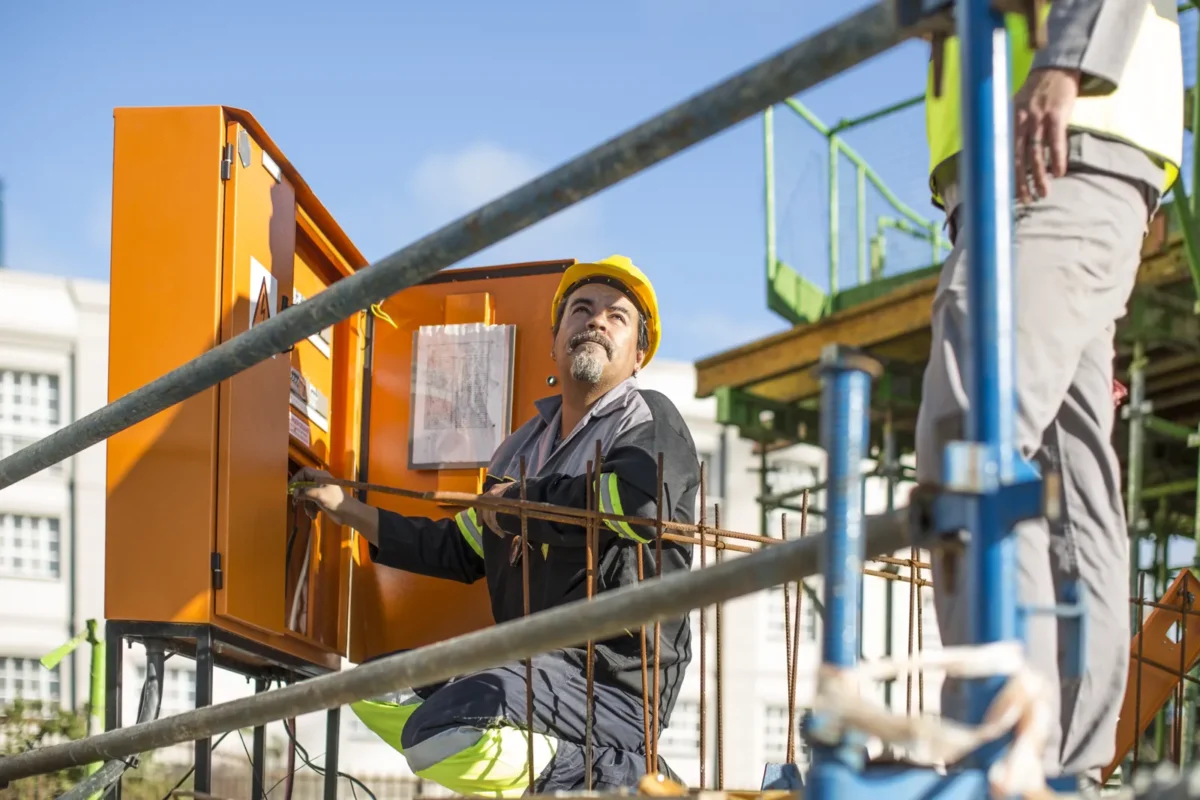
An IP66 inverter can still suffer ingress problems if the balance-of-system installation is poor. Cable glands, connectors, conduits, communication ports, DC isolators, AC switchgear, combiner boxes, grounding components, and surge protection devices must all be selected and installed as part of a coherent outdoor system.
Cable entries are common weak points. Glands must match cable diameter and jacket type. Unused ports must be sealed with approved blanking plugs. Conduit should not create a path for water into the enclosure. Connectors should be compatible, correctly crimped, and protected from mechanical stress. Communication cables require the same sealing discipline as power cables.
For C&I projects, cable management also affects O&M. Clear labeling, accessible isolation, tidy routing, and accurate as-built documentation reduce troubleshooting time. In multi-inverter systems, consistent layout and labeling make commissioning and future service much easier.
Many commercial PV projects are now designed with future storage in mind, even if batteries are not installed on day one. Inverter selection can influence how easily the system can later support peak shaving, backup power, demand charge reduction, export control, EV charging, or participation in energy management programs.
A battery-ready or hybrid inverter may be appropriate where the project owner has a defined storage roadmap. In other cases, an AC-coupled storage design may provide more flexibility for retrofit projects. The decision depends on load profile, tariff structure, backup requirements, battery location, control architecture, and grid rules.
Design teams must complete a clear DC-coupled versus AC-coupled storage architecture comparison, and define selection criteria for backup capable versus non-backup system layouts. Battery voltage compatibility must be fully verified against inverter operating windows. Specifiers should also understand the clear functional distinction between a dedicated PCS unit and a multi-functional hybrid inverter.
Project planners must evaluate black-start functionality and islanding operational limitations during hybrid system design, and explicitly confirm if the selected inverter platform supports formal microgrid operation modes. A hybrid inverter hardware configuration does not automatically qualify the system for reliable backup power functionality. EPCs must formally verify automatic transfer switching capability, utility-approved islanding permission, full battery voltage and chemistry compatibility, and critical-load panel segregation and design compliance for all grid-independent backup system deployments. Storage planning should also align inverter enclosure ratings with matching environmental protection levels for battery cabinets installed in the same outdoor or harsh-site footprint.
For EPCs, the important point is to avoid locking the customer into a design that cannot support foreseeable energy management needs. Communications protocols, metering compatibility, export control capability, and monitoring integration should be evaluated even when the initial project is PV-only.
Grid compliance and official interconnection rules lay the foundation for safe, legal, and long-term operation of outdoor solar inverter systems across commercial and industrial sites.
Inverter selection must align with local grid requirements. These may include anti-islanding protection, voltage and frequency ride-through, reactive power control, power factor settings, active power curtailment, export limitation, remote disconnection, and power quality limits. Requirements can differ significantly between countries, utilities, and connection voltage levels.
For C&I projects, grid approval can be a critical path item. A technically strong IP66 rated outdoor inverter is not useful if it lacks the required certification or cannot be configured to the utility’s protection settings. EPCs should confirm grid-code compliance before procurement, especially for projects with tight delivery schedules or tender commitments.
Firmware version and regional settings also matter. In some markets, certification applies to a specific firmware version or grid profile. Commissioning teams should document selected country settings, protection parameters, and utility-required configurations.
Key regional grid compliance standards include US requirements UL 1741, UL 1741 SB, and IEEE 1547, EU standards EN 50549 and EU Network Code Requirements for Generators, UK regulations G98 and G99, Australia and New Zealand standard AS/NZS 4777.2, and German guidelines VDE-AR-N 4105 and VDE-AR-N 4110. Project teams must check local grid codes for China, India, Middle East, or Latin America if those target markets are relevant. The exact inverter model and firmware version should appear on the applicable utility or national approved-equipment list before procurement.
Commercial PV systems often connect behind the meter at facilities with motors, drives, compressors, refrigeration, industrial processes, or other significant loads. Inverter behavior can affect site power quality and utility acceptance. Total harmonic distortion, power factor control, voltage regulation, and reactive power capability should be reviewed during design.
Reactive power control may be required by the utility or beneficial for facility power management. Export limitation may need fast response to avoid violating interconnection agreements. In weak grids or rural feeders, voltage rise can become a design constraint. These issues are not solved by the enclosure rating, but they are central to inverter selection.
Some commercial sites are allowed to install PV only if export is limited or prevented. This is common where grid capacity is constrained, feed-in tariffs are unavailable, or the facility’s interconnection agreement restricts reverse power flow. In these cases, the inverter must work with smart meters, data loggers, energy management systems, or export control devices.
Zero-export design requires careful commissioning. Meter placement, CT orientation, communication stability, response time, and fail-safe behavior all matter. If the control system is unreliable, the site may breach utility limits or curtail unnecessarily, reducing project value.
For facility owners, export control should be considered alongside load profile analysis. A system designed only around annual consumption may still export during weekends, holidays, or low-load periods. The inverter and control architecture must reflect real operating patterns.
Professional PV projects require complete documentation. Datasheets, certificates, single-line diagrams, protection settings, installation manuals, test reports, monitoring setup records, cable schedules, and commissioning checklists all support permitting and handover. For EPCs and resellers, good documentation improves tender quality and reduces friction during inspection.
Documentation also protects warranty positions. If an ingress or electrical fault occurs later, installation records, photos, torque documentation, and commissioning data can show whether the inverter was installed correctly. This is especially valuable for multi-site portfolios where different installation teams may be involved.
Proper installation and professional commissioning directly determine the long-term performance, ingress protection integrity and service life of IP66 rated outdoor inverters. Following standardized on-site practices helps avoid common errors, maintain full enclosure protection, and ensure safe and reliable grid connection for commercial PV systems.
The IP66 rating applies only when the inverter is installed according to manufacturer instructions. Common mistakes include under-tightened or over-tightened cable glands, wrong gland sizes, missing blanking plugs, damaged gaskets, incorrect conduit entry, unsupported cables, blocked heat sinks, insufficient clearance, and mounting outside permitted angles.
Another frequent issue is treating communication ports as secondary. Ethernet, RS485, antenna, or data logger entries can be just as vulnerable to ingress as DC and AC cable entries. If these ports are not sealed correctly, water can enter even when power cable glands are properly installed.
Installers should also avoid locations where water can pool, debris can accumulate, or cleaning jets are directed continuously at the unit. Additionally, opening the inverter enclosure during rainfall or high humidity conditions can trap moist air inside and create recurring future condensation problems within the sealed housing. IP66 protects against powerful water jets under test conditions, but repeated aggressive cleaning, chemical spray, or pressure washing at close range may exceed manufacturer limits.
A good mounting location protects performance and serviceability. Wall, frame, rooftop, and ground-mount installations should provide adequate airflow, stable mechanical support, safe access, and clearance for tools. Inverters should be mounted away from flood-prone areas, excessive heat sources, corrosive discharge points, and locations where vehicles or equipment can strike them.
Direct sunlight is not always avoidable, but shading or thoughtful orientation can reduce thermal stress where allowed by the manufacturer. Heat sinks and cooling paths must remain unobstructed. If the inverter uses fans, maintenance access and dust exposure should be considered. If it is fanless, natural convection and spacing become even more important.
Safe technician access is often overlooked during design. A rooftop inverter mounted in a hard-to-reach location may reduce cable length but increase O&M cost and safety risk. The best design balances electrical efficiency with service practicality.
Commissioning should be systematic because early-stage errors can cause nuisance trips, underperformance, or equipment damage. A practical workflow normally verifies the following areas before energization and grid synchronization:
This process is not only technical. It supports warranty defensibility, customer confidence, and faster project acceptance.
For EPCs managing multiple commercial sites, repeatability is a major advantage. Standard installation checklists, technician training, photo templates, commissioning forms, and quality audits reduce variability between teams. This is especially important for distributed portfolios such as warehouses, retail chains, municipal buildings, schools, or agricultural facilities.
Training should cover sealing practices, torque requirements, communication setup, firmware management, grid profile selection, and troubleshooting. A technician who understands how IP66 can be compromised is less likely to create a hidden failure point during installation or service.
Effective long-term performance of outdoor solar inverters relies on professional monitoring arrangements, routine operational maintenance, and thoughtful lifecycle management throughout service years.
Remote monitoring is essential for commercial PV operations. IP66 rated outdoor inverters are often deployed across large rooftops, carports, or multiple sites, where manual inspection alone is inefficient. Monitoring platforms, data loggers, RS485, Ethernet, Wi-Fi, 4G, Modbus, and third-party energy management integration can all support faster fault detection and better asset management.
For operators, useful monitoring goes beyond total energy output. String-level or MPPT-level visibility can identify shading, soiling, connector issues, insulation faults, or underperforming array sections. Alarm history, temperature data, grid events, and SPD status can help technicians diagnose problems before a truck roll.
Evaluation should cover user access permission requirements, installer versus owner account-control boundaries, long-term cloud platform availability, open API access capability, regular cybersecurity update schedules, regulated data retention policies, and local Modbus and SunSpec protocol integration compatibility. Teams must define operational contingency plans for scenarios where vendor cloud service becomes unavailable, and establish clear remote firmware update authority and control protocols. C&I asset owners should evaluate monitoring solutions on account ownership governance, cybersecurity resilience, exportable raw data capability, and seamless third-party EMS integration support.
Portfolio-level monitoring is particularly valuable for EPCs offering O&M services. Standardized inverter platforms and communication protocols allow teams to compare performance across sites, prioritize interventions, and maintain common spare parts.
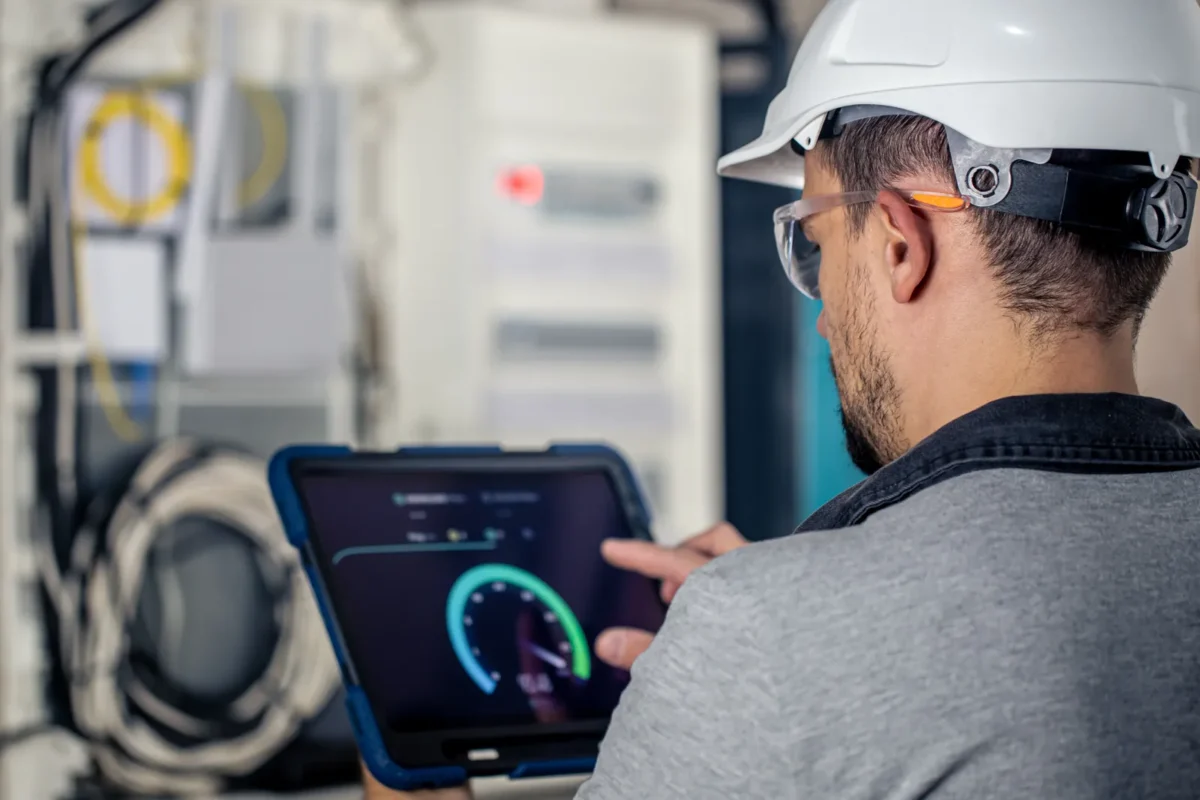
Inspection frequency depends on site conditions, manufacturer guidance, warranty requirements, and local environmental exposure. A clean urban rooftop may need a different schedule from a dusty farm, coastal factory, or industrial site with airborne contaminants. As a general professional practice, outdoor inverters should be visually inspected during scheduled PV maintenance visits and after severe weather events.
Typical inspection areas include enclosure condition, cable glands, connectors, heat sinks, fans if applicable, mounting hardware, corrosion signs, SPD indicators, warning logs, firmware status, communication stability, and thermal performance. Technicians should also check whether vegetation, dust, bird activity, or site modifications have affected airflow or access.
Clean urban rooftop installations should follow annual inspection cycles aligned with official manufacturer guidance. Dusty industrial and agricultural sites require semiannual or quarterly visual and operational checks. Coastal and chemically corrosive locations demand more frequent targeted corrosion and material degradation inspections. Mandatory post-event inspections must be performed following severe storms, flooding events, hail impact, or aggressive on-site pressure-washing activity. Fixed-interval routine servicing is required for fan filter cleaning and heat sink debris removal to preserve thermal performance. Overall inspection scheduling should follow a risk-based framework: annual intervals for low-exposure urban sites, semiannual assessments for dusty or coastal environments, and immediate post-event verification after any severe weather occurrence.
The goal is not excessive maintenance. The goal is early detection of low-cost issues before they become production loss or warranty disputes.
IP66 reduces ingress risk, but it does not eliminate environmental failure modes. Moisture can enter through installation errors or damaged seals. Dust can accumulate on heat sinks and reduce cooling. Thermal cycling can stress connectors and internal components. Corrosion can affect fasteners, terminals, and communication interfaces. Surge events can damage electronics, especially on exposed sites with long cable runs.
Communication failures are also common operational issues. A PV system may continue producing power while the monitoring system is offline, but the asset owner loses visibility. For commercial systems, this can delay fault detection and reduce confidence in performance reporting.
Preventive maintenance, surge protection coordination, correct grounding, clean installation practices, and reliable monitoring all work together with IP66 protection. The enclosure rating is one layer of reliability, not the entire reliability strategy.
Warranty evaluation should include more than the number of years printed on a datasheet. Buyers should review warranty exclusions, installation requirements, replacement process, response time, firmware support, local service availability, and extension options. For resellers and EPCs, after-sales responsiveness can become a major differentiator in commercial accounts.
Spare parts planning depends on project size and remoteness. For a large portfolio, maintaining spare units or critical accessories may reduce downtime. Standardizing inverter models can simplify this strategy. If every site uses different models, service teams need more training, more spare parts, and more documentation.
A strong warranty is valuable only if the supplier can support the project region, provide clear RMA procedures, and deliver replacements within acceptable timeframes.
Common warranty exclusion scenarios include incorrect cable gland sizing and improper sealing installation, unauthorized enclosure opening or gasket tampering, accelerated corrosion in unapproved coastal or chemically exposed environments, equipment damage from flooding or prolonged water immersion, unmitigated lightning surge and transient voltage damage, incorrect grid-code parameter configuration and protection setting errors, unapproved third-party firmware modifications or version changes, installation operating outside published temperature altitude or mounting orientation limits, use of non-compatible uncertified connectors and cabling hardware, and failure to retain organized maintenance and inspection records to validate proper upkeep. Procurement teams must carefully review warranty fine print for explicit clauses covering salt-air exposure, improper enclosure sealing practices, non-approved interconnect components, flood-related damage, and unqualified on-site unauthorized repair work.
Choosing the right outdoor solar inverter involves more than technical parameters alone. Resellers, EPCs and system integrators need practical guidelines to assess suppliers, overall value, supply stability and long-term business potential.
Professional procurement should evaluate supplier capability as well as product specifications. Important factors include certification coverage, quality control processes, production capacity, technical documentation, regional compliance experience, logistics reliability, and after-sales structure.
For channel partners, supplier reliability affects inventory risk and customer retention. A product may look attractive on unit price but create commercial problems if certificates are incomplete, lead times are unstable, documentation is poor, or technical support is slow. In C&I projects, these issues can delay grid approval, commissioning, or revenue recognition.
Technical pre-sales support is also important. EPCs often need help with string sizing, grid settings, export control, monitoring integration, and storage planning. A supplier that can support these questions reduces project risk.
The lowest inverter price does not always produce the lowest project cost. Total value includes energy yield, installation labor, balance-of-system savings, serviceability, monitoring quality, failure risk, compliance readiness, and expected lifetime. A robust outdoor inverter may reduce the need for extra enclosures, shorten cable runs, and simplify deployment. Conversely, a lower-cost unit can become expensive if it causes commissioning delays, frequent site visits, or limited monitoring visibility.
C&I buyers should connect inverter selection to financial outcomes. Downtime during high-production months can affect payback. Poor monitoring can delay fault response. Limited certification can delay interconnection. Difficult service access can raise O&M costs. These factors should be included in procurement decisions, especially for multi-site projects.
Inverter delivery often sits on the project critical path. Lead times, packaging quality, regional warehousing, spare parts availability, and delivery coordination all affect execution. Outdoor electrical equipment must be packaged and handled properly to avoid damage before installation. If units arrive late or damaged, grid inspection dates and commercial operation milestones may slip.
For EPCs managing multiple projects, supply planning should align inverter availability with installation crews, switchgear delivery, module delivery, and utility approval. Resellers should consider inventory depth, model continuity, and warranty administration capacity. A good product with unreliable availability may still create project risk.
Demand for outdoor-rated commercial inverters is supported by C&I rooftop growth, industrial energy cost reduction, agricultural PV, carport development, and distributed generation projects. Distributors and resellers can create value by offering not only equipment but also training, documentation, pre-sales design support, commissioning guidance, and warranty coordination.
Product range depth matters. Channel partners serving C&I customers may need multiple power classes, monitoring accessories, export control options, and storage-ready solutions. The ability to support repeatable project types can improve customer loyalty and reduce technical friction.
Evaluating outdoor inverter solutions goes beyond technical performance alone, as financial returns and long-term expandability stand as core considerations for commercial and industrial solar projects.
Inverter choice affects both upfront and long-term project economics. CAPEX includes inverter cost, mounting hardware, cable runs, switchgear, enclosures, communications, labor, and commissioning. OPEX includes inspections, cleaning, monitoring subscriptions if applicable, service visits, spare parts, warranty administration, and downtime risk.
An IP66 rated outdoor inverter may carry a cost premium compared with a lower-protection or indoor-only alternative. However, it may reduce other costs by avoiding dedicated indoor space, minimizing additional outdoor cabinets, and enabling more efficient cable routing. Whether the premium is justified depends on the project’s exposure, layout, labor cost, and service strategy.
Lifecycle cost is the better metric. A slightly more expensive inverter that reduces failures, improves monitoring, and simplifies maintenance may produce stronger financial performance than a cheaper alternative with higher operational risk.
For commercial PV owners, inverter performance affects cash flow through energy generation, uptime, and maintenance cost. High efficiency supports yield, but reliability and monitoring are equally important. A system that quickly detects faults and minimizes downtime can protect expected savings or revenue.
Payback period depends on installed cost, electricity tariff, self-consumption rate, export compensation, incentives, demand charges, and operating cost. The inverter influences several of these variables indirectly. For example, export control capability can allow a larger PV system under utility constraints. Hybrid readiness can support future demand charge management. Stable grid support functions can help secure interconnection approval.
LCOE is also affected by replacement planning. Inverters may have a different service life than PV modules, so asset owners should plan for repair or replacement during the project life. Selecting a platform with strong support, available spare parts, and reliable firmware maintenance can reduce long-term uncertainty.
For EPCs and asset owners managing portfolios, standardization creates value. Using a consistent inverter platform across similar sites can simplify design templates, installation training, monitoring dashboards, spare parts, and troubleshooting. It also improves benchmarking because performance differences between sites are easier to interpret.
Portfolio deployment is common for warehouses, retail chains, factories, schools, municipal buildings, and agricultural enterprises. In these projects, the best inverter strategy is often the one that supports repeatable engineering and O&M. IP66 rated outdoor inverters can fit this model well because they allow flexible outdoor placement across diverse sites, provided the environmental and grid requirements are verified for each location.
Commercial energy systems are becoming more integrated. PV projects may later connect to batteries, EV chargers, microgrids, demand response platforms, or building energy management systems. Inverter selection can either support or limit those future options.
Flexible communications, open protocols, metering compatibility, export control, and firmware upgrade capability are increasingly important. A project owner may not install storage immediately, but if the facility has high demand charges, backup power needs, or EV charging plans, the PV inverter strategy should not be chosen in isolation.
Design must incorporate explicit demand charge reduction operational requirements, formal metering hardware specifications and end-to-end EMS communication protocol compliance, and structured EV charger load-management logic to balance solar generation, building base load and vehicle charging demand. EMS layout planning must account for rugged outdoor-rated communication wiring routing between PV inverter, battery storage cabinets, EMS controllers, and revenue-grade site meters. Engineers shall also define minimum thermal clearance and physical spacing requirements for equipment installed adjacent to battery enclosures to maintain safe operating temperatures and service access.
Future-ready design does not always mean buying the most complex inverter on day one. It means understanding likely expansion paths and selecting equipment that does not create unnecessary barriers.
IP66 rated outdoor inverters are valuable when commercial PV systems need reliable inverter operation in exposed environments. They can simplify system architecture, support distributed installation, reduce enclosure requirements, and improve confidence in harsh outdoor conditions. However, the rating should never be evaluated alone.
For EPCs, installers, resellers, and C&I project owners, the strongest specification approach is to connect the IP66 enclosure rating with thermal performance, grid compliance, cable sealing, protection features, monitoring, O&M workflows, warranty support, and lifecycle economics. When these factors are addressed together, the inverter becomes more than a weatherproof component. It becomes a controlled part of a reliable, scalable, and financially sound commercial PV asset.
Both IP65 and IP66 rated outdoor inverters deliver full dust-tight performance per IEC 60529, yet they differ sharply in water jet resilience for commercial PV deployments. IP65 handles standard water spray only, while IP66 withstands powerful high-flow jets, fitting fully exposed rooftops and open ground-mount layouts perfectly. IP65 works well for semi-sheltered outdoor spots, though it lacks the rugged durability needed for persistent harsh weather and regular on-site cleaning activities. This rating gap also matters when comparing NEMA 4X equivalent inverters for industrial and coastal project specification and long-term lifecycle reliability.
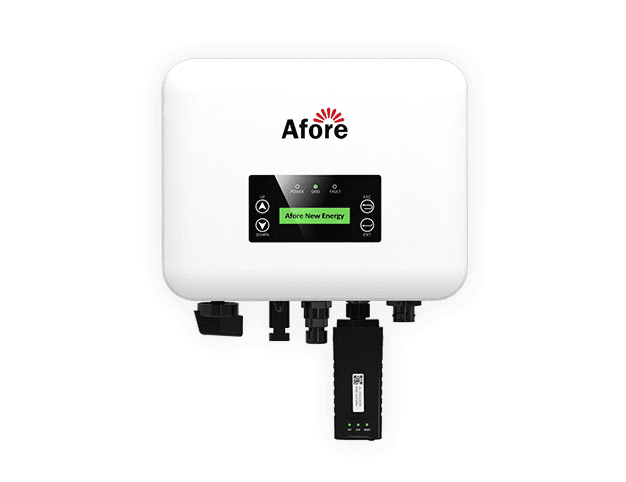
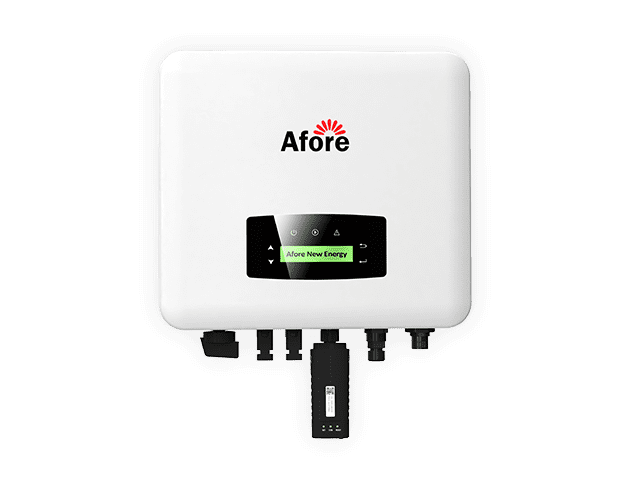
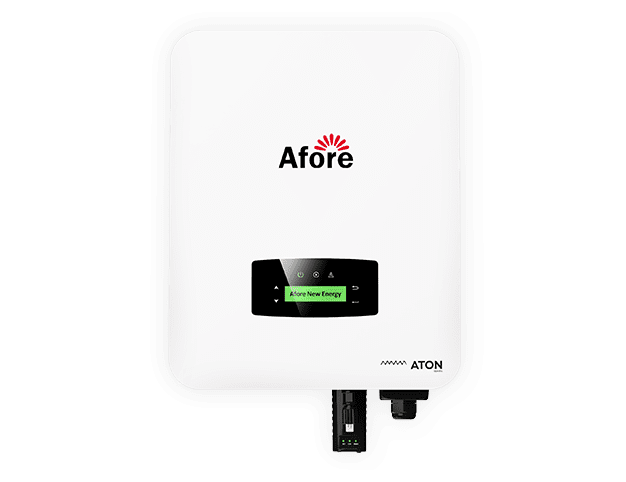
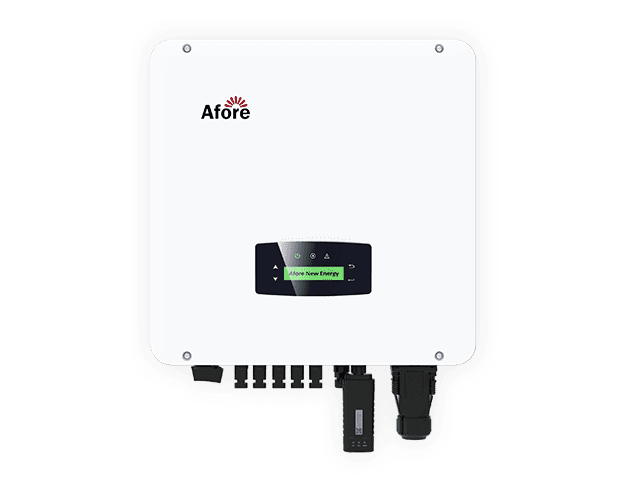
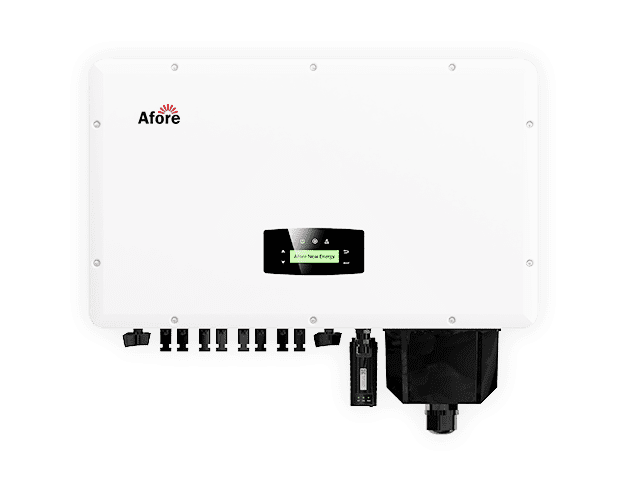
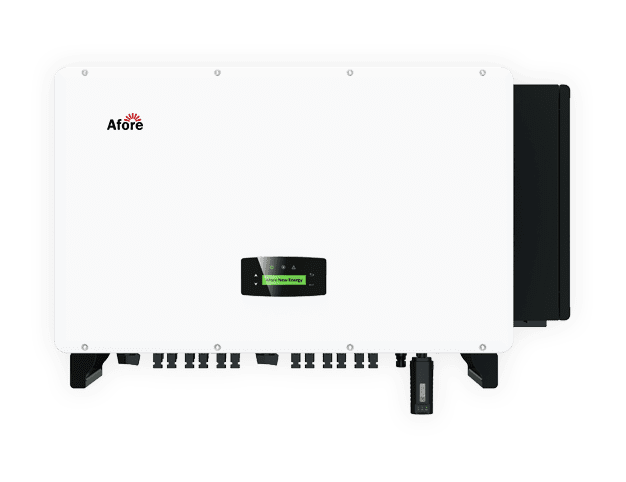
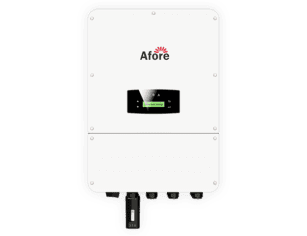
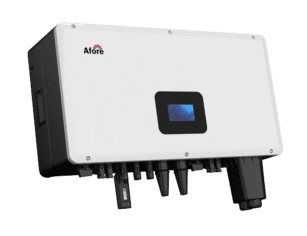
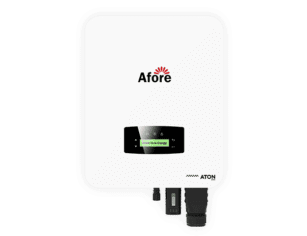
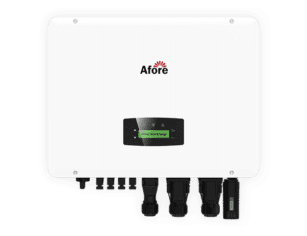
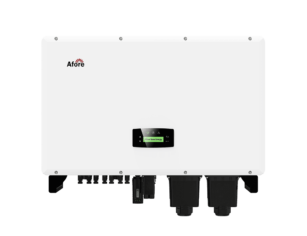
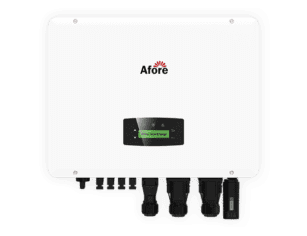
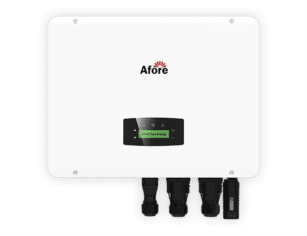
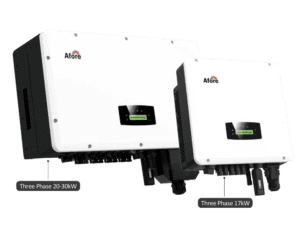
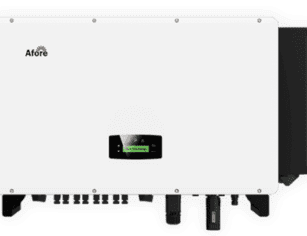
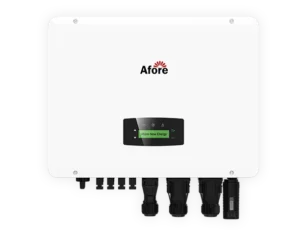
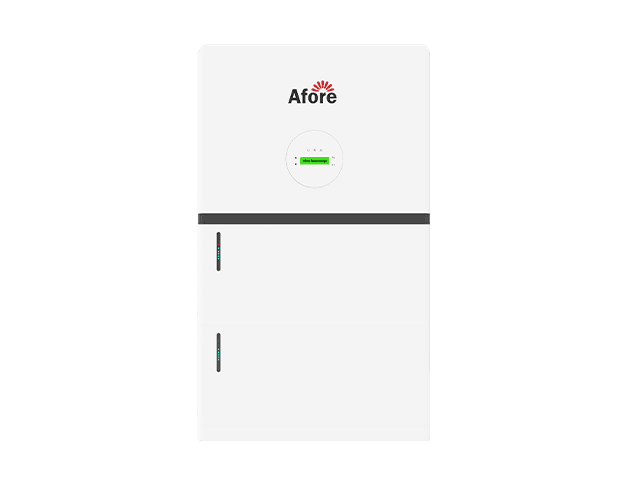
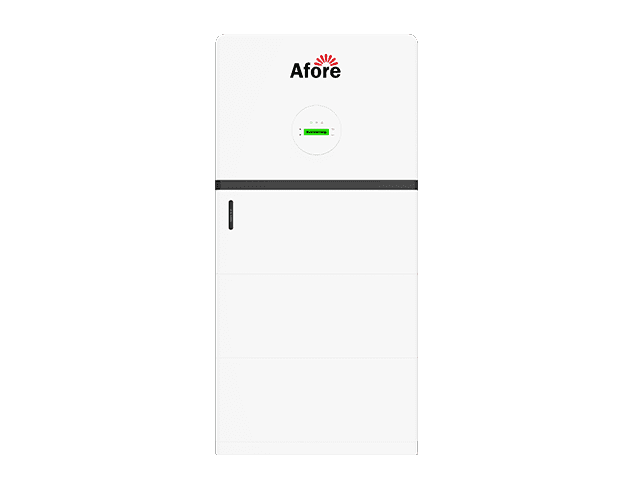
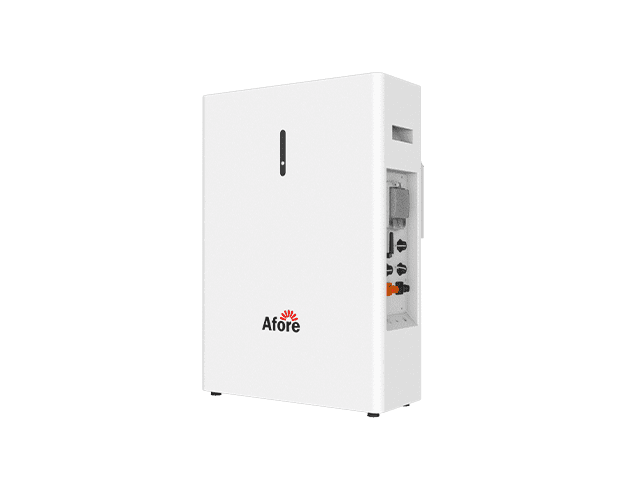
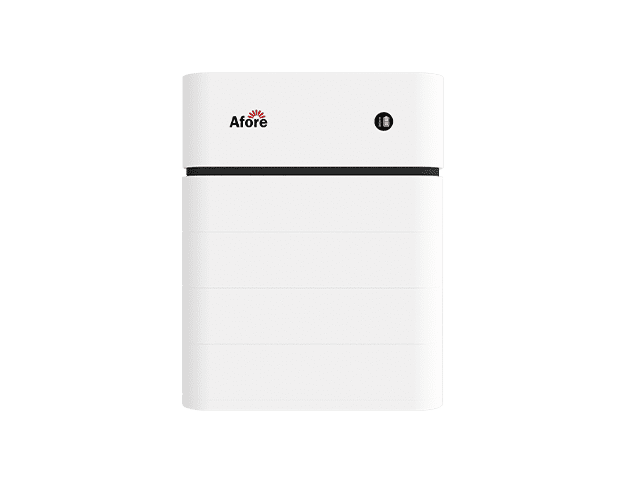
Afore IP66 protection equips dedicated inverter models for reliable outdoor deployment across commercial rooftops, carports and agricultural solar project landscapes. These units meet strict ingress protection benchmarks and follow thermal derating rules to maintain stable operation in fluctuating outdoor temperature and humidity levels. Built with robust enclosure construction, they align with industry installation standards to retain full performance in open-air and semi-exposed project layouts. When mounted per official guidelines, these units qualify as dependable outdoor power conversion hardware for small to large-scale commercial PV portfolios.
Rising ambient temperatures and direct sun exposure trigger thermal derating, cutting output efficiency and accelerating component wear for outdoor solar inverter hardware. Blocked heat sinks, tight installation spacing and poor airflow compound overheating issues and reduce annual energy yield throughout hot summer seasons. Extreme thermal stress also shortens cooling system lifespan and increases unplanned maintenance risks across unattended commercial PV sites. Choosing properly rated weatherproof solar inverters with validated thermal curves is critical to offset heat-related performance loss in warm-climate regions.
Adopt a risk-based inspection routine tailored to site conditions, with annual checks for clean urban rooftops and frequent visual audits for dusty industrial zones. Always conduct thorough post-event inspections after storms, hail or flooding to check enclosure seals, cable glands and early corrosion signs on exposed hardware. Schedule regular cleaning for fan filters and heat sinks while verifying gasket integrity and locked communication ports to preserve long-term enclosure protection. Follow manufacturer service guidelines closely to uphold equipment durability within harsh environment solar project setups and avoid unnecessary warranty voidance.
NEMA 4X and IP66 share overlapping outdoor enclosure defense traits but feature distinct material testing and corrosion compliance criteria for solar applications. IP66 follows IEC 60529 protocols focused purely on dust and powerful water jet resistance for standard outdoor inverter enclosures. NEMA 4X adds upgraded anti-corrosion coatings and material standards designed to withstand persistent salt and chemical airborne contaminants. Specifiers must review both ratings alongside site exposure risks instead of treating them as fully interchangeable enclosure protection classifications.
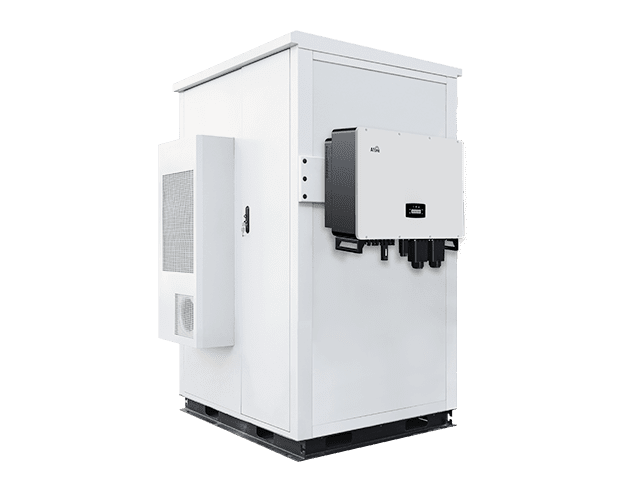
Select rugged enclosure-rated inverters that pair seamlessly with outdoor energy storage units to maintain consistent performance in fluctuating outdoor weather and temperature cycles. Arrange equipment layout with adequate thermal clearance and shelter planning to shield both inverters and battery units from direct storm impact and prolonged moisture buildup. Adhere to strict sealing and mounting protocols to retain factory ingress protection against dust, rain and humid ambient air in open-air deployment zones. Conduct routine visual and corrosion inspections after severe weather events to secure system stability and extend the combined lifespan of solar and storage hardware.
https://webstore.iec.ch/publication/2452
https://webstore.iec.ch/publication/64703
https://www.nfpa.org/codes-and-standards/nfpa-70-standard-development/70








 Turkish
  Romanian