



When people talk about solar performance, they usually jump straight to efficiency numbers. Conversion rates. Peak output. Fancy monitoring dashboards.
But here’s the truth from years in the field: none of that matters if your system doesn’t stay alive.
That’s where inverter MTBF and reliability come in.
If you’re designing, installing, financing, or operating a PV system, understanding inverter MTBF and reliability is not optional—it’s mission-critical. It affects downtime, maintenance budgets, financing terms, insurance premiums, and ultimately your return on investment.
In this deep-dive guide, we’re going to unpack everything you need to know about inverter MTBF and reliability, including:
Let’s start simple.
Mean time between failures (MTBF) is a statistical estimate of how many operating hours an inverter can run before a failure occurs.
If an inverter has:
That doesn’t mean it will run for 100,000 hours and then stop. It means that statistically, across a large population, failures are expected to occur on average every 100,000 hours of operation.
That’s a huge distinction.
When discussing inverter MTBF and reliability, remember:
Yet, in the solar industry, people often confuse these terms.
Another common confusion in inverter MTBF and reliability discussions is between reliability and lifespan.
An inverter could have a high MTBF but still require major component replacement halfway through its expected life.
Understanding this distinction is key when evaluating long-term performance.
If you’ve spent any time around real solar projects—not just reading spec sheets, but walking sites, reviewing O&M logs, sitting in financing meetings—you already know something important:
Performance is exciting.
Reliability is profitable.
That’s why inverter MTBF and reliability sit at the heart of every serious solar discussion.
A solar array can have excellent irradiance, strong module efficiency, and clean system design. But if the inverter fails frequently, the entire revenue model starts to wobble. And once investors or insurers lose confidence, that wobble turns into higher costs, stricter terms, or worse—lost deals.
Understanding inverter MTBF and reliability is not just a technical exercise. It’s a financial strategy, a risk management decision, and frankly, a reputation issue for developers and EPCs.
Let’s break down why this matters more than most people initially realize.
When people hear “failure,” they often imagine a quick swap and a small inconvenience. In reality, inverter downtime can spiral into a cascade of costs.
Here’s what typically happens when a mid-sized commercial inverter goes offline:
Now multiply that by multiple events per year.
Suddenly, your carefully calculated revenue projections start eroding.
This is where inverter MTBF and reliability directly translate into dollars. A higher mean time between failures means fewer interruptions, fewer site visits, and fewer emergency logistics headaches.
And here’s something many new developers underestimate: not all downtime is visible in financial models.
Consider:
Even short outages during peak sun hours can materially impact annual yield. That’s why strong inverter MTBF and reliability metrics are more than theoretical—they directly protect cash flow.
From field experience, I’ve seen projects where poor ventilation reduced real-world performance, dramatically lowering actual mean time between failures compared to lab estimates. The result? Frequent thermal shutdowns that didn’t technically count as “hardware failure,” but still caused production loss.
This is why smart operators don’t just ask for a high MTBF number. They evaluate how inverter MTBF and reliability will perform in their specific climate, enclosure design, and load profile.
Because downtime rarely stays small. It compounds.
If you’ve ever sat across from a lender during due diligence, you know that they are not impressed by marketing slides. They want risk clarity.
And this is exactly where inverter MTBF and reliability become central to financing discussions.
Financial institutions examine:
A lower projected MTBF increases perceived operational risk. That risk translates into:
On the flip side, strong documented inverter MTBF and reliability can smooth negotiations.
Lenders understand that inverters are among the most failure-prone components in a PV system. Modules degrade slowly and predictably. Inverters are electronic devices exposed to heat, dust, humidity, and load cycling.
So when they evaluate a project, they ask:
“How confident are we that this revenue stream won’t be interrupted?”
High-quality data around mean time between failures and realistic solar inverter life expectancy provide reassurance.
And here’s something rarely discussed publicly: financiers don’t just look at the number. They look at how the number was derived.
If your inverter MTBF and reliability assumptions are supported by:
You gain credibility.
Overly optimistic assumptions, on the other hand, can trigger independent engineering reviews, delay financial close, or increase transaction costs.
Reliability isn’t just technical. It’s bankable.
Insurance is another area where inverter MTBF and reliability quietly shape outcomes.
Insurers build actuarial models around failure probability and loss exposure. They analyze:
If your project demonstrates strong inverter MTBF and reliability, underwriters perceive lower operational risk.
Lower risk can translate into:
Now, can a high mean time between failures alone guarantee lower premiums? Not automatically. But documented reliability performance absolutely strengthens your position.
Consider large utility-scale projects. If an inverter fails and takes weeks to replace due to supply chain delays, revenue loss accumulates quickly. Insurers model these scenarios carefully.
A system designed with distributed architecture and strong inverter MTBF and reliability reduces exposure concentration. Instead of one major failure halting megawatts of capacity, impact is compartmentalized.
That structural resilience matters.
Insurers also evaluate environmental stress. High temperatures, corrosive environments, and dust accumulation reduce actual solar inverter life expectancy relative to lab estimates. Projects that account for these factors in design and maintenance demonstrate risk awareness.
In my experience, transparent documentation around:
Ultimately, strong inverter MTBF and reliability reduce uncertainty. And in finance and insurance, reducing uncertainty is the fastest way to reduce cost.
Manufacturers calculate mean time between failures by:
The formula is essentially:
MTBF = 1 / (sum of component failure rates)
This is foundational in inverter MTBF and reliability analysis.
To estimate solar inverter life expectancy, manufacturers perform:
But remember: lab conditions are controlled. Field conditions are not.
Real-world inverter MTBF and reliability depend heavily on installation environment.
When it comes to inverter MTBF and reliability, you can have brilliant system design, excellent monitoring, and ideal installation—but if the hardware itself is weak, all of that effort can be wasted. In other words, the foundation of long-lasting solar inverter performance lies in the components that make it tick. Hardware quality directly determines how often failures occur and how long the system can sustain peak performance. Let’s dive into the key elements that influence inverter MTBF and reliability.
At the heart of any solar inverter are power semiconductors—IGBTs, MOSFETs, and other switching devices. These components handle the conversion of DC electricity from your PV modules into AC electricity suitable for the grid or local loads.
Why they matter for inverter MTBF and reliability:
In practice, high-quality semiconductors combined with proper thermal management dramatically improve mean time between failures, making the inverter more robust under variable operating conditions.
Electrolytic capacitors are often the silent killers of inverters. They store and smooth electrical energy, stabilizing voltages and supporting transient loads. Unfortunately, they’re highly sensitive to:
Capacitor failure is one of the most common causes of reduced inverter MTBF and reliability. Proactive component selection, derating to operate below maximum voltage and temperature, and regular thermal monitoring can extend life significantly. In field experience, replacing capacitors proactively before failure is often cheaper than dealing with unplanned downtime and repair logistics.
Heat is the enemy of electronics. A poorly designed or maintained cooling system can wipe out the benefits of high-quality semiconductors and capacitors. Cooling system design plays a critical role in real-world inverter MTBF and reliability.
Key considerations:
In field deployments, I’ve noticed that even a well-built inverter can underperform if the enclosure restricts airflow or dust accumulation blocks ventilation. Strong hardware quality, combined with intelligent cooling system design, ensures that the inverter reaches its calculated mean time between failures in real operating conditions.
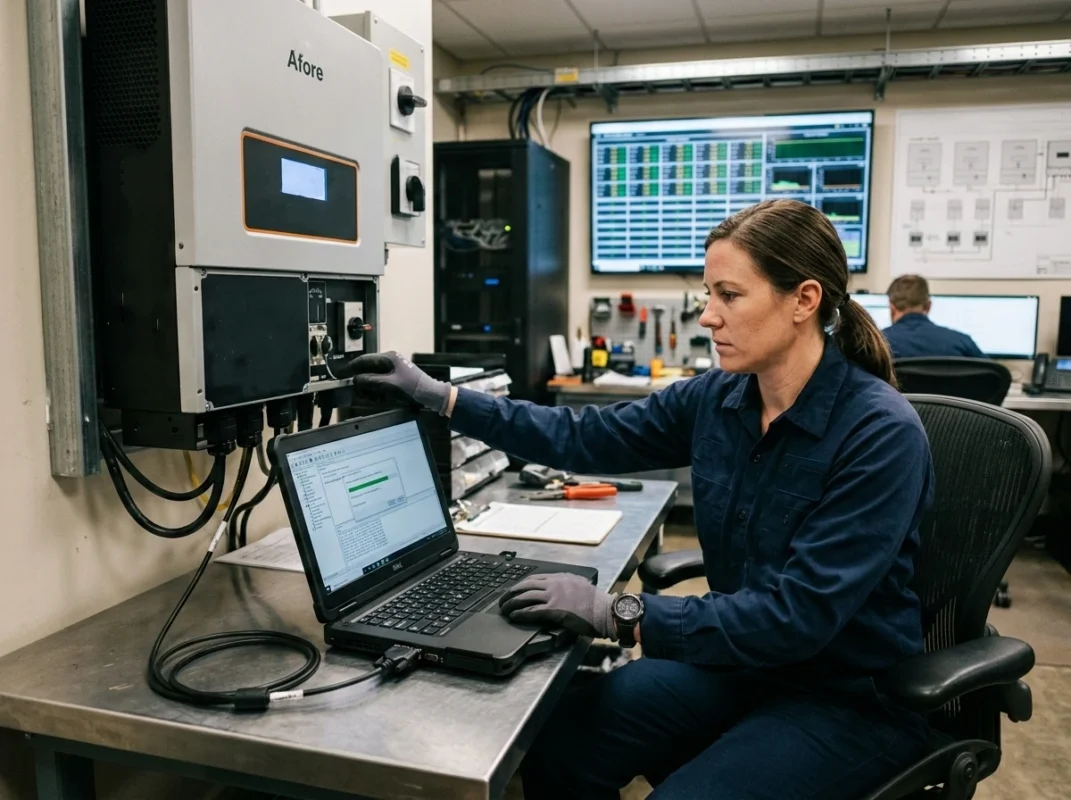
You can buy the best unit available—but install it poorly—and your numbers won’t matter.
Every 10°C increase roughly doubles failure rates in many electronic components.
High ambient temperature reduces:
Coastal projects face:
These dramatically affect inverter MTBF and reliability.
Clogged cooling systems increase internal heat, lowering real-world inverter MTBF and reliability compared to lab estimates.
When evaluating inverter MTBF and reliability, one of the key design decisions in any solar project is choosing between string and central inverters. Both have their strengths and weaknesses, but their failure profiles and risk exposure are quite different. Understanding these differences is crucial for designing a system that balances performance, maintainability, and long-term reliability. Let’s break it down.
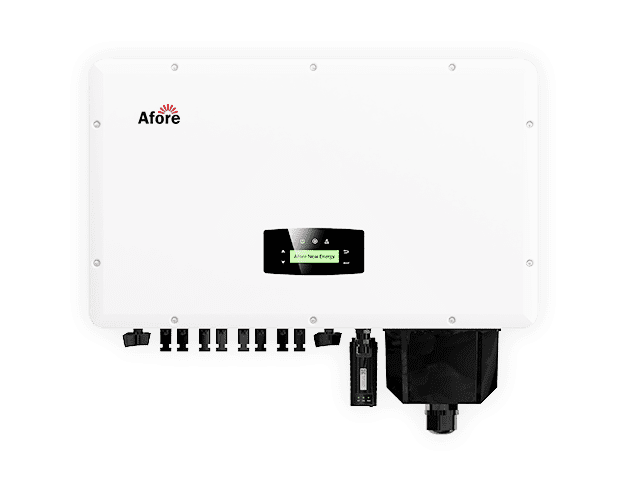
String inverters are smaller, distributed devices, typically assigned to a string of PV modules rather than an entire plant.
How this impacts inverter MTBF and reliability:
From an MTBF perspective, individual string inverters may have similar mean time between failures as larger central units, but the system-level risk is lower. In other words, even if a string inverter fails, the impact on overall energy production is limited, which makes the system more resilient and predictable in terms of solar inverter life expectancy.
Practical insight: operators often monitor string inverters closely, checking for early signs of thermal stress or capacitor aging, because addressing small failures early can preserve overall inverter MTBF and reliability across the plant.
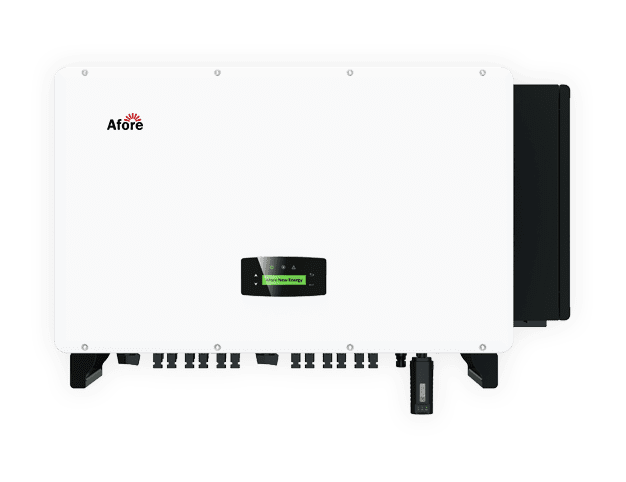
Central inverters are large, high-capacity units that serve multiple strings or even entire PV fields.
Key points regarding inverter MTBF and reliability:
Because of these factors, evaluating inverter MTBF and reliability for central inverters involves looking not just at the unit’s lab-rated MTBF, but also at how failures propagate across the system. Effective maintenance planning, redundancy strategies, and preventive inspections are essential to ensure realistic solar inverter life expectancy.
Practical takeaway: while central inverters can reduce equipment count and simplify some aspects of O&M, they concentrate risk. A single failure can be far more costly than multiple string inverter outages, even if the MTBF numbers are comparable on paper.
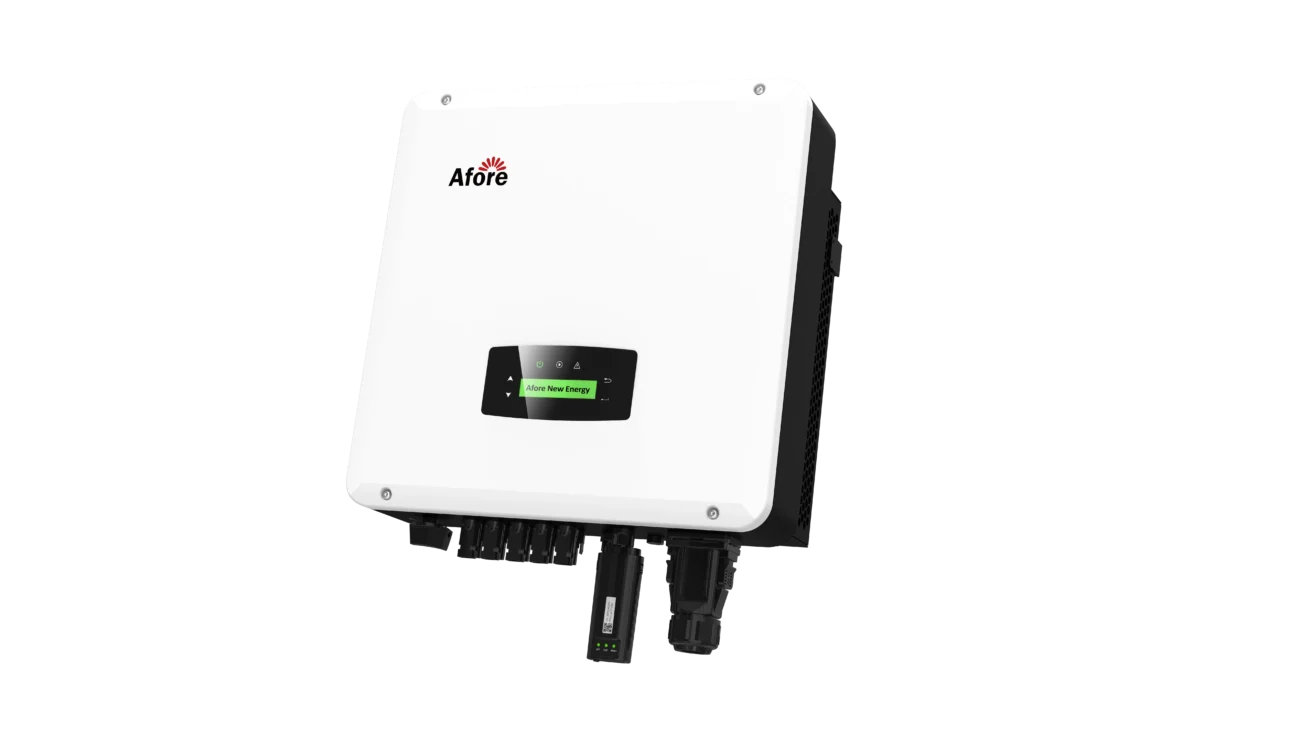
Even the highest-quality solar inverter with excellent MTBF numbers can underperform without proper maintenance. Field experience consistently shows that proactive care significantly enhances inverter MTBF and reliability, reduces downtime, and extends solar inverter life expectancy. In this section, we’ll explore actionable strategies that keep inverters running at peak performance over the long term.
Heat is the number one enemy of electronic components. Poor thermal conditions accelerate wear on power semiconductors, electrolytic capacitors, and circuit boards, directly impacting mean time between failures.
Effective thermal management includes:
Even small lapses in thermal management can shorten solar inverter life expectancy and reduce real-world inverter MTBF and reliability, turning what should be a 10-15 year device into one that fails prematurely.
Many inverter failures are not purely hardware-related. Outdated firmware can cause:
Regular firmware updates address software bugs and improve operational logic. They often include:
By keeping firmware current, operators ensure that software does not undermine the mean time between failures projected by hardware ratings. In practice, combining firmware maintenance with physical inspections significantly improves overall inverter MTBF and reliability.
Some components have predictable aging patterns. Electrolytic capacitors, cooling fans, and connectors often degrade over time, even without catastrophic failure.
Proactive replacement strategies include:
Preventive maintenance reduces unexpected downtime, ensuring the inverter continues to deliver the expected solar inverter life expectancy. It also keeps inverter MTBF and reliability closer to laboratory estimates, even in harsh field conditions.
Field experience shows that proactive replacement is often far cheaper than emergency repairs, which can include emergency technician dispatch, shipping of parts, and revenue loss due to production downtime.
Achieving high inverter MTBF and reliability starts long before the inverter is installed—it begins at the design stage. Smart design choices directly influence how long a solar inverter operates without failure and how well it withstands environmental and operational stresses. Two of the most effective strategies involve oversizing and derating and ensuring proper ventilation. Both approaches may seem simple, but they can significantly extend solar inverter life expectancy and reduce real-world failures.
Running an inverter at its maximum rated capacity may seem efficient on paper, but in practice, it increases thermal and electrical stress. Oversizing and derating are design techniques that mitigate these risks:
In essence, slightly “underloading” the inverter improves resilience. It’s like giving your car a bit of extra horsepower than needed for daily driving—the engine runs cooler, lasts longer, and experiences fewer breakdowns. Properly implemented, oversizing and derating ensure that lab-rated inverter MTBF and reliability are closely mirrored in real-world operations.
Even the best components can fail prematurely if heat cannot escape efficiently. Proper ventilation is essential for maintaining stable operating temperatures and maximizing solar inverter life expectancy:
Field experience consistently shows that even minor ventilation improvements can drastically reduce inverter downtime. Poor airflow is one of the leading causes of thermal-induced failures, which directly affect mean time between failures and long-term system profitability.
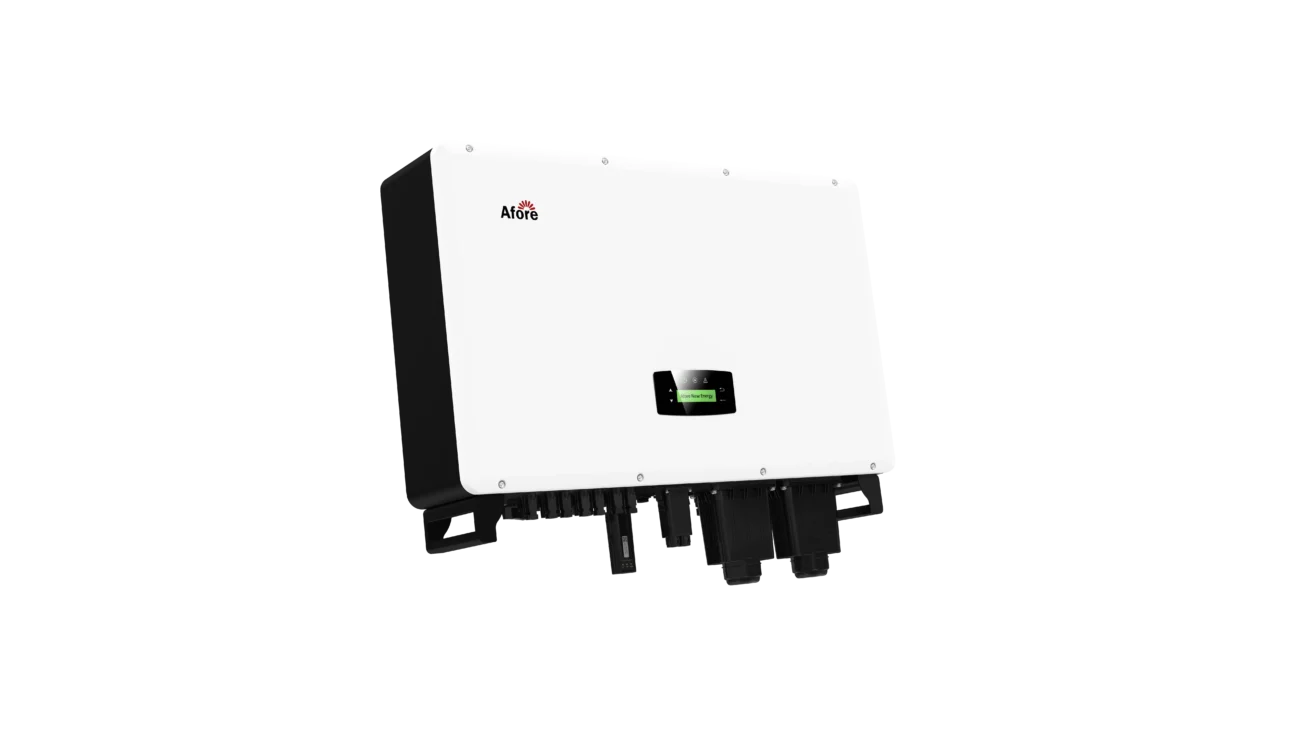
When we discuss inverter MTBF and reliability, it’s easy to focus entirely on hardware specs, cooling systems, or environmental stressors. Yet, one of the most overlooked influences on long-term performance is the human factor. Even the best-designed solar inverter can fail prematurely due to poor installation practices or inadequate operator knowledge. Understanding and managing these human elements is crucial for achieving the solar inverter life expectancy and mean time between failures projected by manufacturers.
The way an inverter is installed has a direct impact on its inverter MTBF and reliability:
In field operations, I’ve seen technically sound inverters fail within months simply because of sloppy installation. This is why strict adherence to installation best practices isn’t optional—it directly preserves mean time between failures and overall system reliability.
Once an inverter is installed, ongoing operation and maintenance depend on the people managing it. Training and documentation are critical factors in maintaining inverter MTBF and reliability:
Projects with strong training programs and robust documentation consistently achieve higher real-world inverter MTBF and reliability, even under challenging environmental conditions. The difference between theoretical performance and actual longevity often comes down to human factors.
If you take away one thing from this guide, let it be this:
Efficiency sells systems.
But inverter MTBF and reliability keep them profitable.
A shiny datasheet won’t save you from overheating capacitors.
A big warranty won’t eliminate downtime headaches.
Long-term success depends on:
When you evaluate your next solar inverter, don’t just ask about peak efficiency. Ask the harder question:
“How will this perform after 10 years in my climate?”
That’s where true inverter MTBF and reliability reveal themselves.
And in solar, longevity is everything.
Commercial string inverters typically report a mean time between failures between 80,000 and 150,000 hours under laboratory conditions. However, real-world inverter MTBF and reliability depend heavily on environment, load, and maintenance practices.
Manufacturers estimate solar inverter life expectancy using component failure rate databases, accelerated life testing, and thermal modeling. These feed into inverter MTBF and reliability calculations, though field conditions may vary significantly.
Electrolytic capacitors, cooling fans, and power semiconductors are among the most common failure points. Their degradation directly impacts mean time between failures and overall inverter MTBF and reliability.
Investors use inverter MTBF and reliability metrics to estimate operational risk and long-term revenue stability. Higher reliability reduces projected downtime and improves financial confidence.
Yes, strong documented inverter MTBF and reliability performance can lower perceived risk. Insurers may offer more favorable terms when failure probability and downtime risk are minimized.








 Turkish
  Romanian