




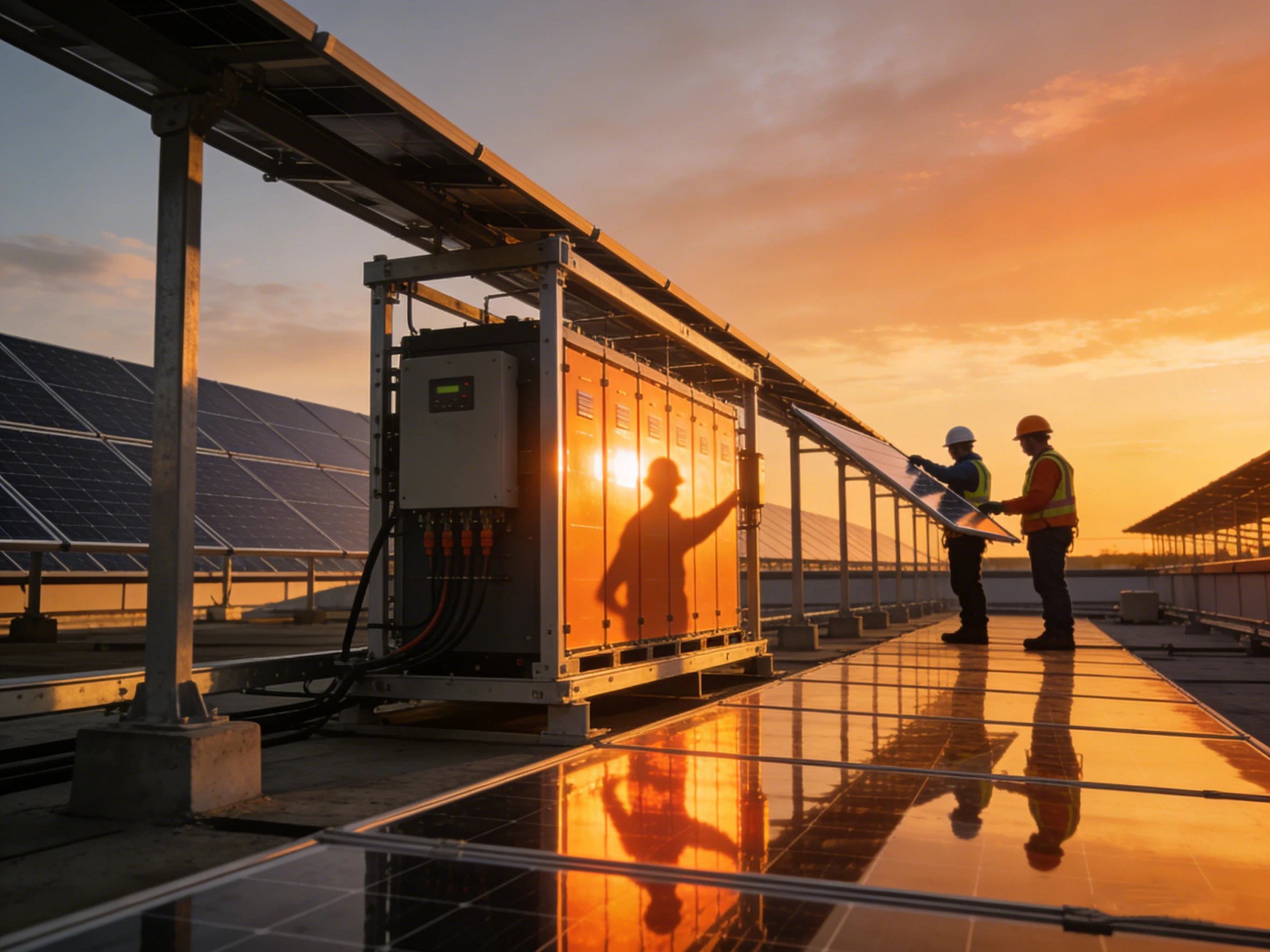
If you’re diving into the world of commercial solar, chances are you’ve heard the buzz about high voltage battery for commercial solar systems. These powerhouses are changing the way businesses store and manage solar energy, offering higher efficiency, scalability, and long-term reliability.
High voltage batteries aren’t just a trend—they’re quickly becoming the standard in commercial and industrial (C&I) solar setups. Here’s why.
When you’re dealing with a commercial solar installation, efficiency is king. High voltage battery for commercial solar systems can handle larger loads with fewer losses. By moving energy at higher voltages, you reduce current flow and minimize resistive losses in cables. That’s a technical way of saying: less wasted energy, more bang for your buck.
Think about wiring a large solar array. With low voltage batteries, you might need multiple parallel strings to achieve the same output. With high voltage battery for commercial solar, you can simplify your setup. Fewer cables, fewer connections, and less room for error.
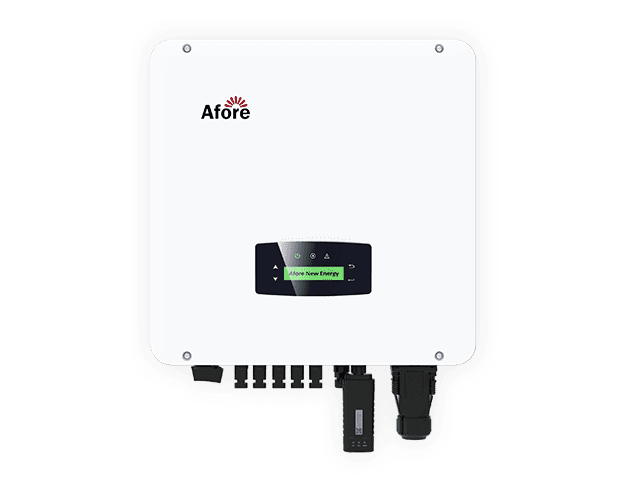
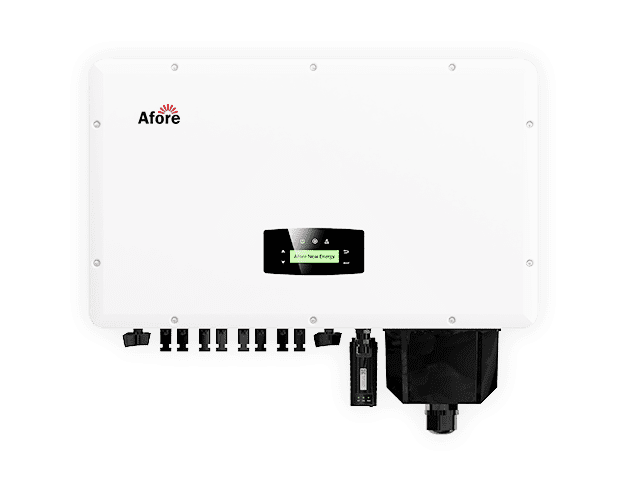
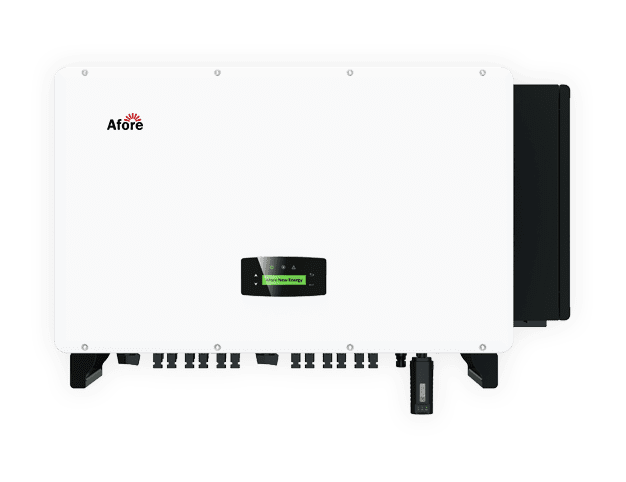
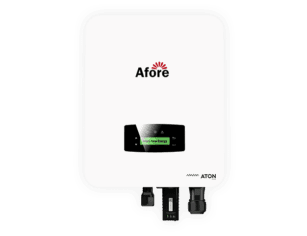
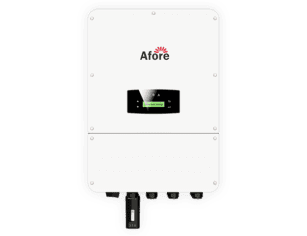
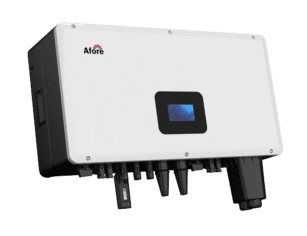
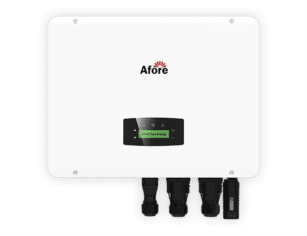
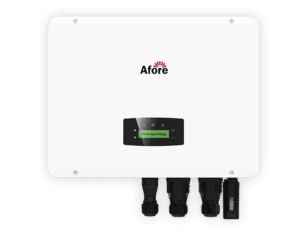
Modern solar inverter designs increasingly favor HV input. A high voltage battery pairs naturally with these inverters, making your overall system more efficient and reducing the need for intermediate DC-DC conversion.
Choosing between a high voltage battery for commercial solar and a low voltage alternative isn’t just about numbers—it’s about matching the system to your energy needs, long-term efficiency goals, and safety considerations. Let’s break it down in practical terms.
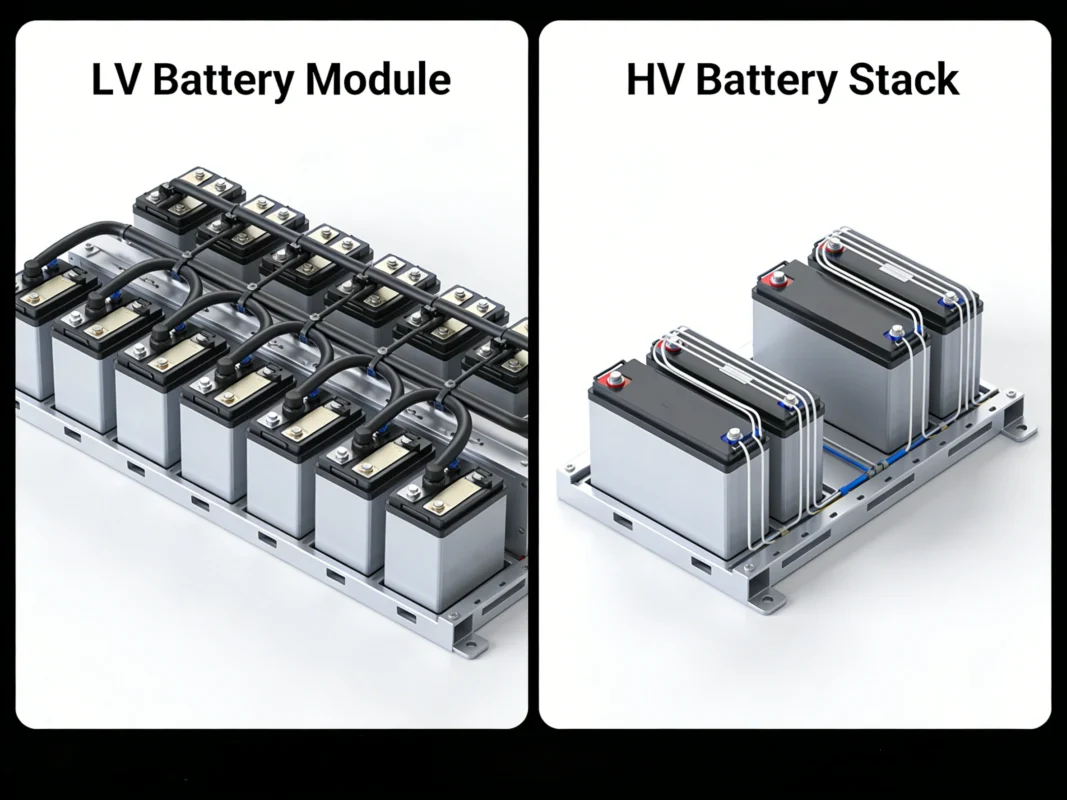
When it comes to voltage, bigger isn’t always better, but in commercial solar setups, high voltage battery for commercial solar systems have a clear edge. HV systems—typically above 400V—allow fewer parallel strings to achieve the same energy output as multiple low voltage (LV) modules. That means less wiring, lower current losses, and simpler integration with large-scale solar inverters.
LV systems, often under 100V, are easier to handle and safer for smaller installations or rooftop solar. But when you’re powering a warehouse or an industrial facility, LV setups can become bulky, requiring dozens of parallel strings to meet load demands. HV setups simplify this by letting you stack 400V battery stacks in series, reducing complexity and improving performance.
At first glance, HV systems can seem more expensive. The battery packs themselves and the associated safety equipment—fuses, insulation, and BMS—might cost more upfront. However, if you look at the bigger picture, the story changes. High voltage systems reduce the amount of cabling, simplify installation, and decrease energy losses over long runs. Over time, these savings often offset the initial investment.
On the other hand, LV systems might seem cheaper initially, but as your energy demand grows, you could face escalating costs for additional batteries, more complex wiring, and increased maintenance. For commercial solar projects where efficiency and scalability matter, HV is often more economical in the long run.
Safety is paramount with any high voltage battery for commercial solar setup. HV systems require careful attention to insulation, proper fusing, and strict adherence to electrical codes. Thermal management is critical—without it, overheating can damage cells and reduce system life. A robust battery management system (BMS) is essential to monitor voltage, current, and temperature across all modules.
LV batteries, while safer to handle manually and easier to maintain, can become tricky when scaling up. More parallel strings mean more connection points, increasing the chance of loose connections, imbalances, or minor faults that degrade performance over time.
In practice, installers often choose HV setups for commercial projects due to simplified architecture, higher efficiency, and long-term reliability. LV remains viable for smaller systems, but once you’re dealing with industrial-scale loads, high voltage battery for commercial solar becomes the clear winner.
When planning a commercial solar project, flexibility is key. That’s where stackable LFP batteries come into play. They allow you to scale your high voltage battery for commercial solar setup gradually, without committing to a massive, fixed system upfront. Let’s dive into how they work, the advantages of modular design, and practical insights from real installations.
Stackable LFP (Lithium Iron Phosphate) batteries are designed to connect multiple modules in series to achieve higher voltages while maintaining safe and stable operation. Unlike traditional battery packs, these modules are built to “stack” together, forming strings that can reach the voltage requirements of large solar inverters. This modularity makes them ideal for commercial installations where energy needs can grow over time. Essentially, you can start with a few modules and expand as your demand increases, turning a small system into a 400V battery stack without major rewiring.
The modular nature of stackable LFP batteries brings several clear advantages:
From real-world installations, a few practical lessons stand out:
By approaching stackable LFP batteries with proper planning and monitoring, you can build a commercial solar system that’s both efficient and adaptable. Whether you’re starting small or designing a 400V battery stack, modular LFP setups give you the control and flexibility that large-scale solar projects demand.

For commercial solar projects, 400V battery stacks have become a cornerstone solution. They strike a balance between efficiency, scalability, and ease of integration, making them ideal for industrial rooftops, warehouses, and mid-sized solar farms. If you’re considering a high voltage battery for commercial solar, understanding the advantages of 400V stacks can help you design smarter systems.
Higher voltage equals higher efficiency. A 400V battery stack allows energy to move through the system with lower current, reducing resistive losses in cables and connectors. This means more of the energy captured by your solar panels actually reaches your solar inverter and your load, rather than being lost as heat. In practical terms, fewer losses translate to higher energy yield over time, making the system more cost-effective. For commercial setups, this difference is significant, especially when powering heavy machinery or multiple building systems simultaneously.
Another key benefit of 400V battery stacks is the ability to use smaller cables without compromising performance. Higher voltage reduces current for the same power output, which directly affects cable sizing. Smaller cables are cheaper, easier to route, and reduce installation complexity. For installers, this simplifies layout planning and reduces the overall footprint of the electrical infrastructure. Less cabling also means fewer points of potential failure, which is a big win for long-term reliability and maintenance.
Many modern solar inverters are designed to accept high voltage inputs, typically in the 400V range. This makes integrating a 400V battery stack straightforward. You can often connect directly to the inverter without additional DC-DC conversion or complex step-up equipment. For commercial systems, this plug-and-play approach saves time during installation and reduces engineering costs. Moreover, it ensures that the high voltage battery and the inverter operate harmoniously, optimizing charge and discharge cycles while extending battery lifespan.
A few practical considerations: make sure your racks are properly fused and monitored with a BMS to track voltage, current, and temperature. Leave room for expansion if you anticipate future energy demands. And always double-check compatibility with your solar inverter specifications to avoid mismatches that could reduce efficiency or trigger safety trips.
Installing a high voltage battery for commercial solar isn’t just about connecting cables—it’s about planning, safety, and future-proofing your system. Following best practices can save time, reduce costs, and ensure your system performs reliably for years.
Before bringing in batteries, a thorough site assessment is crucial. Start by checking ambient temperatures—extreme heat or cold can affect battery performance and lifespan. Ensure the installation area has adequate ventilation to prevent overheating. Think about space: leave room not just for the initial racks, but also for future expansions, especially if you plan to stack multiple modules or form 400V battery stacks. Structural integrity matters too; racks must be placed on stable surfaces that can support their weight safely. Finally, consider access for maintenance and monitoring—easy access makes routine checks and repairs much safer and more efficient.
When it comes to wiring multiple high voltage racks, careful planning is essential. Start by connecting modules in series to reach your desired voltage, but always follow proper polarity and spacing guidelines. Parallel connections can increase capacity, but they must be implemented cautiously to avoid current imbalances. Every rack should be fused individually to prevent a fault in one module from affecting the entire system. A robust battery management system (BMS) is highly recommended—it monitors voltage, current, and temperature across all modules, helping prevent overcharge, deep discharge, and thermal issues. Label all connections clearly and maintain consistent cable routing to simplify troubleshooting and future expansion.
By combining careful site assessment with disciplined wiring practices, your high voltage battery for commercial solar installation will not only operate efficiently but also remain safe and scalable. Taking the time to plan the layout, ensure proper airflow, and implement effective monitoring can save headaches down the road and maximize the return on your commercial solar investment.
Working with a high voltage battery for commercial solar offers efficiency and scalability, but it also demands strict attention to safety. Ignoring precautions can lead to serious electrical hazards, thermal issues, or system damage. Understanding key safety aspects ensures your installation remains reliable and secure.
High voltage DC storage carries a real risk of electrical shock. Even brief contact with live terminals can cause injury or worse. Always use insulated gloves, rated tools, and follow proper lockout/tagout procedures when performing any work. Clearly label all HV circuits and restrict access to trained personnel. Maintaining separation between live parts and service areas is crucial. Remember, safety isn’t just a checklist—it’s an attitude when dealing with high voltage systems.
Temperature control is another critical factor. High voltage batteries generate heat during charge and discharge cycles. Overheating can degrade cell life, reduce efficiency, and in extreme cases, trigger thermal runaway. Proper ventilation and spacing between battery modules help dissipate heat naturally. For larger systems, consider active cooling solutions, like fans or liquid cooling, to maintain consistent operating temperatures. Monitoring ambient and module temperatures ensures the system operates within safe limits at all times.
A robust monitoring system is essential for both safety and performance. A battery management system (BMS) tracks voltage, current, and temperature for each module, alerting operators to potential problems before they escalate. Early detection of overvoltage, undervoltage, or thermal anomalies prevents damage and extends battery life. For commercial solar setups with multiple 400V battery stacks, integrating real-time monitoring with your solar inverter provides centralized oversight, making it easier to manage and maintain the system efficiently.
By prioritizing electrical safety, effective thermal management, and comprehensive monitoring, a high voltage battery for commercial solar installation can deliver reliable performance without compromising safety. These practices not only protect personnel and equipment but also enhance the long-term value of your commercial solar investment.
Learning from actual commercial solar installations can provide invaluable guidance when designing or upgrading a high voltage battery for commercial solar system.
Many commercial installations begin with a few stackable LFP batteries to meet immediate energy needs. This approach allows operators to test system performance, fine-tune solar inverter integration, and monitor real-world efficiency before committing to full-scale deployment. As energy demand grows, modules can be added to form 400V battery stacks, providing additional capacity without overhauling the existing setup. Starting small reduces risk and allows for gradual capital investment, which is especially important for facilities with tight budgets.
In practice, proper monitoring is critical for long-term reliability. Operators often pair high voltage battery for commercial solar systems with a robust battery management system (BMS) that tracks voltage, current, and temperature for each module. Real-time data helps identify underperforming modules, prevent imbalances, and reduce maintenance downtime. Field teams have noted that even minor deviations in voltage or temperature, if left unmonitored, can escalate into larger performance issues, highlighting the importance of proactive monitoring.
One lesson that keeps coming up in commercial projects is the importance of careful wiring and rack layout. Labeling cables, organizing modules by voltage and capacity, and leaving space for expansion makes future maintenance and scaling much easier. Installers have found that 400V battery stacks with well-planned layouts are easier to integrate with solar inverters and require fewer troubleshooting visits. Parallel connections should always be approached cautiously, with individual fusing to isolate potential faults.
Operators consistently report that maintaining a stable thermal environment and consistent charge/discharge cycles dramatically improves system longevity. Proper ventilation, module spacing, and adherence to recommended operating conditions prevent unnecessary stress on cells. Additionally, having accessible racks for inspection and minor adjustments saves significant time and reduces risks associated with high-voltage work.
By observing these real-world practices, designers and operators can build high voltage battery for commercial solar systems that are not only efficient and safe but also scalable and long-lasting. Learning from field experience often prevents costly mistakes and helps ensure commercial solar projects meet both performance and financial expectations.
The high voltage battery for commercial solar is no longer just an option—it’s the backbone of efficient, scalable, and safe commercial solar projects. From stackable LFP batteries to 400V battery stacks, the benefits are clear: higher efficiency, simplified design, and future-proof scalability.
Whether you’re deciding between HV vs LV battery for inverters or planning your next commercial installation, high voltage systems provide the flexibility and performance that modern solar projects demand.
High-voltage batteries are increasingly standard in commercial and industrial (C&I) solar because they offer higher efficiency and simplified system architecture. With fewer parallel strings needed to reach target power, there’s less cabling and lower resistive losses. They also integrate seamlessly with modern solar inverters, allowing facilities to scale energy storage more easily and maintain consistent performance. Essentially, HV batteries reduce system complexity while improving energy yield.
400V battery stacks and other high-voltage setups reduce current for the same power output, minimizing heat loss in cables and connectors. This translates directly into higher system efficiency. Commercial operators have found that these systems maintain optimal charge/discharge cycles with fewer losses compared to low-voltage alternatives, making them ideal for facilities with heavy loads or multiple simultaneous energy demands.
Yes, you can, but with precautions. Using stackable LFP batteries, you can combine modules in series to reach higher voltages. It’s critical to match module voltage and capacity to avoid imbalances that can reduce performance or strain the battery management system (BMS). Proper fusing, monitoring, and consistent wiring practices are essential when forming 400V battery stacks or other high-voltage configurations.
High-voltage DC storage carries risks such as electrical shock, thermal runaway, and potential fire hazards if poorly managed. Installing a robust BMS, ensuring proper ventilation, and adhering to insulation and fusing standards are essential. Personnel should always use insulated tools, wear protective equipment, and limit access to trained operators. Following best practices protects both people and the longevity of your high voltage battery for commercial solar system.
To wire multiple high-voltage racks in parallel safely, first connect each rack in series to achieve the target voltage. Then, carefully parallel the series strings to increase total capacity. Each rack should have its own fuse to isolate faults, and a BMS should monitor voltage, current, and temperature across all modules. Clear labeling, organized cable routing, and planning for future expansion are essential to maintain safety and simplify maintenance.








 Turkish
  Romanian