




Commercial battery storage sizing is one of the most important design decisions in a commercial solar PV project. If the system is too small, it may fail to reduce demand charges, absorb excess PV generation, or support critical loads during an outage. If it is too large, the project can become capital-intensive without producing enough additional savings to justify the investment.
For EPC companies, PV installers, system integrators, resellers, commercial building owners, and facility managers, battery sizing is not simply a matter of choosing a kWh capacity from a catalogue. A bankable commercial battery energy storage system must be designed around load behavior, tariff structures, PV generation, inverter limits, export rules, safety standards, site constraints, warranty terms, and lifecycle economics.
The right battery size is therefore not always the largest system the site can physically accommodate. It is the configuration that delivers the strongest combination of technical performance, regulatory compliance, operational reliability, and commercial return.
Commercial and industrial battery storage projects are usually driven by business outcomes. A retail facility may want to reduce peak demand charges. A cold storage warehouse may need resilience for refrigeration loads. A factory may want to shift solar energy into evening production hours. A logistics site may need to manage EV charging peaks without upgrading its grid connection.
Each of these cases leads to a different battery power rating, energy capacity, inverter configuration, and control strategy. This is why commercial battery storage sizing must begin with the operating objective rather than the battery module specification.
A battery has two core sizing dimensions: power and energy. Power, measured in kW, determines how much load the system can support or offset at a given moment. Energy, measured in kWh, determines how long it can sustain that output. In commercial PV projects, both values must be modeled separately. A peak shaving battery system may need high kW output for short events, while a backup or solar load-shifting system may require more kWh for longer discharge periods.
The design process also needs to account for real-world limitations. Batteries do not normally operate across their full nameplate capacity. Depth of discharge limits, round-trip efficiency losses, temperature derating, state-of-charge reserves, and long-term degradation all reduce the usable capacity available to the project. Ignoring these factors can lead to systems that look correct on paper but underperform during operation.
Accurate commercial battery storage sizing relies on practical on-site data and reasonable technical adjustments. The following section breaks down the core inputs and step-by-step calculation methods to help designers determine appropriate power and energy capacity for real-world commercial projects.
The basic sizing process starts with clear objective and accurate site data. In practice, the calculation should move through four stages: define the use case, analyze interval load and PV data, calculate the required kW and kWh, then adjust for technical and lifecycle factors.
A simplified sizing logic is:
| Sizing element | What it determines | Typical design question |
|---|---|---|
| Power rating | kW | How much load must the battery offset or support? |
| Usable energy | kWh | How long must the battery discharge? |
| Installed capacity | kWh | How much nameplate capacity is needed after losses and reserves? |
| Inverter or PCS rating | kW/kVA | Can the system charge and discharge at the required rate? |
| Control reserve | % SoC | How much capacity must be held for backup, warranty, or grid rules? |
For a basic load coverage calculation, the useful starting point is:
Required usable energy = load to be supported × discharge duration
For example, if a commercial site needs to support 200 kW of critical load for two hours, the required usable energy is 400 kWh before applying efficiency, depth of discharge, and reserve assumptions.
To convert usable energy into installed battery capacity, a practical formula is:
Installed battery capacity = required usable energy ÷ allowable DoD ÷ round-trip efficiency ÷ end-of-life capacity factor ÷ operating reserve factor
If the required usable capacity is 400 kWh, allowable depth of discharge is 90%, round-trip efficiency is 88%, end-of-life capacity is 80%, and the system maintains a 10% operating reserve, the installed capacity requirement becomes approximately:
400 ÷ 0.90 ÷ 0.88 ÷ 0.80 ÷ 0.90 = 701 kWh
This does not mean every project needs such a large margin. It shows why nameplate capacity and usable capacity should never be treated as the same value in commercial battery storage sizing.
A common sizing error is to focus only on kWh. In commercial applications, the kW rating can be equally important. A battery may have enough stored energy to cover a demand event, but if the inverter or power conversion system cannot discharge at the required kW, the site may still set a high demand peak.
Consider a facility that wants to reduce a monthly peak from 800 kW to 650 kW. The battery must be able to discharge at least 150 kW during the relevant intervals. If the selected battery has 500 kWh of energy capacity but the inverter is rated at only 100 kW, the system cannot fully meet the peak shaving target.
By contrast, a site using storage for solar self-consumption may need less instantaneous power but more discharge duration. For example, shifting excess PV generation from midday to evening operations may require a battery that discharges at 100 kW for four hours rather than 300 kW for 30 minutes.
The same commercial building can require different battery sizes depending on the intended use case. A system designed only for demand-charge reduction may be smaller than one designed for backup power. A battery sized for export limitation may follow the PV surplus curve rather than the site’s peak demand curve.
Before selecting battery modules, PCS capacity, hybrid inverters, switchgear, or an EMS, the project team should define the operating hierarchy. If backup power is the highest priority, a minimum state of charge may need to be reserved at all times. If demand-charge reduction is the primary value stream, the EMS must have enough flexibility to discharge when demand peaks are likely. If grid services are included, cycling limits and market dispatch requirements must be checked against the warranty.
This operating strategy directly affects commercial energy storage ROI because it determines both savings and degradation.
Accurate commercial battery sizing hinges on real site conditions and local tariff structures. This section covers key data requirements and common operational scenarios to inform practical, cost-effective storage capacity design.
The most useful input for commercial battery storage sizing is 12 months of interval load data. In many markets, 15-minute or 30-minute data is sufficient because commercial demand charges are often calculated over similar intervals. Where available, one-minute or five-minute data can improve the analysis for volatile loads, but it is not always necessary for initial modeling.
Monthly utility bills are still useful, but they are not enough on their own. Bills show energy use and billed demand, while interval data shows when peaks occur, how long they last, and whether they are predictable. For a peak shaving battery system, this distinction is critical.
A professional sizing study should include the following technical and commercial inputs:
| Input | Why it matters |
|---|---|
| 12 months of interval load data | Identifies recurring peaks, peak duration, and seasonal load patterns |
| Utility tariff and demand charges | Determines the financial value of reducing kW demand |
| Time-of-use periods | Shows when stored energy has the highest value |
| PV production estimate | Quantifies solar surplus available for charging |
| Export rules and interconnection limits | Defines whether the battery can export or must operate behind the meter |
| Critical load schedule | Determines backup power and autonomy requirements |
| Existing generator or UPS data | Affects resilience architecture and transfer strategy |
| Site electrical drawings | Confirms switchgear, transformer, and service capacity |
| Expansion plans | Avoids undersizing where load growth is expected |
If interval data is unavailable, EPCs can perform a preliminary estimate using utility bills, site operating schedules, equipment ratings, and temporary metering. However, this should be treated as a screening exercise, not a final battery storage capacity calculation.
Demand-charge reduction is one of the strongest commercial storage use cases in markets where utility bills include significant kW-based charges. The battery discharges during high-demand intervals to reduce the billed peak.
Effective peak shaving depends on three questions. First, how high are the peaks relative to the normal load? Second, how long do the peaks last? Third, are the peaks predictable enough for the EMS to respond?
A facility with short, recurring peaks caused by equipment startup, HVAC demand, refrigeration cycles, or EV charging may be a good candidate for battery storage. A facility with long, flat high-load periods may require a much larger and more expensive system to achieve the same demand reduction.
A practical method is to set a target demand cap, then calculate how much battery power and energy are needed to keep site demand below that cap during selected events.
Required battery power = observed site demand − target demand cap
If the observed peak is 900 kW and the target cap is 750 kW, the required discharge power is 150 kW. The required usable energy depends on how long demand remains above 750 kW. If the event lasts 90 minutes, the system needs at least 225 kWh of usable energy before adjustment factors.
For professional studies, the target cap should not always be based on eliminating the single highest peak of the year. A rare outlier may require a large battery but produce limited incremental savings. Many analysts therefore test multiple demand caps and compare the avoided charges against the installed cost.
Time-of-use arbitrage is another important input in C&I solar battery sizing. The battery charges when electricity is cheaper or when excess PV is available, then discharges when grid energy is more expensive.
Economics depend heavily on the tariff spread. If off-peak energy costs 0.08 per kWh and peak energy costs 0.25 per kWh, storage may create meaningful value. If the spread is only a few cents, round-trip efficiency losses and battery degradation may consume much of the benefit.
Round-trip efficiency is especially important. A battery with 88% round-trip efficiency must charge about 1.14 kWh to deliver 1 kWh back to the load. Therefore, the arbitrage value should be calculated on delivered energy, not charged energy.
TOU arbitrage often becomes more attractive when combined with solar self-consumption. Instead of exporting PV at a low rate or curtailing PV under a zero-export agreement, the battery can store midday surplus and discharge later during higher-value periods.
Backup sizing requires a different approach to bill savings. The project team must decide whether the battery will support the whole facility or only selected critical loads.
Whole-site backup is usually expensive for commercial and industrial buildings because peak loads can be large and outage durations uncertain. Critical-load backup is often more practical. Critical loads may include refrigeration, IT systems, emergency lighting, security systems, process controls, pumps, medical or laboratory equipment, point-of-sale systems, or essential HVAC.
The backup calculation should be based on both power and duration. A site may need 100 kW of critical power for four hours, or 300 kW for 30 minutes until a generator starts. System architecture also matters. Backup operation may require islanding capability, transfer equipment, grid-forming inverter functions, and coordination with existing generators or UPS systems.
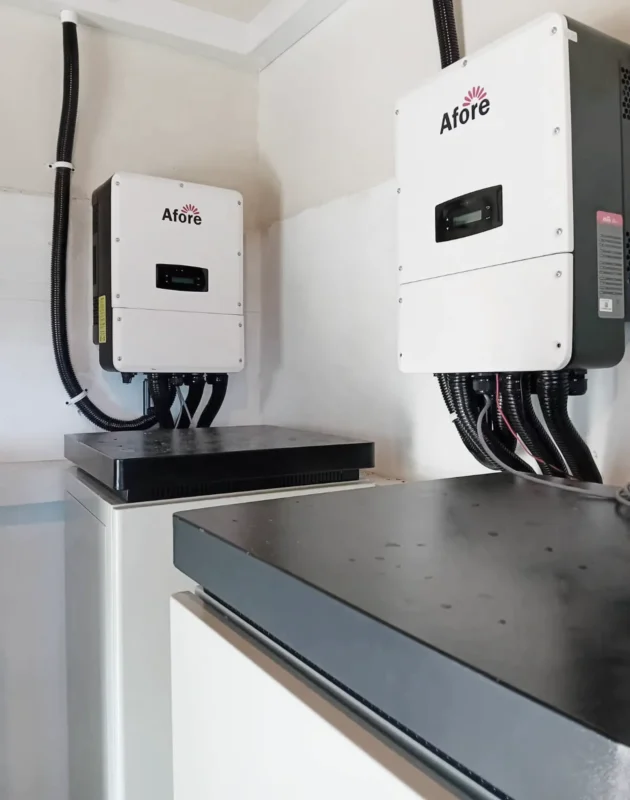
Commercial battery storage sizing varies greatly based on project goals. Below are the most common commercial use cases, along with tailored sizing considerations for each application.
Peak shaving is often the primary driver for commercial battery storage sizing because demand charges can represent a large share of C&I electricity bills. The battery is controlled to discharge when site demand approaches a predefined threshold.
The key design challenge is avoiding missed peaks. If the EMS discharges too early, the battery may be depleted before the true peak occurs. If it discharges too late, the demand interval may already be set. Predictive controls using load history, weather data, production schedules, or equipment signals can improve performance, but they do not eliminate the need for adequate kW and kWh sizing.
Cycling limits also matter. A system that discharges every weekday for peak shaving may experience 250 or more cycles per year. If the same system is also used for TOU arbitrage and demand response, annual cycles can increase significantly. The warranty must support the expected duty cycle.
Commercial PV systems may produce more electricity than the facility can consume during certain hours. If export compensation is low, unavailable, or restricted by interconnection rules, battery storage can improve project economics by storing excess solar energy.
The correct sizing basis is not total PV capacity. It is actual PV surplus after on-site consumption. A 1 MW rooftop PV system does not automatically justify a 1 MWh battery. If the building consumes most of the PV output during operating hours, the usable surplus may be modest. Conversely, a warehouse with low weekend load may produce large surplus energy on non-working days.
For export-limited projects, the battery power rating should also be checked against the maximum PV surplus rate. If surplus PV can rise quickly to 300 kW but the battery can charge at only 100 kW, the site may still curtail solar generation unless the PV inverter output is limited.
Resilience-driven systems are often larger and more complex than systems sized only for bill savings. The project team must define the outage scenarios the battery is expected to cover. A 30-minute bridge-to-generator application is very different from a four-hour standalone backup requirement.
If the battery will operate with PV during an outage, the design must support islanded solar operation. Many grid-tied PV inverters shut down when the grid is unavailable unless they are coordinated with a grid-forming battery inverter and appropriate protection equipment. The EMS must also control PV output, battery charging, and load balance to maintain stable operation.
Backup requirements can conflict with economic dispatch. A battery that must always reserve 50% state of charge for emergency use has less capacity available for arbitrage or peak shaving. This reserve should be included in the financial model, not treated as a minor control setting.
Some commercial batteries can generate revenue through demand response, capacity programs, frequency regulation, or aggregator-managed virtual power plants. These opportunities vary widely by country, utility, grid operator, and market design.
Before including these revenues in the project model, EPCs and owners should confirm eligibility rules, metering requirements, communication protocols, baseline calculations, and dispatch obligations. It is also important to verify whether grid-service cycling is allowed under the battery warranty.
A system optimized for behind-the-meter savings may not be ideal for grid services. Frequency regulation may require fast response and frequent cycling. Capacity programs may require availability during specific system peak windows. These requirements influence inverter sizing, usable capacity, EMS functionality, and reserve management.
System architecture and hardware matching directly determine how efficiently commercial battery storage works with existing PV setups. This section breaks down core system configurations, key equipment compatibility rules, and auxiliary design considerations for seamless integration.
Commercial solar-plus-storage system design usually follows either AC-coupled or DC-coupled architecture. In an AC-coupled system, the PV inverter and battery inverter connect on the AC side. This approach is common for retrofits because it can be added to existing PV systems with less disruption. It also supports modular expansion and multi-inverter sites.
In a DC-coupled system, PV and battery storage share a DC bus through compatible power electronics. This can reduce conversion losses in some operating modes, especially when charging the battery directly from PV. DC coupling may also help manage clipped PV energy where the array-to-inverter ratio is high.
The best architecture depends on the project context. Retrofit commercial PV projects often favor AC coupling. New-build projects with export limits, high PV clipping, or integrated hybrid inverters may benefit from DC coupling. The choice affects efficiency, control complexity, interconnection review, protection design, and commissioning.
| Design factor | AC-coupled storage | DC-coupled storage |
|---|---|---|
| Retrofit suitability | Often strong | Usually more complex |
| PV-to-battery efficiency | Additional conversion may occur | Can be higher in some designs |
| Modularity | Typically flexible | Depends on inverter platform |
| Export control | Managed on AC side | Managed through hybrid controls |
| Commissioning complexity | Familiar for many EPCs | Requires tighter PV-battery integration |
The power conversion system controls battery charging and discharging. In commercial systems, it must be sized and configured around the site’s electrical requirements, not just the battery cabinet rating.
Important compatibility issues include inverter output power, charge and discharge limits, voltage range, communications, metering, anti-islanding protection, grid-code settings, and EMS integration. If the project requires backup, the inverter may also need grid-forming capability and black-start functionality.
The EMS is equally important because it decides when the system charges, discharges, reserves capacity, or curtails PV. For commercial sites, the EMS should align with tariff periods, demand thresholds, export rules, backup reserve requirements, and facility operating schedules.
The inverter or PCS rating should be based on the maximum required charge or discharge power. For peak shaving, this is usually the difference between expected site demand and the target demand cap. For backup, it is the simultaneous critical load requirement. For PV self-consumption, it may be the expected PV surplus charge rate or evening discharge requirement.
A common mistake is selecting a large battery with an undersized inverter. For example, a 1,000 kWh battery connected to a 100 kW inverter can discharge for many hours, but it cannot reduce a 300 kW demand spike by more than 100 kW. In demand-charge markets, that may leave significant savings unrealized.
The inverter rating must also be checked against site import and export limits. In some behind-the-meter projects, the battery may be prohibited from exporting to the grid. In others, export may be allowed only under certain conditions. Interconnection and grid-code requirements can therefore cap the practical PCS size.
Battery modules and inverters are only part of the installed system. Balance-of-system components can significantly affect cost, footprint, installation complexity, and performance.
Commercial projects may require transformers, switchgear, protection devices, disconnects, cable systems, metering, HVAC or liquid cooling equipment, fire detection, emergency shutdown, and communications infrastructure. Outdoor systems need suitable enclosure ratings and thermal management. Indoor systems may face stricter ventilation, spacing, and fire safety requirements.
These elements should be evaluated before procurement. A battery size that appears suitable in software may become impractical if the site lacks space, transformer capacity, emergency access, or approval from the authority having jurisdiction.

Many hidden technical parameters impact real-world battery capacity and performance. This section covers key technical factors that shape accurate, reliable commercial battery storage sizing and long-term system performance.
Battery nameplate capacity is not the same as usable capacity. Manufacturers typically define operating limits to protect battery life and safety. A battery with 1,000 kWh nameplate capacity may provide 800–900 kWh of usable capacity depending on the allowable depth of discharge and warranty conditions.
Degradation further reduces available capacity over time. Commercial projects should be designed around end-of-life performance, not only first-year performance. If the battery is expected to retain 80% capacity at the end of the warranty period, the initial installed capacity may need to be larger or the project may require augmentation later.
The decision between initial oversizing and future augmentation is financial as well as technical. Oversizing increases upfront CAPEX but may simplify operations. Augmentation can preserve capital early in the project but introduces future procurement, installation, and downtime considerations.
C-rate describes how quickly a battery charges or discharges relative to its capacity. A 1C battery can theoretically discharge its rated energy in about one hour. A 0.5C system discharges over about two hours. A 0.25C system is closer to four-hour operation.
High C-rate systems are useful for short-duration peak shaving and fast response applications. Lower C-rate systems are often better suited for energy shifting and backup duration. The selected C-rate must be compatible with the battery chemistry, thermal design, PCS rating, and warranty.
Duty cycle is also important. A battery used occasionally for backup may experience few cycles per year. A battery used daily for peak shaving and TOU arbitrage may cycle hundreds of times per year. Higher cycling increases the importance of round-trip efficiency, thermal control, and degradation modeling.
Round-trip efficiency measures how much energy is returned compared with how much energy was charged into the battery. Losses occur in battery cells, inverters, transformers, wiring, and auxiliary systems such as HVAC.
Thermal conditions can also reduce performance. Outdoor systems in hot climates may experience derating if thermal management is insufficient. Cold climates can affect charging behavior and available capacity. Rooftop installations, poorly ventilated rooms, and high-temperature industrial sites require careful review.
For commercial energy storage ROI, these losses should be included in the dispatch model. A system that appears profitable at 100% efficiency may be marginal after realistic conversion losses and auxiliary consumption are included.
Lithium iron phosphate is widely used in commercial battery energy storage systems because of its cycle life, thermal stability, and suitability for stationary applications. Other lithium-ion chemistries may offer higher energy density but can have different safety, cost, and lifecycle characteristics.
Chemistry selection should consider more than energy density. For C&I solar battery sizing, EPCs and owners should evaluate safety profile, cycle life, C-rate capability, usable DoD, warranty terms, operating temperature range, availability, certification documentation, and service support.
The best chemistry is the one that fits the duty cycle and site risk profile. For example, a high-cycling solar-plus-storage application may prioritize cycle life and thermal stability, while a space-constrained site may place more value on energy density.
Grid rules, safety codes and local permitting rules will limit viable battery sizes and layouts. This section covers grid interconnection rules, compliance standards and site constraints that shape your final storage design.
Commercial battery systems may require new or updated interconnection approval, even when installed behind the meter. Utilities and grid operators may need to evaluate export capability, protection settings, anti-islanding behavior, fault contribution, metering, and control schemes.
Some projects are approved only as non-export systems. In that case, the EMS and metering architecture must prevent battery export under all operating conditions. Other projects may allow export from PV but not from the battery, or may require separate metering for grid-charged energy.
Interconnection standards such as IEEE 1547 are often referenced for distributed energy resource connection requirements, although exact application varies by jurisdiction and utility. EPCs should confirm local grid rules early because interconnection limits can affect both battery power rating and control strategy.
Commercial battery storage involves electrical, fire, and building safety requirements. Commonly referenced standards and test frameworks include UL 9540, UL 9540A, NFPA 855, NEC requirements in the United States, IEC-based requirements in many international markets, and local authority having jurisdiction rules.
NFPA 855 is frequently used as a reference for stationary energy storage system installation considerations, including fire safety, spacing, and related requirements in applicable jurisdictions. However, requirements vary by country, state, province, municipality, building type, and system size.
Compliance should not be treated as a late-stage permitting task. Fire safety spacing, emergency access, ventilation, and enclosure selection can affect where the battery can be installed and how much capacity can fit on site.
Battery siting must account for thermal runaway mitigation, fire detection, emergency shutdown, signage, clearances, and first-responder access. Indoor installations may require dedicated rooms, ventilation, fire-rated construction, gas detection, or suppression systems depending on local requirements and system design.
Outdoor installations may simplify some ventilation concerns but introduce other issues such as weather exposure, security, vehicle impact protection, and separation distances from buildings, property lines, or public areas.
These factors can influence commercial battery storage sizing. A site may have an economic case for 2 MWh of storage but only enough approved space for 1 MWh without major civil works. In that case, the final design must balance technical value against permitting feasibility and installed cost.
Retrofit projects can face practical constraints that are not visible in a desktop sizing model. Existing switchgear may have limited spare capacity. Transformers may already be near their rating. Electrical rooms may lack space. Rooftop installations may be limited by structural loading. Ground-mounted systems may conflict with parking, delivery access, lease boundaries, or fire lanes.
Multi-tenant buildings add another layer of complexity. Landlord approval, tenant metering, shared electrical infrastructure, and cost allocation can affect the business case. EPCs should clarify ownership, control rights, and operating responsibilities before finalizing the battery configuration.
Proper vendor selection, on-site execution, and thorough testing ensure the battery system performs as designed long-term. This section outlines key procurement, installation, and commissioning best practices for reliable commercial storage deployments.
Procurement should evaluate the complete system, not only battery price per kWh. Bankability, certification documentation, warranty terms, EMS capability, cybersecurity practices, spare parts availability, technical support, and compatibility with PV inverters all influence long-term project performance.
Warranty review deserves particular attention. Some warranties are limited by time, throughput, cycle count, C-rate, temperature, or minimum operating conditions. If the dispatch strategy exceeds the warranty profile, expected savings may come with hidden lifecycle risk.
For EPCs and resellers managing multiple customer projects, supplier consistency also matters. Standardized product platforms, monitoring interfaces, commissioning procedures, and spare parts can reduce operational complexity across a portfolio.
Commercial battery systems require careful installation planning. Delivery access, forklift or crane requirements, pad or foundation design, conduit routing, weather protection, site shutdown windows, and coordination with utility work can all affect the project schedule.
Battery installation should also be coordinated with PV construction, switchgear upgrades, transformer work, and EMS commissioning. Poor sequencing can lead to extended downtime or temporary operating restrictions. For operating commercial sites, shutdown windows may be limited to weekends, nights, or planned maintenance periods.
Physical installation details can influence performance. Poor ventilation, inadequate clearances, incorrect cable sizing, or unsuitable enclosure placement may lead to thermal derating, nuisance trips, or maintenance difficulties.
A correctly sized battery can still underperform if commissioning is incomplete. Commissioning should verify electrical integrity, communications, control logic, protection settings, metering accuracy, and actual charge/discharge capability.
Key commissioning activities typically include insulation resistance checks, torque verification, inverter synchronization, EMS communication tests, meter and CT validation, charge and discharge testing, emergency stop verification, alarm testing, and owner/operator training.
For demand-charge applications, the EMS should be tested against simulated demand events. For backup applications, transfer equipment and islanding functions should be validated according to applicable rules and safety procedures. For export-limited systems, zero-export controls should be tested under realistic PV and load conditions.
Every storage sizing choice ties back to long-term project finances. This section breaks down core financial modeling metrics to assess whether a battery system delivers viable returns for commercial solar sites.
Battery storage is most attractive where multiple value streams can be combined. A project that reduces demand charges, increases PV self-consumption, shifts energy away from peak TOU periods, and provides resilience may justify storage more easily than a project relying on only one revenue stream.
The business case depends on tariff structure, demand charges, PV surplus, export compensation, incentives, outage costs, financing assumptions, and operating profile. Government energy agencies increasingly recognize energy storage as an important part of power system flexibility, but project economics remain highly site-specific.
In some cases, storage is not yet financially justified. If demand charges are low, the tariff is flat, PV surplus is minimal, and outages have limited business impact, the battery may not meet the owner’s return requirements. A professional feasibility study should identify these cases early.
Battery modules are only one part of total installed cost. CAPEX also includes the PCS or hybrid inverter, EMS, switchgear, transformers, protection devices, fire safety systems, civil works, engineering, permitting, installation labor, commissioning, and potential interconnection upgrades.
A larger battery may not scale linearly in cost. Adding capacity may require a larger transformer, additional fire separation, more complex permitting, or upgraded electrical infrastructure. Conversely, some balance-of-system costs are relatively fixed, which means a slightly larger system may reduce unit cost per kWh.
The financial model should therefore compare complete installed configurations rather than battery module prices alone.
Commercial battery systems have ongoing operating costs. These may include monitoring subscriptions, preventive maintenance, HVAC servicing, firmware updates, inspections, insurance, spare parts, cybersecurity management, and periodic testing.
Maintenance planning is especially important for critical facilities and multi-site portfolios. A system that cannot be serviced quickly may expose the owner to higher operational risk. Remote diagnostics, alarm escalation, and clear warranty claim procedures help reduce downtime.
Augmentation should also be considered. If the project must maintain a guaranteed capacity for 10 or 15 years, the owner may need to add battery modules later or accept reduced performance. This should be modeled before procurement, not discovered after several years of operation.
Simple payback is useful for screening, but it is not enough for final investment decisions. Commercial energy storage ROI should also consider net present value, internal rate of return, lifecycle cost, battery degradation, OPEX, downtime, incentive expiry, tariff escalation, and residual value.
Sensitivity analysis is essential because the economics depend on variables that can change over time. Demand charges may increase or decrease. Facility loads may grow. PV production may vary. Grid-service revenues may not be available every year. Battery performance may differ from assumptions.
The best size is often the one with the strongest risk-adjusted lifecycle value, not the largest savings in the first year.
Ongoing monitoring and maintenance keep sized batteries running as intended over their full lifespan. This section covers EMS control logic, key tracking metrics and portfolio-wide management strategies.
The EMS is the operating brain of a commercial battery energy storage system. It decides when to charge from PV or the grid, when to discharge, how much capacity to reserve, and whether to curtail PV.
For demand-charge reduction, EMS controls must monitor real-time demand and forecast whether the site is likely to exceed the target cap. For TOU arbitrage, the EMS must align charging and discharging with tariff periods. For backup applications, it must preserve the required state-of-charge reserve. For export-limited systems, it must prevent unauthorized export.
A poorly configured EMS can reduce savings even if the battery size is technically correct. Control logic should be reviewed during design, tested during commissioning, and monitored during operation.
Long-term performance should be measured against the original business case. The owner and service provider should track whether the system is delivering expected savings, maintaining required capacity, and operating within warranty limits.
| Metric | Why it matters |
|---|---|
| State of charge | Confirms available operating reserve |
| State of health | Tracks degradation and capacity fade |
| Cycle count and throughput | Verifies warranty compliance |
| Charge/discharge power | Confirms PCS performance |
| Battery temperature | Identifies thermal stress or derating risk |
| Round-trip efficiency | Measures operational losses |
| Peak demand reduction | Confirms demand-charge savings |
| PV self-consumption ratio | Measures solar utilization improvement |
| Alarm history | Supports maintenance and reliability analysis |
These metrics are particularly valuable for EPCs, installers, and resellers that provide after-sales service across multiple commercial sites.
For organizations with multiple buildings, storage sizing should combine site-specific analysis with standardization. Retail chains, warehouses, schools, factories, and municipal facilities may benefit from repeatable system blocks, common EMS platforms, standardized commissioning procedures, and portfolio-level monitoring.
Not every site needs a fully custom design. A portfolio may use a small number of standard configurations after screening sites by load shape, tariff, PV potential, and space availability. This reduces procurement complexity and service risk while still allowing project teams to adapt sizing where the economics justify it.
Below is a streamlined, actionable workflow to accurately size commercial battery storage for real-world project deployment.
The first step is to define the value stream. Is the project intended to reduce demand charges, increase PV self-consumption, provide backup, shift TOU energy, participate in grid programs, or combine several objectives?
A battery cannot be accurately sized until this is clear. The operating objective determines the kW requirement, kWh requirement, control reserve, cycling profile, and financial model.
The next step is to simulate energy flows using interval load data, PV production estimates, tariff schedules, and battery dispatch assumptions. This model should test multiple battery sizes rather than relying on a rule of thumb.
For example, an EPC may compare 250 kW / 500 kWh, 500 kW / 1,000 kWh, and 750 kW / 1,500 kWh options. The largest system may produce the highest gross savings, but the middle option may deliver better payback and lower permitting risk.
Preliminary sizing must be checked against site infrastructure. The project team should confirm switchgear capacity, transformer ratings, protection coordination, available space, ventilation, fire safety requirements, emergency access, and interconnection rules.
This step often changes the final design. A technically optimal battery may need to be split into multiple enclosures, relocated outdoors, paired with a different inverter rating, or reduced in capacity to fit within site constraints.
The final configuration should be selected based on installed cost, expected savings, warranty-adjusted performance, OPEX, serviceability, scalability, and risk. The most bankable design is usually the one that performs reliably under realistic operating conditions, not the one that looks best under ideal assumptions.
For professional PV teams, commercial battery storage sizing is therefore a disciplined workflow: define the use case, model the load and tariff, size kW and kWh separately, adjust for real-world constraints, validate compliance, and test lifecycle economics before procurement.
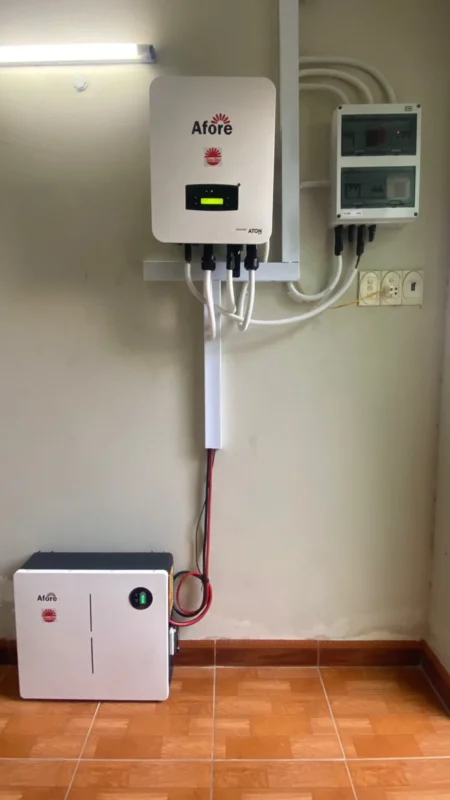
A battery energy storage system (BESS) is a modular electrical solution that stores excess power for on-demand use in commercial facilities. It pairs battery units with inverters and control software to manage charge and discharge cycles automatically. It works alongside solar PV systems and the grid to stabilize power usage and cut operational costs.
You size a battery energy storage system by matching its power and energy capacity to your site’s unique operational goals. First confirm your core use case, then analyze real site load and power generation data to calculate required kW and kWh ratings. Finally, adjust the raw capacity for real-world operational losses and long-term battery wear to get a practical final size.
The best commercial battery sizing method is goal-driven, data-backed customized calculation instead of generic capacity matching. It prioritizes your top business needs, whether that’s cost savings, power backup, or grid compliance. It also accounts for site constraints, safety standards, and lifecycle performance to deliver reliable returns.
You calculate battery storage capacity by starting with the usable energy required for your site’s load and runtime needs. You then factor in real-world operational variables including discharge limits, energy efficiency losses, and battery degradation. This adjusted calculation gives you the accurate installed capacity your project needs.
Commercial battery sizing is mainly affected by site load patterns, operational goals, and local grid tariff rules. Physical site limits, system efficiency, battery cycle life, and safety compliance standards also play key roles. Project ROI targets and long-term performance stability further refine the final system configuration.
A properly sized and maintained commercial battery storage system typically lasts 10 to 15 years for standard commercial projects. Its actual lifespan depends heavily on daily cycling frequency, operating temperature, and consistent load management. Adhering to warranty guidelines and regular maintenance can maximize its service life.
https://standards.ieee.org/ieee/1547/5915
https://www.nfpa.org/codes-and-standards/nfpa-855-standard-development/855








 Turkish
  Romanian