




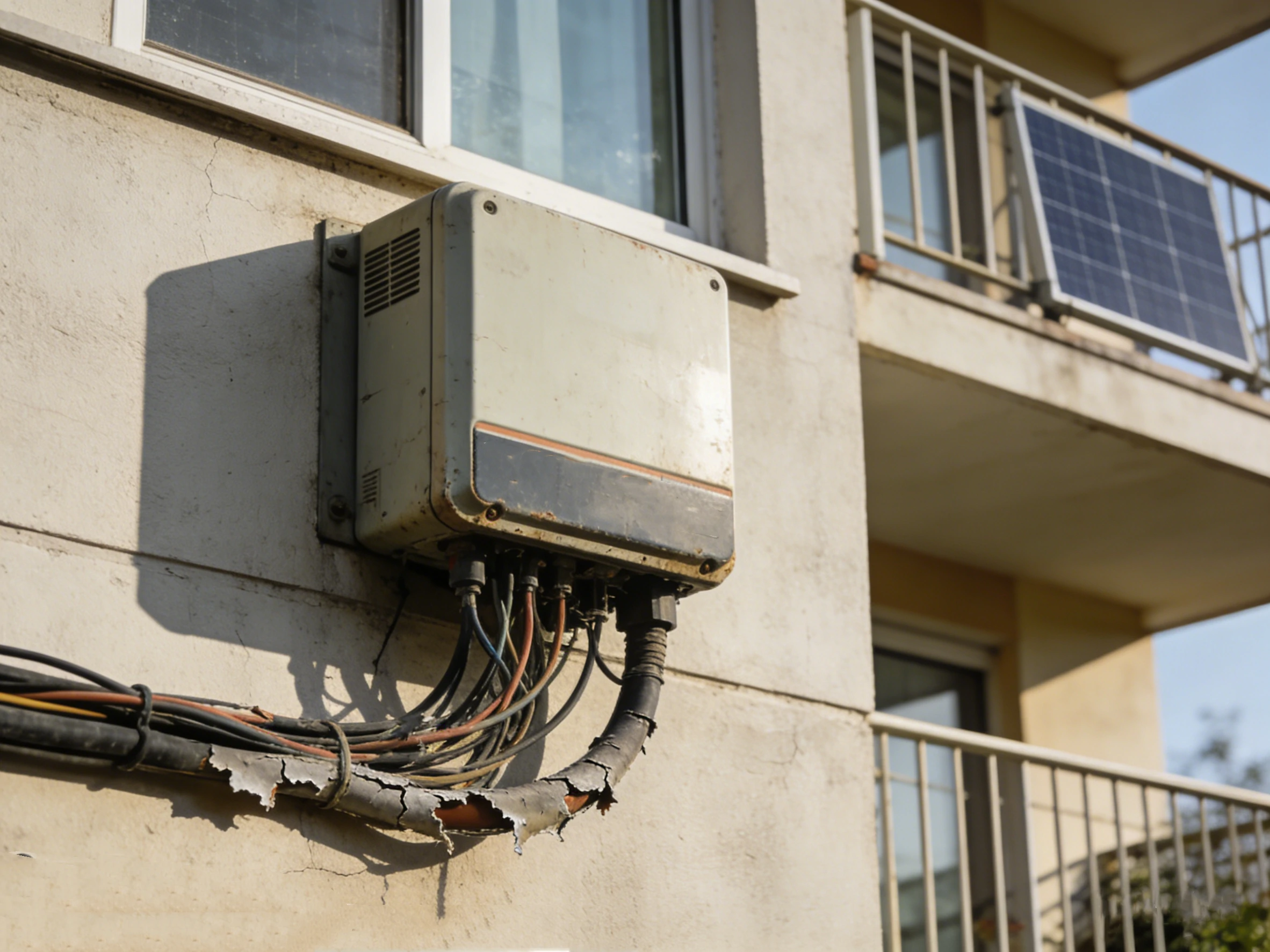
If you work with solar systems long enough, you’ll eventually run into an inverter ground fault. It’s one of those issues that sounds technical, sometimes feels mysterious, and often shows up at the worst possible moment—right when the system should be producing power.
I’ve seen inverter ground fault problems shut down perfectly good systems, confuse experienced installers, and frustrate homeowners who just want their solar inverter to work like it did yesterday. The good news? Most inverter ground fault issues are understandable, diagnosable, and fixable—if you know what to look for.
An inverter ground fault occurs when electrical current unintentionally flows from a live conductor to ground. In simple terms, electricity is taking a shortcut it should never take.
In a solar system, this usually means current from the DC side is leaking to ground somewhere between the solar panels and the solar inverter. When that happens, the inverter ground fault protection kicks in—and shuts the system down for safety.
This matters because an inverter ground fault isn’t just a performance issue. It’s a safety issue. Left unchecked, it can increase fire risk, damage equipment, and create shock hazards.
Modern solar inverter designs are intentionally sensitive. They’d rather shut down than guess. That’s why inverter ground fault warnings should always be taken seriously.
A solar inverter doesn’t “see” a ground fault the way a human does. Instead, it constantly measures electrical balance and insulation resistance.
Inside the solar inverter, monitoring circuits look for current leakage between live conductors and ground. When the inverter detects abnormal leakage beyond a safe threshold, it flags an inverter ground fault and disconnects itself from the system.
This sensitivity is a good thing—but it also means small issues can trigger faults. Slight insulation damage, moisture buildup, or grounding inconsistencies can all trip inverter ground fault protection even if the system looks fine on the surface.
That’s why inverter ground fault problems often require patience and methodical testing.
If there’s one thing years of field experience teach you, it’s this: an inverter ground fault almost never happens “out of nowhere.” There is always a physical or environmental reason behind it. The challenge is that those reasons are often hidden, gradual, or misunderstood—especially in real-world solar inverter installations.
Let’s walk through the most common causes of inverter ground fault issues you’ll actually encounter, not just the ones listed in manuals.
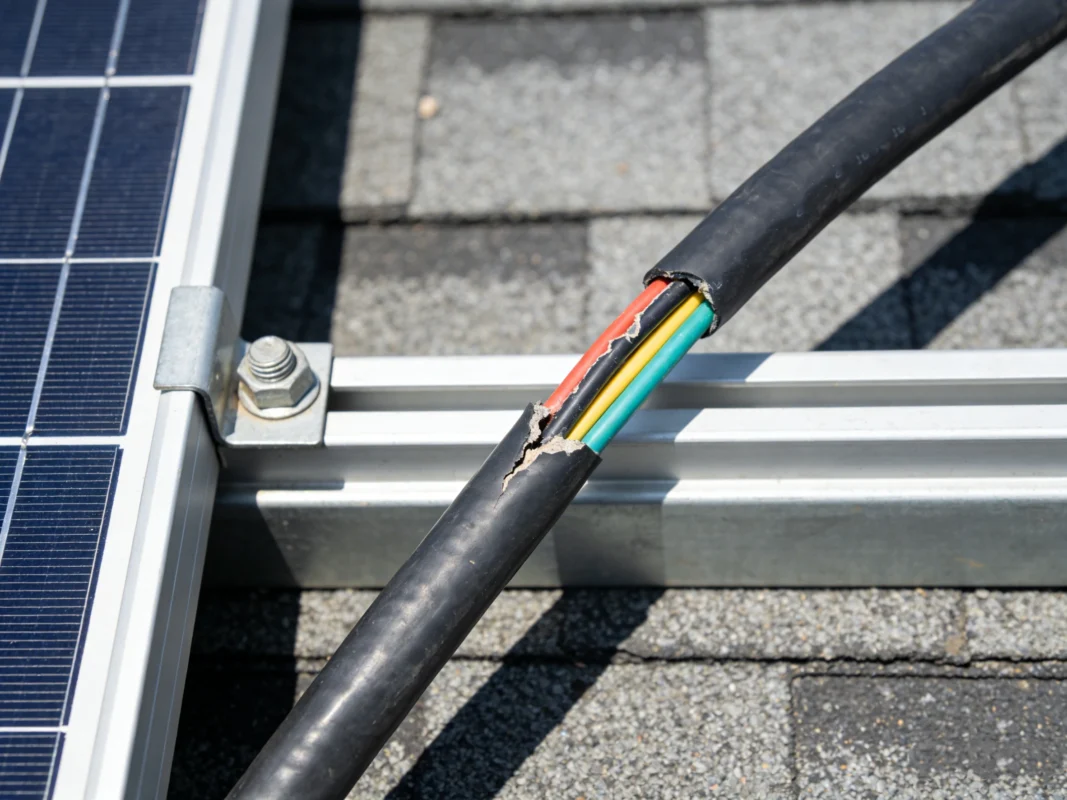
One of the most frequent causes of an inverter ground fault is damaged DC cabling. Solar systems rely on long DC runs, often exposed to heat, UV radiation, vibration, and sharp edges. Over time, insulation weakens.
A small crack in insulation is enough to allow current leakage to ground. When that happens, the solar inverter detects abnormal leakage and triggers an inverter ground fault shutdown.
What makes this tricky is that cable damage isn’t always obvious. The wire may look fine from a distance, but under load or moisture, leakage becomes significant. In older installations, insulation resistance slowly drops until the inverter ground fault suddenly appears.
This is where experience matters: replacing a visibly “almost okay” cable often solves inverter ground fault issues faster than hours of testing.
Moisture is a silent killer in solar systems. Rain, humidity, condensation, and morning dew all play a role in inverter ground fault problems.
Water can enter:
Once moisture is present, insulation resistance drops. The solar inverter interprets this as a leakage path to ground, resulting in an inverter ground fault—sometimes only during wet conditions.
A classic real-world scenario: the system runs perfectly all summer, then starts throwing inverter ground fault errors during rainy seasons. When everything dries out, the fault disappears. That doesn’t mean the problem is gone—it means it’s waiting.
Moisture-related inverter ground fault issues are among the most misdiagnosed because they’re intermittent and weather-dependent.
Improper grounding is another major contributor to inverter ground fault conditions. Even when wiring looks neat, grounding mistakes can confuse the solar inverter’s monitoring system.
Common grounding issues include:
From the inverter’s perspective, inconsistent grounding can look like current leakage—even when there is no actual damage. The result is a false or borderline inverter ground fault that repeatedly shuts the system down.
This is why experienced installers always verify grounding continuity and bonding integrity when troubleshooting inverter ground fault errors. Skipping this step leads to wasted time and unnecessary part replacements.
Not every inverter ground fault originates in external wiring. Over time, internal components inside the solar inverter can degrade.
As systems age:
Eventually, the solar inverter may detect internal leakage to ground and report an inverter ground fault even though external wiring tests fine.
This type of inverter ground fault is more common in older systems and usually becomes more frequent over time. Resetting the inverter may work temporarily, but the underlying issue remains.
Physical damage is one of the most underestimated causes of inverter ground fault problems.
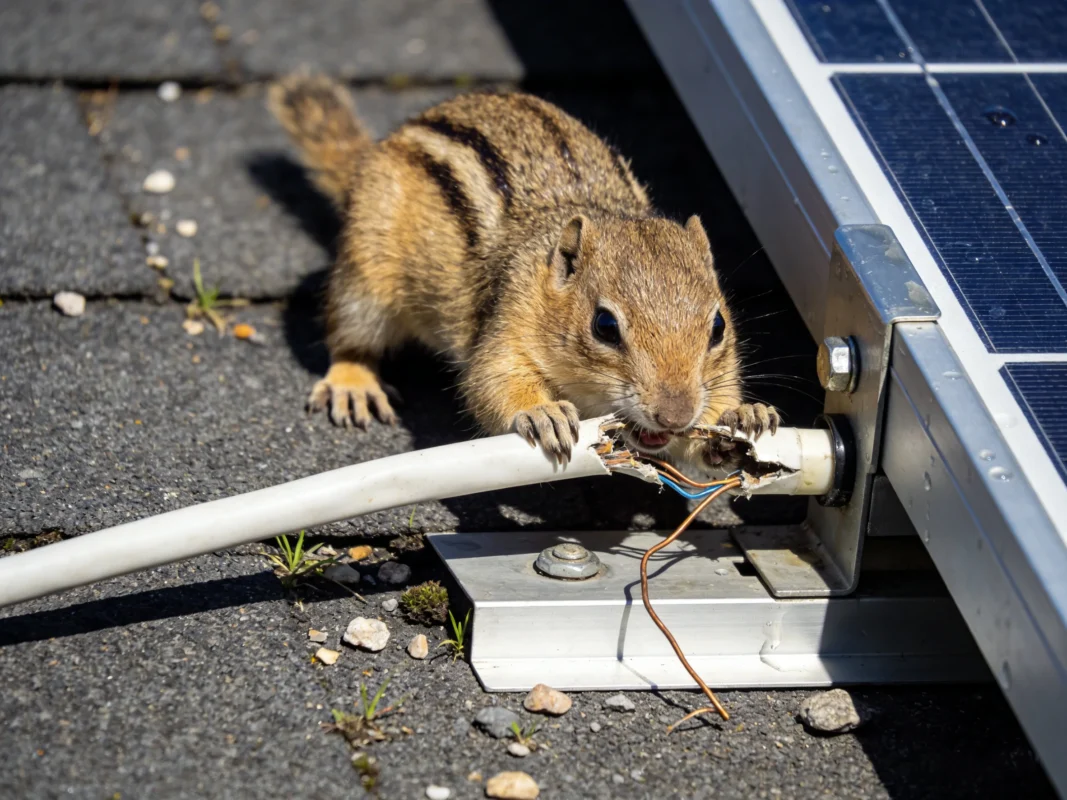
Rodents chewing through DC cables, insulation rubbed away by metal edges, or wires pinched during installation can all create leakage paths to ground. These faults are often hidden under panels, inside conduits, or behind structural elements.
What makes these inverter ground fault cases difficult is timing. Damage may occur months or years before the solar inverter finally detects leakage beyond safe limits.
Experienced technicians know to inspect areas that are “out of sight,” because inverter ground fault causes are rarely found in the most convenient places.
Some inverter ground fault issues are baked into the system from day one.
Examples include:
These shortcuts may not cause immediate problems, but over time they increase the likelihood of inverter ground fault conditions.
A well-designed solar inverter system anticipates environmental stress and aging. A rushed installation often leads to recurring inverter ground fault errors later in the system’s life.
One of the reasons an inverter ground fault causes so much confusion is that its symptoms don’t always look dramatic. In many real installations, the system appears to be “mostly working” until it suddenly doesn’t. Knowing how inverter ground fault symptoms show up in daily operation can save hours of troubleshooting and prevent bigger failures later.
Let’s break down the most common signs—based on what actually happens in the field.
The most obvious symptom of an inverter ground fault is a warning or error message from the system. Modern solar inverter units continuously monitor current leakage to ground. When the measured value crosses a safety threshold, the inverter flags an inverter ground fault and stops normal operation.
These alerts may appear as:
The solar inverter isn’t “overreacting.” It’s responding to a real or perceived safety risk. Ignoring or repeatedly resetting an inverter ground fault without investigation often leads to recurring shutdowns.
Another common inverter ground fault symptom is repeated shutdown and restart cycles. The solar inverter detects leakage, shuts down, waits for conditions to stabilize, then tries to reconnect.
If the underlying inverter ground fault remains, the cycle repeats.
In real-world operation, this looks like:
These repeated interruptions are not just annoying—they stress internal components and reduce long-term reliability. Experienced technicians recognize frequent restarts as a red flag pointing directly toward an inverter ground fault condition.
Not every inverter ground fault causes a complete shutdown. In some cases, leakage levels hover near the detection threshold. The solar inverter may continue operating but with unstable output.
You might notice:
This type of partial inverter ground fault is easy to miss, especially if system performance isn’t closely monitored. Over time, however, the leakage often increases until a full inverter ground fault shutdown occurs.
From a practical standpoint, inconsistent output is often an early warning sign—not something to dismiss.
One of the most frustrating inverter ground fault symptoms is inconsistency. Many systems only show faults under specific environmental conditions.
Common triggers include:
In these cases, the inverter ground fault seems to “fix itself” when conditions improve. In reality, the fault is still there—just temporarily below the detection threshold.
Experienced professionals know that condition-based inverter ground fault symptoms almost always point to moisture intrusion or insulation degradation somewhere in the system.
In many installations, inverter ground fault symptoms originate on the DC side of the system. This is where long cable runs, connectors, and environmental exposure increase risk.
Typical DC-side indicators include:
Understanding this distinction helps narrow down the cause faster. A solar inverter detecting DC-side leakage behaves very differently than when facing AC-side issues.
Another overlooked symptom of inverter ground fault problems is the fault history itself. Even if the system is currently running, the solar inverter may have logged multiple ground fault events over time.
These historical records often show patterns:
Reviewing fault history is critical. It provides evidence-based insight rather than guesswork, helping confirm that a recurring inverter ground fault is developing.
Many inverter ground fault symptoms mimic other problems—such as grid instability or shading issues. That’s why misdiagnosis is common.
The key difference is consistency. Grid issues affect many systems at once. Shading follows predictable patterns. An inverter ground fault tends to follow environmental stress, wiring conditions, or system aging.
Professionals rely on symptom patterns, not just single events, to correctly identify inverter ground fault conditions before they escalate.
Diagnosing an inverter ground fault is rarely about finding a single obvious mistake. In most real installations, it’s a process of elimination, careful observation, and understanding how the solar inverter interprets leakage to ground. Rushing this step often leads to misdiagnosis and repeated failures.
Below is a practical, step-by-step approach that reflects how experienced professionals actually track down inverter ground fault issues in the field.
Before touching anything, treat every inverter ground fault as a live electrical risk. Even when the solar inverter has shut itself down, DC circuits can still carry dangerous voltage.
Start by:
This step isn’t optional. Many inverter ground fault incidents become accidents simply because safety was skipped in the rush to “fix the problem.”
Not every warning labeled as a ground issue is actually an inverter ground fault. Some alerts are triggered by isolation imbalance or transient conditions.
Check:
If the inverter ground fault appears repeatedly under similar conditions, you’re likely dealing with a genuine leakage issue—not a one-time anomaly.
Experienced technicians always confirm the fault type before moving forward.
A visual inspection solves more inverter ground fault cases than most people expect. Look beyond what’s easy to see.
Focus on:
Many inverter ground fault problems come down to insulation damage or moisture—both of which often leave subtle physical clues.
If something looks “almost okay,” it usually isn’t.
Isolation is one of the most reliable ways to pinpoint an inverter ground fault. The goal is to determine where leakage begins.
Typical isolation steps include:
If the fault only occurs when a specific string is connected, you’ve narrowed the problem dramatically. This step alone often cuts troubleshooting time in half.
Isolation requires patience, but it removes guesswork.
Once isolation points toward a suspect section, insulation resistance testing becomes critical.
Using appropriate test equipment, measure resistance between:
Low resistance indicates a leakage path that can trigger an inverter ground fault. Compare readings across strings to identify anomalies.
This step separates informed diagnosis from trial-and-error part swapping.
Not all inverter ground fault issues originate on the DC side. Although DC faults are more common, AC-side problems can also trigger ground leakage detection.
Key indicators include:
Understanding how the solar inverter monitors both sides of the system helps avoid chasing the wrong problem area.
If external wiring, connectors, and grounding all test normal, the inverter ground fault may be internal.
Signs pointing to internal issues include:
At this stage, experience matters. Knowing when to stop testing external components prevents wasted labor and unnecessary system downtime.
Finally, look at the bigger picture. Most inverter ground fault cases follow a pattern.
Review:
A solar inverter that reports inverter ground fault errors only during rain or early mornings is telling you something important. Patterns often reveal causes that individual tests miss.
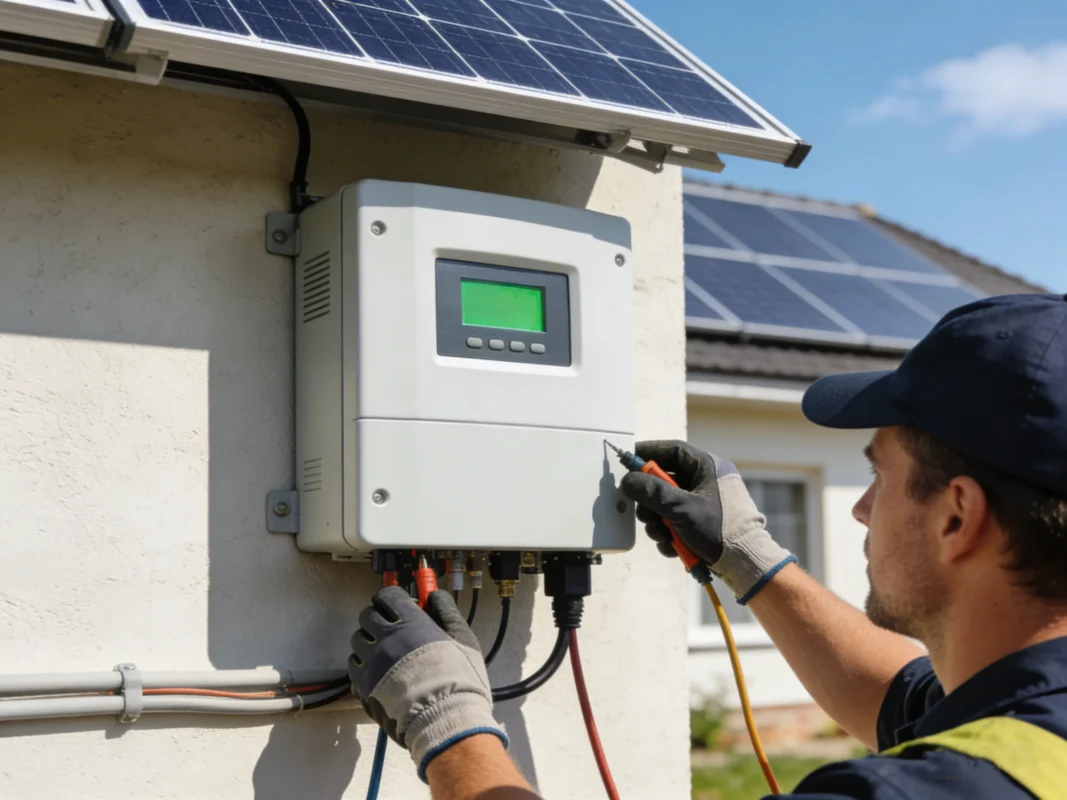
Once an inverter ground fault has been correctly diagnosed, the real work begins. Fixing the problem isn’t about quick resets or temporary workarounds—it’s about eliminating the leakage path that triggered the fault in the first place. In real installations, practical, evidence-based solutions always outperform guesswork.
Below are the most reliable ways professionals resolve inverter ground fault issues in the field.
Damaged DC wiring is one of the leading causes of inverter ground fault conditions, and it’s also one of the most straightforward to fix—if you do it properly.
Effective solutions include:
Even small insulation defects can allow current leakage to ground. A solar inverter will detect that leakage no matter how minor it looks to the eye.
Improper grounding can create inverter ground fault errors even when all conductors are intact. Fixing this requires more than tightening a single connection.
Practical grounding corrections often involve:
Once grounding integrity is restored, many inverter ground fault alerts disappear immediately. Experienced professionals always recheck grounding after repairs because even minor inconsistencies can confuse a solar inverter’s monitoring system.
Moisture-related inverter ground fault problems demand a combination of repair and prevention.
Solutions include:
It’s important to understand that simply drying components may temporarily clear the inverter ground fault, but unless the entry point is sealed, the fault will return. A solar inverter is sensitive to insulation resistance changes, especially in humid environments.
Loose or improperly crimped connections can create localized heating, insulation breakdown, and eventual inverter ground fault conditions.
Effective corrective actions involve:
These fixes often restore stable operation and prevent recurring inverter ground fault shutdowns that frustrate system owners.
Some inverter ground fault issues stem from installation design rather than component failure.
Corrective steps may include:
A well-routed DC system reduces mechanical wear and lowers the long-term risk of inverter ground fault events.
Not all inverter ground fault issues are external. In older or heavily stressed systems, internal insulation degradation inside the solar inverter can trigger persistent faults.
Indicators that point to internal issues include:
In these cases, repair options are limited. Replacing the solar inverter becomes the most reliable long-term solution. Recognizing this early prevents endless troubleshooting and system downtime.
Fixing an inverter ground fault isn’t complete until verification confirms the issue is resolved.
Final checks should include:
Experienced professionals never assume success after a single reset. They let the system prove itself.
One of the most common reasons an inverter ground fault takes so long to resolve is simple confusion. In real installations, different inverter faults often look similar on the surface. Systems shut down, error messages appear, and power production stops. But the cause behind each fault can be very different.
Understanding how inverter ground fault conditions differ from other inverter faults is essential for accurate diagnosis, faster repairs, and safer operation of a solar inverter system.
An inverter ground fault and an isolation fault are closely related, which is why they’re often mixed up.
An inverter ground fault occurs when current finds an unintended path to ground. The solar inverter detects actual or perceived leakage beyond safe limits and shuts down to protect the system.
An isolation fault, on the other hand, usually refers to reduced insulation resistance without a clearly defined leakage path. Insulation may be degrading, but current hasn’t fully reached ground yet.
From a practical standpoint:
Many systems show isolation warnings long before a true inverter ground fault appears. Treating early isolation issues seriously can prevent full shutdowns later.
A short circuit fault and an inverter ground fault are very different events, even though both cause immediate shutdown.
A short circuit involves direct contact between conductors with different electrical potentials. It usually produces high current and instant protective response.
An inverter ground fault, by contrast, often involves small leakage currents. The system may operate intermittently before the solar inverter finally trips.
Key differences include:
Confusing these two leads to incorrect repairs and unnecessary component replacement.
Overcurrent faults occur when current exceeds safe operating limits, often due to load issues or wiring errors.
An inverter ground fault isn’t about too much current—it’s about current going where it shouldn’t. The solar inverter is reacting to imbalance, not overload.
In real-world troubleshooting:
Recognizing this distinction helps narrow down the cause quickly.
Grid-related faults can mimic inverter ground fault symptoms, especially when shutdowns happen unexpectedly.
However, grid faults typically:
An inverter ground fault is isolated to a single system and follows its own pattern. If neighboring systems are unaffected, the solar inverter itself—or its wiring—is usually the issue.
This comparison is a practical shortcut seasoned technicians rely on.
High temperatures can trigger protective shutdowns, and environmental stress can affect performance. These issues are sometimes mistaken for inverter ground fault conditions.
The key difference lies in repeatability:
Understanding these patterns helps avoid mislabeling environmental stress as a grounding issue.

Prevention is cheaper than repair.
Good practices include:
A well-installed solar inverter system rarely develops inverter ground fault problems without warning signs.
Ground fault protection exists for a reason. Inverter ground fault systems protect people, property, and firefighters. Ignoring or bypassing them is dangerous and often illegal.
From inspections to insurance claims, inverter ground fault compliance matters more than many realize.
An inverter ground fault occurs when electrical current unintentionally flows from a live conductor to ground. Instead of staying within the intended circuit, the current finds an abnormal path, which the solar inverter detects as a safety risk and responds by shutting down or limiting operation.
Yes. An inverter ground fault can pose real safety risks, including electric shock and increased fire potential. That’s why modern solar inverter systems are designed to shut down immediately when ground leakage exceeds safe limits. Ignoring repeated inverter ground fault warnings is never recommended.
In most cases, no. A properly functioning solar inverter will disconnect itself once an inverter ground fault is detected. Some systems may attempt automatic restarts, but if the fault persists, the inverter will continue to shut down to protect the system.
The most common causes include damaged DC cables, moisture intrusion, insulation breakdown, poor grounding, and aging components. In real installations, inverter ground fault issues often develop slowly rather than appearing suddenly.
Yes. Moisture is a frequent trigger. Rain, condensation, or high humidity can lower insulation resistance and create temporary leakage paths to ground. Many inverter ground fault problems appear only during wet conditions, then disappear when everything dries out.
Resetting the system clears the symptom, not the cause. If the inverter ground fault keeps returning, there is an unresolved leakage path somewhere in the system. The solar inverter is doing its job by repeatedly shutting down to signal a real problem.
No. While external DC wiring is a common cause, inverter ground fault conditions can also originate inside the solar inverter itself. Internal insulation degradation or component aging can trigger ground fault detection even when external wiring tests normal.
A common method is isolation testing. If the inverter ground fault disappears when DC inputs are disconnected, the issue is likely on the DC side. If the fault persists with DC disconnected, AC-side wiring or internal inverter issues should be considered.
Absolutely. Improper grounding or bonding can confuse the solar inverter’s monitoring system, making it appear as though current is leaking to ground. This can trigger inverter ground fault errors even when conductors themselves are undamaged.
Yes. As systems age, insulation materials naturally degrade, and environmental exposure takes its toll. Older installations are more likely to experience inverter ground fault issues, especially if regular inspections and maintenance have been neglected.
Yes, and it happens more often than people expect. Rodents chewing on insulation or cables rubbing against sharp edges can create small leakage paths that eventually trigger an inverter ground fault in the solar inverter.
Not necessarily. Many inverter ground fault issues are caused by wiring or environmental problems rather than the inverter itself. Replacement should only be considered after proper diagnosis confirms an internal fault.
It depends on system size and complexity. Simple cases may be resolved quickly, while intermittent inverter ground fault issues caused by moisture or insulation aging can take longer to identify. A methodical approach is always faster than guesswork in the long run.
Yes. In some cases, leakage levels hover near the detection threshold, causing unstable or reduced output before a full inverter ground fault shutdown occurs. This is often an early warning sign that should not be ignored.
Quality installation, proper grounding, protective cable routing, and regular inspections are the most effective ways to reduce inverter ground fault risk. A well-maintained solar inverter system rarely develops serious ground fault issues without warning signs.








 Turkish
  Romanian