





If you’ve worked with solar systems long enough, you’ll notice a pattern: when energy production starts acting strange, inverter MPPT failure is often hiding in plain sight.
Everything looks “on.” The solar inverter is running. Panels are producing voltage. Yet batteries charge slowly—or not at all. That frustrating gray zone is where inverter MPPT failure lives, quietly draining performance while convincing people nothing is actually broken.
Let’s break it down in real terms, the way installers, technicians, and long-time system owners experience it in the field.
If you strip a solar system down to its essentials, MPPT is where the real intelligence lives. Many people think the solar inverter is just about converting DC to AC, but in reality, MPPT is the part that decides how much usable energy you actually get from your panels every single day.
That’s exactly why inverter MPPT failure is so damaging—and so often misunderstood.
MPPT, or Maximum Power Point Tracking, is constantly hunting for the sweet spot where voltage and current combine to deliver maximum power. That “sweet spot” changes all the time. Morning light is different from noon. Cold panels behave differently from hot ones. Even passing clouds shift the electrical characteristics in seconds.
A properly working solar inverter uses MPPT to adapt to all of this automatically. You don’t see it happening, but it’s working nonstop in the background, adjusting hundreds or thousands of times per day.
When inverter MPPT failure starts, that fine-tuned adjustment process breaks down. The inverter may still accept power, but it stops optimizing it. Energy is left on the table—sometimes a little, sometimes a lot.
One reason inverter MPPT failure is so dangerous is that it rarely causes a total system shutdown. Panels still produce voltage. The solar inverter still turns on. Batteries may even charge—just poorly.
From the outside, everything looks “mostly fine.” And that’s the trap.
In real installations, inverter MPPT failure often shows up as:
Because the system isn’t completely dead, many users assume the issue is weather, battery age, or temporary load changes. Meanwhile, inverter MPPT failure quietly keeps reducing efficiency day after day.
The MPPT stage sits between your panels and the rest of the system. That means any MPPT inefficiency affects everything downstream. Even a healthy battery bank can’t compensate for poor tracking.
In practice, inverter MPPT failure usually shows up as an energy problem long before it becomes a hardware failure. You lose usable power first. Then batteries start suffering from incomplete or unstable charging. Eventually, the solar inverter itself operates under higher stress trying to compensate.
This cascading effect is why experienced technicians pay close attention to MPPT behavior when diagnosing performance issues. If MPPT isn’t tracking correctly, no amount of panel cleaning or battery replacement will fix the root cause.
The word “failure” makes people think of something that stops working completely. In reality, inverter MPPT failure is often partial. Tracking still happens—but badly.
That partial failure is often worse than a full shutdown. A system that stops completely gets immediate attention. A system suffering inverter MPPT failure can limp along inefficiently for months or years, slowly damaging batteries and reducing return on investment without triggering alarms.
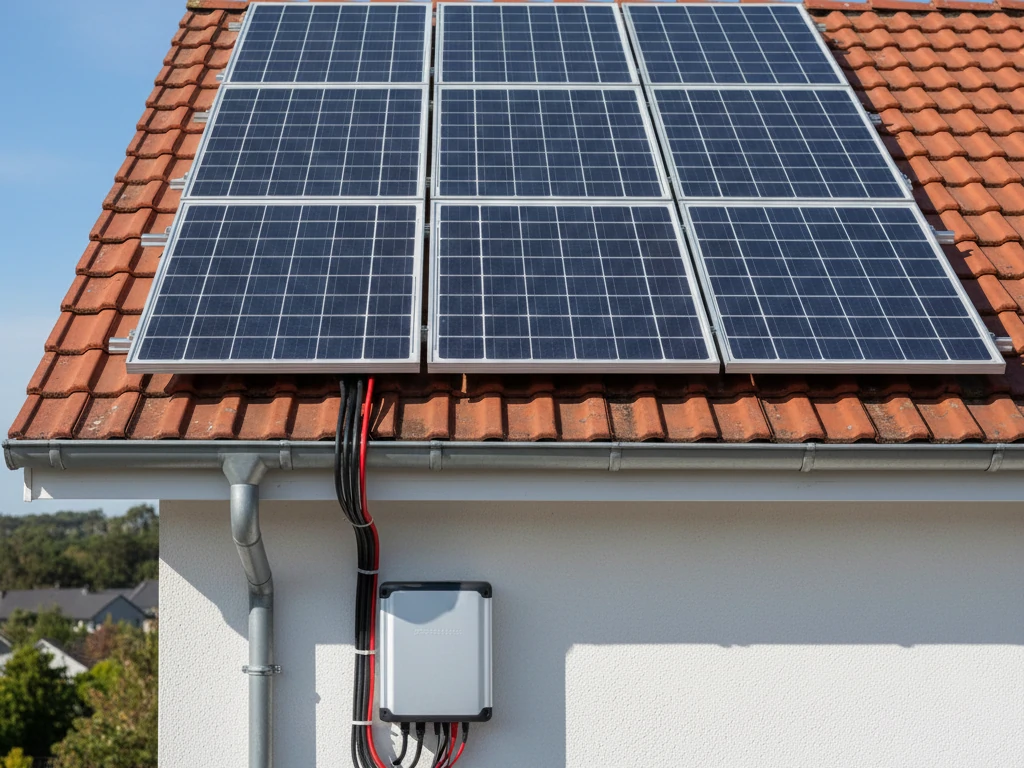
One of the most frustrating things about inverter MPPT failure is that it almost never announces itself loudly. There’s no dramatic shutdown, no obvious smoke, no instant error message. Instead, it starts quietly—small performance changes that are easy to ignore until real damage has already begun.
Recognizing these early warning signs is often the difference between a simple adjustment and a costly repair.
A classic early indicator of inverter MPPT failure is a noticeable drop in charging efficiency without any clear external cause. The weather hasn’t changed. The panels are clean. Loads are normal. Yet batteries take longer to reach the same state of charge they used to hit easily.
In many real systems, this is the first moment something feels “off.” The solar inverter is still working, but the MPPT is no longer locking onto the true maximum power point. The result is less usable energy even under good sunlight conditions.
This kind of performance loss often starts small—5% or 10%. That’s exactly why inverter MPPT failure slips under the radar so often.
Healthy MPPT behavior produces relatively stable tracking patterns. Voltage and current adjust smoothly as conditions change. When inverter MPPT failure begins, those adjustments become erratic.
You may see:
These symptoms suggest the MPPT algorithm is struggling to interpret panel data correctly. While the solar inverter may still operate, unstable tracking is a strong technical sign of inverter MPPT failure rather than a simple measurement glitch.
This is one of the most confusing warning signs for system owners. The solar inverter shows normal operation, yet the batteries barely charge—or charge inconsistently.
In practice, this happens when inverter MPPT failure prevents the system from delivering usable power at the right voltage and current. Energy exists, but it’s not being delivered efficiently where it’s needed.
Many people initially blame the batteries themselves. However, experienced technicians know that inverter MPPT failure is often the hidden cause behind “mysterious” charging problems.
Another early red flag is performance that degrades as the system heats up. Morning output may look normal, but by midday, charging efficiency drops sharply.
This pattern strongly points toward inverter MPPT failure related to thermal stress. As internal components warm up, tracking accuracy deteriorates. By late afternoon, performance may partially recover, making the issue seem inconsistent or random.
This heat-sensitive behavior is one reason inverter MPPT failure is often misdiagnosed as a weather-related issue.
Not all inverter MPPT failure symptoms are dramatic. Some systems simply produce a little less energy every day—just enough to shorten battery life and reduce overall system efficiency over time.
If your solar inverter still works but overall output feels weaker year after year, inverter MPPT failure should be considered early in the diagnostic process—not last.

Understanding why inverter MPPT failure happens is crucial if you want to prevent it. Unlike sudden component breakdowns, most MPPT problems develop gradually, often from a combination of factors that slowly undermine efficiency. Experienced system operators know that catching these causes early can save months of frustration and significant energy losses.
MPPT circuits are constantly working to track the maximum power point, and that generates heat. Over time, if your solar inverter isn’t properly ventilated or sits in a high-temperature environment, internal components can degrade.
Real-world experience shows that capacitors, transistors, and solder joints are particularly vulnerable to heat. Even a few degrees above the recommended operating range, day after day, can gradually reduce MPPT tracking accuracy, eventually leading to inverter MPPT failure.
Incorrect wiring is another frequent culprit. PV strings that exceed voltage limits, undersized cables, or loose connections can stress the MPPT stage. Brief overvoltage events may not immediately kill the system, but they can weaken circuits, causing intermittent or permanent inverter MPPT failure.
Many DIY installations unknowingly trigger these issues. A properly designed wiring layout—matching string voltage to MPPT input limits—is one of the simplest preventive measures to avoid failure.
Electrical noise might sound abstract, but it has very real consequences for MPPT performance. Poor grounding, nearby high-current devices, or fluctuating loads can introduce interference that confuses the tracking algorithm inside the solar inverter.
When voltage readings become noisy, MPPT struggles to find the real maximum power point. The result is reduced charging efficiency, erratic voltage/current behavior, and eventually inverter MPPT failure if left unaddressed.
Even in well-installed systems, time takes its toll. Capacitors dry out, sensors drift, and connections fatigue. Unlike a sudden failure, this gradual aging often shows up as subtle performance decline. MPPT algorithms become less accurate, efficiency drops, and inverter MPPT failure creeps in.
Seasoned installers often find that replacing a single aging component—like a degraded capacitor—can restore performance if the MPPT hasn’t suffered permanent damage.
Not all causes are physical. Sometimes the hardware is fine, but MPPT behavior appears faulty due to improper configuration or outdated firmware. Incorrect voltage limits, tracking mode, or timing settings can mimic inverter MPPT failure symptoms perfectly.
A controlled check of software settings is often the fastest way to determine whether the problem is real hardware failure or something that can be fixed with a reset or reconfiguration. This step is especially important because unnecessary hardware replacement can be costly and avoidable.
Diagnosing inverter MPPT failure can feel daunting at first. The tricky part is that your solar inverter might look completely normal while the MPPT stage is quietly underperforming. Experienced technicians know that a methodical, step-by-step approach often uncovers the problem faster than guessing or replacing components blindly. Here’s how to do it in the real world.
Start simple. Look at the inverter and PV connections carefully. Check for:
Even minor physical issues can cause inverter MPPT failure or worsen an existing problem. Many failures originate from small, overlooked faults that escalate over time.
Next, measure basic voltages at the PV input and output terminals. Compare them to expected values under similar sunlight conditions. Unexpected drops or spikes often point toward MPPT tracking issues rather than panel or battery faults.
One of the clearest ways to diagnose inverter MPPT failure is to compare what’s coming in from your PV array with what’s actually reaching your batteries.
For example:
This discrepancy is a hallmark of inverter MPPT failure. It tells you the solar inverter isn’t optimizing power delivery, even though panels and batteries themselves are likely fine.
Modern solar inverters often log performance metrics automatically. Reviewing historical MPPT efficiency and input/output data can reveal patterns invisible in a single-day snapshot.
Look for:
These logs help confirm whether the issue is a transient anomaly or a persistent MPPT failure.
Before declaring the MPPT stage as faulty, eliminate the obvious culprits. Inspect batteries for capacity and voltage irregularities. Verify that PV panels are clean, connected properly, and producing expected output.
In many real-world cases, a battery with poor performance or a partially shaded panel string can mimic inverter MPPT failure. Checking these first ensures you don’t misdiagnose the problem and replace the wrong component.
Following these steps allows you to confidently identify inverter MPPT failure early. Not only does this prevent long-term energy losses, but it also avoids unnecessary repairs and prolongs the life of your solar inverter.
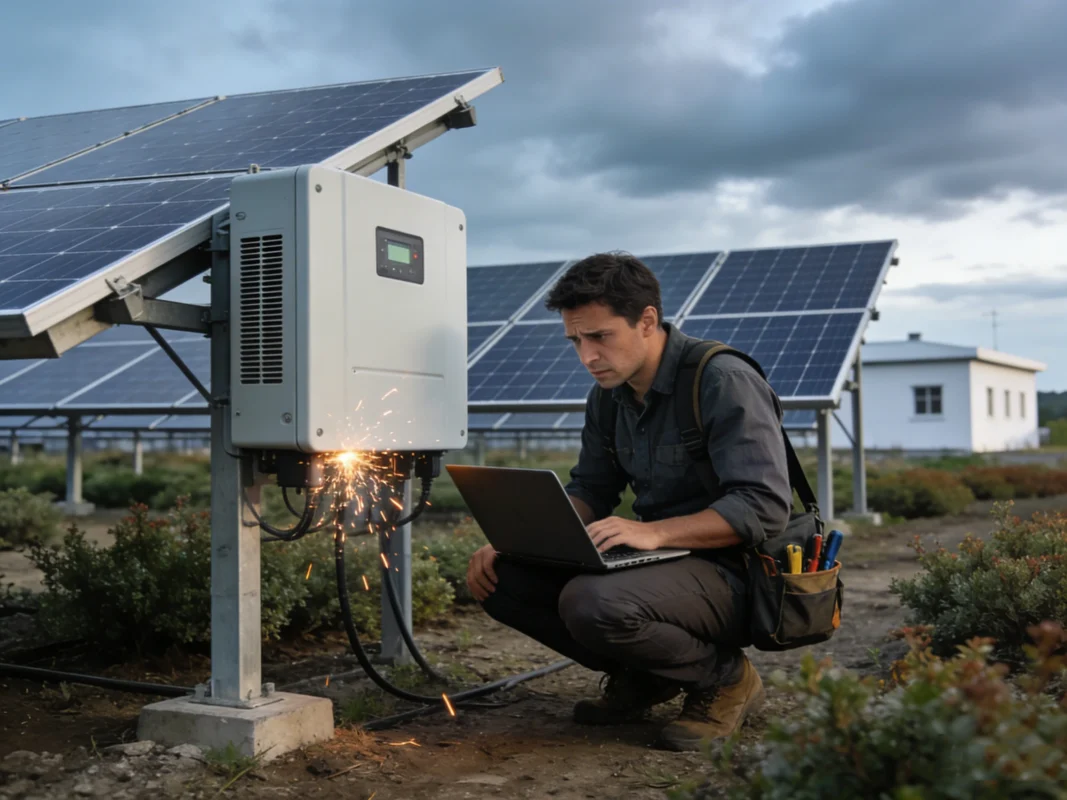
When it comes to inverter MPPT failure, knowing what to do isn’t just about reading a manual. In the field, fixes are often a combination of careful observation, practical adjustments, and preventive measures. Here’s what actually works in real-world installations.
One of the first steps when dealing with inverter MPPT failure is performing a controlled reset. Unlike a simple power cycle, this involves:
A reset can sometimes temporarily restore proper MPPT tracking by clearing logic errors or temporary glitches. While it’s rarely a permanent fix, it’s a safe and low-cost first step that every installer tries.
Incorrect configuration is a surprisingly common contributor to inverter MPPT failure. Check settings such as:
Even minor misalignments between your PV array and MPPT settings can reduce efficiency dramatically. In practice, adjusting these parameters to match actual field conditions often resolves partial MPPT failures and improves daily energy harvest.
Heat is one of the silent killers of MPPT circuits. Many solar inverter failures are accelerated by poor ventilation. Solutions include:
Improving airflow doesn’t just fix current inverter MPPT failure—it helps prevent future degradation and extends the life of the system.
Not all inverter MPPT failures can be repaired easily. Minor issues caused by loose connections, misconfiguration, or temporary heat stress can often be fixed on site.
However, permanent hardware degradation—like worn-out capacitors, damaged transistors, or burned tracking circuits—may require professional repair or replacement. Experienced technicians weigh the cost of repair against the efficiency loss of a failing MPPT stage, deciding the most economical solution for the long term.
Even after resolving an MPPT failure, routine preventive actions are key to avoiding recurrence:
By combining these real-world fixes with preventive maintenance, most inverter MPPT failure issues can be addressed effectively before they escalate into expensive, system-wide problems.
Poor MPPT tracking means improper charging profiles. Over time, this shortens battery life dramatically.
A 15% loss from inverter MPPT failure may not feel urgent—but over years, it adds up fast.
When MPPT struggles, other inverter components compensate, accelerating overall system wear.
Correct voltage design, proper cable sizing, and clean grounding dramatically reduce inverter MPPT failure risk.
Monthly performance checks can catch inverter MPPT failure long before serious damage occurs.
Dust, heat, and moisture are slow killers. Simple maintenance goes a long way.
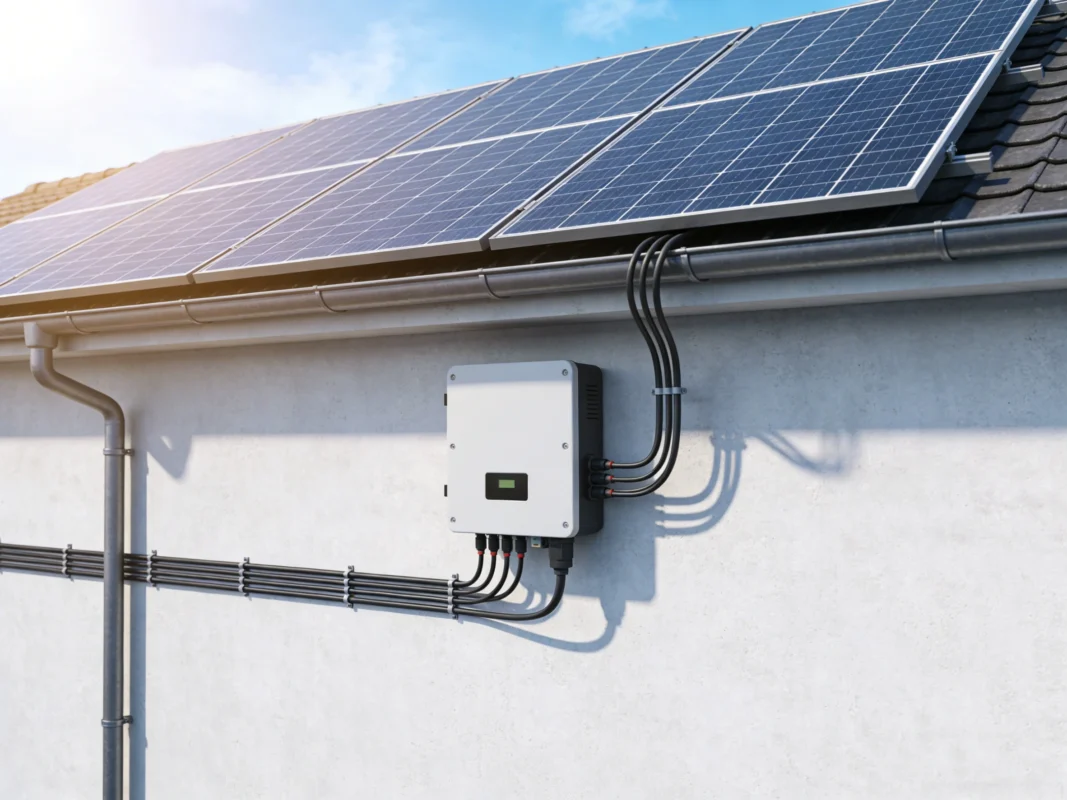
DC faults are sudden. Inverter MPPT failure is gradual. That distinction matters during diagnosis.
A shutdown is obvious. Inverter MPPT failure is subtle—and far more expensive long-term.
Because everything still “works,” inverter MPPT failure hides behind partial functionality.
A faulty MPPT often shows up as poor charging performance even when your panels are producing good voltage. Look for:
• Batteries charging slower than usual
• Fluctuating voltage or current readings on your solar inverter
• Energy yield dropping compared to previous sunny days
If multiple indicators line up, you’re likely dealing with inverter MPPT failure, rather than a panel or battery issue.
Common MPPT controller issues include:
• Overheating of internal components
• Tracking instability that prevents optimal power extraction
• Voltage or current sensor drift
• Configuration mismatches with battery or panel specifications
Each of these problems can trigger inverter MPPT failure, reducing overall system efficiency.
Under good installation and operating conditions, MPPT charge controllers typically last 8–12 years. Factors like high ambient temperature, poor ventilation, and voltage stress can shorten lifespan and increase the risk of inverter MPPT failure. Regular inspections and preventive maintenance can help maximize longevity.
To safely reset your MPPT:
1. Turn off the DC input from your PV array
2. Shut down the AC output of your solar inverter
3. Wait a few minutes for internal circuits to discharge
4. Restart the system in the correct sequence
This process can clear temporary logic glitches that mimic inverter MPPT failure. However, repeated issues often point to underlying hardware or configuration problems.
There are several possible reasons why your MPPT may not be charging:
• Misconfigured voltage or current limits
• Overheating or thermal throttling of the inverter
• Internal component degradation
• Wiring issues or electrical noise interfering with tracking
Persistent failures usually indicate inverter MPPT failure rather than a panel or battery problem. Diagnosing it early can save you from long-term energy losses and battery stress.








 Turkish
  Romanian