





Texas Solar Storage Incentives are an important planning factor for EPCs, installers, resellers, system integrators, facility owners, and commercial PV buyers evaluating commercial PV storage Texas projects. For B2B solar in TX, these incentives shape every major decision around design and financing. The opportunity is substantial: Texas has strong solar resources, large commercial loads, exposure to grid price volatility, and a power market where decentralized power TX and distributed energy resources can create value beyond simple energy offset. The challenge is that Texas does not offer a simple statewide commercial battery program, and utility rebates for TX solar vary widely by territory.
For most commercial and industrial projects, the incentive stack is built from federal tax credits, depreciation, Texas property tax exemptions solar, local utility programs, financing structures, tariff optimization, and, in some cases, ERCOT grid services and market value. That makes project qualification more complex than in states with a single battery incentive program. A warehouse in a competitive retail territory, a public facility served by a municipal utility, a manufacturing plant served by a cooperative, and a multi-site retail portfolio may all face different export rules, interconnection requirements, bill savings, and incentive pathways.For B2B solar in TX professionals, the key is to treat Texas Solar Storage Incentives as part of a broader project development process. A battery that looks attractive under one tariff may underperform under another. A system that qualifies for federal tax credits may still face interconnection delays if export controls are not documented. A project with strong demand-charge savings may lose value if the energy management system cannot dispatch accurately against interval demand peaks. Therefore, commercial PV storage Texas projects require a coordinated review of tax, electrical design, utility rules, procurement, commissioning, and lifecycle operations—including careful selection from qualified solar inverter manufacturers.This guide explains the main Texas Solar Storage Incentives categories, how they affect commercial project design, and what professional buyers should verify before procurement.
| Incentive Category | Core Definition | Main Income Source |
|---|---|---|
| Direct Incentive | One-time cash subsidy from official departments | Local utility special funds |
| Tax Incentive | Tax reduction, exemption and credit benefits | Federal ITC, property tax exemption, depreciation |
| Tariff-based Value | Cost savings brought by electricity price rules | Demand charge cut, self-consumption optimization |
| Market Revenue | Grid market participatory income | ERCOT market auxiliary service income |
| Operational Value | Non-monetary long-term operational benefits | Power supply resilience, load peak regulation |
Texas Solar Storage Incentives are best understood as a stack rather than a single program. The most material financial benefit is usually federal, while Texas-specific value often comes from Texas property tax exemptions solar, tariff design, utility programs, operational revenue, and ERCOT grid services opportunities. Commercial buyers should avoid assuming that utility rebates for TX solar available in one service territory apply elsewhere in the state. PV power generation equipment generally meets Texas property tax exemptions solar standards, while battery storage equipment needs to be reviewed comprehensively according to solar system integration degree and local county appraisal district official standards. All ERCOT grid services or demand response related revenue shall be regarded as conditional upside benefits only for fully qualified decentralized power TX and commercial systems, not included in basic benefit calculation.
For commercial PV storage Texas and battery energy storage systems, the main incentive categories generally include the federal clean energy Investment Tax Credit, possible bonus credit adders, accelerated depreciation, Texas property tax exemptions solar for qualifying solar or wind energy devices, local programs, utility rebates for TX solar where available, and economic value from avoided demand charges or improved self-consumption. Texas has no universal statewide commercial battery cash rebate, and commercial PV storage Texas project economic benefits mainly rely on federal tax policies and on-site electricity cost optimization.A simplified incentive stack for commercial solar-plus-storage projects in Texas may look like this:
| Incentive or value source | Typical relevance for commercial PV + storage | Key qualification issue |
|---|---|---|
| Federal commercial clean energy tax credit | Often the largest incentive | Ownership, eligible costs, storage capacity, labor rules, placed-in-service timing |
| Bonus credit adders | Can improve project economics | Domestic content, energy community location, documentation |
| MACRS and bonus depreciation | Important for taxable commercial owners | Tax appetite and accounting treatment |
| Texas property tax exemption | Can reduce property tax impact from eligible systems | County appraisal treatment and documentation |
| Local utility or municipal programs | Highly location-specific | Program availability, reservation rules, commercial eligibility |
| Demand-charge management | Often central for C&I storage ROI | Interval load profile and tariff design |
| ERCOT or demand response revenue | Possible for some systems | Size, metering, aggregation, registration, dispatch controls |
The practical takeaway is that incentive qualification should happen before equipment selection is finalized. EPCs should not wait until late-stage permitting to determine whether the customer has tax appetite, whether storage is standalone or solar-paired, whether the system will export, and whether local utility approval requires specific inverter or relay settings.
For many business-owned solar-plus-storage projects, the federal clean energy tax credit is the dominant incentive. Under current federal rules, qualifying energy storage property can be eligible for a commercial tax credit if it meets capacity and compliance requirements—key for commercial PV storage Texas. For commercial projects, standalone storage can qualify separately from solar, which is a major change from older project structures where battery eligibility often depended on being charged by renewable energy.
However, the headline percentage is not the whole story. The base credit, possible bonus adders, prevailing wage and apprenticeship requirements, domestic content documentation (including equipment from qualified solar inverter manufacturers), project size, ownership structure, and placed-in-service date can materially affect the final value. Commercial customers without sufficient tax liability may need to consider third-party ownership, transferability, leasing, or other financing structures to monetize the benefit efficiently.
For EPCs and developers, tax-credit documentation is not only a finance issue. It affects procurement records, labor compliance, commission charging, building electrification, process expansion, automation, and data loads can alter demand profiles significantly. Storage planning should consider future load growth, not just current bills—especially when designing decentralized power TX systems.
Texas has a fragmented electricity market. Some customers are in competitive retail areas, some are served by municipal utilities, and others are served by electric cooperatives. These differences affect interconnection, export compensation, buyback terms, demand response opportunities, and sometimes local incentive availability.
Texas has no unified net metering rules, and on-grid power settlement standards vary by region. Storage can improve project economics by increasing on-site consumption of solar generation and reducing exposure to low export compensation. It can also reduce demand charges if the system is sized and controlled against the correct billing peaks.
Local programs can be useful, but they should be treated as project-specific and time-sensitive. Reservation windows, funding caps, system size limits, commercial eligibility rules, and battery-specific requirements may change. A proposal that includes a local incentive should identify the application deadline, approval sequence, funding status, and risk if the incentive is not awarded.
Commercial solar storage projects in Texas should pass a structured qualification review before financial modeling is presented as bankable. The following checklist is intentionally practical for sales engineering, EPC design review, and owner decision-making.
| Qualification item | Why it matters |
|---|---|
| Ownership model | Determines who can claim tax credits, depreciation, and property tax benefits |
| Storage capacity and configuration | Affects tax-credit eligibility, interconnection, and dispatch value |
| Battery use case | Demand shaving, backup, self-consumption, market participation, or EV charging support require different designs |
| Utility territory and retail contract | Determines export treatment, demand charges, and local program eligibility |
| Tax appetite | Determines whether direct ownership can use federal tax benefits efficiently |
| Prevailing wage and apprenticeship compliance | May affect federal credit value for larger commercial projects |
| Export configuration | Export-capable, limited-export, and non-export systems have different interconnection paths |
| Codes and certifications | Impacts permitting, inspection, safety approval, and insurance review |
| Warranty and service structure | Affects lifecycle value, uptime, and replacement risk |
| Commissioning documentation | Supports incentive records, warranty claims, and performance verification |
A project that cannot answer these questions is not ready for final procurement. It may still be viable, but the financial model should remain preliminary.
Project-Stage Incentive Implementation Timeline
Initial qualification: Confirm tax appetite, utility territory access and basic incentive eligibility
Preliminary design: Match system capacity, pairing mode with federal tax credit rules
Interconnection and incentive reservation: Submit utility access application, lock local incentive quota
Procurement: Screen eligible equipment, sort tax-certified procurement documents
Installation and commissioning: Complete safety acceptance, confirm placed-in-service time
Post-commissioning: Submit tax declaration materials, apply for property tax exemption and settle utility benefits
| Document Type | Core Required Materials | Application Scenario |
|---|---|---|
| Tax Documents | ITC certification, cost allocation sheet, tax qualification statement | Federal tax credit, depreciation declaration |
| Utility Documents | Interconnection application, export limit scheme, metering confirmation | Grid access, electricity fee settlement |
| AHJ Documents | Fire safety report, electrical certification, installation compliance files | Site permitting, on-site inspection |
| Procurement Documents | Equipment invoice, BOM list, supplier qualification certificate | Cost verification, incentive cost confirmation |
| Commissioning Documents | Commissioning test report, as-built drawing, system operation record | Placed-in-service proof, warranty activation |
Federal incentives are central to the economics of many Texas commercial solar-plus-storage projects. They are also among the most documentation-sensitive elements of the deal. For global suppliers and EPCs entering the Texas market, it is important to understand that U.S. Tax incentives are not simple rebates. They depend on eligible property, taxpayer status, ownership structure, labor compliance, and tax reporting.
Commercial energy storage can qualify for the federal clean energy Investment Tax Credit if it meets the applicable statutory and regulatory requirements, including minimum capacity rules. For commercial projects, this is especially relevant because batteries no longer need to be paired with PV to be potentially eligible. A standalone battery serving a facility load, reducing demand charges, or participating in demand response may qualify if it meets the requirements.
| Federal ITC item | What EPCs should verify |
|---|---|
| Storage capacity | Meet federal minimum access capacity threshold |
| Credit percentage | Confirm base credit and full bonus credit ratio |
| Labor compliance | Check prevailing wage and apprenticeship record completeness |
| Ownership | Match tax benefit monetization mode with project subject |
| Eligible costs | Screen all qualified equipment and construction cost scope |
| Placed-in-service date | Lock time node to confirm current year incentive standard |
That said, EPCs should avoid giving tax advice as part of a technical proposal. The correct approach is to identify the equipment and installation scope that may be eligible, provide documentation, and recommend review by qualified tax counsel. The tax treatment of switchgear, transformers, controls, labor, site work, and shared infrastructure can be project-specific.
Project teams must confirm the official minimum storage capacity threshold as a core verification indicator before declaring tax credits. Developers need to distinguish between base tax credit ratio and full combined bonus credit structure to accurately calculate actual deductible benefits.
Prevailing wage standards and formal apprenticeship program compliance are mandatory for most medium and large-scale projects, and relevant payroll records and training files must be fully retained. Policy rules differ distinctly between projects below 1 MW installed capacity and large-scale megawatt-level projects in application scope and credit approval speed.
Common eligible cost categories cover battery containers and mounting racks, solar storage inverters, EMS energy management control systems, power transformers, high and low voltage switchgear, on-site installation labor costs, civil site construction work and complete grid interconnection auxiliary equipment.
After successfully claiming federal ITC benefits, investors will face corresponding asset basis reduction adjustments, which will affect the subsequent annual taxable income accounting. If project ownership changes or actual operational usage is altered within the tax credit recapture period, investors will face tax credit recapture risks and corresponding financial losses.
Four mainstream benefit monetization modes apply to storage projects: direct asset ownership by the investor, federal tax credit transfer transactions, elective pay policy application for qualified tax-exempt entities, and third-party asset holding and operation modes, each with different application thresholds and benefit allocation rules.
Independent energy storage projects shall be assessed in accordance with dedicated storage tax credit rules; solar-storage coupled projects need to reasonably split shared infrastructure costs, and clarify the actual operation and power consumption allocation assumptions of photovoltaic and energy storage systems.
| Responsible Role | Core Work Responsibility |
|---|---|
| EPC Contractor | Equipment eligibility confirmation, construction document sorting, interconnection standard docking |
| Tax Advisor | Equipment eligibility confirmation, construction document sorting, interconnection standard docking |
| Owner & Financier | Confirm tax bearing capacity, determine holding mode, coordinate fund scheduling |
Some commercial projects may qualify for federal bonus credit adders, such as domestic content or energy community bonuses. These adders can improve ROI, but they are not automatic. They require careful review of project location, eligible components, manufacturing origin, and federal guidance.
Domestic content bonus qualifications must be supported by complete project-level official certification documents, simple supplier promotional statements cannot be used as valid proof for tax declaration. Steel and iron structural components adopt different review standards compared with finished electrical power equipment in domestic content verification.
Battery cells, finished battery modules, installation racks, grid-tied inverters and various BOS auxiliary equipment need to sort out classified independent certification materials respectively to meet audit requirements. Energy community qualification judgment must be strictly verified based on the precise actual address of the project site.
All bonus credit benefits can only be used as provisional estimated data for financial modeling before obtaining formal written confirmation from professional tax consultants. Public institutions and non-profit purchasers adopting elective pay direct payment mode will face potential domestic content policy restrictions and phased implementation adjustment risks.
Documentation checklist for bonus adders
1.Project address certificate and official energy community zoning map certification materials
2.Complete domestic product content qualification certification package
3.Detailed project bill of materials and component origin labeling list
4.Formal manufacturer origin compliance declaration documents
5.EPC side formal procurement contract and goods delivery record vouchers
6.On-site construction labor standard compliance review records
7.Official project placed-in-service acceptance certification documents
Accelerated depreciation can materially improve after-tax economics for commercial solar-plus-storage projects. Many commercial PV and energy storage assets may be eligible for depreciation under the Modified Accelerated Cost Recovery System, commonly modeled over a five-year recovery period for qualifying energy property. Bonus depreciation rules can further affect near-term value, but the applicable rate and eligibility should be confirmed for the project year.
Depreciation should be modeled separately from tax credits. The ITC reduces upfront tax liability based on eligible costs, while depreciation affects taxable income over time. For owners with strong taxable income, the combined after-tax value can significantly reduce effective project cost. For nonprofit entities, public agencies, or businesses without sufficient tax liability, direct ownership may not capture the same value unless elective payment, transferability, or third-party structures are available and applicable.
Public institutions and non-profit organizations are not eligible to apply for commercial project accelerated depreciation policy benefits. Qualified tax-exempt entities can make full use of federal elective payment direct tax benefit acquisition policies to realize incentive monetization.
When direct tax benefit utilization is restricted, public projects can adopt third-party asset ownership or energy-as-a-service cooperation modes to obtain stable operational cost reduction benefits. Public facility construction projects need to comply with more stringent government procurement review rules and public bidding management specifications.
For public service-oriented facilities, power supply safety and emergency resilience value often outweigh pure investment return ratio indicators in project decision-making.
Commercial buyers in Texas commonly evaluate several ownership and financing approaches. The best structure depends on tax position, balance sheet priorities, resilience requirements, operating control, and portfolio scale.
| Buyer situation | Likely structure to evaluate |
|---|---|
| Strong tax appetite and capital budget | Direct independent investment and operation |
| limited tax appetite | Tax credit transfer cooperation mode |
| public/nonprofit owner | Elective pay + energy service agreement |
| multi-site portfolio | Unified asset aggregation financing |
| resilience-first buyer | Self-owned reserve power independent construction |
For battery systems, the financing agreement should address dispatch authority. If a system is intended to reduce demand charges, provide backup, and participate in grid programs, the contract must define which use case has priority. A battery reserved for resilience cannot simultaneously discharge fully for market revenue if an outage occurs afterward. This operational hierarchy should be built into both the financial model and the energy management system.

The most common misconception about Texas Solar Storage Incentives is that the state offers a universal battery rebate. It does not. Texas can still be a strong market for commercial solar-plus-storage, but the value comes from a combination of tax treatment, local programs, electricity market structure, and avoided costs.
Texas has no official unified statewide commercial solar battery rebate policy. Its core commercial project profit sources are federal investment tax credits, accelerated depreciation policies, Texas local property tax exemption rules, regional utility customized policies and actual electricity bill cost savings.
This is important for proposal accuracy. If a commercial buyer asks for a “Texas solar tax credit for businesses,” the answer should distinguish between state and federal incentives. The most significant tax credit is federal, not a Texas state income tax credit. Texas does not have a personal or corporate income tax system equivalent to states that offer state-level solar tax credits. However, the state’s property tax exemption for qualifying renewable energy devices can be meaningful, especially for larger commercial systems.
For EPCs, the safest proposal language is to state that statewide battery rebates are not generally available, while federal incentives and local opportunities may apply subject to eligibility. This avoids overstating benefits and protects the commercial relationship during diligence.
Texas provides a property tax exemption for certain solar or wind-powered energy devices. The whole set of exemption review and approval work is uniformly undertaken by local county appraisal districts. Project owners need to submit special formal exemption application documents to complete the approval process. This exemption policy is mainly aimed at the newly increased appraised value of qualified wind and solar renewable energy power generation equipment after installation.
If battery supporting energy storage equipment needs to apply for property tax exemption together, it is necessary to sort out independent special supporting verification documents separately. County appraisal departments usually require applicants to provide equipment procurement invoices, project cost segregation statements, detailed equipment parameter descriptions, complete system design drawings and formal project commissioning acceptance records as review materials. EPC contractors need to organize and deliver complete property tax exemption declaration document packages to customers uniformly after project final acceptance.
Commercial owners should confirm the filing process with the county appraisal district before construction and that EPCs should provide a cost breakdown separating PV modules, inverters, battery equipment, controls, labor, and shared electrical infrastructure. For commercial property owners, this can help prevent the eligible renewable energy improvement from increasing the taxable appraised value of the property. On large C&I projects, avoiding incremental property tax can improve long-term economics, especially where local tax rates are high.
The treatment of battery storage should be handled carefully. If storage is integrated with a solar energy system, there may be a stronger argument that it is part of the qualifying renewable energy device, but county appraisal practices and project documentation can matter. Standalone storage may require closer review. Commercial owners should consult the county appraisal district and tax advisors before assuming the battery portion will receive the same treatment as PV equipment.
The application process typically requires documentation showing the nature of the system, its installation, and its qualifying purpose. EPCs can support the owner by providing equipment descriptions, single-line diagrams, site plans, commissioning records, and cost breakdowns. For multi-site portfolios, standardizing this documentation can reduce administrative delays.
Local programs in Texas vary widely. Municipal utilities, electric cooperatives, and competitive retail providers may offer solar buyback options, demand response programs, load management incentives, or pilot programs for distributed energy resources. Some programs may support PV directly but not batteries. Others may require storage to be paired with solar, enrolled in a demand response program, or controlled during peak events.
Local Incentive Verification Template
Utility name, service territory, commercial user eligibility standard, incentive type, whether energy storage equipment is qualified for application, whether photovoltaic matching installation is mandatory, maximum accessible system capacity, maximum single-project incentive amount, incentive application deadline, on-grid surplus electricity settlement method, current policy effective status and verification completion date
| Field to verify | Example of why it matters |
|---|---|
| commercial eligibility | Distinguish industrial and commercial user access thresholds |
| battery eligibility | Avoid invalid design that cannot obtain storage subsidies |
| reservation requirement | Prevent quota saturation leading to incentive loss |
| export compensation | Optimize on-site consumption ratio according to settlement rules |
| demand response enrollment | Reserve grid peak regulation income access space |
| program expiration | Lock effective policy cycle to control project schedule |
Because these programs change, EPCs should verify the current rules before including any local incentive in a proposal. The verification should cover commercial eligibility, system size limits, battery requirements, export compensation, metering, application deadlines, funding availability, pre-approval requirements, and post-installation inspection rules.
A common project risk is assuming that a commercial customer will receive the same treatment as a residential customer. In many service territories, residential solar programs are more visible, while commercial programs are limited, performance-based, or capacity-constrained. Commercial PV buyers should request written confirmation of program eligibility before contract execution if the incentive is material to payback.
Texas does not have a single statewide net metering mandate. This has major implications for C&I solar storage ROI. In some cases, exported solar generation may be credited at a rate well below the customer’s retail energy price. In other cases, export terms depend on the retail electricity contract, the utility’s distributed generation rules, or a negotiated arrangement.
Common on-grid surplus electricity settlement structures in Texas include: no export power permitted, permitted export without any economic compensation, cost avoidance settlement or wholesale electricity price index settlement, retail electricity bill credit offset, formal retail power supplier repurchase mechanism, customized commercial surplus electricity negotiation agreement, exclusive electricity price settlement rules formulated by municipal utilities and electric cooperatives.
| Export scenario | Storage implication |
|---|---|
| No export allowed | Prioritize full on-site consumption design |
| Low wholesale export credit | Maximize peak load shifting function |
| Retail buyback available | Appropriately expand reasonable grid-connected scale |
| Demand charges dominate bill | Focus on peak shaving energy storage configuration |
| Export requires study | Reserve adjustable power control space |
Storage can improve the economics of commercial PV by shifting solar energy from low-value export periods to higher-value on-site consumption periods. This is especially relevant for facilities with afternoon or evening loads, poor export compensation, or demand charges. However, storage should not be added automatically to every PV system. A site with strong daytime load matching and minimal demand charges may not need a large battery. A facility with sharp demand spikes, cold storage compressors, process loads, or EV charging may benefit substantially from targeted battery dispatch.
The key analytical tool is interval data. At least 12 months of 15-minute or hourly load data should be reviewed where available. Utility bills alone often hide the shape of demand peaks, which is where commercial battery value is created or lost.
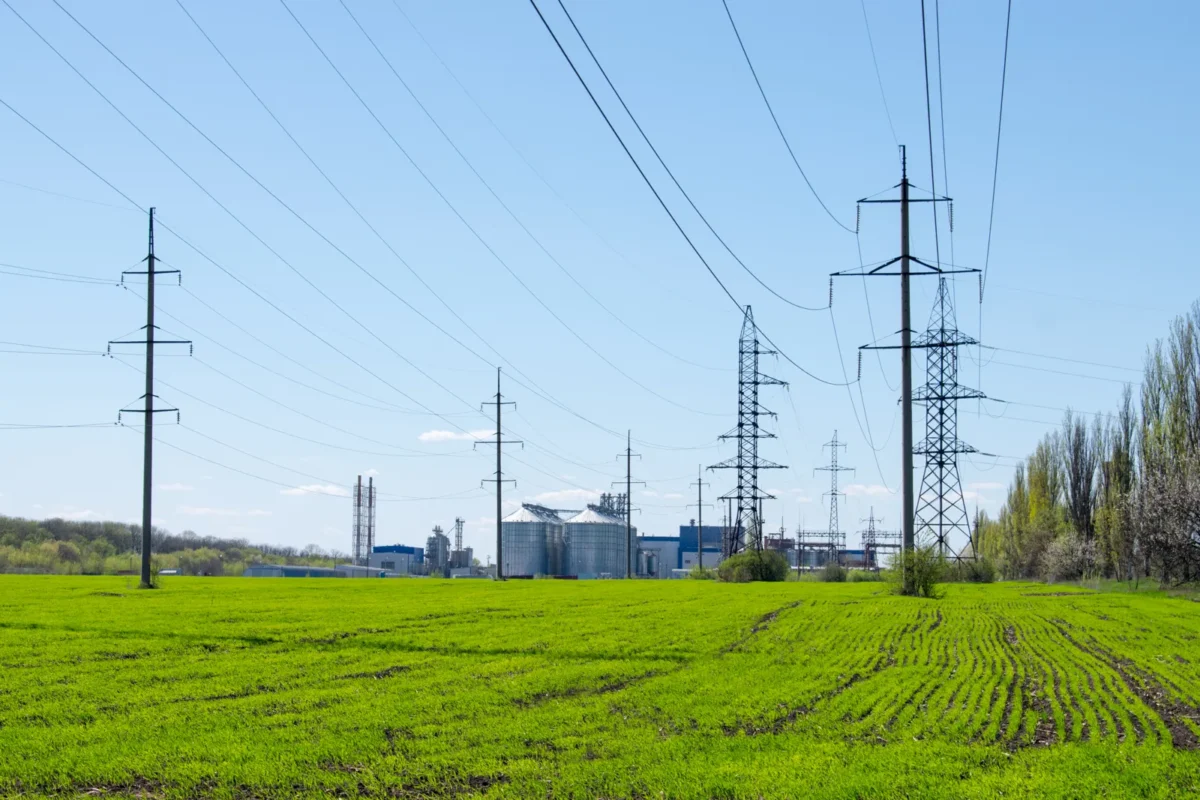
Commercial storage incentive eligibility and project economic benefits are closely linked to grid interconnection approval, on-grid power configuration and intelligent dispatching operation performance.
Texas solar-plus-storage projects operate within a complex grid environment. Some commercial systems remain purely behind the meter. Others may export energy, participate in demand response, or connect through aggregators to market programs. The interconnection and compliance pathway should be established early because it affects equipment selection, protection design, controls, metering, and commissioning.
Interconnection requirements differ depending on service territory, system size, export capability, and whether the project is located in a competitive retail area, municipal utility area, or cooperative service area. There are clear differences in review standards between distribution network level conventional interconnection and ERCOT wholesale market main body participation access modes.
Review procedures are divided into three major categories corresponding to competitive retail power service areas, municipal public utility management areas and rural electric cooperative service areas respectively. Before formal application, projects need to confirm clear positioning: pure behind-the-meter self-use system, surplus power export system, zero external power output system, electricity bill settlement-only system or formal registered market schedulable resource.
Before procurement, EPCs should evaluate transformer capacity, service entrance limitations, short-circuit duty, protection coordination, export settings, utility application timelines, and whether witness testing is required. Core interconnection review items cover complete electrical one-line design drawings, project site general layout plan, grid-tied inverter official qualification certification, power system protection fixed value setting scheme, on-grid power output limit setting specification, special utility side isolation switch configuration, on-site electric energy metering equipment renovation plan and project liability insurance purchase certificate.
| Interconnection document | Why it matters |
|---|---|
| one-line diagram | Confirm overall electrical safety topology |
| export-control narrative | Clarify on-grid power limit execution standard |
| inverter certification | Meet utility grid access equipment qualification |
| protection settings | Avoid grid safety linkage failure risks |
| commissioning test plan | Standardize official grid-connected acceptance process |
Battery systems can complicate interconnection because they may import, export, charge from PV, charge from the grid, or operate in islanded mode depending on design.
A common mistake is selecting equipment before confirming interconnection constraints. If the utility requires limited export or specific anti-islanding functions, the chosen inverter, relay, and energy management system must support those requirements. Retrofit changes after equipment delivery can be expensive and delay commissioning.
Commercial battery systems can be designed as export-capable, limited-export, or non-export assets. Export-capable systems may sell or send energy to the grid when allowed, but they often face more detailed interconnection review. Limited-export systems cap grid export to a specified threshold using controls, relays, and metering. Non-export systems are designed to serve on-site loads only and prevent energy from flowing back to the grid.
Limited-export and non-export designs can reduce interconnection complexity, but they require precise commissioning. The control system must respond quickly enough to load changes, PV fluctuations, and battery dispatch commands. If export limits are violated during testing or operation, the utility may require corrective action or restrict operation.
For larger projects, grid impact studies may evaluate voltage, protection, thermal loading, and power quality. EPCs should plan for these timelines in the project schedule, especially when switchgear, transformers, or utility upgrades have long lead times.
Battery energy storage systems are subject to electrical, fire, and building safety requirements. Battery energy storage systems are subject to electrical, fire, and building safety requirements under NFPA 855 (2023 Edition), the Standard for the Installation of Stationary Energy Storage Systems.Relevant compliance topics include UL 9540 system listing, UL 9540A thermal runaway testing data, NFPA 855 energy storage installation requirements, National Electrical Code provisions, IEEE 1547 interconnection requirements, labeling, disconnects, ventilation, emergency shutdown, fire separation, and authority-having-jurisdiction approval.
UL 9540 complete system listing filing documents, UL 9540A thermal runaway risk test official report or manufacturer standardized summary document, NFPA 855 full standard compliance comparison matrix, special project fire safety design plan, on-site emergency accident response disposal plan, complete safety sign layout documents, equipment fire safety spacing design plan, equipment ventilation and thermal management compliance documents, fire suppression system configuration description, battery core chemical attribute detailed explanation, system emergency power cut-off operation specification and emergency rescue personnel site access planning scheme.
For Texas commercial installations, heat exposure is an additional design issue. Outdoor battery enclosures should be evaluated for temperature ratings, thermal management, derating behavior, dust exposure, stormwater risk, and service access. A system that performs well in a laboratory rating may deliver less usable capacity during extreme summer conditions if thermal controls are undersized or poorly maintained.
Documentation quality can materially affect permitting and inspection timelines. AHJs and fire officials may request installation manuals, safety data, emergency response plans, spacing diagrams, signage details, and commissioning procedures. EPCs that prepare these packages early reduce rework and improve customer confidence.
Commercial batteries can participate in multiple ERCOT market business paths including user-side demand response services, grid emergency power response services, formal load resource grid connection registration, third-party qualified market aggregator unified access, power grid auxiliary service provision, controllable load centralized scheduling and distributed energy resource cluster aggregation operation modes.
To join ERCOT market projects, commercial energy storage needs to meet unified technical access requirements including professional remote data telemetry and high-precision electric energy metering equipment configuration, minimum single-project installed capacity or cluster aggregation scale threshold, and need to reasonably avoid functional conflicts between facility backup power reserve functions and market unified scheduling power discharge requirements.
| ERCOT-related opportunity | Best-fit project type | Key barrier |
|---|---|---|
| Demand response | Large industrial load enterprise | Peak-time usage constraint |
| Aggregated DER program | Multi-site chain commercial projects | Unified dispatching management difficulty |
| Ancillary services | Medium and large independent energy storage stations | Market access registration threshold |
| Emergency programs | Public service supporting facilities | Startup response speed requirement |
Some commercial batteries may access additional value through demand response, aggregation, ancillary services, or wholesale market participation. However, this should not be assumed for every behind-the-meter system. Participation depends on size, metering, telemetry, dispatch controls, registration, market rules, and the involvement of qualified market participants.
For most C&I projects, the first financial model should focus on on-site value: demand charge reduction, energy arbitrage under the retail tariff, solar self-consumption, resilience, and avoided generator runtime. ERCOT-related revenue can then be modeled as an upside case if the system can meet technical and market requirements.
This conservative approach protects both EPCs and customers. Ancillary service prices can change, and market access may require operational commitments that conflict with backup reserve or demand-charge management. A battery cannot be valued as if it will always be fully available for every revenue stream at the same time.
Battery sizing is where incentive-driven projects either become operationally sound or financially weak. A tax credit can reduce cost, but it does not correct poor sizing. For commercial PV systems in Texas, storage should be designed around load behavior, tariff value, interconnection limits, and customer operating priorities.
Commercial batteries should be sized from interval load data, not simply from PV capacity. A 1 MW PV system does not automatically require a 1 MWh, 2 MWh, or 4 MWh battery. The right capacity depends on the duration and timing of demand peaks, PV production profile, export compensation, backup requirements, and the customer’s operating schedule.
For demand charge management, the battery must have enough power output to reduce peak demand and enough energy capacity to sustain discharge across the billing interval. If peaks last only 15 to 30 minutes, a high-power shorter-duration system may work. If peaks extend for several hours during late afternoon operations, a longer-duration battery may be required. For resilience, sizing should begin with critical loads and required backup duration rather than bill savings.
A practical sizing study should compare multiple scenarios. One scenario may optimize for lowest payback period. Another may reserve energy for backup. A third may prioritize limited export compliance. The chosen design should reflect the customer’s business priorities, not only the highest spreadsheet IRR.
AC-coupled and DC-coupled architectures can both work for Texas commercial PV. The right choice depends on whether the project is a retrofit or new build, how the PV and battery will be dispatched, and how interconnection capacity is constrained.
| Design factor | AC-coupled storage | DC-coupled storage |
|---|---|---|
| Best fit | Retrofits and flexible control | New solar-plus-storage builds |
| PV and battery control | Separate inverter systems | Shared DC-side integration |
| Expansion flexibility | Often easier for existing PV sites | May require more integrated design |
| Clipping recovery | Less direct | Can capture some clipped PV energy |
| Interconnection planning | May increase AC equipment count | Can optimize shared inverter capacity |
| Commissioning complexity | More devices to coordinate | More integrated controls to validate |
AC-coupled systems are often attractive for existing commercial PV customers because storage can be added without redesigning the entire PV array. DC-coupled systems may offer efficiency and clipping-recovery advantages in new projects, especially where PV oversizing and inverter capacity are optimized together. However, DC-coupled systems require careful coordination between PV, battery, inverter, and controls suppliers.
Commercial decision-makers should look beyond headline battery capacity. A battery advertised with a nominal kWh value may have lower usable capacity after depth-of-discharge limits, temperature derating, warranty constraints, and degradation are considered. The power rating also matters. A battery with high energy capacity but insufficient kW output may not reduce demand peaks effectively.
Key technical metrics include usable kWh, continuous and peak kW output, C-rate, round-trip efficiency, cycle life, depth of discharge, thermal operating range, capacity retention, and warranty throughput. In Texas, temperature derating and HVAC energy consumption should be reviewed carefully for outdoor systems.
| Metric | Why it matters for C&I projects |
|---|---|
| Usable capacity | Determines actual discharge energy available for operations |
| Power rating | Determines ability to reduce demand peaks or support critical loads |
| Duration | Aligns battery output with peak length or backup requirement |
| Round-trip efficiency | Affects energy arbitrage and solar shifting value |
| Degradation curve | Impacts long-term savings and replacement planning |
| Warranty throughput | Limits how aggressively the battery can be cycled |
| Temperature range | Critical for Texas outdoor performance |
A robust financial model should include degradation and end-of-warranty capacity assumptions. If the model assumes year-one performance for 15 years, payback and lifecycle value will be overstated.
Commercial solar-plus-storage systems rely on coordination between PV inverters, battery inverters, the battery management system, the energy management system, utility meters, and sometimes building management systems. Compatibility is not a minor integration detail; it determines whether the battery can deliver the value promised in the proposal.
The EMS must understand the tariff, monitor site load in real time, forecast PV production where relevant, preserve backup reserve if required, and control dispatch within interconnection limits. For demand-charge management, response speed and metering accuracy are essential. For limited-export systems, the EMS must prevent export violations under fast load changes.
Monitoring should also support O&M. Remote diagnostics, alarm visibility, state-of-health reporting, cell temperature data, inverter performance, and dispatch history are necessary for warranty claims and performance verification. For resellers and EPCs managing multiple sites, standardized monitoring reduces service cost and improves fleet-level visibility.
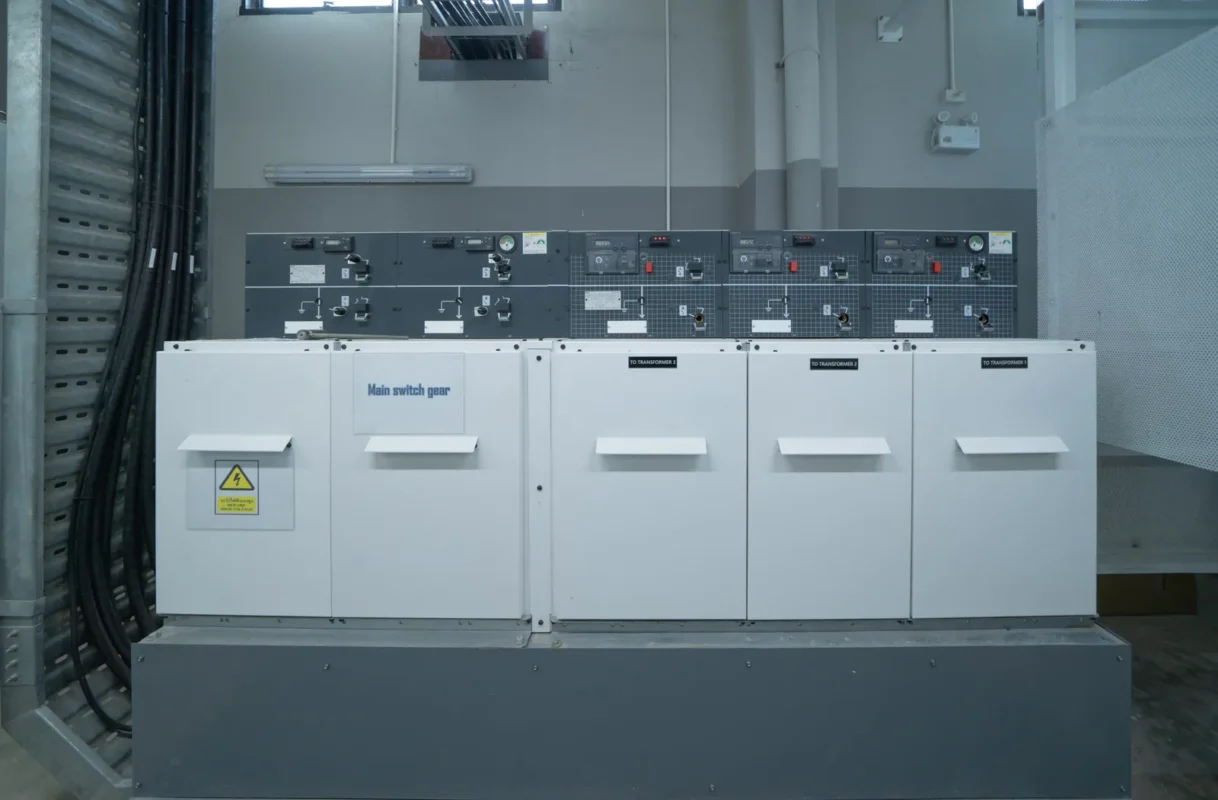
Incentives improve project economics, but they do not replace site-specific modeling. Commercial battery ROI in Texas depends heavily on tariff design, operating behavior, tax monetization, and system performance. A project should be evaluated on both first-cost reduction and lifecycle value.
Demand charges are often the most important behind-the-meter value stream for C&I batteries. A battery can reduce the customer’s billed peak demand by discharging during peak intervals. However, this only works if the system predicts and responds to the correct peaks.
Some facilities have predictable peaks, such as scheduled manufacturing shifts or recurring HVAC loads. Others have irregular peaks caused by equipment startup, refrigeration cycles, fleet charging, or tenant behavior. The more unpredictable the peak, the more sophisticated the control strategy must be.
Tariff review should include energy charges, demand charges, time-of-use periods, ratchets, power factor penalties, standby charges, export credits, and contract terms. In competitive retail areas, the retail supply contract can be as important as the utility delivery tariff. EPCs should request complete bills and interval data before estimating savings.
A commercial solar-plus-storage financial model should separate gross project cost, federal tax credits, depreciation benefits, local incentives, O&M costs, financing costs, battery augmentation or replacement risk, energy savings, demand-charge savings, and resilience value. Blending all benefits into a single “savings” number can obscure risk.
A simplified modeling structure may include:
| Model input | Typical treatment |
|---|---|
| Gross CAPEX | PV, battery, inverters, BOS, labor, engineering, interconnection |
| Federal tax credit | Applied to eligible costs if owner qualifies |
| Depreciation | Modeled as after-tax benefit over applicable recovery period |
| Property tax treatment | Modeled as avoided incremental tax where applicable |
| Local incentives | Included only after eligibility and funding are verified |
| O&M | Annual inspections, software, monitoring, corrective maintenance |
| Battery degradation | Reduced capacity and performance over time |
| Financing | Interest, lease payments, PPA rate, or service fee |
| Avoided costs | Energy, demand charges, outage costs, generator fuel |
| Residual value | Conservative end-of-term assumption |
For customer-facing proposals, it is useful to show a base case, downside case, and upside case. The base case should rely on verified incentives and on-site savings. Upside cases may include market participation or future tariff changes, but they should be clearly labeled.
Levelized cost of energy and levelized cost of storage can help compare system configurations, especially in portfolio planning. LCOE is useful for PV generation cost. LCOS is useful for comparing battery dispatch value across different durations, chemistries, and cycling patterns.
For storage, LCOS should account for installed cost, usable capacity, round-trip efficiency, cycle life, degradation, maintenance, inverter replacement, augmentation, warranty coverage, and financing. A lower-cost battery with limited throughput may have a higher lifecycle cost if it cannot support the required cycling strategy. Similarly, a system with strong warranty terms but poor controls may fail to capture expected demand savings.
Professional buyers should avoid comparing batteries solely on installed dollars per kWh. For commercial applications, dollars per usable warranted kWh delivered over the life of the system is often a more meaningful metric.
Resilience is a real economic driver for many Texas commercial facilities, but it should be modeled separately from utility-bill savings. Cold storage, food processing, healthcare-adjacent facilities, data operations, logistics centers, security systems, and manufacturing lines may face high outage costs. For these customers, the value of backup power may justify battery capacity that would not be selected for demand-charge savings alone.
However, resilience design requires different assumptions. The system must identify critical loads, transfer requirements, islanding capability, generator integration, black-start needs, and backup duration. A battery designed only for grid-tied demand shaving may not provide backup during an outage unless the electrical architecture supports islanded operation.
For many facilities, the optimal resilience solution is a hybrid approach: PV, battery storage, controls, and existing standby generation coordinated to reduce fuel use and extend backup duration. The incentive model should not obscure the operational requirement.
For EPCs, resellers, and system integrators, procurement decisions affect incentive compliance, permitting, warranty risk, and long-term service cost. Texas commercial projects often operate in harsh environmental conditions, and large C&I customers expect professional documentation and support.
Battery supplier evaluation should go beyond upfront price. Commercial buyers should review warranty length, capacity retention guarantees, throughput limits, operating temperature exclusions, maintenance requirements, response times, replacement logistics, and financial stability. A low-cost battery can create lifecycle risk if warranty claims are difficult to process or replacement parts are unavailable.
The warranty should align with the intended use case. A battery cycled daily for demand-charge management and energy shifting may consume warranted throughput faster than a battery used primarily for backup. If the project also participates in demand response or market programs, cycling assumptions should be reviewed against warranty limits.
For EPCs building repeat business, serviceability matters. Modular replacement, remote diagnostics, local technical support, spare parts availability, and clear commissioning procedures can reduce O&M cost and improve customer satisfaction.
Documentation readiness is a procurement requirement, not an administrative afterthought. Commercial battery systems should be supported by applicable safety listings, test reports, installation manuals, single-line diagram templates, fire safety documentation, commissioning procedures, and AHJ-ready submittal materials.
Permitting delays often occur when documentation is incomplete or inconsistent. If the battery enclosure spacing differs between the installation manual and site plan, or if fire safety documentation is not available, the AHJ may delay approval. Similarly, utility interconnection review may require inverter settings, protection functions, and export-control descriptions before authorization to operate.
A well-prepared procurement package reduces installer rework and helps protect incentive timelines. Placed-in-service documentation, commissioning records, and equipment invoices should be retained for tax and warranty purposes.
Texas commercial projects can face long lead times for batteries, inverters, switchgear, transformers, metering equipment, and communications hardware. EPCs should coordinate procurement with interconnection milestones rather than assuming equipment can be substituted easily late in the process.
Weather and site conditions also matter. Summer heat can affect installation productivity and commissioning schedules. Storm-season planning may be necessary for outdoor equipment delivery and storage. For multi-site portfolios, logistics should account for staggered utility approvals, local permitting differences, and crew availability.
Global suppliers serving the Texas market should prepare documentation for U.S. electrical standards, fire code review, and utility interconnection requirements. A technically strong product may still face adoption barriers if submittals are not formatted for local engineering and permitting workflows.
For resellers and channel partners, the strongest opportunities are not generic battery sales. They are consultative applications where storage solves a defined commercial problem. High-value segments include existing PV customers with poor export compensation, facilities with significant demand charges, resilience-sensitive businesses, EV fleet charging sites, and customers planning future electrification.
The qualification conversation should begin with bills, interval data, operating schedules, outage exposure, and facility growth plans. Product selection comes later. This approach improves close rates and reduces the risk of installing batteries that do not meet customer expectations.
A commercial battery project is not complete when equipment is installed. Commissioning quality and O&M discipline determine whether the system qualifies for incentives, meets warranty requirements, and delivers expected performance.
Site assessment should evaluate available space, structural loading, access clearance, fire separation, flood exposure, security, ventilation, electrical room capacity, service equipment ratings, and proximity to critical loads. Outdoor systems should be reviewed for heat exposure, drainage, bollard protection, corrosion risk, and maintenance access.
For rooftop installations, structural loading and fire access are critical. For ground-mounted or pad-mounted systems, civil work, fencing, conduit routing, and transformer location can affect both cost and approval timelines. For indoor systems, ventilation, fire detection, and emergency access may be more complex.
Early site review reduces redesign risk. It also helps determine whether the intended battery size is practical or whether the financial model needs to be adjusted for site constraints.
Commissioning should validate electrical installation, inverter settings, EMS configuration, battery management functions, export controls, metering accuracy, communications, monitoring activation, emergency shutdown, and utility witness testing where required. The commissioning process should also document the placed-in-service date and confirm that the system operates as intended.
A professional commissioning package should include as-built drawings, test results, equipment serial numbers, firmware versions, settings files, inspection records, photos, and customer training documentation. These records support warranty claims, tax documentation, performance verification, and future troubleshooting.
For limited-export systems, commissioning should include export-control testing under realistic operating conditions. For backup systems, islanding and transfer functions should be tested according to the approved design and safety requirements.
Battery O&M includes routine inspections, thermal system checks, software updates, alarm review, state-of-health monitoring, capacity testing, inverter maintenance, enclosure inspection, and communications verification. The O&M plan should define response times, spare parts strategy, data access, and escalation procedures.
Long-term service costs should be included in the financial model. A project that ignores O&M may show an attractive payback on paper but underperform due to downtime, unresolved alarms, or degraded capacity. For C&I customers, uptime is often as important as theoretical savings.
Remote monitoring is particularly valuable for multi-site portfolios. Fleet-level analytics can identify underperforming sites, control issues, and abnormal degradation before they become major failures.
Battery safety should be addressed during design, installation, and operations. Thermal runaway risk management, emergency shutdown procedures, fire department coordination, signage, ventilation, access control, and emergency response plans should be specific to the site and technology.
Local emergency responders may request information on battery chemistry, enclosure layout, shutoff locations, fire suppression approach, and isolation procedures. EPCs should provide clear documentation and owner training. Safety planning is not only a compliance issue; it protects the facility, personnel, and long-term insurability of the asset.

Many commercial buyers in Texas are not evaluating one facility in isolation. Retail chains, logistics operators, manufacturers, public entities, and real estate owners may consider multi-site solar-plus-storage deployments. Portfolio standardization can reduce soft costs and improve decision quality, but only if local differences are handled correctly.
A portfolio approach should use repeatable templates for utility territory review, tax-credit eligibility, property tax documentation, tariff modeling, interconnection requirements, permitting documents, and O&M planning. This allows decision-makers to compare sites consistently while still accounting for local variation.
For example, two warehouses may have similar roof space and load profiles, but different retail contracts and export compensation. One may justify storage for demand-charge management, while the other may prioritize PV-only economics. Standardized evaluation helps prevent overgeneralization and supports better capital allocation.
Commercial facilities are changing. EV charging, building electrification, process expansion, automation, and data loads can alter demand profiles significantly. Storage planning should consider future load growth, not just current bills.
Modular battery systems, inverter capacity planning from trusted solar inverter manufacturers, switchgear sizing, conduit pathways, and EMS expandability can reduce future retrofit cost. Even if a customer installs a smaller battery initially, designing the electrical infrastructure for expansion may be cost-effective for commercial PV storage Texas. Future PV additions should also be considered. If roof or land area allows additional solar, the storage architecture should not block later capacity growth. This is particularly important for industrial sites and logistics facilities with phased electrification plans and decentralized power TX goals.Controls readiness for DER aggregation and virtual power plants
Future value may depend on controllability. Advanced metering, secure communications, open protocols, EMS flexibility, and dispatch integration can improve optionality for demand response, aggregation, virtual power plant participation, and ERCOT grid services. Even if today’s economics are primarily behind the meter, designing for future control capabilities can preserve long-term value for decentralized power TX. However, cybersecurity and operational authority should be addressed. A commercial owner needs to know who can dispatch the battery, under what conditions, and how backup reserve or demand-charge objectives are protected. Control rights should be reflected in contracts, not left to assumptions—critical for commercial PV storage Texas asset owners.How can commercial owners avoid incentive delays or disqualification?
Commercial owners can reduce Texas Solar Storage Incentives risk by confirming eligibility before contract signing, documenting equipment certifications (including solar inverter manufacturers listings), verifying ownership and tax structure, reserving local incentives where applicable, aligning installation timelines with tax-credit requirements, and maintaining commissioning records. For B2B solar in TX, EPCs should build incentive review into the project development schedule. Tax counsel, utility interconnection specialists, finance teams, and engineering teams should coordinate early. The most costly incentive problems often arise when procurement, tax planning, and interconnection are handled in separate silos—especially for commercial PV storage Texas and decentralized power TX projects.
Texas has no unified statewide commercial battery cash rebate, with no universal utility rebates for TX solar available statewide.Business investors can leverage federal policies covered under Texas Solar Storage Incentives to lower project costs.Local Texas property tax exemptions solar also bring steady cost-saving advantages for local projects.Reasonable power consumption optimization boosts profit gains for commercial PV storage Texas systems.These mature solutions are highly favored by practitioners engaged in B2B solar in TX fields.Project owners can rely on multiple auxiliary benefits to improve overall investment returns.
Standalone storage meeting standards can apply for federal tax credits per Texas Solar Storage Incentives rules. Operators need to verify conditions in advance to ensure commercial PV storage Texas projects meet requirements. Consult professionals to clarify Texas property tax exemptions solar and tax credit application regulations. Sort out project relevant costs and qualifications to lay groundwork for decentralized power TX layout. Complete labor norms and project documents to satisfy ERCOT grid services access basic conditions. Refer to materials provided by solar inverter manufacturers to finish full qualification preparation work.
Texas lacks unified statewide net metering rules under Texas Solar Storage Incentives guidance. Surplus power settlement standards differ greatly among various decentralized power TX facilities.Local power providers and signed utility rebates for TX solar agreements decide specific compensation rules. Rules from different departments will create obvious benefit gaps for commercial PV storage Texas projects. Equipped storage systems lift self-power usage rate for regular B2B solar in TX deployment projects. It can effectively avoid low returns caused by unfavorable ERCOT grid services power export prices.
Design battery capacity referring to actual operation data of commercial PV storage Texas projects. Analyze enterprise power usage data first following Texas Solar Storage Incentives planning direction. Match proper specifications combining electricity price rules for building complete decentralized power TX setups. Reserve emergency power function if needed to support subsequent ERCOT grid services participation. Avoid only referring to panel parameters and solar inverter manufacturers data for blind matching. Combine practical demands and economic benefits to confirm suitable standards for B2B solar in TX projects.
Qualified batteries can gain extra proceeds via ERCOT grid services in line with incentive policies. Scale, metering and other conditions restrict the market access of commercial PV storage Texas devices. Large-scale standardized decentralized power TX equipment is more eligible for grid market cooperation. Finish formal registration and data statistics to obtain utility rebates for TX solar and grid related income. Reliable devices from professional solar inverter manufacturers guarantee stable system operation. B2B solar in TX investors shall prioritize on-site savings instead of over-relying on external market earnings.
https://comptroller.texas.gov/taxes/property-tax/exemptions/solar-wind.php
https://www.nfpa.org/codes-and-standards/nfpa-855-standard-development/855










 Turkish
  Romanian