



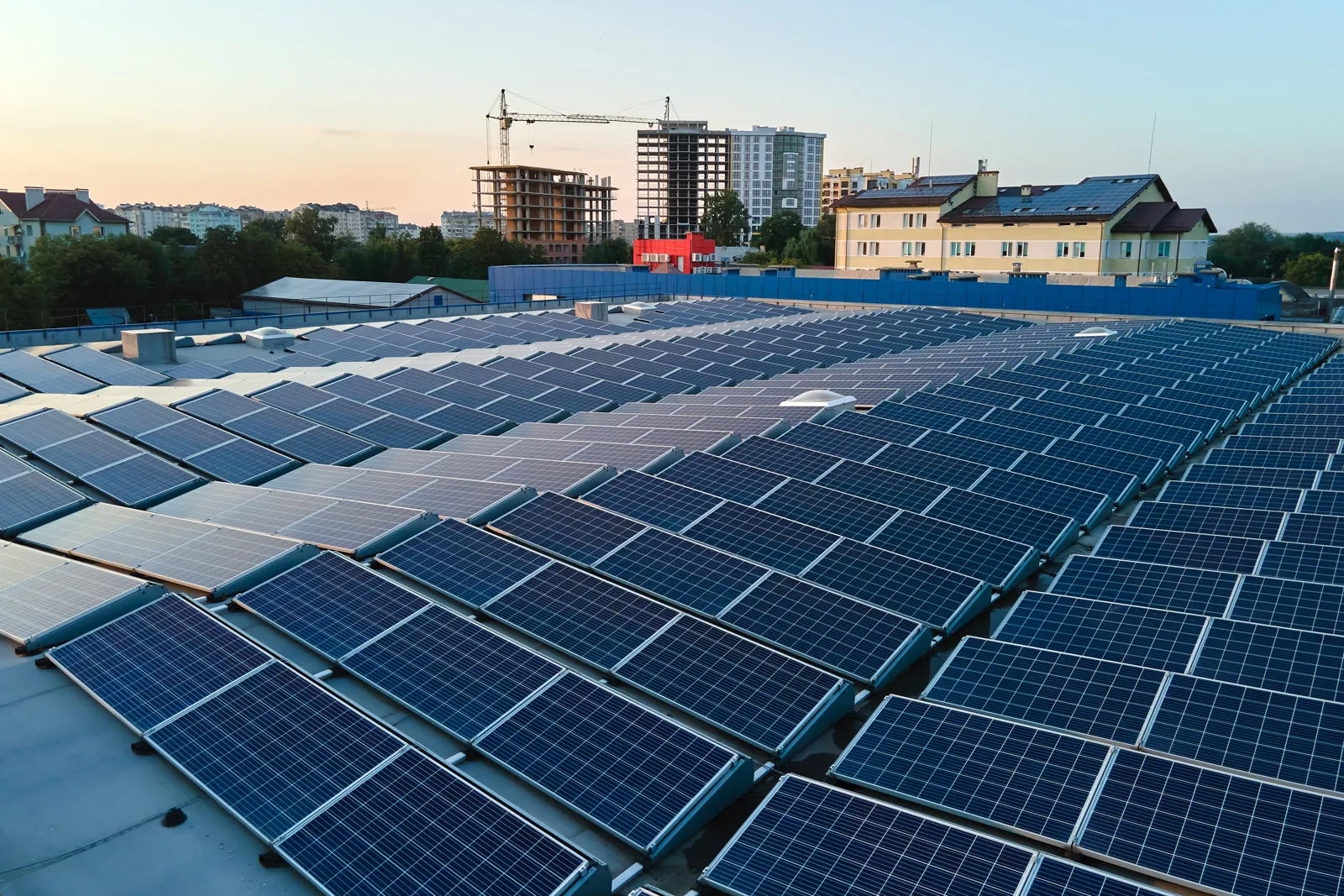
A commercial solar string inverter is one of the most important components in a commercial and industrial PV system. It converts DC electricity from solar module strings into grid-compatible AC power, but its role goes far beyond conversion. The інвертор affects energy yield, grid-code compliance, installation efficiency, monitoring quality, service response, and the long-term economics of the project. According to the European Commission on renewable energy policy, grid integration requirements for distributed PV systems are becoming increasingly strict, especially in commercial and industrial applications.
For EPCs, installers, resellers, system integrators, facility owners, and commercial portfolio managers, inverter selection is not simply a matter of comparing rated power and price. A technically unsuitable inverter can create permitting delays, commissioning failures, unexpected clipping losses, thermal derating, higher O&M costs, or warranty disputes. A well-selected inverter, by contrast, can simplify system design, improve uptime, support future expansion, and reduce lifecycle risk.
Commercial PV projects are also becoming more complex. Rooftops often have multiple orientations, different shade zones, limited cable routes, fire access requirements, and existing electrical infrastructure constraints. Ground-mount commercial systems may involve export limits, medium-voltage interconnection, reactive power requirements, or portfolio-wide monitoring needs. In many markets, grid operators now expect commercial PV inverters to provide active grid-support functions such as reactive power control, voltage ride-through, frequency response, and export limitation.
This guide explains how commercial string inverters fit into C&I PV architecture, how to evaluate technical specifications, what compliance and commissioning issues matter, and how inverter decisions affect CAPEX, OPEX, ROI, scalability, and serviceability. The focus is practical: how professional buyers and project teams can reduce execution risk while improving long-term PV asset performance.
A commercial solar string inverter is a grid-tied solar inverter designed for commercial and industrial PV systems. It receives DC power from several PV module strings, tracks the maximum power point of those strings, and converts the power into three-phase AC electricity suitable for a building switchboard, low-voltage distribution system, or medium-voltage step-up architecture.
Commercial string inverters are commonly used on warehouses, factories, logistics centers, schools, hospitals, retail buildings, agricultural facilities, carports, and small-to-medium ground-mount PV plants. In global C&I markets, individual inverter sizes often range from tens of kilowatts to several hundred kilowatts, and projects scale by connecting multiple units in parallel.
PV modules produce DC electricity. In a typical commercial PV system, modules are wired in series to form strings, and these strings are connected to inverter DC inputs. The inverter continuously measures voltage and current, then uses maximum power point tracking, or MPPT, to harvest energy as efficiently as possible under changing irradiance, temperature, and shading conditions.
The AC output is usually three-phase because commercial buildings and industrial sites normally operate on three-phase electrical distribution. Depending on the region and project design, the inverter may connect to a low-voltage switchboard or feed a transformer for medium-voltage interconnection. In behind-the-meter projects, the generated energy may be consumed directly by site loads, exported to the grid, curtailed according to utility limits, or coordinated with storage and energy management systems.
Modern commercial PV inverter design is increasingly focused on more than conversion efficiency. Inverters now support communication with meters, monitoring portals, data loggers, SCADA systems, and export-control devices. For asset owners, this makes the inverter a core data source for performance management, fault diagnosis, and revenue protection.
Commercial string inverters sit between residential inverters and utility-scale central inverters in both size and operating model. Residential units are usually smaller, often single-phase in many markets, and designed for simpler roof layouts and lower power levels. Central inverters are much larger and are typically used in utility-scale or very large ground-mount plants where centralized conversion and medium-voltage integration are preferred.
A commercial solar string inverter usually offers higher AC power, wider DC voltage windows, more MPPT channels, stronger enclosure protection, more advanced grid-code functions, and deeper monitoring capability than residential equipment. Compared with central inverters, string inverters are more modular and can be distributed across a rooftop, carport, or site. This modularity helps reduce single-point failure risk and can simplify replacement because one failed inverter represents only a portion of total plant capacity.
The best architecture depends on the project. A uniform multi-megawatt ground-mount system with simple array geometry may benefit from centralized conversion. A commercial rooftop with several orientations, obstructions, and phased expansion needs usually favors distributed string inverter architecture.
| Category | Residential inverter | Комерційний струнний інвертор | Central inverter |
|---|---|---|---|
| Typical project use | Homes, small buildings | C&I rooftops, carports, distributed ground-mount | Large ground-mount, utility-scale |
| Output type | Often single-phase or small three-phase | Three-phase | Three-phase, often MV-integrated |
| Design flexibility | Помірний | Високий | Lower for complex layouts |
| Service model | Small-unit replacement | Modular fleet replacement | Centralized service event |
| Best fit | Simple small systems | Complex C&I projects | Large uniform plants |
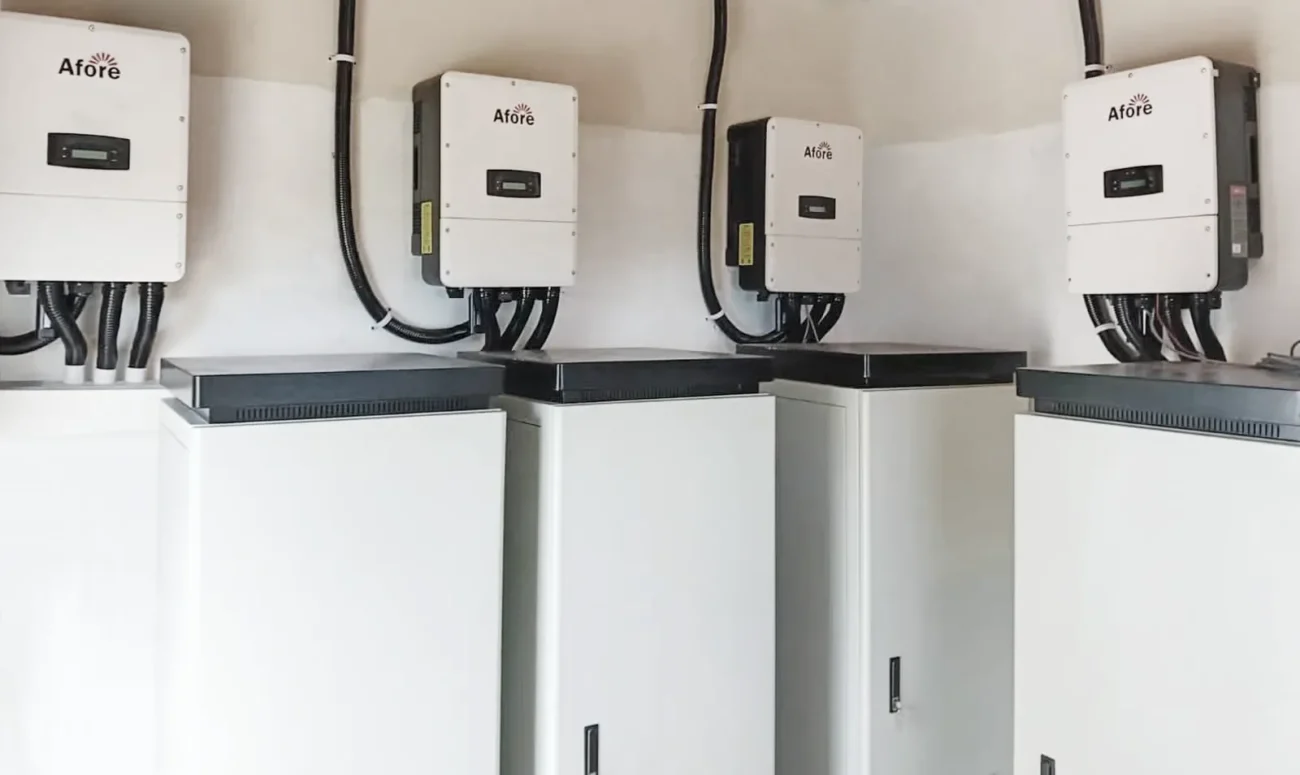
String inverter architecture has become common in commercial PV because it aligns well with real project conditions. Commercial rooftops are rarely ideal. They may include HVAC equipment, parapets, skylights, different roof planes, fire lanes, structural loading constraints, and uneven shading. Multiple MPPTs allow EPCs to separate strings with different orientations or irradiance profiles, reducing mismatch losses.
The modular design also helps with procurement and construction. Instead of planning crane access or dedicated inverter stations for large centralized equipment, installers can distribute smaller units closer to array blocks. This can reduce DC cable runs, simplify logistics, and make phased deployment more practical. If a project expands from one building to another, additional inverters can often be integrated without redesigning the original power conversion architecture.
Serviceability is another major driver. When a central inverter fails, a large share of the PV plant may be offline. When one commercial string inverter fails in a multi-inverter system, the remaining units can continue operating. For portfolio owners, this can improve availability and reduce the financial impact of single equipment failures.
String inverters are not universally better, but they are often better suited to commercial and industrial PV. They are especially effective for rooftops, carports, multi-building campuses, sites with multiple azimuths, projects with partial shading, and distributed portfolios that need standardized maintenance procedures.
Central inverters may be more suitable for large, uniform ground-mount systems where arrays are consistent, electrical rooms or inverter stations are planned from the start, and centralized medium-voltage integration is economically attractive. They can also simplify some protection and transformer arrangements at very large scale.
The correct question is not “Which inverter type is better?” but “Which architecture reduces project risk and improves lifecycle value for this site?” For C&I projects, the answer often depends on roof geometry, interconnection voltage, labor cost, service access, spare strategy, utility requirements, and whether the asset owner values modular uptime over centralized equipment management.
A commercial solar string inverter should be evaluated as part of the complete PV system, not as an isolated device. Rated power, MPPT design, voltage limits, protection functions, communication capability, and environmental ratings all influence whether the project can be installed, commissioned, approved, and operated efficiently.
The rated AC power of the inverter defines its maximum continuous AC output under specified conditions. EPCs compare this rating with the planned DC array capacity to determine the DC/AC ratio. A 100 kW DC array does not automatically require exactly 100 kW AC of inverter capacity. In many commercial systems, the DC array is larger than the inverter AC rating because modules rarely operate at nameplate capacity for long periods.
A higher DC/AC ratio can improve inverter utilization during mornings, afternoons, cloudy periods, winter months, and lower irradiance conditions. However, excessive oversizing can cause clipping during high-production periods, increase thermal stress, or exceed inverter input limits. The best ratio depends on the climate, module orientation, tariff structure, export limits, and the value of energy at different times of day.
| Коефіцієнт проектування | Why it matters for sizing |
|---|---|
| Local irradiance and temperature | Determines how often array output approaches nameplate capacity |
| Module tilt and azimuth | East-west arrays may support higher DC/AC ratios than south-facing arrays in some markets |
| Interconnection limit | May cap AC export below DC array capacity |
| Self-consumption profile | Higher daytime loads can increase value of PV production |
| Tariff or PPA structure | Determines whether clipped energy has material financial impact |
| Module degradation | Affects long-term DC output and inverter loading over time |
Professional sizing should be modeled using site-specific irradiance, temperature assumptions, module degradation, inverter efficiency curves, and financial inputs. A simple rule of thumb may help with early feasibility, but it is not enough for investment-grade design.
Professional sizing should be modeled using site-specific irradiance, temperature assumptions, module degradation, inverter efficiency curves, and financial inputs. In addition, a robust energy yield and economic model should include:
This ensures inverter sizing decisions are aligned with both technical performance and long-term financial optimization.
MPPT configuration is one of the most important reasons EPCs choose string inverters for commercial PV. Each MPPT can independently optimize the operating point of connected strings. This matters when strings face different directions, experience different shade patterns, use different string lengths, or sit on different roof sections.
A commercial rooftop may have one array facing east, another facing west, and a smaller section facing south. If all strings are forced into the same MPPT, mismatch losses can increase because the inverter must operate those strings at one compromise voltage. Multiple MPPTs allow better separation of electrical conditions, improving yield and design flexibility.
EPCs should evaluate maximum DC voltage, MPPT operating range, startup voltage, maximum input current per MPPT, maximum short-circuit current, and the number of string inputs. This is especially important with modern high-power modules that have higher current ratings. A module may appear compatible based on voltage, but the string current or short-circuit current may exceed inverter input limits under cold or high-irradiance conditions.
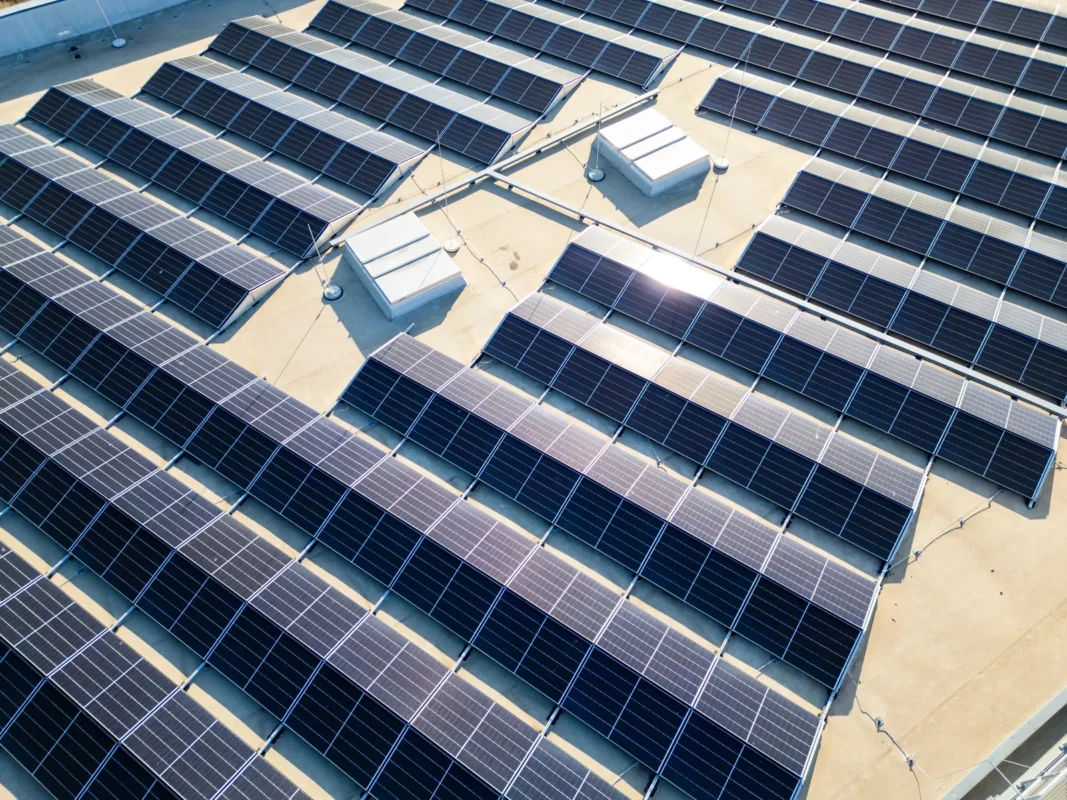
In PV string design, voltage and current risks must be evaluated using different environmental assumptions. Maximum string voltage is calculated using the lowest expected ambient temperature, which increases module open-circuit voltage. In contrast, input current and short-circuit current checks are based on high irradiance conditions, bifacial gain effects, and module current ratings.
This separation ensures that inverter input limits are not exceeded under either extreme cold or peak irradiance conditions.
Different string lengths should generally not be paralleled on the same MPPT, as mismatch losses can significantly reduce system efficiency. Multi-MPPT inverter architectures allow designers to separate strings with different orientations, shading conditions, or electrical lengths, enabling optimized energy harvesting across heterogeneous roof or ground layouts.
Datasheet efficiency is useful, but it does not tell the full performance story. Commercial string inverter peak efficiencies are commonly high, often above 98% in modern designs, but real energy yield depends on weighted efficiency, partial-load performance, ambient temperature, airflow, installation location, and derating behavior.
Thermal derating occurs when the inverter reduces output power to protect internal components from excessive heat. This can happen when units are installed in direct sun, near heat-reflective surfaces, in poorly ventilated rooms, or in climates with high ambient temperatures. High altitude can also affect cooling and derating assumptions.
For project economics, the key question is not only “What is the maximum efficiency?” but “How will this inverter perform on this site over the full year?” A slightly lower nominal efficiency with better thermal management and reliable operation may outperform a higher-efficiency product installed in poor conditions.
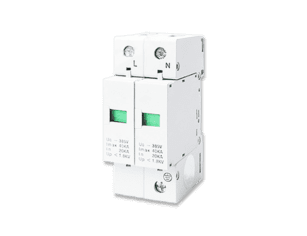
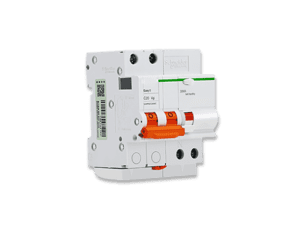
Commercial PV systems require multiple layers of electrical protection. Many modern commercial inverters integrate DC reverse polarity protection, insulation monitoring, ground fault detection, DC and AC surge protection, residual current monitoring, and anti-islanding functions. Arc-fault detection may be required in some jurisdictions or project specifications, particularly on rooftop systems.
Integrated protection can reduce balance-of-system complexity, but it does not eliminate the need for code-compliant design. External surge protection, disconnects, fuses, breakers, rapid shutdown equipment, or fire safety devices may still be necessary depending on local regulations and system architecture.
Anti-islanding is especially important for grid-tied solar inverter approval. The inverter must detect abnormal grid conditions and disconnect according to applicable standards and utility rules. In many markets, this behavior must be certified and configurable only within approved limits.
A commercial inverter decision affects the whole electrical design. It changes cable lengths, combiner requirements, switchgear sizing, protection coordination, transformer selection, monitoring design, and installation sequencing. EPC teams should therefore evaluate inverters during early design, not after the array layout is already fixed.
Rooftop projects often benefit from placing inverters near array blocks to reduce DC cable runs and simplify string routing. However, rooftop placement introduces other concerns: heat exposure, waterproofing penetrations, structural loading, service access, fire pathways, and safe working space. An inverter mounted in direct sun on a hot roof may experience more thermal stress than one mounted in a shaded, ventilated location.
Carport systems create different trade-offs. Inverters may be mounted on structural columns or nearby electrical areas, but designers must consider vehicle impact, public access, cable protection, and maintenance safety. Ground-mount systems may allow more controlled layouts, but AC collection, combiner strategy, trenching, and transformer placement become more important.
The physical location of each commercial PV inverter should support safe installation, easy commissioning, routine inspection, and rapid replacement. A low-cost layout that makes future service difficult can increase O&M cost for years.
Commercial PV modules continue to increase in power rating, and many use larger wafer formats with higher operating currents. Bifacial modules can also produce additional rear-side current under favorable ground reflectance conditions. EPCs must confirm that inverter input current and short-circuit current limits are compatible with the selected modules and string design.
Voltage design remains equally important. Maximum string voltage must be calculated under the lowest expected site temperature because module open-circuit voltage rises in cold conditions. The operating voltage must remain within the inverter MPPT range across expected temperature and irradiance conditions. Startup voltage should also be considered for low-light operation, especially in east-west layouts or partially shaded roof sections.
Connector compatibility should not be overlooked. Mismatched connectors can create overheating, arcing, warranty issues, and inspection failures. Professional installers should follow manufacturer-approved connector and crimping requirements rather than treating DC connectors as interchangeable commodities.
Inverter selection directly affects BOS design. A higher-power inverter may reduce the number of units but increase AC cable size, breaker capacity, and fault current considerations. A larger number of smaller inverters may improve modularity but require more AC circuits, communication points, mounting positions, and commissioning steps.
Protection coordination must account for inverter output characteristics, grid connection requirements, transformer impedance, switchgear ratings, and site load architecture. Commercial buildings often have existing distribution boards that were not originally designed for reverse power flow. This can require switchboard upgrades, protection studies, export-control systems, or dedicated PV interconnection panels.
Transformer selection also depends on inverter output voltage, total AC capacity, grounding arrangement, harmonic performance, and utility requirements. In multi-inverter systems, designers should confirm whether the inverter platform supports the planned AC coupling, communication topology, and reactive power control strategy.
The required inverter size depends on the PV array capacity, available roof or land area, interconnection limit, export policy, self-consumption profile, module orientation, climate, and financial model. A 500 kW DC rooftop array may use less than 500 kW AC of inverter capacity if the site has an export cap, east-west design, or economics that favor higher inverter utilization. Another project with high-value midday export may use a lower DC/AC ratio to reduce clipping.
The correct sizing process starts with energy modeling. Designers should simulate annual production, clipping, self-consumption, export revenue, and inverter loading. They should also test sensitivity to module degradation, soiling, downtime, and tariff changes. In commercial PV, inverter sizing is a financial decision as much as an electrical decision.
Grid compliance is now one of the most important factors in commercial inverter procurement. An inverter that is technically efficient but not certified for the target market may be unusable. Even when hardware is capable, missing documentation, unsupported grid-code settings, or weak technical support can delay interconnection approval.
Modern commercial PV inverters are expected to support grid stability. Depending on the jurisdiction and project size, required functions may include reactive power control, fixed power factor operation, voltage-watt response, frequency-watt response, low-voltage ride-through, high-voltage ride-through, ramp-rate control, and remote curtailment.
These functions allow grid operators to manage distributed solar penetration without compromising voltage or frequency stability. For commercial asset owners, however, they also introduce design and revenue implications. For example, reactive power requirements may reduce available active power under certain conditions. Export limits may curtail production if site loads are low. Ramp-rate requirements may require coordination with monitoring, meters, or storage.
The inverter should support the correct grid-code library for the market, and the commissioning team must apply the approved settings. Incorrect grid-code selection can cause failed commissioning tests, nuisance trips, or non-compliance with utility agreements.
Modern grid-supporting inverters are expected to provide a wide range of dynamic grid services beyond basic power conversion. These include:
These functions directly influence both project approval timelines and long-term operational compliance.
| Grid-support function | Procurement implication |
|---|---|
| Volt-var | Determines reactive power capability and grid stability compliance |
| Volt-watt | Impacts curtailment behavior under high-voltage conditions |
| Frequency-watt | Required for frequency stabilization participation and grid services |
| Ride-through | Mandatory for grid fault tolerance and connection approval |
| Remote control | Enables utility dispatchability and export limitation compliance |
| Interoperability | Affects SCADA integration and long-term O&M monitoring |
Commercial PV inverter certification varies by market. Internationally, IEC 62109 is widely used for inverter safety, while IEC 62116 addresses anti-islanding test procedures and IEC 61727 covers PV system grid interface characteristics. In North America, IEEE 1547 defines interconnection and interoperability requirements for distributed energy resources, while UL 1741 certification is commonly required for inverter equipment.
Certification should be verified before procurement, not after delivery. EPCs and resellers should confirm the exact model number, firmware version, grid-code approval, and certificate validity for the destination market. A similar model approved in one country may not be acceptable in another.
| Сфера дотримання вимог | Typical concern for C&I PV |
|---|---|
| Електробезпека | Shock, fire, insulation, enclosure, fault protection |
| Антиострівний | Safe disconnection during abnormal grid conditions |
| Grid support | Reactive power, ride-through, frequency response |
| Market certification | Proof accepted by local utility or authority having jurisdiction |
| Firmware control | Approved settings must be protected and documented |
In commercial PV procurement, it is critical to distinguish between safety standards, grid interconnection standards, certification or listing processes, and final utility approval. Safety standards define electrical and fire safety compliance requirements, while grid interconnection standards define how the inverter behaves within a utility network. Certification or listing confirms that a product has been tested against specific standards by accredited bodies, whereas utility approval is a project-level authorization that considers local grid conditions, installation design, and configuration settings.
Even when an inverter is fully certified, it may still require additional utility-specific settings validation or grid-code parameter adjustments before final commissioning approval.
| Standard | Practical relevance for inverter selection |
|---|---|
| IEC 62109 | Core safety standard for PV inverter electrical and fire safety compliance |
| IEC 62116 | Anti-islanding test procedure ensuring safe disconnection during grid loss |
| IEC 61727 | Defines PV system interface requirements for grid connection behavior |
| IEEE 1547 | North American grid interconnection standard covering voltage, frequency, and ride-through |
| UL 1741 | Certification framework for safety and grid-support functionality in the US market |
Inverter qualification should be understood as a layered hierarchy rather than a single certification step. The typical structure includes safety certification, grid interconnection performance testing, anti-islanding verification, market-specific listing or certification, utility acceptance, and finally firmware and settings documentation approval.
This hierarchy ensures that both hardware safety and dynamic grid behavior are validated at different regulatory levels before commissioning.
Utility approval usually requires a complete documentation package. This may include inverter datasheets, certification files, single-line diagrams, protection settings, export-control descriptions, equipment layout drawings, monitoring details, and sometimes power quality studies.
In behind-the-meter commercial systems, export limitation is increasingly important. A facility may be allowed to install a large PV array but export only a limited amount of power to the grid. In this case, the inverter must coordinate with revenue-grade meters, site load monitoring, and control equipment to reduce output when export approaches the limit. The accuracy and response time of this system can affect approval.
Permitting delays often occur when inverter documentation is incomplete or when the selected inverter does not match the certification file submitted to the utility. For resellers, this makes regional certification management a core business risk. Carrying inventory that cannot be approved in the target market can create financial losses and customer disputes.
Export control in commercial PV systems is implemented through multiple layers of measurement and control infrastructure, including utility revenue meters, dedicated control meters, site-level current transformers (CTs), data loggers, energy management systems (EMS), and inverter-level curtailment functions.
Each layer serves a different role: revenue meters define billing accuracy, CTs provide real-time measurement, EMS coordinates system-level control, and inverters execute active curtailment commands.
In many utility jurisdictions, control meters must meet strict accuracy classes and response-time requirements to ensure reliable export limitation enforcement. These requirements directly influence equipment selection and system architecture design, particularly in grid-constrained or zero-export commercial installations.
Grid-code compliance is not a secondary feature. It can determine whether a commercial solar string inverter can legally operate in a market. Professional buyers should evaluate grid-code libraries, regional certification, firmware upgradeability, remote configuration controls, cybersecurity practices, and local technical support before placing large orders.
For multi-country resellers and portfolio owners, this is particularly important. A single inverter platform may be attractive for standardization, but only if it supports the required certification and grid functions in each jurisdiction. Otherwise, standardization can create hidden compliance risk.
In European PV projects, compliance is not limited to general IEC-based equipment certification. Many countries apply country-specific grid-code requirements enforced by distribution system operators (DSOs), meaning that even certified equipment must be individually validated for local grid behavior and operational settings.
Key compliance dimensions include country-specific grid-code parameter sets, DSO approval processes, export limitation rules and remote curtailment capability, documentation language and declaration requirements for regulatory submission, and differences between EU-level policy objectives and local technical interconnection rules. In practice, project approval requires confirmation that the exact inverter model, firmware version, and grid-code configuration have been explicitly accepted in the destination country, rather than relying solely on generic certification documentation.
Commercial PV projects often lose time and margin during installation and commissioning, not because the inverter specification was poor, but because details were missed during execution. Mechanical placement, wiring quality, communication setup, firmware configuration, and documentation discipline all affect project handover.
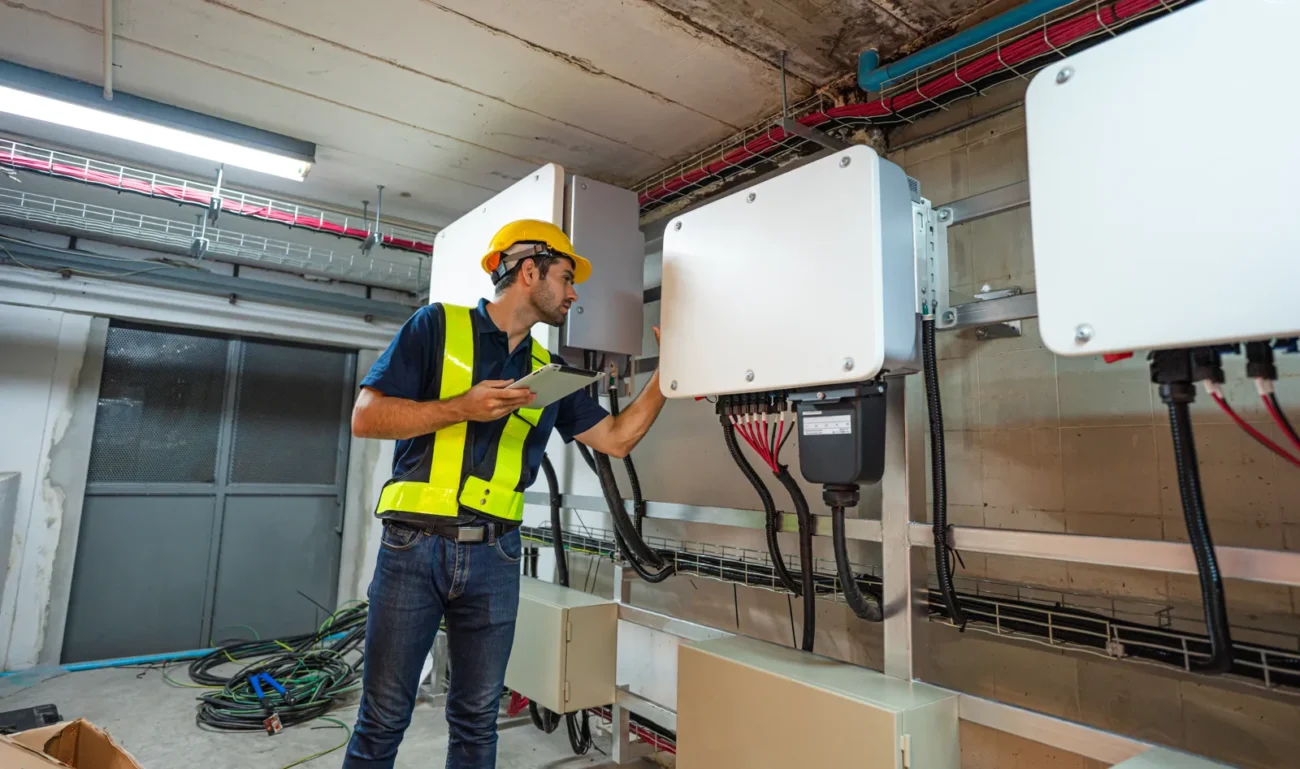
Commercial string inverters are often installed outdoors, so enclosure protection is important. IP65 or IP66 ratings are common in many outdoor inverter designs, but the correct rating depends on the site environment. Coastal areas may require corrosion resistance. Agricultural or industrial sites may expose equipment to dust, chemicals, ammonia, or vibration. Flood-prone locations require elevated mounting and careful cable entry planning.
Cooling clearance must follow the installation manual. Blocking airflow, installing units too close together, or placing inverters in unventilated spaces can cause thermal derating and shorten component life. Direct solar exposure may also increase internal temperatures, especially on rooftops with reflective surfaces.
Service access should be planned from the beginning. Technicians need safe working space, isolation access, communication access, and the ability to replace fans or units without dismantling surrounding equipment.
Many inverter issues begin with wiring mistakes. Incorrect polarity, loose terminals, mixed connectors, poor crimping, insufficient torque, damaged insulation, and poor cable routing can cause faults, downtime, fire risk, or warranty disputes. On the AC side, incorrect phase sequence, undersized conductors, poor grounding, and protection mismatch can cause commissioning failure.
Before energization, installers should perform polarity checks, insulation resistance tests, continuity checks, torque verification, grounding verification, labeling review, and AC phase confirmation. These steps may seem routine, but they are essential for commercial systems where one mistake can affect dozens of strings or delay utility witness testing.
A disciplined commissioning record protects all parties. It gives the EPC evidence of proper installation, helps the owner manage future O&M, and supports warranty claims if equipment problems occur later.
A practical commissioning process starts with visual inspection and mechanical verification. The team then confirms DC string voltage, polarity, insulation resistance, AC voltage, grounding, and protection devices. After that, the inverter is energized according to the approved procedure, grid-code settings are selected, communication is configured, and monitoring is activated.
The solar inverter monitoring system should not be treated as an optional final step. Without monitoring, the owner cannot easily confirm performance, identify underperforming strings, detect communication failures, or prove availability. For portfolio owners, monitoring activation should be part of handover acceptance.
| Commissioning step | Commercial project purpose |
|---|---|
| Visual and mechanical inspection | Confirms mounting, clearances, labeling, and access |
| DC testing | Verifies string voltage, polarity, insulation, and configuration |
| AC testing | Confirms grid voltage, phase order, grounding, and protection |
| Firmware and grid-code setup | Aligns inverter behavior with approved interconnection settings |
| Monitoring activation | Enables performance validation and long-term O&M |
| Handover documentation | Supports warranty, compliance, and asset management |
The most common mistakes include oversizing the DC array without clipping analysis, selecting uncertified products, ignoring thermal derating, underestimating communication design, assuming integrated surge protection is always sufficient, and failing to plan spare units for multi-site portfolios.
Another frequent problem is weak after-sales planning. A commercial project owner may accept a low inverter price during procurement, only to discover later that replacement units, local service, or warranty processing are slow. For EPCs that provide performance guarantees, this can turn a product decision into a contractual risk.
In commercial PV, inverter monitoring is central to asset management. It helps detect faults, compare string performance, analyze downtime, verify export control, and support revenue reporting. For multi-site portfolios, the monitoring platform can be as important as the inverter hardware.
Professional monitoring should provide clear alarms, performance trends, inverter-level and string-level data where available, export-control visibility, and historical reports. Data intervals matter. A system reporting every five minutes can support better fault diagnosis than one reporting only daily totals, although the right interval depends on project size and monitoring cost.
Integration is also important. Many commercial PV assets use third-party SCADA, building management systems, or energy management platforms. Communication protocols such as Modbus and SunSpec are commonly used for interoperability. API access may be valuable for portfolio owners that aggregate data across multiple sites and equipment types.
Monitoring design should include network reliability. Poor cellular signal, weak Wi-Fi, unprotected Ethernet runs, or missing cybersecurity controls can create blind spots. If a system is producing energy but not reporting data, asset managers may still treat it as an operational problem.
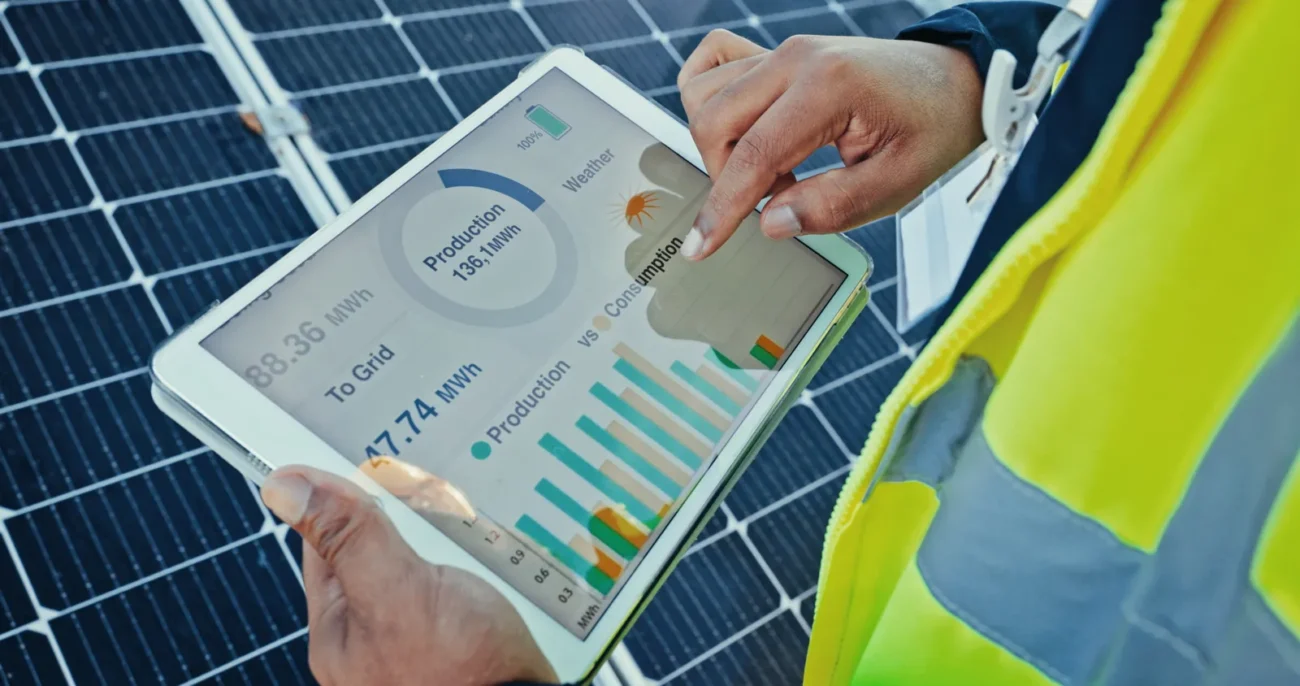
Inverter faults should be easy to diagnose. Clear error codes, event logs, string current data, remote diagnostics, and firmware status reduce troubleshooting time. Serviceable components such as fans, communication boards, or surge protection modules can reduce replacement cost if they are accessible and available.
Mean time to repair is often more important than claimed failure rate. A low failure rate is valuable, but if replacement takes weeks, downtime cost can be significant. EPCs and asset owners should evaluate spare parts availability, regional service centers, local technician training, and warranty response procedures.
For large portfolios, a spare-unit strategy is usually worthwhile. Standardizing on a limited number of inverter platforms can reduce spare inventory, training burden, and troubleshooting complexity. However, standardization should not override site-specific compliance and design requirements.
Inverter service strategies generally fall into two categories: whole-unit replacement and component-level repair. Whole-unit replacement is typically applied when failure affects core power conversion stages or when repair costs exceed replacement thresholds. Component-level replacement is more common for auxiliary systems and modular internal parts.
Common serviceable components include cooling fans, DC-link capacitors, surge protection devices (SPDs), and communication boards. These components are often subject to wear due to thermal cycling, environmental stress, or grid surge events.
Operational reliability is often evaluated using two key metrics: mean time to repair (MTTR) and mean time between failures (MTBF). MTBF reflects expected operational stability over time, while MTTR defines how quickly a system can be restored after failure. Together, they determine system availability and directly impact lifecycle energy yield.
A standardized financial model for inverter downtime impact can be expressed as:
Lost revenue or savings = offline inverter capacity × site-specific yield × energy value × downtime duration
This framework allows EPCs and asset managers to quantify the direct financial impact of inverter outages and integrate reliability assumptions into LCOE and ROI models.
Commercial inverter warranties commonly include a standard term with optional extensions, but the details vary. Buyers should review whether the warranty covers parts only or includes labor, shipping, replacement processing, and onsite service. They should also confirm what documentation is required for claims, such as commissioning records, monitoring logs, photos, test results, and serial numbers.
Resellers have additional responsibilities. They must understand regional certifications, train installers, maintain clear RMA workflows, plan spare inventory, and communicate realistic lead times. A reseller that cannot support commissioning and warranty claims may expose EPC customers to project delays and reputational risk.
Commercial string inverter service life depends on product quality, thermal stress, operating environment, electrical conditions, maintenance, and grid stability. Many PV projects have a module life of 25 years or more, while inverters may require major service or replacement during that lifecycle. Financial models should therefore include inverter OPEX assumptions rather than assuming the original units will operate without intervention for the full PV asset life.
Hot climates, poor ventilation, frequent grid disturbances, dust, humidity, and corrosive environments can shorten service life. Good installation practices, monitoring, preventive maintenance, and timely component replacement can extend useful operation.
Commercial PV systems should not assume that inverters will last for the full duration of the PV module lifetime. In practice, inverter service interventions, major component replacement, or full inverter replacement are often required during the lifecycle of the asset, especially in systems designed for 20–30 years of operation.
According to long-term benchmarking frameworks such as those used in NREL ATB lifecycle assumptions, inverter lifespan is typically shorter than PV modules, making at least one major intervention event a standard planning assumption rather than an exception. This lifecycle gap must be reflected in both technical design and financial modeling to avoid underestimating long-term OPEX exposure.
A commercial solar string inverter affects project economics through installed cost, energy yield, availability, service cost, and future expansion capability. The lowest unit price does not always produce the lowest levelized cost of energy.
Inverter cost is only one part of total EPC cost. The true installed cost includes mounting, DC cable, AC cable, protection devices, switchgear, monitoring hardware, commissioning labor, logistics, and engineering time. A lower-cost inverter may become more expensive if it requires additional external protection, more complex wiring, limited monitoring integration, or longer commissioning.
Conversely, a slightly higher-cost inverter may reduce BOS complexity, speed installation, improve diagnostics, or lower service risk. EPCs should compare total installed cost and lifecycle value, not just procurement price.
Inverter performance affects revenue through efficiency, MPPT optimization, clipping, curtailment, and downtime. On complex rooftops, distributed MPPT architecture can improve yield by reducing mismatch between roof sections. In export-limited projects, accurate control can protect interconnection compliance while maximizing self-consumption.
Availability is critical. A commercial owner using PV for self-consumption values every kilowatt-hour that offsets retail electricity purchases. If an inverter fault goes unnoticed for several days, the lost savings may exceed the cost of preventive monitoring or faster service.
OPEX includes routine inspections, cleaning around inverter air paths, fan or filter replacement where applicable, surge protection checks, monitoring subscriptions, truck rolls, replacement labor, and downtime. EPCs offering O&M contracts should model these costs realistically.
Warranty risk should also be considered. If warranty replacement excludes labor or shipping, the owner or EPC may still face meaningful costs. If local support is slow, lost production may become more important than the replacement hardware itself.
In financial models for commercial PV assets, inverter replacement reserve should be explicitly included as a planned lifecycle cost rather than treated as a contingency expense. This reserve accounts for potential mid-life replacement events, major refurbishment cycles, and degradation-driven service interventions.
For multi-site portfolios, spare-unit planning becomes even more critical. Operators often maintain centralized spare inventory strategies to reduce downtime exposure across geographically distributed assets. Warranty duration also needs to be evaluated against actual financial exposure, since standard manufacturer warranties may not fully align with financing periods or investor return expectations.
Downtime cost calculation is equally important, particularly for tariff-based or PPA-based systems where lost production directly impacts revenue. Financial models should incorporate both energy loss and contractual penalty exposure when estimating inverter-related risk.
Levelized cost of energy depends on CAPEX, annual generation, degradation, O&M cost, financing, and system availability. Inverter selection influences several of these variables at once. High uptime, reliable monitoring, efficient service, and strong grid compliance can reduce LCOE even if the initial inverter price is not the lowest.
For portfolio owners and resellers, standardizing on reliable commercial PV inverter platforms can reduce technician training, spare inventory, commissioning errors, and support complexity. The best choice is often the inverter architecture that produces repeatable project execution, not the one that looks cheapest in a single quotation.
Financial sensitivity model
| Financial model input | Why inverter selection affects it |
|---|---|
| Installed cost | Different inverter architectures impact BOS cost, wiring complexity, and labor requirements |
| Fixed O&M | Reliability, remote monitoring capability, and service intervals influence long-term maintenance cost |
| Capacity factor / yield | Efficiency curve, MPPT design, and part-load performance directly affect annual energy output |
| Inverter loading ratio | DC/AC sizing strategy determines clipping behavior and energy optimization |
| Replacement reserve | Lifetime expectancy and warranty structure affect mid-life replacement planning |
| Доступність | Failure rate, redundancy design, and service response time influence system uptime |
Inverter selection should not be assessed in isolation but benchmarked against full project economics and long-term system behavior. In commercial and utility-scale PV projects, inverter performance and bankability are typically evaluated in relation to installed system cost (CAPEX), fixed and variable O&M cost (OPEX), and expected lifetime energy yield rather than nameplate efficiency alone.
Key financial and technical benchmarks include:
From a portfolio perspective, inverter selection directly influences lifecycle value through energy yield stability, replacement risk exposure, and serviceability costs, making it a core driver of long-term ROI rather than a purely technical component decision.
Commercial energy strategies are changing. Many facilities are now evaluating solar with battery storage, EV charging, demand-charge management, backup power, and energy management systems. Inverter selection should consider not only the first PV phase but also future site requirements.
Yes, commercial string inverters can work with battery storage, but the architecture matters. In an AC-coupled system, standard PV string inverters connect to the AC bus, while separate battery inverters manage the storage system. This is common for retrofits and commercial sites that want design flexibility.
In a DC-coupled or hybrid architecture, PV and battery systems may share DC-side equipment or use гібридний інвертор functions. This can improve some efficiency or control outcomes, but it requires careful compatibility review. Commercial projects often choose AC coupling because it allows PV and storage to be sized, installed, serviced, and expanded more independently.
Storage may be used for peak shaving, demand-charge reduction, backup power, export control, time-of-use optimization, or grid services. The inverter communication and control architecture must support the intended operating mode.
Backup or islanded operation requires careful validation of system architecture, particularly whether the PV inverter operates behind a grid-forming battery inverter. In many configurations, the battery inverter provides grid reference, while the PV inverter operates in grid-following mode, meaning standalone backup operation is not possible without a compatible hybrid architecture.
When integrating storage, system designers must confirm curtailment control behavior, anti-islanding response, frequency-watt dynamic response, and black-start limitations. These parameters determine whether the system can maintain stability during grid outages and how it transitions between grid-connected and islanded modes.
Commercial sites increasingly rely on energy management systems to coordinate PV, storage, EV chargers, HVAC loads, meters, and building management systems. The inverter must communicate reliably with these systems, especially where export limitation or demand response is required.
Protocol support, meter compatibility, data refresh rate, control accuracy, and cybersecurity all matter. A PV system that cannot coordinate with site loads may be forced to curtail more often than necessary. For facilities with variable industrial loads, accurate real-time measurement can significantly improve PV utilization.
Many commercial projects are built in phases. A logistics campus may start with one warehouse roof and later expand to carports or adjacent buildings. A manufacturer may install PV first and add batteries or EV charging later. Modular string inverter architecture supports this phased approach because new inverter blocks can be added as capacity grows.
However, future expansion should be planned from the first phase. EPCs should evaluate transformer capacity, switchgear space, cable routes, monitoring hierarchy, interconnection limits, and utility rules. If the first phase uses all available electrical capacity, later expansion may become expensive or impossible.
Future-ready inverter selection involves firmware upgradeability, adaptable grid-code settings, secure remote management, storage compatibility, and open communication. Grid rules are becoming more demanding as distributed PV penetration increases. Commercial asset owners should avoid equipment that cannot adapt to updated interconnection requirements or integrate with modern monitoring platforms.
Cybersecurity is also becoming more relevant. Remote inverter access, cloud monitoring, API connections, and utility control signals must be managed securely, especially for large portfolios and critical facilities.
For B2B buyers, inverter procurement is a risk-management process. The right evaluation framework considers technical fit, certification, supply reliability, documentation quality, service infrastructure, warranty execution, and long-term product continuity.
A datasheet review should include input and output ratings, maximum DC voltage, MPPT range, startup voltage, input current limits, short-circuit current limits, efficiency curves, operating temperature, derating behavior, enclosure rating, protection functions, communication protocols, certifications, dimensions, weight, and warranty terms.
However, professional buyers should also look beyond the datasheet. They should evaluate field track record, supplier financial stability, technical documentation quality, design tool availability, training support, firmware management, and responsiveness during pre-sales engineering. A technically strong inverter can still create project risk if documentation is incomplete or support is unavailable.
Commercial PV projects are sensitive to lead times. Delayed inverters can postpone commissioning, utility approval, and revenue generation. EPCs and resellers should confirm regional stock, spare-unit availability, packaging durability, model continuity, and replacement timelines.
Inventory planning is especially important for resellers serving multiple markets. A product certified in one region may not be suitable elsewhere. Carrying the wrong inventory can tie up capital and create customer dissatisfaction.
Good installer enablement reduces project errors. Clear installation manuals, commissioning guides, wiring diagrams, grid-code configuration instructions, troubleshooting documents, and training programs help field teams work faster and safer.
For new inverter platforms, EPCs should conduct internal training before large-scale deployment. Commissioning technicians should understand communication setup, firmware procedures, alarm interpretation, and documentation requirements. This is particularly important for multi-site rollouts where small errors can repeat across many projects.
For repeat commercial projects, the best inverter partner is often the one that reduces execution risk. Important criteria include product range across project sizes, consistent certification coverage, reliable lead times, local technical support, clear warranty procedures, monitoring ecosystem quality, and a practical product roadmap.
Unit price still matters, but it should be evaluated within the total project context. A commercial solar string inverter is not just a box on the wall. It is a conversion device, grid interface, data source, compliance component, and service liability. The strongest procurement decisions account for all of those roles.
A commercial solar string inverter should be selected through a system-level evaluation, not a unit-price comparison. The right choice supports the array layout, complies with local grid codes, simplifies installation, enables reliable monitoring, reduces downtime, and fits the owner’s financial model. For EPCs, installers, resellers, and commercial asset owners, the most valuable inverter is the one that improves project certainty from design approval through decades of operation.
String inverters are widely used in commercial solar projects because they deliver a practical balance of performance, reliability, and installation efficiency in commercial solar string inverter applications. Compared with more complex architectures, they reduce system fragmentation and simplify design for EPC teams working on large rooftops or ground-mounted arrays. In real-world deployments, this approach is often preferred for benefits of string inverters B2B scenarios where long-term stability and predictable output matter more than module-level complexity.
For large roofs, the comparison between string and microinverters is often framed around centralized vs decentralized solar design philosophy. String systems centralize power conversion, which reduces equipment density and improves cost control, while microinverters distribute conversion at module level. In most commercial PV system architecture cases, string inverters are favored because they handle scale better, reduce hardware overhead, and maintain strong performance even in partially shaded or multi-orientation installations.
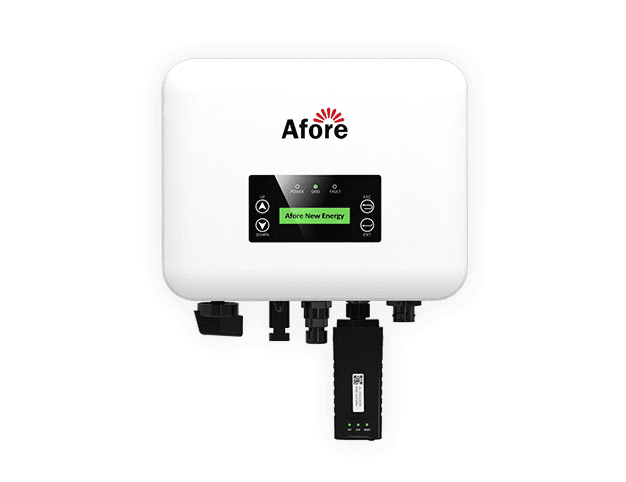
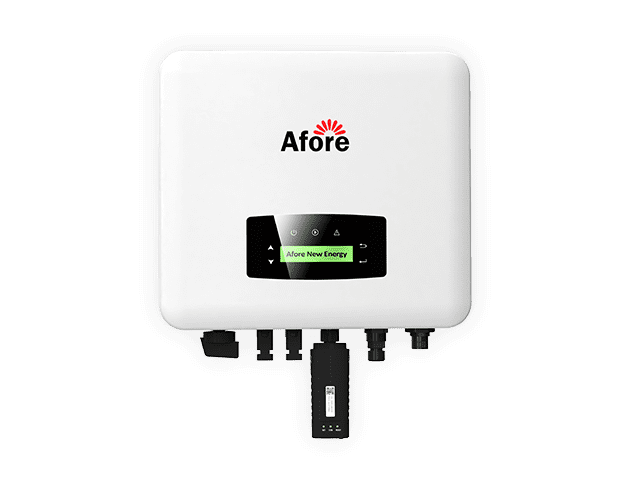
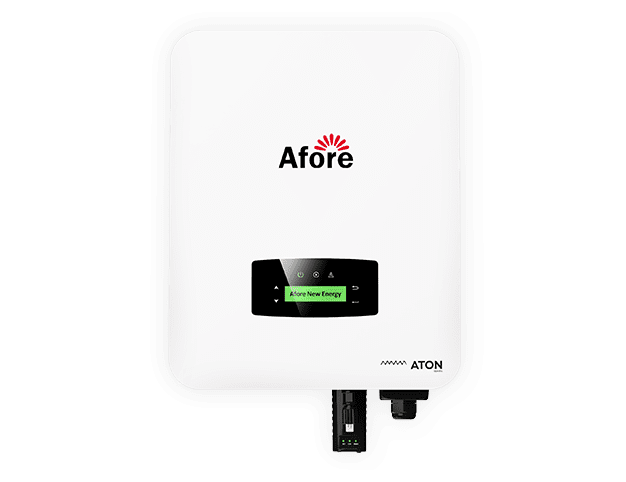
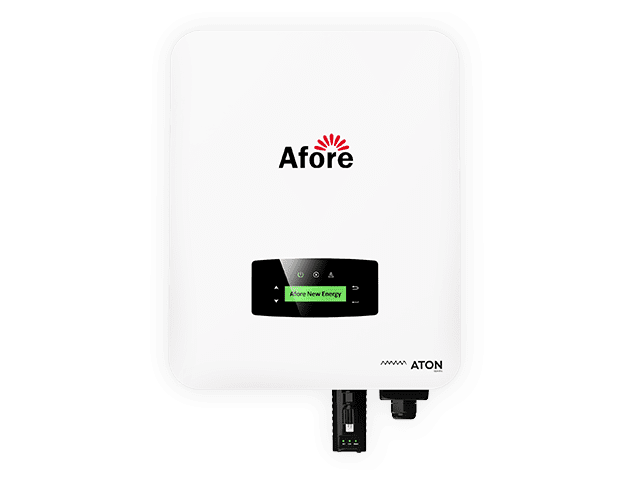
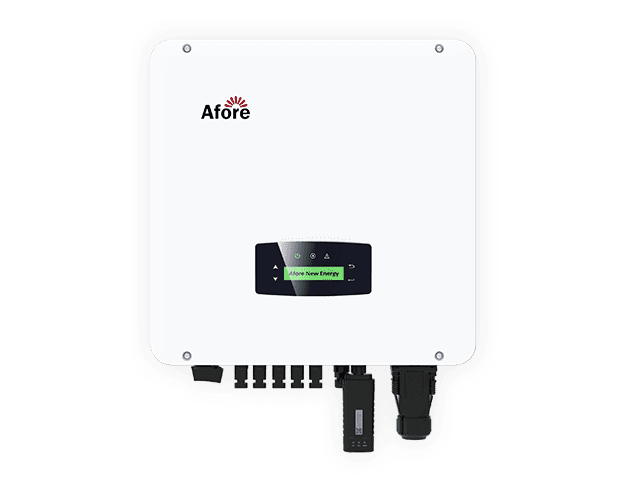
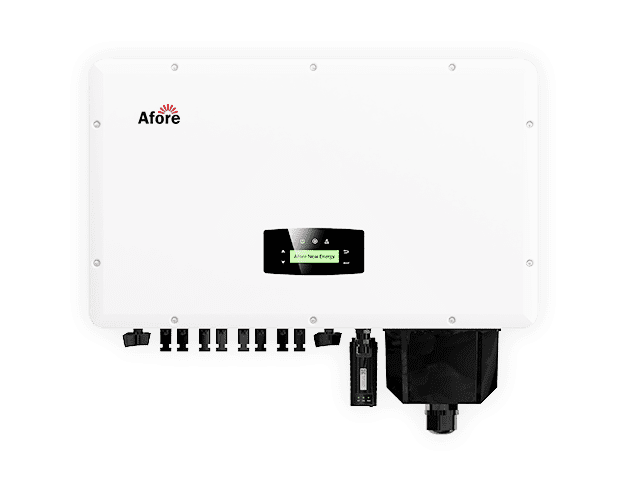
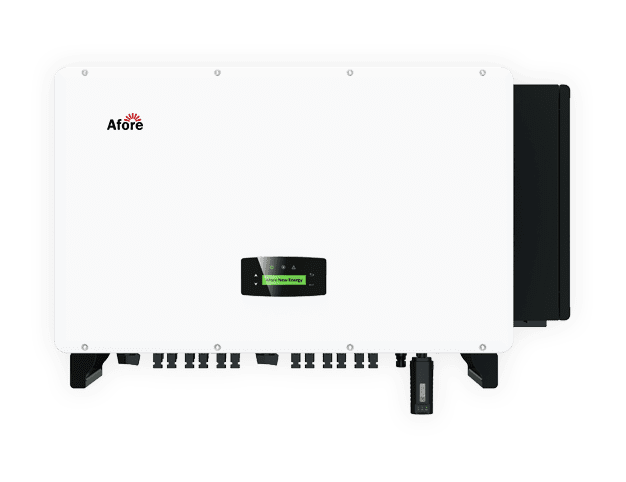
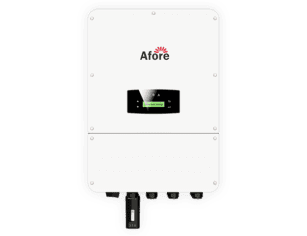
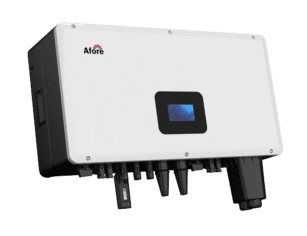
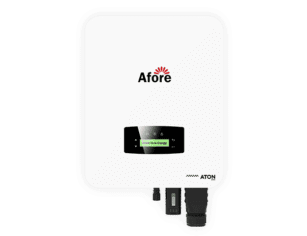
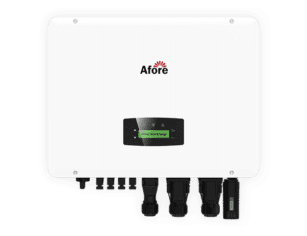
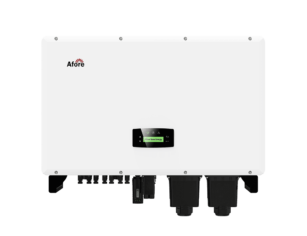
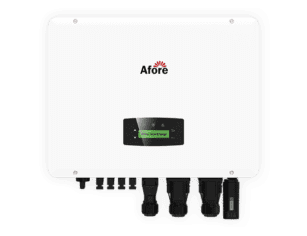
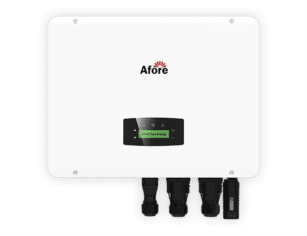
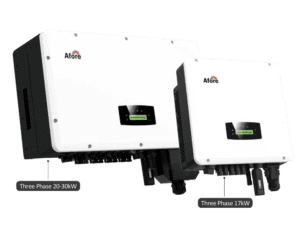
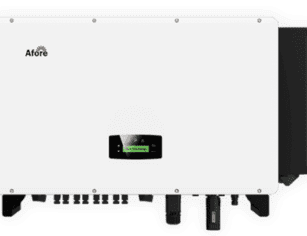
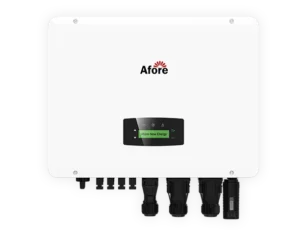
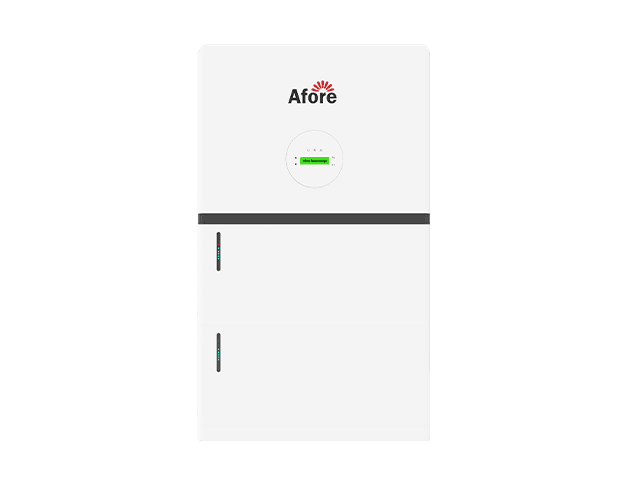
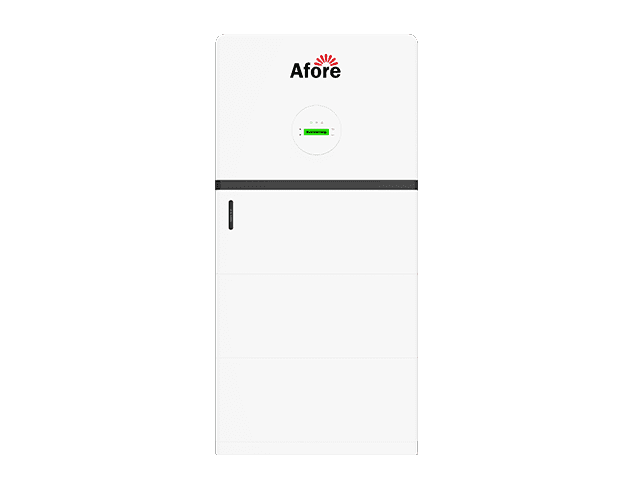
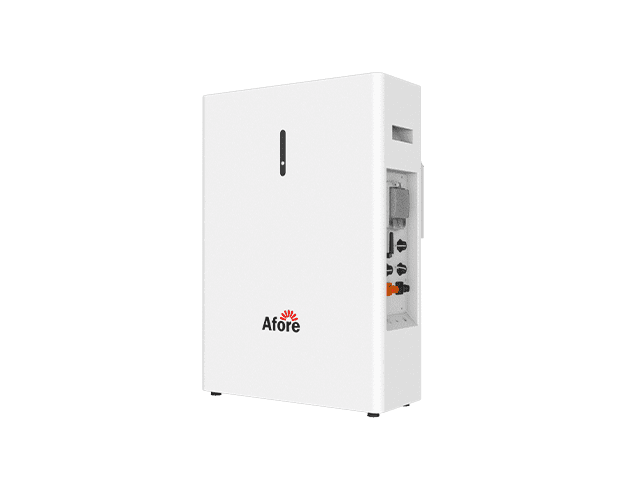
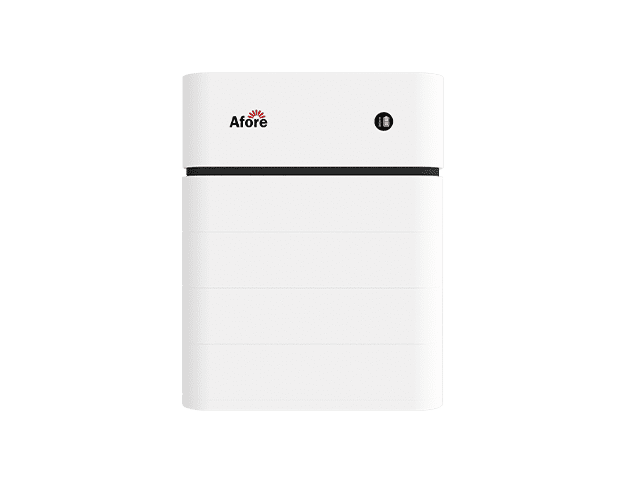
In B2B solar projects, Afore string inverter solutions are commonly selected for their adaptability in commercial and industrial environments. These inverters are designed to support complex rooftop layouts and deliver stable performance under variable load conditions. For EPCs and project developers seeking cost-effective commercial solar systems, Afore’s multi-MPPT string models provide a practical balance between flexibility, monitoring capability, and deployment efficiency.
From a cost perspective, string inverters generally achieve a lower cost per watt in commercial installations due to reduced component duplication and simplified wiring structures. This makes them a strong fit for cost-effective commercial solar projects where ROI is closely tracked. While microinverters add module-level optimization, they often increase hardware and maintenance costs, whereas string systems maintain a more streamlined investment profile across large-scale deployments.
Maintenance is significantly easier in string-based systems because diagnostics are centralized, reducing time spent on field troubleshooting. Technicians can identify issues at the inverter or string level instead of inspecting individual modules, which improves operational efficiency. This contributes to higher string inverter efficiency in real-world operations, especially for asset owners managing multiple commercial sites who prioritize fast fault response and lower O&M costs.
String inverter systems are highly scalable, making them a strong fit for phased commercial developments and expanding solar assets. New capacity can be added by increasing string counts or deploying additional inverters without redesigning the entire system. This flexibility supports evolving commercial PV system architecture, allowing developers to expand installations over time while maintaining stable performance and predictable integration.
https://webstore.iec.ch/publication/26027








 Turkish
  Romanian