





Commercial and industrial PV systems are usually evaluated around headline figures: installed capacity, expected annual yield, inverter maximum efficiency, payback period, and levelized cost of energy. Yet one of the most important performance questions is often hidden behind the headline datasheet number: how does the inverter perform when the PV array is producing only a fraction of its rated power?
Inverter efficiency at low load is a practical design and procurement issue for commercial PV systems. C&I arrays may operate for long periods under partial irradiance, winter conditions, morning and evening production, rooftop shading, export limitation, or staged site expansion. In these conditions, the inverter is not operating near its rated output. It may be working at 5%, 10%, 20%, or 30% of capacity for a meaningful share of the year.
For EPCs, installers, resellers, system integrators, facility managers, and commercial asset owners, the concern is not only peak inverter efficiency. The real question is how much usable AC energy is retained across the operating profile of the site. A product with a very high maximum efficiency may still underperform in a project where the inverter spends much of its time at low or variable power. Conversely, an inverter with a slightly lower peak value but a broad, stable efficiency curve can deliver stronger lifecycle value in shaded, cloudy, or constrained C&I environments.
Low-load behavior affects system sizing, inverter architecture, grid compliance, commissioning, monitoring, warranty discussions, and project economics. It also influences how resellers position products and how EPCs defend yield assumptions in front of clients and financiers. For large commercial portfolios, even small differences in part-load inverter efficiency can become material across hundreds of rooftops, thousands of operating hours, and 20-plus years of asset life.
Inverter efficiency is not constant across all operating points. Most modern commercial PV inverters can achieve very high conversion efficiency near their optimal operating range, often in the mid-load zone rather than exactly at full output. However, at very low output levels, fixed internal consumption, control electronics, switching losses, auxiliary power, cooling systems, sensing circuits, and communication modules become more significant relative to the amount of energy being converted.
This is why inverter efficiency at low load should be considered a real energy-yield factor, not a niche technical detail. Early morning, late afternoon, cloudy periods, winter operation, partial shading, soiling, module mismatch, and export controls can all place an inverter in low-load operation. In many C&I projects, especially rooftops with complex layouts, the inverter may spend a large number of hours away from the ideal operating point.
Independent technical literature from organizations such as NREL and IEA PVPS shows that inverter efficiency curves are typically flatter than they were in older products, but part-load losses still exist. Commercial PV inverters may reach peak efficiency in the broad middle of their operating range, while efficiency can decline below very low load levels because fixed losses are spread across less generated power. In practical terms, an inverter that performs at 98% efficiency near its best point may perform several percentage points lower when the available PV power is only a small share of rated inverter capacity.
For a single small system, the impact may appear modest. For a 500 kW rooftop, a 5 MW C&I portfolio, or a multi-site retail chain, the annual kWh impact can become meaningful. The effect is especially important when the business case depends on self-consumption, demand charge reduction, time-of-use tariffs, or guaranteed energy performance.
Maximum efficiency is the best-case conversion value measured under specific conditions. It is useful, but it is not enough for commercial procurement. A maximum efficiency figure does not tell an EPC how the inverter performs at 5%, 10%, 20%, or 30% of rated output. It also does not explain how efficiency changes with DC voltage, ambient temperature, reactive power requirements, or MPPT behavior.
Weighted efficiency metrics are more useful because they approximate inverter performance across multiple load points. European efficiency and CEC efficiency are common examples. European efficiency gives weight to operating points that reflect typical European irradiance patterns, while CEC efficiency is widely used in North American evaluation and interconnection contexts. These ratings help buyers compare inverters more fairly than peak efficiency alone, but they are still generalized benchmarks. They do not replace project-specific simulation.
A commercial rooftop in Northern Europe, a warehouse in the Middle East, a factory in Southeast Asia, and a distribution center in the United States may all have different irradiance profiles, grid requirements, roof constraints, and operating patterns. The same inverter can therefore produce different real-world performance outcomes depending on system design.
| Efficiency metric | What it indicates | Practical limitation for C&I projects |
|---|---|---|
| Maximum efficiency | Best-case conversion efficiency at an optimal operating point | Does not represent low-load, shaded, or variable operation |
| European efficiency | Weighted performance across several part-load points | Based on a regional profile and may not match all climates |
| CEC efficiency | Weighted performance often used in North American contexts | Helpful for comparison, but still not site-specific |
| Full efficiency curve | Conversion behavior across load and voltage ranges | Most useful when combined with site-specific simulation |
The key procurement lesson is simple: do not compare commercial solar inverters only by the largest efficiency number on the datasheet. Request the full efficiency curve, low-load data, MPPT operating range, standby consumption, thermal derating information, and weighted efficiency values.
There is no universal low-load threshold that applies to every inverter. Efficiency often begins to decline more noticeably at very low percentages of rated output, particularly below roughly 10% to 20%, but the exact point depends on topology, power rating, DC voltage, semiconductor design, control strategy, cooling method, firmware, temperature, and MPPT conditions.
For example, a well-loaded string inverter on a compact rooftop may remain close to its optimal range for much of the day. A larger inverter installed ahead of future expansion may operate at a very low percentage of rated capacity for the first year or two. A central inverter block in a large plant may be efficient at scale but may require careful loading analysis to avoid prolonged low-output operation during marginal irradiance or curtailment.
EPCs should therefore model expected operating distribution rather than assume a generic threshold. Hourly or sub-hourly simulation is especially valuable for C&I systems with east-west arrays, mixed roof planes, high seasonal variation, partial shading, or zero-export control.
Low-load efficiency affects more than kWh production. It influences inverter sizing strategy, financial modeling, monitoring expectations, fault detection, warranty discussions, and product positioning. When performance falls below the client’s expectation, the dispute is rarely about one datasheet number. It usually involves a mix of design assumptions, irradiance data, installation quality, grid behavior, monitoring accuracy, and equipment performance.
For resellers and distributors, part-load performance is also a commercial differentiator. EPC customers increasingly expect transparent efficiency curves, certification documentation, remote monitoring capability, and after-sales support. A product that is easy to specify, commission, diagnose, and defend technically reduces channel risk. For asset owners, small conversion differences may affect avoided electricity cost, payback sensitivity, and portfolio-wide return.
A professional inverter review should begin with the efficiency curve, not the headline maximum value. The curve shows how efficiently the inverter converts DC input power to AC output power across different percentages of rated load. In some datasheets, curves are shown at different DC voltage levels because inverter efficiency can vary across the MPPT voltage range.
A broad, stable curve is often more useful than a very high peak. If a C&I site is expected to operate frequently at 10% to 40% output because of climate, orientation, or export constraints, the EPC should compare products at those points. The best inverter for a specific project is not always the one with the highest laboratory peak. It is the one whose operating profile aligns with the project’s real production profile.
A typical inverter efficiency curve rises quickly after startup, reaches a high-efficiency plateau across mid-load operation, and may flatten or slightly decline toward full output depending on thermal and electrical conditions. At very low power, conversion efficiency is affected by fixed internal loads. These loads may include control boards, relays, displays, sensors, fans, communications, and grid synchronization functions.
In commercial procurement, the curve should be reviewed together with the expected annual operating distribution. If simulation shows that the inverter will spend many hours below 20% of rated output, part-load inverter efficiency becomes more important. If the system is in a high-irradiance region with strong DC/AC loading and limited shading, peak and mid-load efficiency may dominate.
The curve should also be checked at relevant DC voltages. A string design that frequently operates near the lower edge of the MPPT range may not produce the same efficiency as a design operating near the inverter’s preferred voltage zone.
European efficiency and CEC efficiency were developed to make inverter comparison more realistic than relying on maximum efficiency alone. They apply weighted values to different load points, recognizing that PV systems do not operate at full power throughout the day.
These weighted metrics are useful during early procurement screening. They help identify products that perform consistently across multiple operating levels. However, they cannot capture every project condition. They do not fully account for roof geometry, shading patterns, string mismatch, temperature exposure, reactive power operation, export limitation, or staged capacity deployment.
For EPCs, the practical approach is to use weighted efficiency as a shortlist criterion, then validate the shortlisted inverter through site-specific modeling. A buyer should ask whether the simulation tool includes inverter efficiency curves and whether those curves are based on verified manufacturer data, independent test data, or generic assumptions.
Low-load performance is not only about conversion efficiency after the inverter is operating. It also includes what happens before meaningful production begins and after production drops toward sunset. Startup voltage, startup power, standby consumption, and night consumption can all affect yield, especially in regions with frequent low irradiance or short winter days.
Startup behavior matters because the inverter must reach sufficient DC voltage and power before it begins exporting AC energy. A string layout that barely reaches the minimum MPPT or startup voltage under hot module conditions may delay morning startup or create unstable tracking during cloudy conditions. Conversely, long strings must remain within maximum voltage limits during cold conditions.
Standby and night consumption are usually small compared with annual PV output, but they should still be reviewed in commercial systems. Across a large portfolio, small auxiliary loads can accumulate. More importantly, abnormal standby behavior may indicate configuration, communication, or firmware issues that deserve attention during commissioning.
Maximum power point tracking is central to low-load energy harvest. The inverter must continuously adjust its operating point to extract maximum available power from the PV array as irradiance, module temperature, shading, and mismatch change. Under low irradiance, current is reduced, while voltage behavior depends on module temperature and string configuration. If the inverter’s MPPT algorithm or voltage window is poorly matched to the array, the system may lose energy even if the conversion stage itself is efficient.
For C&I rooftops, MPPT architecture is often a decisive factor. Multiple roof orientations, parapet shading, skylights, HVAC units, uneven row spacing, and different string lengths can all increase mismatch. More MPPT inputs can allow better electrical separation of different operating conditions, but only if strings are assigned correctly. Poor MPPT grouping can make a high-quality inverter appear inefficient because the array is not being tracked properly.
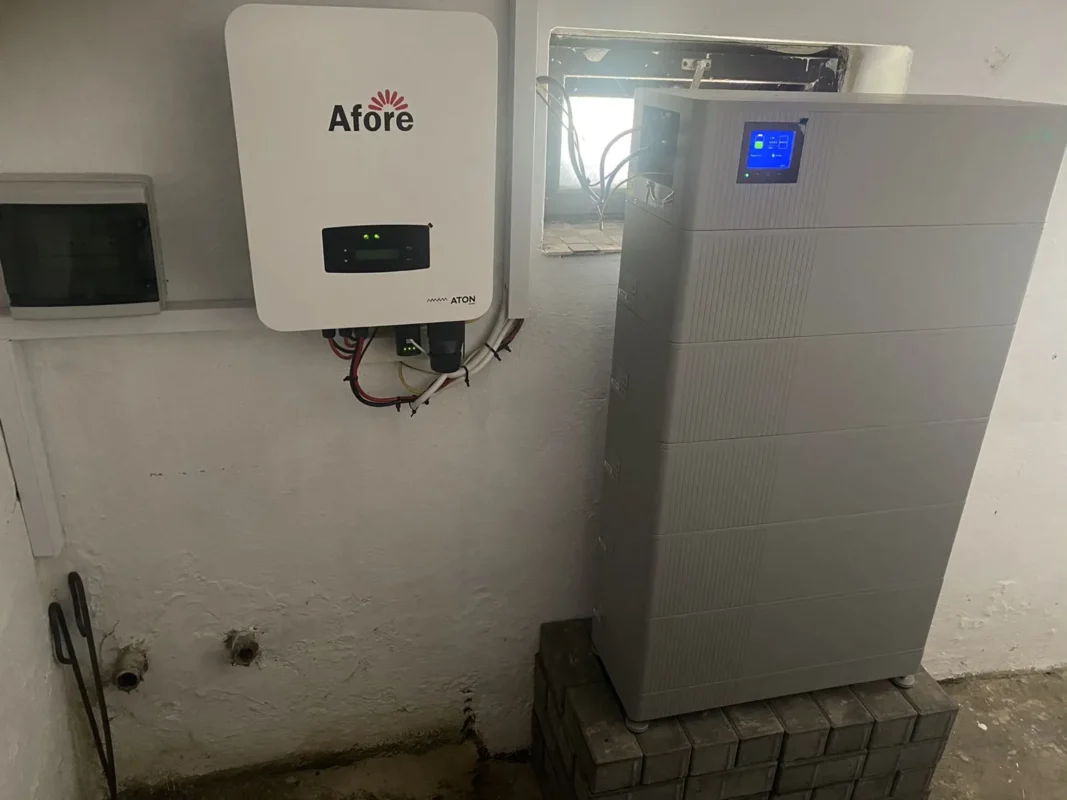
Inverter sizing has a major influence on how often the inverter operates at low, optimal, or clipped output levels. The DC/AC ratio, inverter architecture, MPPT allocation, and expansion plan should be evaluated together rather than separately.
The DC/AC ratio compares the installed DC module capacity with the inverter’s AC rating. A higher DC/AC ratio can reduce the time an inverter spends at very low load because more DC capacity is available to push the inverter into its efficient operating range under moderate irradiance. However, if the ratio is too high for the site, the system may experience more clipping during peak production.
In many commercial projects, a DC/AC ratio above 1.0 is normal because PV arrays rarely operate at nameplate capacity for extended periods. The right value depends on irradiance, module orientation, temperature, roof constraints, tariff structure, export rules, and the value of midday production. A cloudy region with frequent diffuse irradiance may justify a different ratio than a high-irradiance region where clipping risk is greater.
| Design variable | Effect on low-load operation | Trade-off to model |
|---|---|---|
| Higher DC/AC ratio | Can increase inverter loading during moderate irradiance | May increase clipping at peak output |
| Lower DC/AC ratio | May reduce clipping risk | Can increase time spent at low inverter load |
| East-west layout | Extends production profile across the day | May reduce peak output but increase part-load hours |
| Future expansion capacity | Reduces future inverter CAPEX | Can create prolonged low-load operation initially |
The strongest commercial approach is to model several DC/AC ratios and compare annual yield, clipping losses, low-load conversion losses, self-consumption value, and payback sensitivity. A single “rule of thumb” is rarely adequate for B2B project finance.
String inverters are widely used in C&I rooftops because they provide design flexibility, distributed MPPT, simpler replacement logistics, and better alignment with complex roof layouts. They can be especially suitable where different roof zones have different orientations or shading conditions. Their smaller capacity blocks also make it easier to avoid placing a large inverter at very low utilization.
Central inverters are often used in larger ground-mounted or utility-scale systems where array blocks are more uniform and economies of scale matter. They can deliver strong performance when the plant architecture is well matched to inverter loading. However, they require careful analysis of part-load operation, block sizing, redundancy, and downtime impact.
Modular architectures can help maintain efficiency by activating capacity in stages or distributing conversion across multiple units. This can be valuable for phased commercial sites, logistics parks, manufacturing facilities, or campuses where PV capacity grows over time. However, modularity also introduces additional equipment, communication, protection, and maintenance considerations. The decision should be based on lifecycle value rather than efficiency alone.
Low irradiance primarily reduces module current, but voltage is influenced by module temperature, string length, and operating point. If strings are too short, they may operate near the lower MPPT limit during hot conditions or low-light periods. If strings are too long, they may approach voltage limits during cold conditions. Both issues can reduce operating flexibility.
The DC/AC ratio also interacts with MPPT behavior. A higher DC capacity can improve inverter utilization under moderate irradiance, but it must be distributed correctly across MPPT inputs. If one MPPT is overloaded while another is lightly loaded, or if shaded and unshaded strings are combined incorrectly, the expected efficiency benefit may not materialize.
A professional design review should validate string voltage under cold, standard, hot, and low-light assumptions. It should also confirm current limits, MPPT input limits, fuse requirements, connector compatibility, and cable voltage drop. These checks are basic, but they are often the difference between theoretical inverter efficiency and real system performance.
Commercial projects are sometimes built with excess inverter capacity to allow future PV expansion. This can reduce future installation complexity, but it may create a first-phase system that operates at low inverter loading for months or years. The result can be lower part-load efficiency, weaker monitoring confidence, and a performance profile that looks disappointing compared with the client’s expectations.
Undersizing the inverter relative to the array can improve utilization and reduce low-load operation, but it increases the possibility of clipping. Whether that is acceptable depends on the value of clipped energy. In a self-consumption project where midday energy offsets expensive grid electricity, clipping may be more costly. In a project with export limits or low midday tariffs, some clipping may be financially acceptable.
For phased deployments, EPCs should compare installing all inverter capacity upfront against staged inverter installation or modular expansion. The lowest initial CAPEX is not always the lowest lifecycle cost.
Low-load behavior becomes more important when the site naturally creates long periods of partial output. C&I rooftops often have exactly these conditions.
Commercial rooftops are rarely ideal electrical environments. They may include HVAC equipment, vents, skylights, parapets, fire access pathways, telecommunications equipment, roof height changes, and irregular usable areas. These features can create shade patterns that move across the day and across seasons.
Mixed orientations also increase part-load operation. East-west layouts can be excellent for commercial self-consumption because they spread production over a longer period, but they may reduce the time spent at peak output. That makes the inverter efficiency curve across low and medium load points more relevant than the maximum value alone.
In these projects, inverter selection should consider MPPT count, stringing flexibility, shade modeling, module-level power electronics where justified, monitoring granularity, and the ability to separate different roof zones electrically. The goal is not to eliminate all part-load operation, which is impossible, but to ensure the inverter architecture fits the real roof.
Regions with long winters, frequent cloud cover, high diffuse irradiance, monsoon seasons, or strong seasonal sun-angle variation may experience more low-load operation. Annual irradiation totals alone do not fully explain this. Two sites with similar annual solar resources can have different hourly production distributions.
That is why hourly or sub-hourly simulation is important. A simple annual kWh estimate may hide the fact that a large share of operating hours occur at low power. For C&I investors, this matters because energy value is time-dependent. A kilowatt-hour produced during a high-tariff period may be more valuable than one produced during a low-tariff or export-limited period.
Often, yes. Commercial rooftops are more likely than open ground-mounted sites to have constrained placement, partial shading, multiple orientations, and irregular electrical groupings. These conditions increase the probability of part-load operation and MPPT mismatch.
However, low-load performance is not only a rooftop issue. Ground-mounted systems can also be affected by oversized inverter blocks, curtailment, grid support modes, seasonal irradiance, soiling, tracker backtracking, or early and late-day production profiles. The difference is that ground-mounted projects often have more uniform array design, while rooftops require more granular electrical planning.
PV modules degrade over time, and real systems accumulate mismatch from soiling, connector aging, replacement modules, vegetation, mechanical damage, or uneven cleaning patterns. As DC-side performance declines, the inverter may spend more time at lower loading than originally modeled.
O&M teams should therefore avoid treating low-load efficiency as a commissioning-only issue. Long-term monitoring should compare present behavior against baseline performance. If the system appears to be operating at lower load more often, the cause may be module degradation, soiling, string faults, MPPT problems, grid curtailment, or inverter issues. Without good baseline data, these causes can be difficult to separate.
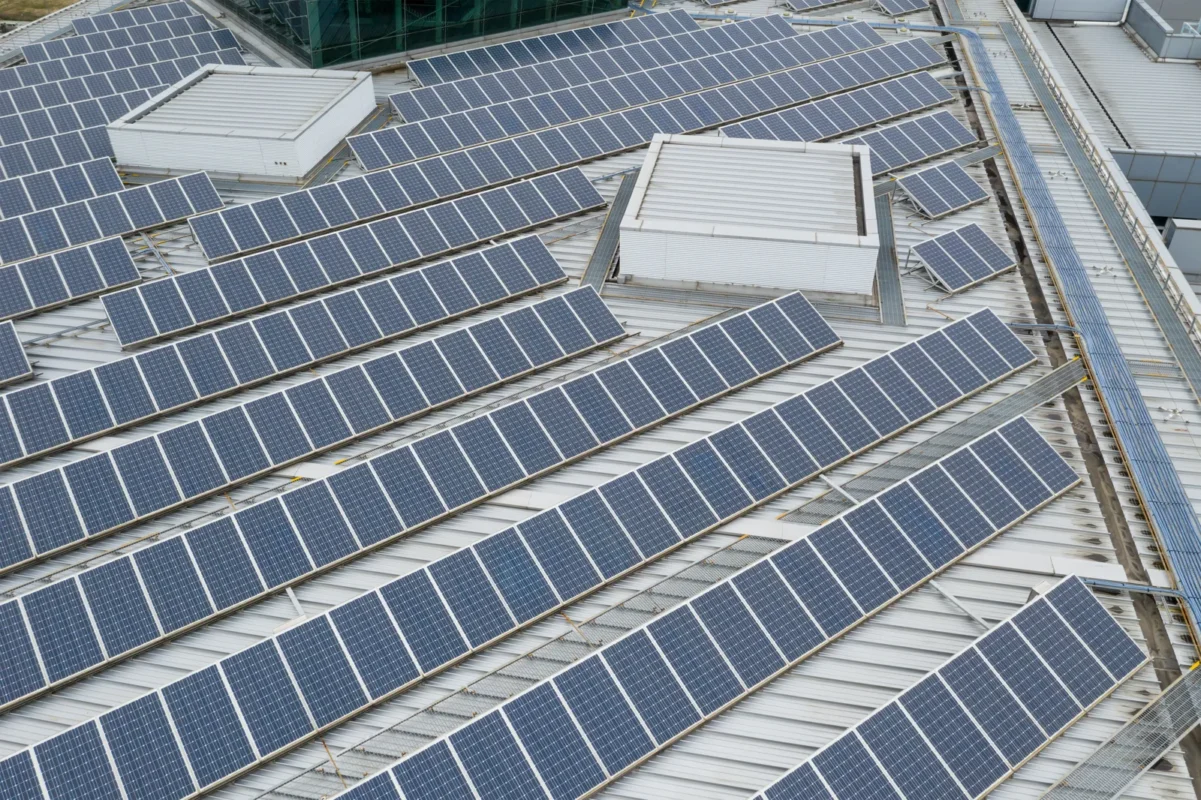
Professional inverter procurement should combine technical performance, documentation quality, serviceability, compliance, and lifecycle risk. Low-load efficiency is one important input, but it should be evaluated as part of a broader decision.
EPCs and resellers should ask suppliers for full efficiency curves at relevant DC voltages, weighted efficiency values, MPPT efficiency data, startup thresholds, standby and night consumption, thermal derating curves, certification documents, grid-code settings, and monitoring specifications. Datasheet transparency is a procurement advantage because it reduces assumptions during design and lowers the risk of disputes later.
The most useful suppliers provide enough technical detail for project-specific modeling. If low-load curves are unavailable, the EPC may need to rely on generic simulation assumptions, which increases uncertainty in the yield estimate.
Different inverter classes have different performance profiles. Transformerless string inverters often provide high conversion efficiency and flexible MPPT design for commercial rooftops. Central inverters can be effective for large, uniform systems where scale and plant-level controls are priorities. Hybrid inverters introduce additional pathways, including PV-to-load, PV-to-battery, battery-to-load, and grid-interactive operation.
Hybrid systems require special attention because efficiency depends on the operating mode. A system designed for peak shaving may operate at low charge or discharge power for long periods. A backup-focused system may have different priorities, such as reliability, transfer behavior, and reserve management. The buyer should evaluate efficiency across realistic battery dispatch scenarios rather than relying only on PV conversion figures.
Low-load efficiency is a performance issue, but commercial procurement also depends on warranty terms, replacement logistics, spare parts availability, firmware support, remote diagnostics, and local service capability. An inverter with excellent laboratory efficiency can still create project risk if failures take too long to diagnose or replacement units are difficult to source.
For resellers, after-sales support is part of product quality. For EPCs, it protects margin and client relationships. For asset owners, it affects availability, downtime cost, and confidence in long-term returns.
Commercial buyers often prefer standardized inverter platforms across multiple sites. Standardization can simplify engineering, commissioning, installer training, monitoring, spare parts, and reporting. However, the chosen platform must support different project sizes, voltage classes, communication protocols, grid-code requirements, and expansion plans without compromising part-load performance.
For multi-site portfolios, the procurement question should not be “Which inverter has the highest peak efficiency?” but “Which inverter platform delivers reliable, compliant, measurable performance across our site types?”
Grid compliance can influence inverter operating behavior. Commercial inverters must satisfy local interconnection rules, including voltage and frequency ride-through, anti-islanding, reactive power capability, power factor control, ramp-rate limits, and communication requirements. These functions are essential for grid stability, but they can affect how the inverter operates under low-generation or constrained-output conditions.
Grid codes vary by country, utility, voltage level, and project size. In many markets, inverters must remain connected during certain voltage or frequency disturbances and provide defined responses. Standards and grid-code frameworks such as IEEE 1547 in the United States and European network requirements influence inverter certification and commissioning settings.
EPCs should review compliance documentation before procurement, not after installation. Missing or incomplete grid-code documentation can delay permitting, interconnection approval, and commercial operation. In some projects, the inverter’s certified operating modes may also affect reactive power behavior and apparent power availability.
Commercial sites may be required to operate at a specified power factor or provide reactive power support. This can reduce the active power capacity available within the inverter’s apparent power limit. Under low-generation conditions, reactive power control may also influence operating behavior and monitoring interpretation.
For example, an inverter may appear to export less active power than expected because it is supporting a power factor requirement or responding to grid voltage conditions. Without reviewing grid settings and power quality data, O&M teams may incorrectly attribute the issue to poor inverter efficiency.
Many C&I systems operate under export limitations or zero-export rules. In these projects, the inverter may be intentionally held below available PV power when on-site load is low or export capacity is restricted. This can increase the number of hours spent at reduced output, even when irradiance is strong.
Low-load efficiency in export-limited systems should be evaluated together with the energy management system. The quality of load matching, export control response, meter accuracy, communication latency, and battery integration can all influence usable energy. In a zero-export project, the best inverter is not simply the most efficient converter; it is the inverter that works reliably with the site controller and load profile.
Even a well-selected inverter can underperform if installation and commissioning are weak. Many low-output complaints are caused by stringing errors, voltage mismatch, communication problems, incorrect settings, or environmental conditions rather than the inverter’s intrinsic efficiency.
Before installation, the EPC should verify string length, voltage limits, current limits, polarity, connector compatibility, conductor sizing, grounding method, and MPPT allocation. The string design should be checked under cold and hot temperature assumptions, not only under standard test conditions.
Incorrect MPPT grouping is a common source of underperformance. Strings with different orientations, shading patterns, or module counts should not be combined without careful analysis. If they are, the inverter may track a compromise operating point and lose energy during variable conditions.
Commissioning should confirm more than maximum output during favorable conditions. It should verify startup behavior, MPPT tracking, monitoring accuracy, communication stability, firmware version, alarm status, grid-code settings, and response during lower irradiance periods.
A useful commissioning baseline includes DC input power, AC output power, MPPT voltage and current, ambient and inverter temperature, irradiance, grid voltage, power factor, and any curtailment commands. This baseline becomes valuable later when O&M teams need to distinguish equipment faults from weather, soiling, degradation, or grid behavior.
Inverter efficiency and output can be affected by temperature. Poor mounting location, insufficient clearance, direct sun exposure, dust accumulation, blocked airflow, or high ambient heat can trigger derating. Although derating is often associated with high load, thermal behavior can also distort expectations across the operating range.
A commercial installation should respect manufacturer clearance requirements, ventilation guidance, enclosure ratings, and ambient temperature limits. Inverters installed in hot rooftop environments, mechanical rooms, or poorly ventilated electrical spaces should be reviewed carefully.
Real-world efficiency problems often trace back to avoidable installation issues. Mismatched string lengths, incorrect polarity, excessive DC voltage drop, undersized AC conductors, loose terminals, improper grounding, water ingress, wrong grid settings, and poor communication setup can all reduce energy output or create unstable operation.
These problems may appear in monitoring as low conversion efficiency, low AC output, frequent alarms, or inconsistent MPPT behavior. The remedy is disciplined installation quality, thorough commissioning, and documentation that allows future technicians to understand the original design intent.
Monitoring can identify low-load efficiency losses, but only if the data is detailed enough. Basic production monitoring may show that energy is below forecast, but it may not explain why. To isolate inverter-side issues, O&M teams need DC input data, AC output data, MPPT-level values, inverter status, irradiance, temperature, grid measurements, and curtailment signals.
Yes, but with limitations. Conversion efficiency can be estimated by comparing DC input power with AC output power, but the result must be interpreted carefully. Sensor accuracy, data resolution, time synchronization, irradiance variability, and measurement location all affect the calculation. At very low power, small measurement errors can create large apparent efficiency differences.
For commercial assets, one-minute or similarly granular data is often more useful than coarse interval data when diagnosing low-load behavior. Irradiance sensors and temperature measurements improve confidence because they allow comparison against expected production. Without them, it is difficult to separate inverter losses from weather variation or module-side underperformance.
The most useful KPIs combine energy performance, availability, and operating context.
| KPI | What it helps diagnose |
|---|---|
| Performance ratio | Overall system performance adjusted for irradiance |
| Питома врожайність | Energy production per installed kW |
| Inverter availability | Downtime and operational readiness |
| Conversion efficiency | DC-to-AC performance under measured conditions |
| Clipping loss | Energy not converted due to inverter power limit |
| Curtailment loss | Energy restricted by grid or export control |
| MPPT voltage stability | Tracking quality and string design issues |
| Частота несправностей | Reliability and recurring operating problems |
These KPIs help separate inverter-side issues from module problems, weather effects, grid constraints, or on-site load behavior. For portfolio owners, consistent KPI definitions are essential because they allow meaningful comparison across sites and inverter platforms.
Modern commercial inverters rely heavily on firmware for grid-code settings, protection behavior, monitoring, communication, and optimization functions. Firmware updates can improve operation, but they can also change settings or performance characteristics if not managed properly.
EPCs and asset managers should maintain records of firmware versions, parameter settings, grid-code profiles, communication configurations, and update dates. When performance changes after an update, these records help determine whether the cause is software-related, environmental, or hardware-based.
Remote diagnostics can reduce truck rolls and speed up troubleshooting, especially for distributed C&I portfolios. However, remote access must be secure, documented, and compatible with the owner’s IT requirements.
Low-output behavior may be caused by inverter faults, but it may also result from insulation faults, grid disturbances, module mismatch, soiling, high temperature, incorrect settings, sensor errors, or curtailment commands. Warranty discussions are more productive when the EPC can provide commissioning baselines, alarm histories, trend data, photos, string test results, and grid measurements.
Good documentation reduces dispute risk. It also helps suppliers respond faster because they can distinguish product issues from site-side causes.

Part-load efficiency becomes financially relevant when it changes annual energy yield, avoided electricity cost, export revenue, demand charge reduction, or asset availability. A small percentage difference may not justify a higher inverter cost in every project, but it should be quantified before procurement.
The financial impact depends on how often the inverter operates at low load and how valuable the lost energy would have been. A 1% difference in conversion efficiency during a small number of hours may be immaterial. The same difference across many low-irradiance hours, many sites, or high-value tariff periods can matter.
For example, consider a commercial portfolio producing 10 GWh per year. A seemingly small performance difference that affects 1% of annual usable energy equals 100 MWh. If that energy offsets high retail electricity prices, the value can be significant over the life of the assets. The correct way to evaluate this is through energy simulation and financial modeling, not by comparing isolated datasheet figures.
A lower-cost inverter may be acceptable if its efficiency curve, warranty, compliance, and support are sufficient for the site profile. A higher-efficiency model may be justified in projects with frequent low-load operation, complex roof conditions, high electricity prices, or strict performance guarantees.
The commercial comparison should include total installed cost, expected yield, clipping and curtailment behavior, warranty value, service cost, downtime risk, monitoring integration, and replacement logistics. The lowest equipment price does not always produce the best lifecycle result.
Inverter-related OPEX includes truck rolls, diagnostics, replacement labor, spare parts, firmware support, monitoring subscriptions, and lost production during downtime. For commercial buildings, service access can be difficult. Work may require roof access planning, safety permits, business-hour restrictions, or coordination with facility operations.
In these cases, serviceability can be as important as a small efficiency difference. An inverter platform with strong diagnostics, accessible replacement procedures, and local support may reduce lifecycle cost even if its peak efficiency is not the absolute highest in the market.
For large portfolios, inverter selection should be evaluated through levelized cost of energy, availability, standardization, service network strength, compliance coverage, and monitoring integration. Low-load efficiency is one input in lifecycle value. It should not be ignored, but it should not be treated in isolation.
Portfolio owners should also consider whether one inverter family can support different site sizes, voltage requirements, grid-code settings, and reporting needs. Standardization can reduce engineering hours, spare parts complexity, and O&M training requirements.
Battery integration changes the low-load efficiency discussion because energy may pass through several conversion pathways. A hybrid inverter or coupled storage system should be evaluated under actual operating modes, not only under PV generation mode.
Commercial batteries used for peak shaving, backup, demand response, or time-of-use optimization may charge and discharge at variable power levels. At low charge or discharge power, fixed losses can again become significant. The system may operate in PV-to-load, PV-to-battery, battery-to-load, grid-to-battery, or battery-to-grid modes depending on the application.
Each path has different efficiency implications. A high PV conversion efficiency does not automatically mean high round-trip battery efficiency. EPCs should request mode-specific data and model dispatch profiles based on the facility’s load curve.
Commercial PV economics often depend on maximizing self-consumption and reducing demand charges. Energy management systems can improve usable PV value by coordinating inverter output, battery dispatch, load control, and export limitation. However, they can also keep the inverter operating at variable or reduced output.
Integration quality matters. Metering accuracy, communication speed, control logic, fail-safe behavior, and compatibility with grid requirements all affect real performance. In export-limited sites, the energy management system may be just as important as the inverter efficiency curve.
System integrators working across multiple facilities should evaluate whether the inverter platform supports consistent monitoring, remote configuration, open communication protocols, cybersecurity requirements, and expansion. Scalable design simplifies reporting, training, spare parts, and O&M workflows.
Low-load efficiency should be part of this scalability review because different sites may have different operating profiles. A platform that performs acceptably across a wide range of loading conditions can reduce engineering risk.
Modular deployment can be valuable when a site will expand in phases or when future load growth is uncertain. Instead of installing a large inverter that operates at low load for several years, the project can add inverter capacity as PV capacity or facility demand grows. This can improve utilization and redundancy.
However, modularity is not automatically better. Additional units may increase installation complexity, protection requirements, communication points, maintenance tasks, and CAPEX. The right decision depends on the expansion schedule, load growth confidence, service strategy, and financial model.
A disciplined evaluation process helps avoid both underengineering and overpaying. The strongest approach is to connect technical inverter data with site-specific design and financial modeling.
| Evaluation step | Commercial purpose |
|---|---|
| Review full efficiency curves | Understand performance across realistic load points |
| Model hourly or sub-hourly production | Identify how often low-load operation occurs |
| Test DC/AC ratio scenarios | Balance low-load utilization against clipping |
| Validate MPPT and string design | Prevent mismatch and voltage-window losses |
| Confirm grid-code documentation | Reduce permitting and commissioning risk |
| Assess monitoring and serviceability | Lower O&M cost and downtime exposure |
| Compare lifecycle economics | Select based on total value, not headline efficiency |
This framework is especially important for projects with performance guarantees, third-party financing, multi-site rollout plans, or strict interconnection requirements. It also helps facility owners ask better questions during procurement.
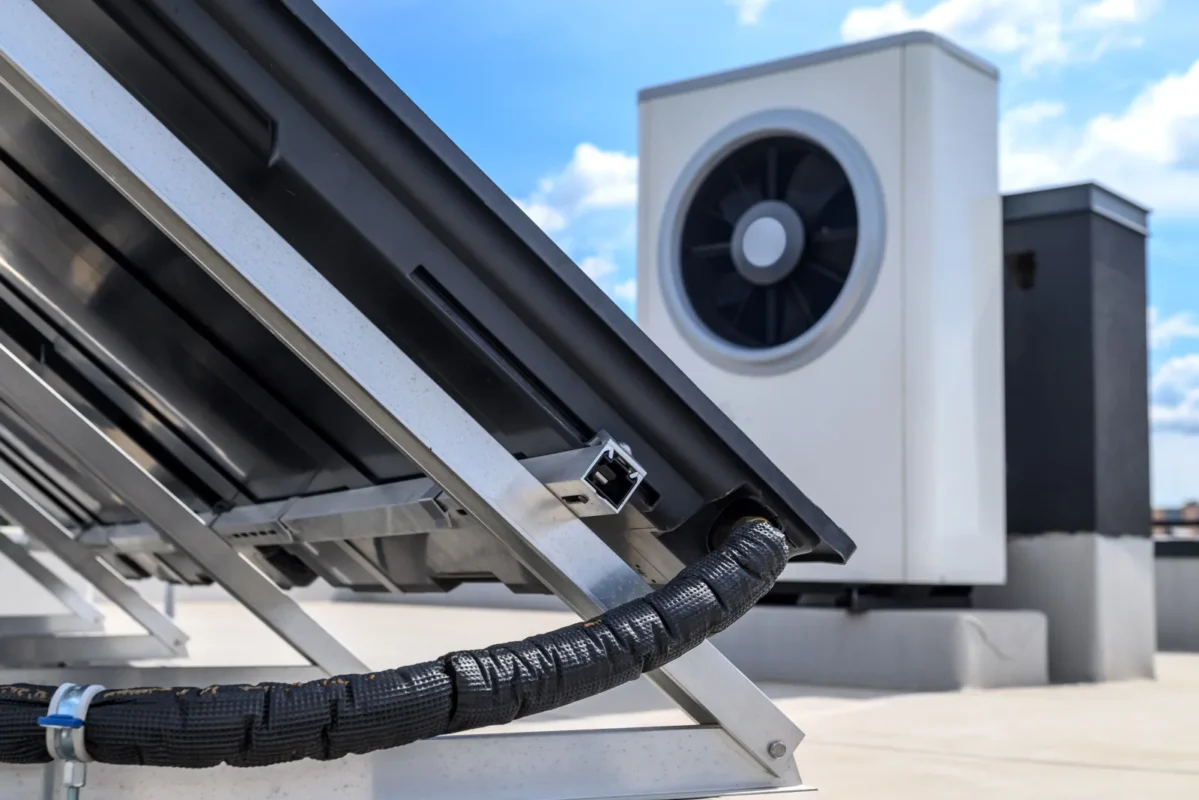
Inverter efficiency at low load, also referred to as partial load efficiency, describes how efficiently a solar inverter converts DC power to AC power when running at only 5% to 20% of its rated capacity. It is a core metric of low light solar technology and directly impacts commercial solar yield optimization, as C&I PV systems frequently run under partial irradiance, shading, seasonal changes and export limits, making it far more practical than ideal lab parameters for real project deployment.
Peak inverter efficiency only reflects the optimal operating point of a solar inverter and cannot represent actual on-site running conditions throughout the year. Real-world annual yield relies heavily on partial load efficiency and optimizing low-light PV performance, so commercial solar decision-makers need to check full efficiency curves, weighted efficiency and actual site simulation data instead of only referencing peak values when cooperating with solar inverter manufacturers.
Solar yield in cloudy weather is largely determined by the low-load performance of solar inverters, as cloudy conditions keep PV systems operating at partial output most of the time. Reasonable DC/AC ratio matching can lift overall output by reducing ultra-low load runtime, while proper parameter configuration also helps optimize low-light PV performance and stabilize energy harvest under persistent overcast climates.
High sensitivity MPPT is a key part of low light solar technology that greatly enhances PV energy capture under weak irradiance and low-load scenarios. It can accurately track subtle power changes in shaded or cloudy environments, effectively boosting low-light harvest and supporting long-term commercial solar yield optimization for C&I rooftop and distributed PV projects.
Shading is one of the biggest factors dragging down hybrid inverter efficiency under partial load, and it easily causes inconsistent module output and unstable MPPT operation at low load. Professional monitoring can distinguish low-load energy losses from shading, soiling and module mismatch, helping EPCs adopt targeted layouts and device selection to maintain stable partial load efficiency of solar inverters all year round.
https://iea-pvps.org/research-tasks/performance-operation-and-reliability-of-photovoltaic-systems








 Turkish
  Romanian