




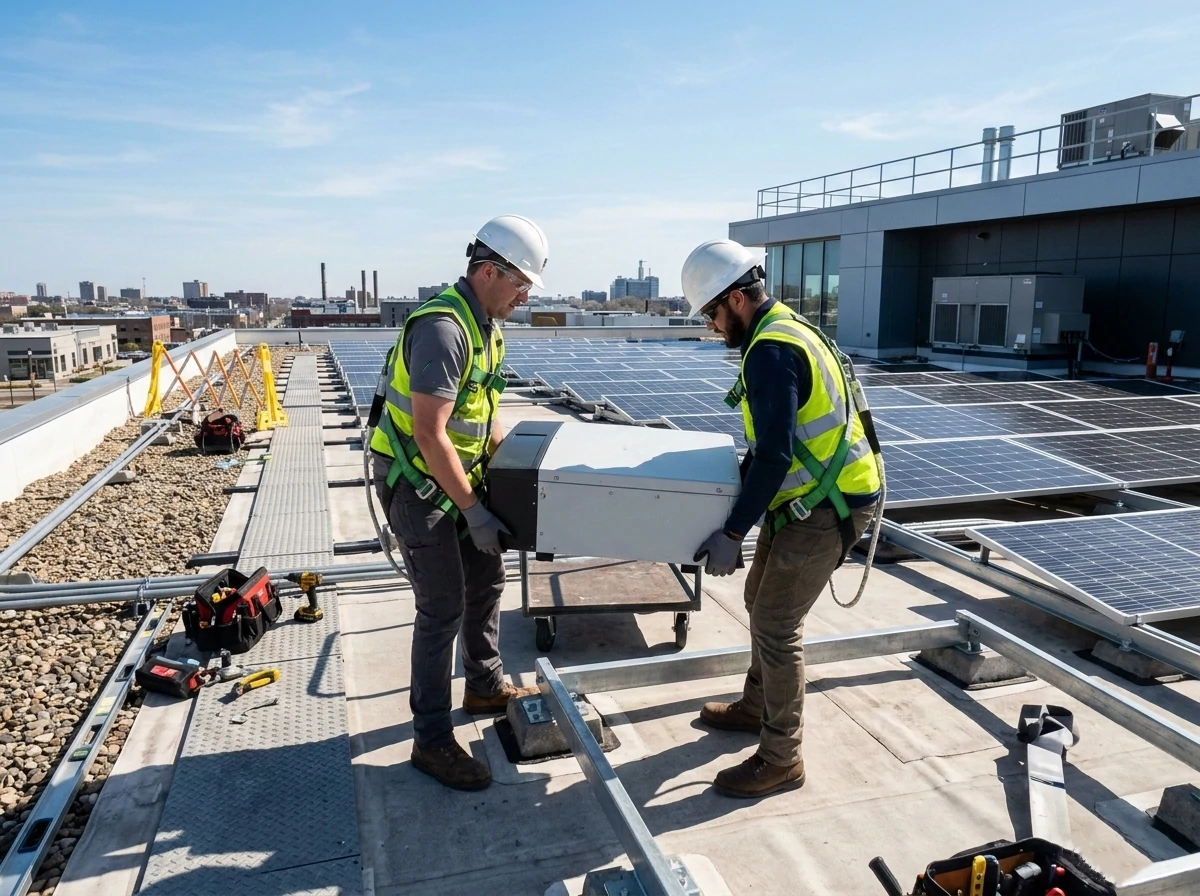
If you’re diving into commercial solar installations, one of the first questions you might ask is: “what’s the commercial solar inverter weight, and how will I handle it safely?” Understanding the weight, dimensions, and logistics of solar inverters is crucial for project planning, labor allocation, and overall efficiency. In this comprehensive guide, I’ll break down everything from inverter dimensions and shipping PV equipment to two-person lift solar best practices, so you can manage your installations smoothly and safely.
When dealing with solar inverters at a commercial scale, weight isn’t just a number—it’s a core factor in planning installation logistics. A heavier inverter can affect:
Think of it this way: a 100kW solar inverter isn’t just a box—it’s a piece of equipment that can weigh hundreds of pounds. Underestimating its weight could lead to safety hazards, delays, and unnecessary costs.
In commercial-scale systems, inverter size typically scales with output capacity. As output increases, so does internal heat management, magnetic components, casing thickness, and overall structural reinforcement. All of that adds up.
From years of working around commercial installations, I can tell you this: underestimating commercial solar inverter weight is one of the most common logistical mistakes in early-stage planning. Crews assume it’s “just another electrical cabinet,” and then they realize it requires special handling.
To help you avoid that situation, let’s break it down by inverter type.
String units are the most common type of solar inverter used in commercial rooftop systems today. When people ask about commercial solar inverter weight, they’re usually referring to these.
Here’s what you can expect in real-world numbers:
So how heavy is that in practical terms?
A 100kW string inverter often weighs around 380–400 lbs. That number is important because it determines whether a two-person lift solar method is realistic—or dangerous.
In my experience, once you cross the 250–275 lb range, manual lifting becomes questionable unless mechanical assistance is used. Even if the weight technically allows a two-person lift solar approach, the inverter dimensions also matter. A tall, narrow cabinet can shift its center of gravity unexpectedly during lifting.
Another thing to consider is wall-mounting. Many commercial string inverters are designed for vertical mounting, which means you’ll need:
When evaluating commercial solar inverter weight, don’t just think about moving it once. Think about holding it steady at chest height while aligning mounting brackets. That’s where installation injuries usually happen.
For rooftop projects, string inverters sometimes avoid crane costs because their commercial solar inverter weight is manageable with lifts or stair-climbing equipment. However, always check the official weight and inverter dimensions before planning access routes.
Now we move into serious territory.
Central inverters are dramatically heavier than string units. When discussing commercial solar inverter weight in utility-scale or large commercial systems, this category changes the logistics entirely.
Typical weight ranges:
At this level, two-person lift solar is obviously out of the question. You’re dealing with industrial rigging procedures, forklifts, cranes, and sometimes reinforced mounting pads.
The reason central inverters are so heavy comes down to:
In central systems, commercial solar inverter weight isn’t just about installation—it’s about foundation planning. Rooftop installations often require structural engineer approval. Ground-mounted systems require concrete pads sized specifically to support both static and dynamic loads.
Shipping is another factor. When handling shipping PV equipment for central inverters:
I’ve seen projects delayed simply because the shipping PV equipment team didn’t verify dock clearance heights against actual inverter dimensions. That’s an expensive oversight.
So when central systems are involved, treat commercial solar inverter weight as a structural engineering issue—not just a logistics line item.
Hybrid systems introduce another layer of complexity. A hybrid inverter combines PV conversion with storage integration, and sometimes grid-support features. That added functionality usually increases commercial solar inverter weight.
Typical ranges for commercial-scale hybrid inverter units:
Why heavier?
Because hybrid units often include:
Compared to a standard solar inverter of the same output, a hybrid inverter almost always carries extra mass.
When evaluating commercial solar inverter weight for hybrid systems, I recommend focusing on three areas:
For larger hybrid systems, crane lifting is often required. Even when the commercial solar inverter weight technically allows forklift handling, rooftop elevation still changes the equation.
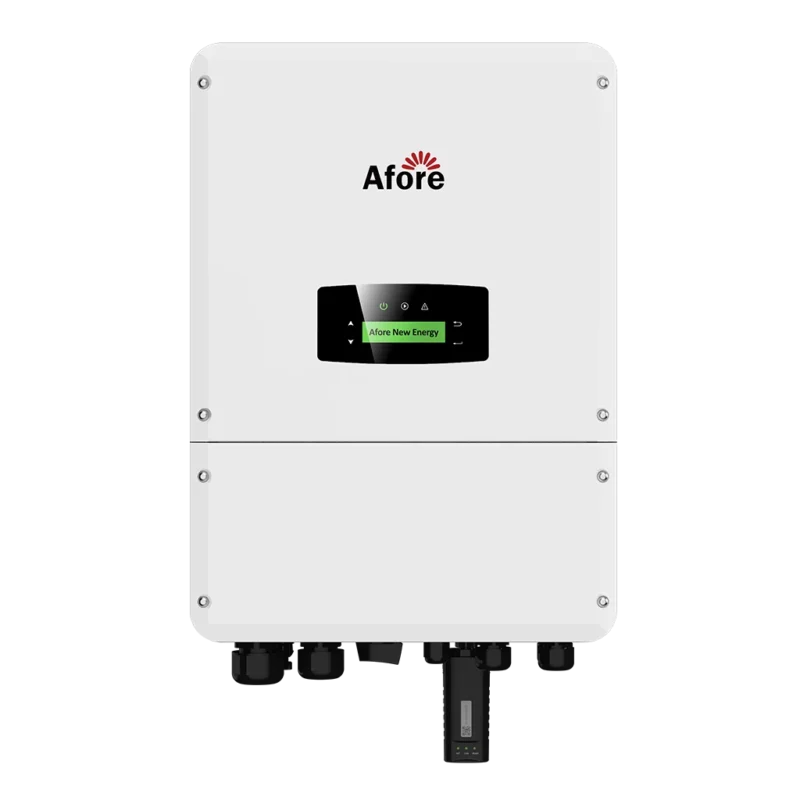
Weight is just one part of the puzzle. Inverter dimensions matter for:
Practical tip: Always measure the installation path. You might need to remove ceiling tiles or schedule a crane if dimensions exceed doorway heights.
Coordinating the shipping of commercial solar inverters can be tricky. Here’s what I’ve learned from handling multiple projects:
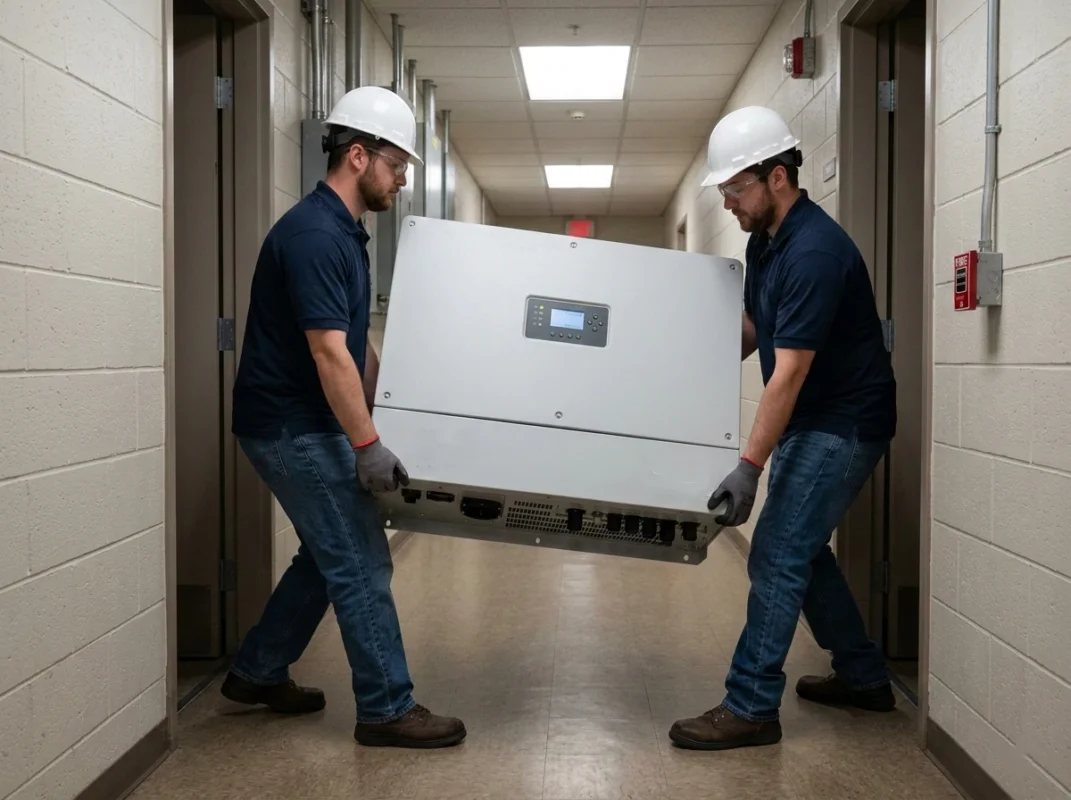
When we talk about commercial solar inverter weight, we’re not just talking about numbers on a spec sheet. We’re talking about real-world safety, labor coordination, insurance risk, and project timelines.
I’ve seen projects delayed not because the electrical design was wrong—but because nobody properly planned how to move a 400-pound cabinet onto a rooftop. That’s the difference between theory and field reality.
Handling heavy inverters safely requires three things:
Before any lift happens, always confirm:
And here’s something many teams overlook: the installation path matters as much as the final mounting position. A 350 lb solar inverter might technically fit through a doorway, but tight stairwells and uneven surfaces make that same commercial solar inverter weight far more dangerous to handle.
Let’s break down the two most common handling approaches.
The two-person lift solar method is often discussed when dealing with smaller commercial string units. But let’s be realistic—this approach has limits.
In general:
Even if the commercial solar inverter weight falls within acceptable manual lifting ranges, the inverter dimensions can complicate things. Tall vertical cabinets shift weight upward, creating instability during movement.
Here’s what I recommend from field experience:
Before attempting a two-person lift solar maneuver:
Do not improvise mid-lift. Once that weight is off the ground, repositioning becomes difficult and risky.
Lifting straps reduce strain and improve grip. They also distribute the commercial solar inverter weight more evenly between two installers.
Back injuries are one of the most common causes of lost labor time in commercial solar work. Proper technique matters:
I always tell crews: silence during a lift is a red flag. If communication stops, coordination stops.
There’s no pride in forcing a two-person lift solar solution when the commercial solar inverter weight exceeds safe limits. If the unit feels unstable or overly heavy, stop immediately and reassess.
Once commercial solar inverter weight moves beyond safe manual handling, mechanical assistance becomes mandatory—not optional.
This typically applies when:
Mechanical lifting equipment includes:
Each tool addresses a different stage of handling.
When shipping PV equipment arrives onsite, forklifts are usually the first line of movement. Always verify:
Never assume the crated weight matches the net unit weight. Crating can add significant extra mass.
For commercial buildings without exterior crane access, interior material lifts are often used. These are particularly useful when:
Even when the commercial solar inverter weight is manageable, vertical lifting eliminates strain and reduces risk.
When dealing with high rooftop systems or large hybrid inverter units, cranes are typically the safest option.
If a unit exceeds 500 lbs, or rooftop access is limited, crane scheduling should be part of early project planning. Delaying that decision often leads to rushed last-minute logistics.
From experience, here are critical crane-lift best practices:
Weather matters too. High wind can make even moderate commercial solar inverter weight unstable mid-air.
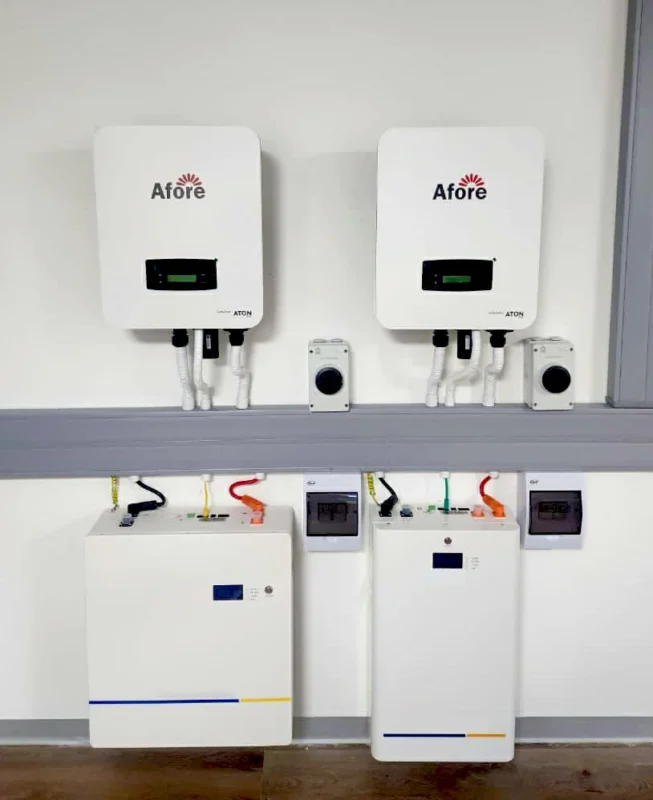
For projects with 50+ inverter sites, logistics planning becomes a game-changer. Here’s how to make it manageable:
You can read every datasheet twice, run load calculations three times, and still run into surprises onsite. That’s the reality of commercial solar work. And when it comes to commercial solar inverter weight, experience on the ground matters just as much as engineering drawings.
Over the years, I’ve been involved in enough rooftop and ground-mount projects to see patterns—what works smoothly, what causes delays, and what quietly increases risk. Below are practical, field-tested installation tips that directly relate to managing commercial solar inverter weight safely and efficiently.
Most teams confirm inverter dimensions and mounting clearances. Fewer teams measure the route the unit must travel.
Before installation day, verify:
A 400 lb unit might technically be within safe handling range, but if the inverter dimensions barely clear a doorway, you’ll lose maneuvering room. Tight angles amplify the risk associated with commercial solar inverter weight.
One of the most common mistakes? Realizing too late that a roof hatch is 2 inches too narrow. At that point, crane rental becomes an emergency expense instead of a planned line item.
Another field lesson: never assume shipping labels reflect the actual unit weight.
When shipping PV equipment, packaging can add significant extra mass. Pallets, protective framing, and moisture barriers may increase total weight by 10–20%.
Before moving anything:
Ignoring this distinction can overload lifting equipment or cause pallet failure during staging.
Let’s talk honestly about the two-person lift solar approach.
It works—within limits.
If the commercial solar inverter weight is under 250 lbs and the center of gravity is stable, a coordinated two-person lift solar method can be safe. But once you cross the 300 lb range, fatigue sets in quickly.
On long installation days, fatigue is a hidden risk multiplier. Even if a team can lift the weight once, repeated movement increases injury probability.
My rule of thumb:
Smart scheduling protects both your crew and your insurance record.
The more times you move a unit, the higher the risk.
When managing commercial solar inverter weight onsite:
Every extra lift adds strain. I’ve seen crews move a solar inverter three times simply because staging wasn’t planned correctly.
For hybrid inverter systems, staging becomes even more important. Because hybrid inverter units often weigh more and have larger inverter dimensions, efficient staging can reduce handling steps by half.
Nothing slows down a job like holding 350 lbs in position while someone realizes anchor holes weren’t drilled.
Before lifting any unit:
Commercial solar inverter weight puts significant stress on mounting hardware. Anchors must match both weight and wall material (concrete, steel framing, reinforced masonry, etc.).
For rooftop installations, structural engineers may specify load distribution plates. Never skip that review when dealing with higher commercial solar inverter weight ranges.
Not all 400 lb units behave the same.
A wide, low cabinet distributes weight evenly. A tall cabinet concentrates mass higher up. That difference affects stability during lifting.
Always:
When a solar inverter shifts unexpectedly mid-lift, reaction time is limited. Anticipating weight distribution prevents panic adjustments.
Weather plays a bigger role than most people expect.
High wind can turn a moderate commercial solar inverter weight into a dangerous swinging load during crane lifts. Rain increases slip risk during manual handling. Extreme heat accelerates fatigue.
Before rooftop lifts:
Environmental awareness is part of professional installation standards, not an afterthought.
Logistics directly impact installation safety.
If shipping PV equipment arrives days before installation, inverters may sit exposed or require extra movement. If equipment arrives late, crews rush lifting procedures.
Best practice:
Well-timed logistics reduce unnecessary handling of commercial solar inverter weight.
For heavier string units, hybrid inverter systems, or central configurations, written lift plans add professionalism and protection.
A basic lift plan should include:
This documentation supports compliance standards and demonstrates responsible project management.
This is the most important lesson I’ve learned.
If a lift feels wrong, stop.
If the inverter dimensions don’t allow safe maneuvering, reassess.
If the commercial solar inverter weight exceeds your initial estimate, adjust the plan.
I’ve seen crews try to “muscle through” a problem to stay on schedule. That almost always backfires.
Professional installation isn’t about speed—it’s about control.
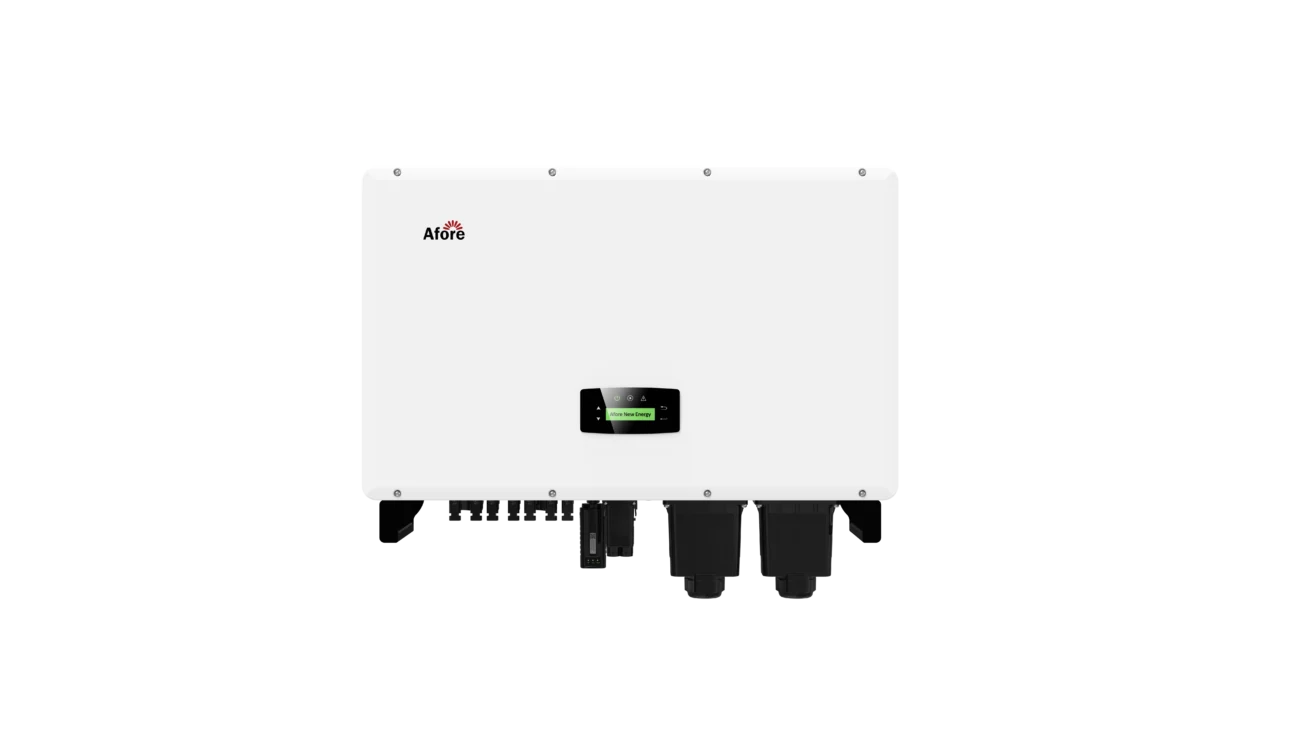
Hybrid inverters add an extra layer of complexity to commercial solar projects. Unlike standard solar inverters, they combine photovoltaic conversion with energy storage or grid-interactive capabilities, which makes both their commercial solar inverter weight and inverter dimensions larger and more challenging to handle. Ignoring these factors can lead to delays, safety hazards, and unnecessary costs.
Hybrid inverters are generally heavier than comparable string inverters because they house additional electronics, heat sinks, and sometimes integrated battery management components. For commercial units:
This means manual handling is rarely an option for large hybrid units. Even with a two-person lift solar approach, the risk of strain or injury is high. Field experience shows that using appropriate mechanical assistance is the safest and most efficient choice.
Because hybrid inverters often connect directly to storage systems or grid-interactive circuits, placement is critical. Consider the following:
Improper planning of hybrid inverter placement can lead to additional lifts or repositioning, which increases labor exposure to heavy equipment and extends project timelines.
Handling hybrid inverters safely requires a step-up in planning compared to standard commercial solar inverter weight. Best practices include:
The combination of extra weight and larger inverter dimensions makes miscalculations particularly costly with hybrid systems.
Hybrid inverters often require specialized shipping. Crates may be larger and heavier, and the shipping PV equipment plan must account for:
Planning shipping around hybrid inverter specifications ensures the installation crew isn’t surprised by oversized units, which could require last-minute equipment rental or create scheduling conflicts.
Because hybrid inverters integrate multiple systems, mishandling can lead to more than just physical injury. Risks include:
Always follow recommended lifting points, verify commercial solar inverter weight, and ensure mechanical lifting equipment is rated for the total load.
From field experience, the most efficient way to handle hybrid inverters is:
Handling hybrid inverters isn’t just about strength—it’s about preparation, coordination, and foresight. Treat them as a critical piece of the system, and your project will proceed smoothly without unnecessary risks.
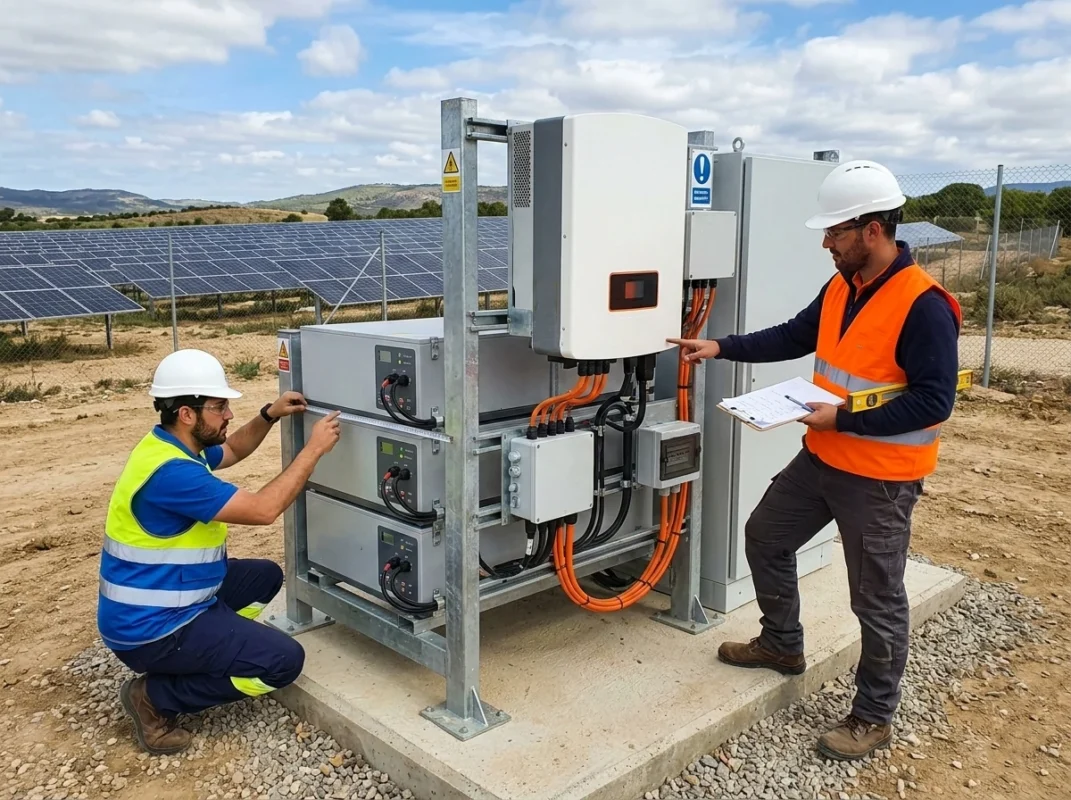
Understanding commercial solar inverter weight is not just about numbers—it’s about planning, safety, and efficiency. Key points to remember:
By paying attention to these details, you’ll ensure that your commercial solar installations are safe, efficient, and cost-effective.
A 100kW string inverter usually weighs around 380–400 lbs, depending on hybrid features and cooling components. Two-person lift solar methods may be sufficient for handling smaller variants, but check the datasheet first.
Yes. For central inverters and hybrid inverters above ~500 lbs, a crane or hoist is typically required. Manual lifting is unsafe for these sizes.
Shipping dimensions vary by capacity. A 100kW string inverter may be ~60” H x 30” W x 12” D, while central inverters can exceed 120” H x 50” W x 24” D. Always confirm with your supplier.
• Consolidate shipments for cost efficiency.
• Stage equipment near each site.
• Maintain clear documentation of inverter dimensions and weight.
• Schedule deliveries to avoid overlapping site traffic.
Typically, a 50–100kW inverter requires one pallet, while larger hybrid or central inverters may occupy multiple pallets. Proper palletization prevents shipping damage.








 Turkish
  Romanian