




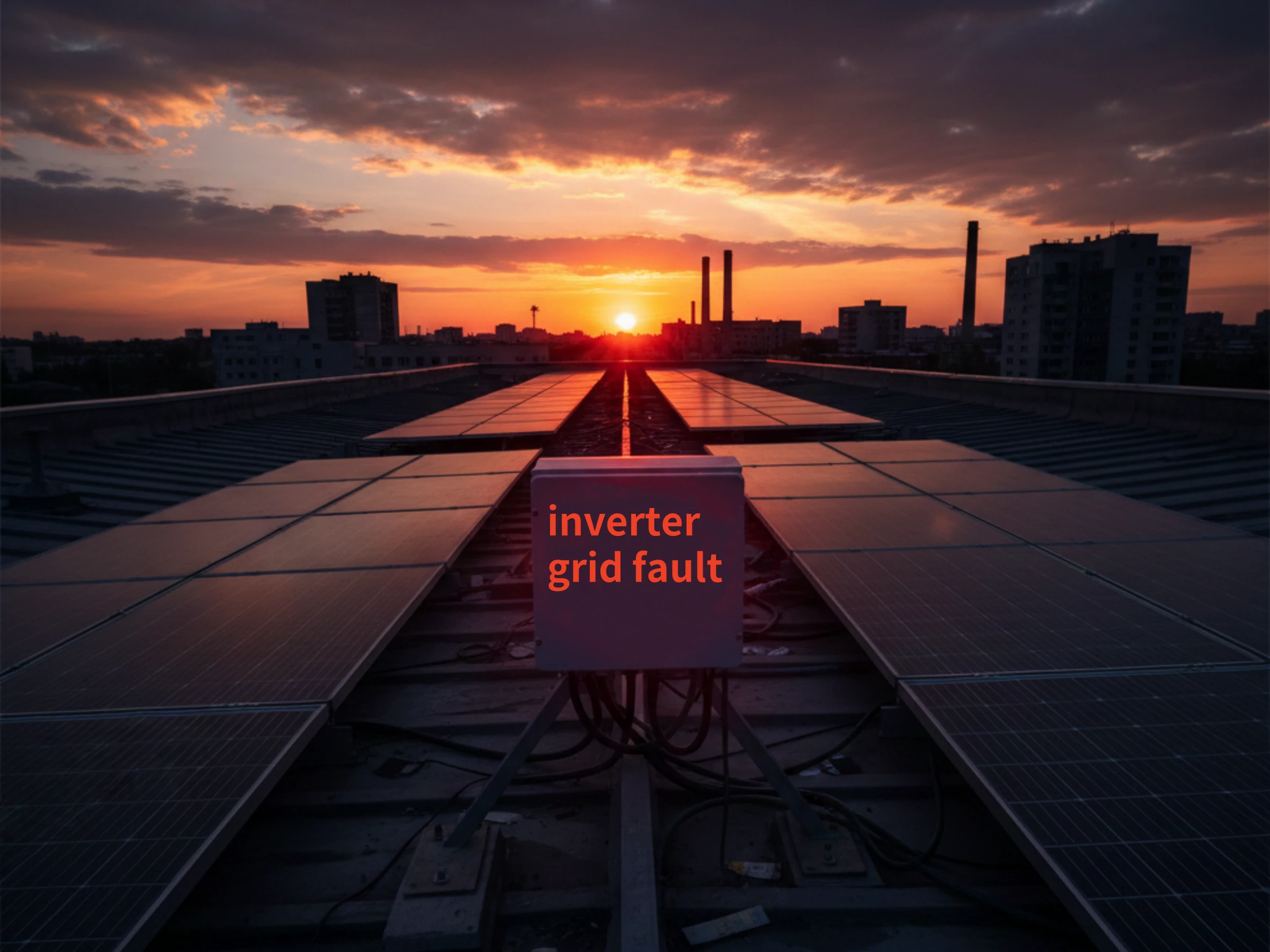
If you’ve ever checked your system and seen the message inverter grid fault, you probably felt that mix of confusion and frustration. The panels look fine. The sun is out. Yet your system isn’t producing power.
You’re not alone.
An inverter grid fault is one of the most common issues reported in any solar inverter system. And the tricky part? It’s often not actually caused by the inverter itself.
In this guide, I’ll walk you through what an inverter grid fault really means, why it happens so often, how to troubleshoot it properly, and how to stop it from turning into a recurring nightmare.
At its core, an inverter grid fault means one simple thing:
Your inverter is unhappy with what it’s seeing from the electrical grid.
Your solar inverter constantly monitors grid voltage, frequency, and stability. If anything goes outside allowed limits—even briefly—it triggers a grid fault and shuts down.
Imagine the grid as a road and your inverter as a cautious driver.
If the road suddenly cracks, shakes, or changes direction, the driver stops.
That’s exactly what happens during an inverter grid fault.
Many people assume an inverter grid fault is just a warning. In reality, it’s a protective shutdown. The solar inverter is doing its job—preventing unsafe power from feeding back into the grid.
If there’s one question I get asked over and over, it’s this:
“Why does inverter grid fault happen so often, even when my system is new?”
The honest answer is simple but uncomfortable — solar systems are evolving faster than the power grid itself. An inverter grid fault isn’t usually caused by poor equipment or bad luck. It’s the result of several structural issues that affect modern solar installations almost everywhere.
Let’s break down why this problem has become so common.
Traditional power grids were built with one assumption: electricity flows in one direction — from the grid to your home. Solar changed that completely.
Now, during peak sunlight hours, thousands of homes push power back into the grid at the same time. When that happens, voltage levels can rise quickly and unpredictably. As soon as those levels exceed permitted limits, the inverter grid fault is triggered.
From the solar inverter’s perspective, this isn’t a failure. It’s a safety response. The inverter disconnects because the grid no longer looks stable or compliant.
In neighborhoods with a lot of solar installations, inverter grid fault issues tend to cluster.
Why? Because local transformers struggle to absorb excess energy during midday production peaks. Voltage rises first at the furthest houses on the line — exactly where many residential systems are installed.
I’ve seen situations where:
This pattern is one of the most common real-world causes of inverter grid fault, especially in sunny regions.
Many people assume grid limits are flexible. They aren’t.
Voltage and frequency thresholds are deliberately narrow to protect infrastructure and people. When the grid drifts even slightly outside those limits, the solar inverter reacts instantly.
That’s why an inverter grid fault can appear even when everything “looks fine” from the outside. You don’t need a blackout or a visible surge — small deviations are enough.
This is also why inverter grid fault events often appear and disappear without manual intervention. Once the grid stabilizes, the inverter reconnects automatically.
In many areas, grid components are decades old. They were never upgraded to handle widespread distributed generation.
As solar adoption increases, the stress on:
also increases. The result is inconsistent voltage behavior, which directly translates into more frequent inverter grid fault warnings.
This isn’t speculation — it’s something I’ve seen repeatedly in the field. Systems installed correctly still experience inverter grid fault because the surrounding infrastructure simply can’t keep up.
High temperatures make inverter grid fault more likely.
Here’s why:
On hot, cloudless days — when solar production is strongest — the grid is under maximum strain. That combination is perfect for triggering inverter grid fault shutdowns, especially in residential systems.
Not all grid problems are dramatic. Many inverter grid fault events are caused by micro-interruptions lasting fractions of a second.
You won’t see lights flicker. Appliances keep running. But the solar inverter detects the disturbance instantly and disconnects as designed.
From a homeowner’s point of view, it feels random. From a technical standpoint, it’s predictable behavior in a sensitive system.
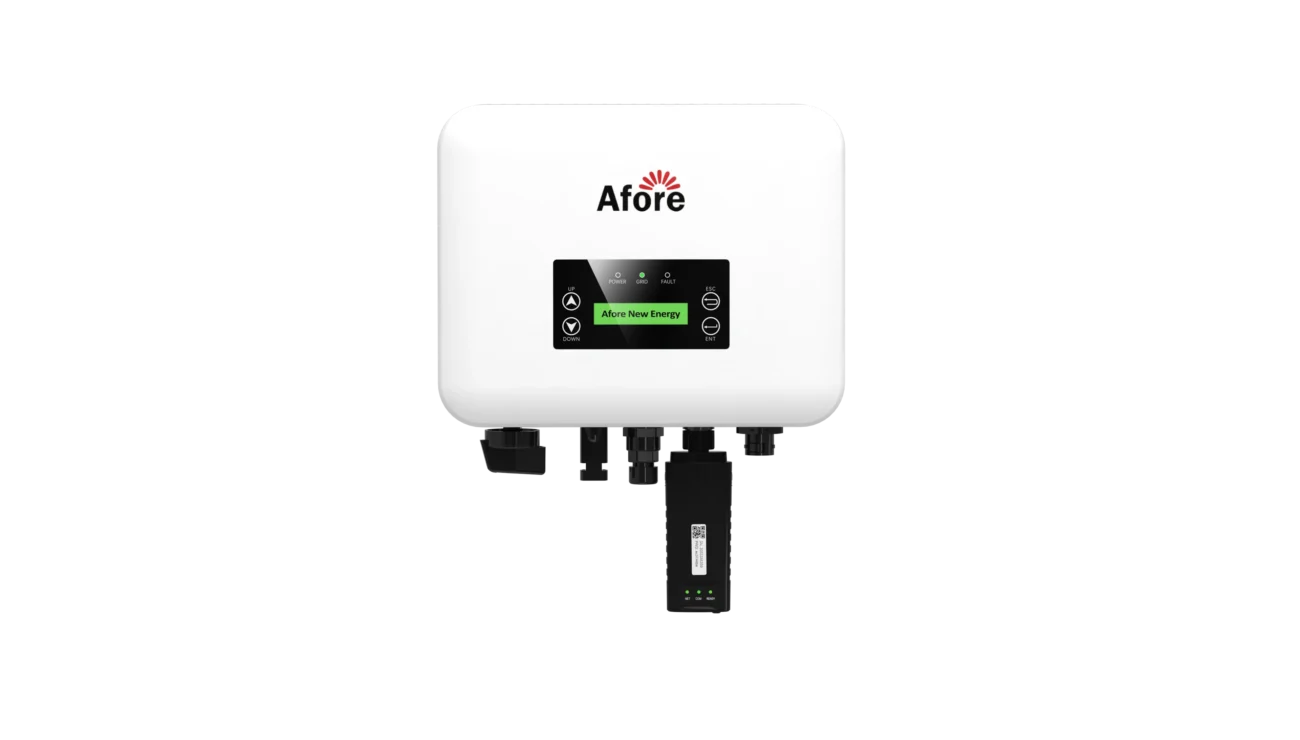
One of the most frustrating things about an inverter grid fault is how inconsistent it looks from the outside. For many system owners, the symptoms feel random, confusing, or even contradictory. In reality, these signs follow clear patterns once you know what to watch for.
Below are the most common and reliable symptoms I’ve seen associated with an inverter grid fault, both from a homeowner’s perspective and from real-world system diagnostics.
The most obvious symptom of an inverter grid fault is unexpected shutdown during normal sunlight hours.
Your solar system may start the day strong, produce normally for a few hours, and then suddenly drop to zero output — even though the sun is still shining. A short time later, it reconnects on its own, only to shut down again.
This cycle is classic inverter grid fault behavior. The solar inverter is reacting to unstable grid conditions, not to a lack of solar energy.
When reviewing historical data, an inverter grid fault often shows up as flat lines or gaps in otherwise healthy production curves.
These gaps:
This pattern strongly suggests a grid-related issue rather than a problem with panels or the solar inverter itself.
Another common symptom of inverter grid fault is repeated self-recovery.
The inverter disconnects, waits for grid conditions to stabilize, then reconnects automatically. From the user’s point of view, it can look like the system is “resetting itself.”
While this behavior is normal, frequent restarts indicate that the inverter grid fault is not a one-off event. It’s a recurring response to ongoing grid instability.
One subtle but important symptom is perfect performance during mornings, evenings, or cloudy conditions.
If your system works flawlessly when solar production is low but throws an inverter grid fault during peak output, that’s a strong clue. It usually means grid voltage rises when export levels increase.
This is one of the clearest indicators that the inverter grid fault is externally driven.
Most systems record fault history, even if users don’t check it regularly.
In cases of inverter grid fault, logs often mention:
These records are extremely valuable. They confirm that the solar inverter shut down due to grid conditions, not internal failure.
Another symptom that often gets overlooked is day-to-day inconsistency.
Two days with similar sunlight conditions may produce very different energy totals. On investigation, the lower-output day usually shows multiple inverter grid fault interruptions.
This inconsistency can quietly reduce annual energy yield without triggering obvious alarms.
Many people reset their system and believe the issue is solved — until it happens again.
This temporary recovery is a textbook inverter grid fault symptom. Resetting clears the warning but doesn’t address the grid condition that caused it.
If inverter grid fault messages return regularly after resets, it’s a sign that deeper analysis is needed.
One of the strongest indicators of inverter grid fault is shared behavior across nearby systems.
If neighbors report similar shutdowns around the same time of day, the issue is almost certainly grid-related. Individual equipment problems don’t spread geographically — grid conditions do.
This is a powerful diagnostic clue that often gets missed.
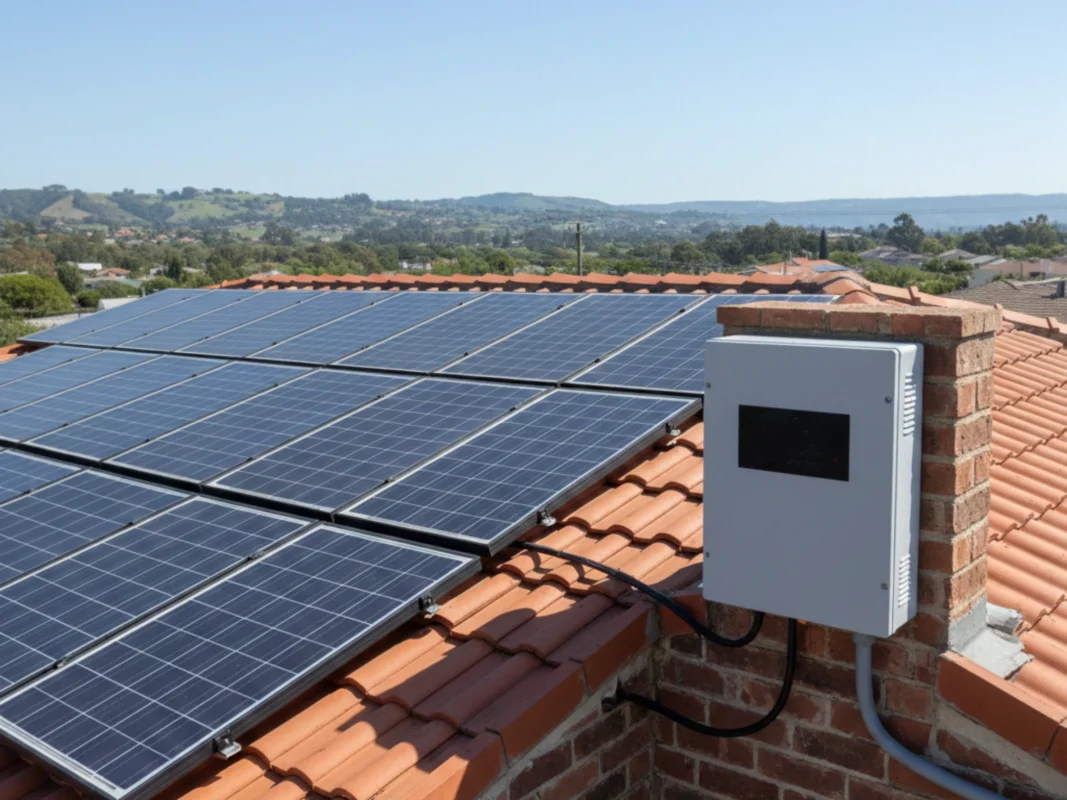
When an inverter grid fault appears, many people immediately suspect something is wrong with the equipment. In reality, most inverter grid fault events are triggered by external conditions rather than internal failure. Over the years, certain causes come up again and again — regardless of system size or location.
Understanding these causes is the key to fixing the problem permanently instead of repeatedly resetting the system.
By far the most frequent cause of inverter grid fault is grid voltage rising above allowed limits.
This typically happens around midday when solar generation is strongest. As multiple systems export power simultaneously, local voltage increases. Once the grid voltage crosses the safety threshold, the solar inverter disconnects immediately.
What makes this tricky is that:
This pattern strongly points to overvoltage rather than faulty hardware.
While overvoltage gets more attention, undervoltage can also trigger an inverter grid fault.
This often occurs in the evening when demand spikes or during grid stress events. If voltage drops too low, the inverter sees the grid as unstable and disconnects.
In areas with weaker infrastructure, undervoltage-related inverter grid fault events can be just as disruptive as overvoltage issues.
Grid frequency doesn’t drift often, but when it does, solar systems notice immediately.
Even small frequency deviations can trigger an inverter grid fault. This usually happens during:
Because frequency issues are usually short-lived, the inverter may reconnect quickly — leaving behind a fault history that’s easy to overlook.
Improper grounding is an underestimated cause of inverter grid fault.
A weak or inconsistent earth connection can distort voltage readings. The solar inverter may detect unsafe conditions that don’t actually exist — or fail to correctly reference the grid.
In practice, I’ve seen inverter grid fault disappear entirely after correcting earthing resistance, without changing any other component.
Over time, electrical connections loosen due to:
Loose AC terminals create intermittent resistance, which leads to voltage fluctuations. These fluctuations often trigger inverter grid fault warnings that seem random and difficult to reproduce.
This is especially common in systems that initially worked fine and developed issues months or years later.
Not all grid problems are obvious.
Short interruptions lasting milliseconds are enough to trigger an inverter grid fault. While household appliances may not react, the solar inverter is designed to respond instantly.
After the grid stabilizes, the inverter reconnects automatically — but repeated micro-interruptions can cause frequent grid fault events throughout the day.
Every grid operates under specific technical rules. If a solar inverter is configured with incorrect limits or outdated compliance profiles, it may react too aggressively.
This leads to unnecessary inverter grid fault shutdowns even when the grid is technically acceptable.
Correct configuration doesn’t weaken safety — it aligns the inverter’s behavior with real grid conditions.
Distance matters.
Long AC cable runs between the inverter and the connection point increase voltage rise, especially at higher export levels. Even when the grid itself is within limits, local voltage at the inverter terminals may exceed thresholds.
This localized rise is a subtle but common cause of inverter grid fault, particularly in residential installations.
Heat amplifies nearly every electrical issue.
High temperatures increase resistance, worsen voltage rise, and stress grid components. On hot days, inverter grid fault events often occur more frequently — even in systems that operate normally during cooler conditions.
This doesn’t mean the solar inverter is overheating. It means the surrounding electrical environment is operating closer to its limits.
To really understand an inverter grid fault, you need to look at things from the inverter’s point of view. A solar inverter isn’t just converting DC to AC — it’s constantly watching the grid like a guard on duty. Every second, it decides whether the grid is safe enough to connect to.
This detection process is automatic, continuous, and far more sensitive than most people realize.
A solar inverter monitors grid conditions continuously, not occasionally. Voltage, frequency, and waveform quality are sampled many times per second.
If any of these parameters drift outside approved limits, the inverter grid fault logic activates instantly. There’s no delay and no warning phase — the inverter disconnects first and asks questions later.
This speed is intentional. Fast reaction protects the grid, the system, and anyone working nearby.
Voltage is the most common trigger.
The solar inverter compares real-time grid voltage against strict upper and lower thresholds. When voltage rises too high or drops too low, an inverter grid fault is declared.
What surprises many people is how narrow these limits are. Even small deviations can trigger a shutdown, especially during periods of rapid voltage change.
In addition to voltage, frequency is monitored just as closely.
A stable grid operates within a tight frequency range. If the solar inverter detects frequency drifting outside that window — even briefly — it assumes the grid is unstable.
This is why inverter grid fault events can occur during large load changes or sudden grid disturbances, even if voltage appears normal.
Beyond basic voltage and frequency, modern solar inverter systems analyze waveform shape and phase alignment.
Distorted waveforms, phase imbalance, or irregular timing can all trigger inverter grid fault protection. These issues often originate upstream in the grid and are invisible to standard household equipment.
The inverter doesn’t try to “fix” poor grid quality. It disconnects to avoid feeding power into an unstable network.
One of the most important functions related to inverter grid fault detection is anti-islanding.
If the grid goes down, the inverter must stop exporting power immediately. To do this, the solar inverter constantly checks whether the grid is genuinely present and stable.
If the inverter suspects the grid has failed — even momentarily — it triggers an inverter grid fault and disconnects. This protects utility workers and prevents unsafe isolated power zones.
When faced with uncertainty, the inverter always chooses safety.
The detection system is designed to be conservative. It would rather disconnect unnecessarily than risk exporting power into unsafe conditions.
This explains why some inverter grid fault events feel overly sensitive. From a technical standpoint, that sensitivity is intentional and required.
After an inverter grid fault, the solar inverter doesn’t reconnect immediately.
It waits for:
Only then does it resume operation. This prevents rapid cycling and protects both the inverter and the grid.
When an inverter grid fault shows up, the worst thing you can do is panic or start changing settings blindly. A methodical, step-by-step approach saves time, avoids unnecessary risk, and leads to real answers instead of guesswork.
Below is the exact troubleshooting flow I follow in the field when dealing with inverter grid fault issues.
Start with the basics.
Check the system display or monitoring logs and confirm that the recorded event clearly indicates an inverter grid fault. Not every shutdown is grid-related, and misidentifying the fault leads to wasted effort.
Look for:
This step ensures you’re solving the right problem from the start.
Timing tells a story.
Note exactly when the inverter grid fault occurs:
If the fault appears consistently at similar times, it strongly points to grid-related causes rather than random equipment failure.
This comparison is critical.
If the system runs smoothly in the morning and evening but shuts down during peak production, the inverter grid fault is almost always linked to voltage rise.
This single observation eliminates a long list of potential causes and keeps troubleshooting focused.
Most people glance at logs. Don’t.
Dig into:
Repeated short-duration faults usually indicate unstable grid conditions rather than permanent defects.
Many inverter grid fault issues are surprisingly physical.
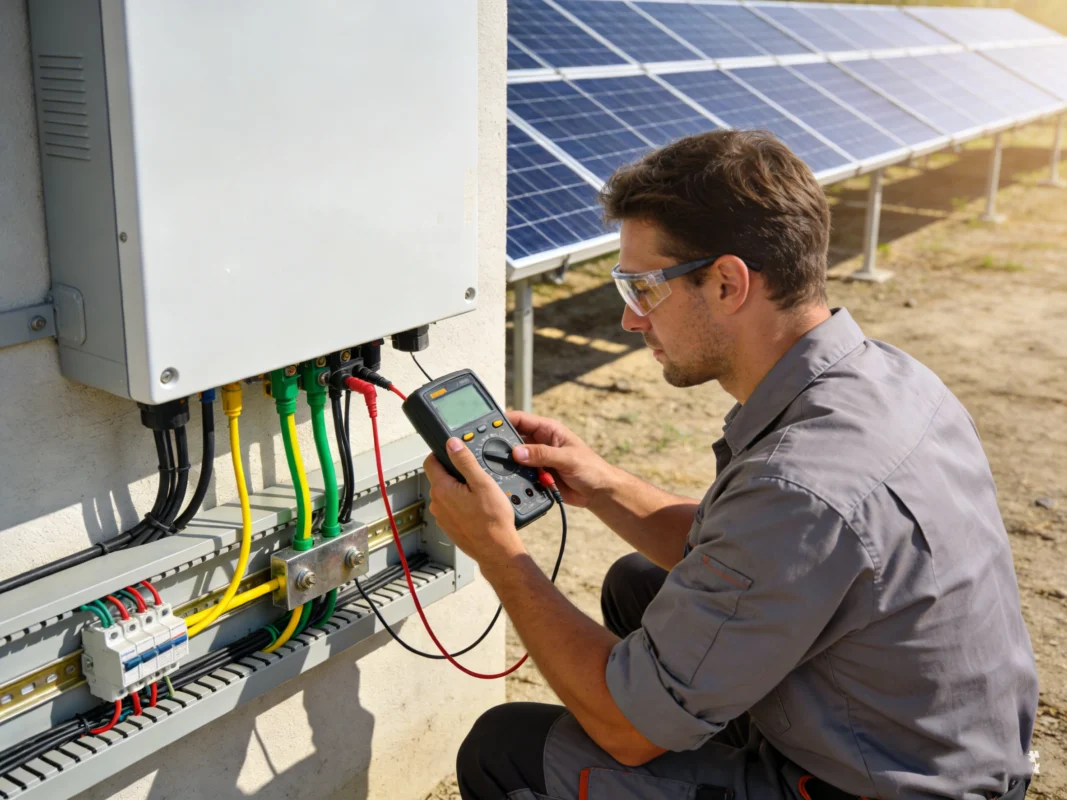
Safely inspect:
Loose or degraded connections can create voltage fluctuations that trigger inverter grid fault warnings without any visible alarms.
This is where precision matters.
Grid voltage must be measured:
Short measurements often miss the problem. Sustained or spiking voltage levels are what typically trigger an inverter grid fault.
This step usually requires professional tools and experience.
Grounding problems don’t always cause obvious failures, but they frequently contribute to inverter grid fault behavior.
Verify:
Correcting grounding issues has resolved inverter grid fault problems in many systems I’ve worked on.
Incorrect or outdated grid parameters can make a system overly sensitive.
Carefully confirm that:
This step should only be done by someone who understands grid compliance. Guessing here can create safety risks.
Change one thing at a time.
After any adjustment or repair, observe how the system behaves over several days. Inverter grid fault issues are often intermittent, and short-term testing can be misleading.
Patience here prevents false conclusions.
If repeated measurements show that grid voltage or stability is outside acceptable limits, the issue is no longer within the system itself.
At this point, the inverter grid fault is a grid infrastructure issue, and resolution requires involvement beyond the installation.
Recognizing when to escalate is part of effective troubleshooting.
The biggest mistake I see is skipping steps. People jump straight to resets, replacements, or setting changes without understanding the pattern.
An inverter grid fault rewards structured thinking. When you follow a clear sequence, the problem usually reveals itself — and once it does, the solution becomes far simpler than expected.
This is one of the most common concerns I hear when an inverter grid fault starts appearing regularly:
“Is this slowly killing my system?”
The short answer is not immediately. But the long answer — the honest one — depends on frequency, duration, and underlying grid conditions.
Let’s break this down realistically, without fear-mongering or guesswork.
An occasional inverter grid fault is not harmful.
Solar inverter systems are designed to disconnect and reconnect thousands of times over their lifespan. Protective shutdowns caused by brief grid instability are expected and accounted for in the design.
If an inverter grid fault happens once in a while — especially during extreme weather or grid maintenance — it’s doing exactly what it should.
Where damage risk begins is frequency.
When an inverter grid fault occurs multiple times per day, every day, the system experiences:
Over time, this constant start-stop behavior accelerates wear, even if each individual fault is minor.
Heat amplifies stress.
When inverter grid fault events happen during hot conditions — which is common — internal components cool down and heat up repeatedly. This thermal cycling shortens the lifespan of sensitive electronics.
The solar inverter isn’t failing because of one grid fault. It’s wearing out faster due to repeated stress under heat.
Not all inverter grid fault events are equal.
Faults caused by:
are more stressful than faults caused by mild, brief deviations. Poor power quality puts additional strain on internal filtering and protection circuits.
This is why understanding why the inverter grid fault occurs is more important than simply clearing it.
Before any physical damage appears, the first real consequence is lost production.
Every inverter grid fault means:
Even if the solar inverter survives, repeated downtime quietly erodes system value.
In some cases, an inverter grid fault is a warning sign rather than the problem itself.
Persistent faults can indicate:
Ignoring these issues doesn’t just risk the inverter — it can affect other electrical equipment connected to the same supply.
It’s important to understand intent.
The solar inverter triggers an inverter grid fault to avoid damage, not because damage has already occurred. Disconnection prevents current from flowing under unsafe conditions.
In that sense, the inverter grid fault is a protective reflex, not a failure.
From real-world experience, most solar inverter damage doesn’t come from a single dramatic event. It comes from months or years of repeated stress caused by unresolved inverter grid fault conditions.
Fixing the root cause early doesn’t just stop the error message — it preserves the health, efficiency, and lifespan of the entire system.
If inverter grid fault has become a regular part of your system’s daily behavior, it’s not something to ignore — not because the inverter is about to fail tomorrow, but because prevention today avoids silent damage over time.
Preventing an inverter grid fault is less about quick fixes and more about long-term system thinking. Once you understand why grid faults occur, prevention becomes a matter of reducing stress points rather than chasing error messages.
From experience, the most reliable way to prevent inverter grid fault is to treat the system as part of the grid — not separate from it.
Prevention begins at the design stage.
A system that is electrically balanced from the start is far less likely to suffer from inverter grid fault issues later. This includes:
Small design compromises often turn into recurring inverter grid fault problems years down the line.
Voltage rise is the number one enemy.
Practical steps to reduce it include:
Even modest reductions in voltage rise can significantly reduce inverter grid fault frequency during peak production.
Good grounding doesn’t just protect against lightning — it stabilizes voltage reference points.
To prevent inverter grid fault, grounding should be:
I’ve seen inverter grid fault issues vanish simply by correcting poor earthing, without touching any other part of the system.
Grid rules evolve, and systems must keep pace.
Ensuring that inverter settings align with current grid requirements helps prevent unnecessary inverter grid fault triggers. This includes:
These settings should be reviewed by someone who understands both solar systems and grid behavior.
Many people only look at total energy produced. That’s not enough.
To prevent inverter grid fault, monitor:
Spotting early trends allows you to address grid stress before faults become frequent.
Electrical systems age quietly.
Loose connections, rising resistance, and minor degradation all increase the likelihood of inverter grid fault. Periodic inspections help catch these issues early, when fixes are simple and inexpensive.
Think of it as maintenance, not repair.
Heat and high output often occur together.
Designing and maintaining the system to handle worst-case conditions reduces inverter grid fault risk. This includes:
Even though the fault originates from the grid, thermal conditions influence how often it appears.
When inverter grid fault happens repeatedly at the same time each day, prevention requires addressing the grid interaction itself.
This may involve:
Once the underlying grid issue is corrected, inverter grid fault events often stop entirely.
The most effective inverter grid fault prevention strategies are proactive, not reactive.
Systems that are well-designed, well-grounded, and well-monitored rarely suffer from chronic grid faults — even in challenging grid environments.
You can’t control the grid, but you can control how your system responds to it.
Preventing inverter grid fault is about minimizing stress, maintaining electrical integrity, and understanding grid behavior over time. Do that, and grid fault warnings stop being a constant frustration and become rare, manageable events.
After dealing with countless inverter grid fault cases over the years, one thing becomes very clear: these faults rarely behave in isolation. Patterns repeat themselves across different systems, locations, and system sizes. The more time you spend in the field, the more predictable inverter grid fault behavior becomes.
Below are some of the most common real-world situations I’ve personally encountered — and what they taught me.
One of the most frequent scenarios is the midday shutdown on a clear, cloudless day.
Everything looks ideal. Panels are clean. The system starts strong in the morning. Then, right when production should peak, the inverter grid fault appears and output drops to zero.
In almost every case, the solar inverter wasn’t the problem. Grid voltage was climbing steadily as nearby systems exported power. Once voltage crossed the limit, the inverter disconnected exactly as designed.
The lesson here is simple: sunny days don’t guarantee stable grid conditions.
Seasonal behavior is another strong indicator.
I’ve seen many systems that operate flawlessly for most of the year, only to suffer frequent inverter grid fault events during hot months. Higher temperatures increase resistance, worsen voltage rise, and stress grid infrastructure.
Nothing “breaks” in summer — conditions just become more extreme. This explains why inverter grid fault can feel like a seasonal problem rather than a permanent defect.
A common habit among system owners is resetting the inverter whenever an inverter grid fault appears.
In the field, I’ve seen systems reset hundreds of times without any improvement. Each reset clears the message but does nothing to change grid conditions.
This taught me an important lesson: if a grid fault keeps coming back, the system is reacting correctly. The real issue is upstream.
One of the strongest clues in real-world diagnostics is geographic consistency.
When several nearby solar inverter systems disconnect at roughly the same time each day, the cause is almost never individual wiring or equipment. It’s a shared grid condition.
These cases reinforce the idea that inverter grid fault is often a neighborhood-level issue, not a single-system failure.
Not all solutions are complex.
I’ve seen inverter grid fault issues resolved by:
These small improvements stabilized voltage just enough to keep the inverter within grid limits during peak conditions.
Another field lesson: fault logs are often underused.
When reviewed carefully, inverter grid fault logs reveal:
These patterns are far more reliable than guesswork or assumptions.
Perhaps the biggest misconception I encounter is the belief that inverter grid fault means the solar inverter is defective.
In the vast majority of cases, the inverter is doing exactly what regulations require. It’s protecting the grid, the system, and anyone working on the network.
Understanding this shifts the mindset from frustration to problem-solving.
Experience teaches you that inverter grid fault is rarely mysterious once you stop looking at it as an equipment issue.
When you observe timing, temperature, and grid behavior together, the explanation usually becomes obvious. The inverter reacts. The grid triggers. The pattern repeats.
Real-world experience shows that:
Once you approach inverter grid fault with a field-tested mindset, troubleshooting becomes faster, decisions become clearer, and long-term solutions become achievable.
An inverter grid fault is not a mystery error — it’s a message. When you understand what the system is reacting to, that message becomes useful information rather than a source of frustration.
Handled correctly, inverter grid fault goes from a recurring annoyance to a manageable, predictable part of operating a solar inverter system.
An inverter grid fault means the solar inverter has detected grid conditions that fall outside safe operating limits. This usually involves voltage or frequency deviations. The inverter disconnects to protect the grid, the system, and anyone working on the network.
In most cases, no.
An inverter grid fault usually indicates unstable or non-compliant grid conditions rather than an internal inverter failure. The inverter is responding correctly to what it senses from the grid.
Midday is when solar production is highest. As many systems export power simultaneously, grid voltage can rise quickly. Once voltage exceeds allowed limits, inverter grid fault protection activates.
Yes, and it often does.
Clear, sunny weather increases solar output, which can stress local grid infrastructure. Stable weather does not guarantee stable grid conditions.
Occasional resets are safe, but frequent resetting doesn’t solve the underlying issue. If inverter grid fault keeps returning, the root cause needs to be identified rather than cleared repeatedly.
Yes. Every inverter grid fault causes downtime. If faults occur frequently, total energy yield drops over time, reducing the system’s overall value and efficiency.
Absolutely. Loose connections, high resistance, or improper grounding can distort voltage readings and trigger inverter grid fault events even when the grid itself is stable.
This is a classic inverter grid fault pattern. Grid voltage often rises during peak solar export hours. When output drops later in the day, voltage stabilizes and the system resumes normal operation.
Occasional inverter grid fault events are harmless. However, repeated daily faults increase electrical and thermal stress, which can shorten the solar inverter’s lifespan over time.
If measurements show consistent overvoltage or instability, yes. In many cases, inverter grid fault is a grid-level issue that cannot be resolved within the solar system alone.
Yes. Incorrect or outdated grid compliance settings can make a system overly sensitive, leading to unnecessary inverter grid fault shutdowns even under acceptable grid conditions.
Once grid voltage or frequency returns to acceptable limits, the solar inverter automatically reconnects. This self-recovery is normal behavior and part of the system’s protective design.
It becomes serious when faults:
• Occur daily
• Cluster at the same time each day
• Significantly reduce energy output
These patterns indicate ongoing grid stress that should be addressed.
In some locations, yes. In others, it can be significantly reduced but not fully eliminated due to grid limitations. The goal is minimizing frequency and impact, not chasing perfection.








 Turkish
  Romanian